I need to begin with a caution I don’t usually give: Elif Shafak’s engrossing new novel spoils the ending of “Madame Bovary” in its opening pages. Many readers have asked whether they should read Flaubert’s classic first, and if you want its ending kept intact, the answer is yes. That said, I don’t think it’s essential. Shafak has said she wanted readers unfamiliar with Flaubert or the 19th century to connect with the story, and I saw one Goodreads reader who had never read “Madame Bovary” name this among her favourite books of the year. Having read Flaubert’s novel twice myself, I found it heightened my appreciation. The book opens with Emma Bovary speaking back to her creator and puts him on trial for the way he portrayed her. Much of what follows plays on that porous boundary between the creator and the created, and on where imagination lies in between.

The novel spans the whole of Flaubert’s life, from a childhood in a Rouen household that was part home, part hospital, part morgue, to his death at Croisset in 1880. He became a writer in defiance of parents who wanted him to be a doctor, then a lawyer, and he was branded the “family idiot” even though he went on to become one of France’s greatest novelists. His life is told in close third person across five life stages, each chapter named after a colour and an object. Interspersed with it are thirty sections in the voices of women, some human, some not, some living, some dead. They include Eleanor Marx, the first to translate “Madame Bovary” into English, George Sand, an Egyptian belly dancer whom biographies treat as a footnote, and, in typical Shafak fashion, the city of Istanbul, syphilis and even a camel. These voices question Gustave’s judgement and memories while forming a web of surprising connections. All of them are caught up in an age of political upheaval and face the social pressures of the time differently. The bird on the gorgeous cover of this novel is the Simurgh of Attar’s “The Conference of the Birds”, the poem that gives the novel its title. It’s also the vision Gustave sees during his epileptic fits, and it holds a secret that only becomes clear at the end.

What moved me most was the portrayal of Gustave himself, especially as a lonely, bookish child. Shafak has described this as a book about loneliness and otherness, and she has spoken of being a lonely child who found companions in books. It’s funny how young Gustave feels so connected to his father’s library that he literally starts consuming the books. The tender bond with his nursemaid Julie, whose fabulous tales spark his imagination, is a reminder of how much children need to be told stories. Shafak depicts him as a synaesthete who can taste words. Some critics have speculated about this, though it has never been proven. It recalls Arthur in “There Are Rivers in the Sky”, and it ties in with the colours that frame the novel. His perceptions are also shaped by his epilepsy and later by syphilis, and Shafak notes the period’s misconceptions that blamed epilepsy on the mother or on too much masturbation. Gustave’s fantastical sensibility, mirrored in his early reading of “Don Quixote”, blends imagination with reality. I loved the description of him wanting to be a literary lizard, warming himself all day in the sun of inspiration, which sits nicely beside his painfully slow way of writing. Above all, he is an empathetic, romantic spirit who stops to ask downtrodden people about their lives, and their stories gradually feed into the creation of Emma Bovary. As Shafak writes, “Nothing human can ever be alien to literature.”

Shafak also explores the blurred lines of gender, a recurring theme in her work and no doubt one reason Virginia Woolf’s “Orlando” is among her inspirations. A tutor presents as a man in order to move through the world and achieve professional success. In a wonderful childhood scene, Gustave and his sister swap clothes to feel what it’s like to inhabit another gender, something he later carries into slipping into the skin of Emma Bovary. There are terrifying sections too, set during revolution and mass starvation, which show how turmoil can drive mobs to act out their fears on outsiders and scapegoats. Gustave witnesses the execution of a woman wrongly convicted of murder. “Is there anything more dangerous than certainty born of ignorance?” Shafak asks, which recalls the “Malady of Certainty” in her “Three Daughters of Eve”. The novel also considers how writers take revenge: “not with punches or swords but with words.” That idea runs from Emma’s opening tirade to Shafak’s own experience of being put on trial in Turkey for words her fictional characters spoke.

Where the novel falters for me is in some of the narrative voices. I understand that giving a voice to a city or a disease extends empathy beyond the confines of human consciousness, much as the fig tree did in “The Island of Missing Trees”. But some of these sections felt too laden with research, as if a writer had gathered a mass of details and packed them into a narrative, and they took me out of the story. Some critics have noted that the voices sound too similar. (Spoilers follow.) The ending offers one answer to this: Emma returns to reveal that Gustave himself wrote all thirty voices, and in Persian si-murgh means “thirty birds”. It’s a clever and artful turn that answers Emma’s opening complaint that writers betray their characters, since Gustave became each of them and turned imagination into an act of empathy. You could also see it as a fault. A novel whose premise is to decentre the male genius ends by recentring him as the author of it all, though of course Shafak wrote everything. For me, the reveal didn’t change my sense that some voices felt manufactured rather than convincing.

None of this detracted from my enjoyment, or from the novel’s insistence that without stories we’d each be much lonelier, and that solitude, as distinct from loneliness, can be a source of strength. As Shafak put it in an interview with Prospect, “I never believe fiction is a luxury—I believe it’s existential,” and in a time of so much conflict that feels especially true. Perhaps this novel isn’t as great as “There Are Rivers in the Sky”, and how much you connect with it may depend on your tolerance for her whimsy. But it’s a wonderful meditation on artistic creation and the lives of outsiders. It also does what all great literature should and sent me looking for more. I’m keen to read Eleanor Marx’s translation of “Madame Bovary” and Lydia Davis’s from 2010, having only read Alan Russell’s, as well as “Salammbô”, which Mircea Cărtărescu cited as a major influence when I interviewed him. I’d be delighted to hear what you think of Shafak’s most recent novel and whether you read “Madame Bovary” before starting it.
Posted
AuthorEric Karl Anderson
CategoriesElif Shafak

First Impressions

This is an immersive epic which I grew increasingly emotionally and intellectually involved with as it went on. When I finally closed the book I looked up and realised I'd been so lost in it that I'd lost track of everything around me. I also realised it was an incredibly rainy day in London, with rain streaming down the window, which tied in perfectly with the novel's central theme as water is at the heart of it.

Tributaries Becoming a River

What I find extraordinary about this novel is how Shafak takes characters who seem quite different from one another, living in very different places and periods, and gradually brings their stories together in a deeply touching way. They begin to fit together like pieces of a jigsaw puzzle or, more fittingly given the theme, like tributaries and bodies of water that slowly join to form one flowing river. I won't give away any spoilers, but I can sketch out the main threads.

The novel opens in Mesopotamia in the seventh century BC with Ashurbanipal, a despotic leader and military commander who was also an intellectual. He amassed a great library of clay tablets, many taken from other cultures and countries, and it's from tablets in that library that we know the "Epic of Gilgamesh." That ancient tale runs through the whole novel, and it feels miraculous that it survived at all, given how many transformations it went through along the way.

In Victorian London we meet Arthur, born into extreme poverty to a mother who scavenged valuables from the city's wastewater, and nicknamed "King Arthur" by the other scavengers. He feels like a Dickensian character, rising from humble beginnings to an intellectual career thanks to an extraordinary memory that lets him recall the distant past in precise, picture-perfect detail. He's also a synaesthete, experiencing tastes and smells when he sees words. These gifts are a double-edged sword: they open doors for him, but they also make him an outsider and an object of curiosity. It's fitting that Charles Dickens himself makes a brief appearance in a couple of scenes, while looking for a new publisher, which is a fun touch.

The next thread follows Narin, a Yazidi girl who is about to be baptised on the banks of the Tigris in 2014, while her family and culture face growing pressure and real danger from military and political forces and the prejudice against them. And in 2018 in London we follow Zaleekhah, a hydrologist who has left her husband after marital difficulties and is moving onto a houseboat on the Thames at Chelsea. She comes from a very privileged, wealthy family. As the novel moves between these very different characters, their stories gradually link up.

Outsiders Who See Clearly

What connects them is that each experiences a great deal of loneliness and isolation, and each has a special ability or intelligence. They are slight outsiders, and I think that's why they see more clearly what's happening around them and begin to question the larger society, in which people are exploited and displaced. The final main character is a drop of water itself. We follow it through the centuries, with a consciousness and a memory, in a book premised on the idea that water holds memory as it passes through its many transformations. Water is so essential to life yet so misunderstood.

Whimsy and Wonder

This is where readers may divide. Shafak walks a fine line between whimsy and absurdity, especially in her recent novels. "The Island of Missing Trees" is partly narrated by a fig tree and by an insect, and some readers feel that tips too far into absurdity. For me, and for others, it's whimsical and a wonderful way of thinking outside the boxes of identity and consciousness we normally work within. That's what I find so moving about Shafak's writing: a heartfelt humanity runs through all her books, along with real sympathy for outsiders and people who don't conform to standard ideas of how a person should live or identify.

I read her whimsy as a way of saying we don't have to be stuck inside a narrowly human consciousness. We can become so accustomed to thinking of ourselves as a human race that dominates and controls the planet, when there are many workings and mysteries we don't understand, outside the mainstream narrative, that steer our lives in unexpected and fantastic ways. The novel has a great sense of wonder, playfulness and humour. One example is the lamassu, the Mesopotamian sculptures with a human head and a lion's body, which also have five legs. Several of them, along with many of the tablets from this famed lost library, now sit in the British Library. I want to read more about that, and about how the "Epic of Gilgamesh" has been passed down across centuries, both orally and in writing.

Hidden Rivers and Serious Themes

Zaleekhah's storyline describes the hidden rivers beneath London and every major city. We think of London and the mighty Thames, but there were many other rivers, which have been built or paved over or repurposed, and it was fascinating to see a map of them. For all its whimsy and humour, the novel also takes on serious themes through water. There's a lot on climate change and pollution, and on how we imagine we control rivers when we don't. Humanitarian crises are so often about a lack of water, with people in disadvantaged areas dying of thirst, and as climate change continues, water will become a major issue for many nations.

The Yazidi genocide is also depicted in the story, which I found heart-wrenching and which made me want to learn more. The theft of cultural artefacts features too, both in the ancient Mesopotamian library and in the contemporary British Museum, whose holdings were taken from so many cultures and remain a hotly debated subject. And there's organ farming, in which very wealthy people who need a transplant bypass the medical system and buy organs from impoverished or displaced people.

I think Shafak mostly strikes a good balance, handling these subjects while keeping the reader involved in the characters' lives. I felt so close to them that what they gradually saw around them, I was seeing too as a reader: the larger things at stake for many people, and the ways we are implicated in systems that should be questioned more. We become complacent because we're born or work our way into certain circumstances, or inherit a cultural outlook that makes us assume this is simply how the world is, and only gradually do we realise how it disadvantages others and what more sinister things we are part of without noticing.

The Reading Experience

The novel contains multitudes of stories and holds them all in one big epic tale. If you find the drop of water's consciousness, or the multiple storylines, a bit disparate at first, trust me that they all come together, and I found it incredibly moving how they form a whole.

Coincidentally while reading the novel I went to the Yoko Ono retrospective at Tate Modern, which sits right on the Thames. Looking out at the rain falling on the river, I thought of the river in this novel. Ono is such a singular conceptual artist, and some of her pieces appear as written prompts on the wall for viewers to carry out or simply imagine. One I read asks you to imagine a drop of water falling on a stone and watch until it eventually drills a hole through it, which of course would take many, many years. It connects so beautifully with this book, as another way of thinking about consciousness and narrative. Imagine being a drop of water, passing through solid and gas, rising into the sky and falling back to earth, perhaps swallowed and ingested along the way. That expands your mind beyond the limits of a single human life.

Verdict

That approach will work for some readers and not for others, and I know people who take issue with Shafak's work in this way, which is entirely fair. For me it was very moving and a wonderful form of storytelling, and I loved how the novel drew me through so many tales, periods and places to form one whole narrative. If you've read it, or want to now, I'd love to hear what you think.

Posted
AuthorEric Karl Anderson
CategoriesElif Shafak
The Island of Missing Trees Elif Shafak.jpg

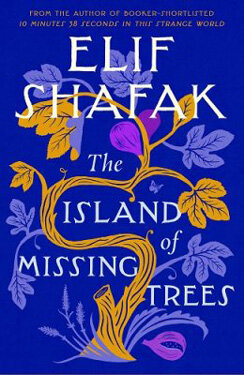
This is the third novel I've read by Elif Shafak and I love the sheer heart and humanity of her fiction. Her work does what the best writing should which is to give a voice to the voiceless and start a conversation about divisive social issues which affect us all while telling an engaging story about characters I grew to really care about. “The Island of Missing Trees” is part love story and part history of recent deadly conflicts in Cyprus. Greek Cypriot Kostas and Turkish Cypriot Defne are teenagers who form a strong romantic relationship in a taverna. When war breaks out their world is torn apart. Many years later in England their teenage daughter Ada struggles to come to terms with her parents' past and she's also dealing with the fact that a video of her experiencing an emotional outburst/breakdown has gone viral. This may sound like an obvious device for exploring the personal ramification of national discord, but like Ada who claims she understand the division which ravaged her parents' lives there is much more to the story and intricacies which require deeper consideration. Gradually we get the full tale of Kostas and Defne's past which is especially heartrending because it also involves another tragic love story about the gay proprietors of the taverna they meet in. It's a vibrant and sweeping saga that I got fully wrapped up in with all its moments of humour and sorrow. 

One of the most surprising and delightful aspects of this novel is that it's partly narrated from the point of view of a fig tree. And she has lots of opinions! It's very playful the way the tree comes to comment upon the story of these characters' lives as a silent witness while also giving a wholly new view on the situation. Since her conception of time and the interrelationship between all living creatures and the natural world is very different from humans she is able to stand somewhat outside the emotional and political drama of these characters (although she has her own love interest). At the same time she's been physically at this story's centre since she grew in the middle of the taverna and a cutting from her branches was taken to England to flourish in a new form. In this way Shafak meaningfully weaves in commentary about environmental issues which have affected Cyprus over the years on top of the human casualties sustained because of the war. Another point of view given by the narrative I really appreciated was that of Ada's aunt Meryem who comes to stay with the family in England and becomes involved in her niece's life (despite the teen's resistance). She maintains her superstitious belief despite Ada's judgemental attitude and the two come to establish a touching bond. It enforces the fact that Shafak's stories are at heart a celebration of family, love and individuality in all its beautifully varied forms.

Posted
AuthorEric Karl Anderson
CategoriesElif Shafak
2 CommentsPost a comment

Although I very much enjoyed Elif Shafak’s previous novel “Three Daughters of Eve”, I was initially hesitant to read her new novel because the subject sounded so depressing. “10 Minutes 38 Seconds in This Strange World” recounts the final thoughts of its central character Leila after she’s been murdered and left in a dumpster. Scientists speculate that the brain remains active for a number of minutes after a person’s heart stops so the first part of the novel captures her final memories and reflections. As the clock ticks down to the inevitable expiration of her consciousness we follow her journey from being born to a religiously conservative man with two wives in the provinces of Turkey to her life as a prostitute in Istanbul where she becomes known as Tequila Leila. Along the way she meets five vital friends. These people form a network of mutual support to each other amidst strenuous circumstances and social rejection. We’re also given brief glimpses into these five people’s experiences of alienation.

While I admire the nobility of a novelist who sympathetically gives voice to the many voiceless represented in this novel it presents a lot of difficult subject matter including child abuse, religious extremism, sexism, transphobia, homophobia, the plight of immigrants, poverty and sexual slavery. I also felt uncertain at first because in the first section of the book it feels like each friend of Leila’s self-consciously represents a different downtrodden community. In her attempt to make visible a full spectrum of alienated people Shafak risks turning her characters into tokens rather than fully realised individuals. But ultimately I found this novel came together and worked very effectively for a couple of reasons.

Firstly, Leila’s personality and resiliency shine through her tumultuous journey. It’s a pleasure seeing her vibrant character come out in scenes where she radiates an energy and creative persistence amidst very challenging situations. This gives the story an engaging momentum. Secondly, the later part of the book is concerned with her friends coming together to memorialize Leila when the state refuses to do so after burying her in a “cemetery of the companionless” amidst many other marginalized unmourned people. The idiosyncratic personalities of these five character emerge in their interactions with each other as they form a wild plan to pay tribute to their beloved friend. I felt these aspects of the novel made it a riveting and convincing read rather than just a worthy exercise in raising social awareness for the disenfranchised citizens of Turkey.

It’s not surprising that Shafak is preoccupied with issues to do with social stigma in modern-day Turkey. As an activist and artist she’s been put on trial by the Turkish government for ‘insulting Turkishness’ in her writing and Shafak wrote a moving article here describing the political struggles she’s encountered. I admire that she’s not only chosen to engage with such difficult issues being faced by people who are being persecuted and silenced, but she’s skilfully crafted a story which draws you right into the heart of their plight and makes them come alive in a way I found powerful and moving.

Posted
AuthorEric Karl Anderson
CategoriesElif Shafak
2 CommentsPost a comment

It's deeply frightening and upsetting how politically divided society is at the moment. When different factions are so convinced about the certitude of their own ideas and beliefs conflict is inevitable. Religion continues to be at the centre of many battles, yet in her new novel Elif Shafak creates the character of A.Z.Azur, a controversial Oxford professor who encourages dialogue across religious belief systems as he believes that too many people suffer from what he calls “The Malady of Certainty”. Every term he holds a selective seminar whose sole purpose is to probe the philosophical meaning of God. However, at the centre of this story is Peri, a highly intelligent Turkish woman who is confused about what God means to her. Enrolled in this seminar alongside her are friends Shirin, a bisexual woman with an Iranian background who considers herself “as British as a treacle tart but as out of place as a stuffed date cake” and Mona, a politically-engaged woman of Egyptian descent who is an ardently devout Muslim. These three women are referred to as “the Sinner, the Believer, the Confused.” They are individuals caught in a state of flux between different nations, faiths and ideologies. Shafak creates a deeply meaningful, extremely relevant and riveting tale about the role belief plays in these modern women's lives.

The novel opens on a typical day in 2016 when Peri is living as a mother in Istanbul driving with her daughter to a high-class dinner party. It's been over fifteen years since she studied at Oxford and the life she's settled into is very different from her idealistic university years in England. She and her husband socialize with powerful businessmen (some of whom are involved in dodgy deals) and an image-conscious class of women who “paraded their handbags like trophies won in faraway battles.” When caught in traffic Peri puts her own handbag in the backseat where it's stolen by a thief. Rather than accept the loss, she decides to do something drastic about it and this sets off a chain of events that prompt her to take action in life. The narrative switches back and forth between this extraordinary day and the back story of Peri's life. It recounts the sharp ideological divides which existed in her family home between her devout mother and non-practicing father as well as her elder brother Umut who is a Marxist targeted by the government and younger brother Hakan who is an “irredeemably religious and excessively nationalistic” journalist. Endearingly, Peri escapes from the dramas of her household by voraciously reading because she “found solace in literature… Books were liberating, full of life.” This leads her to do exceedingly well in school and secure a place studying at Oxford.

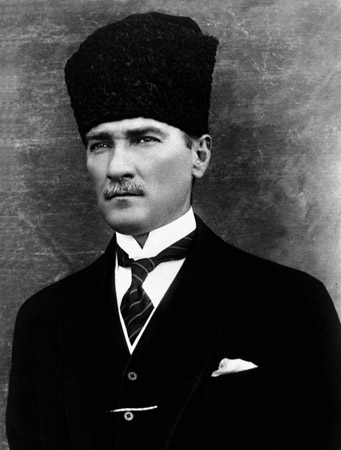
In Peri’s childhood home “There were portraits of the national hero everywhere; Atatürk in his military uniform in the kitchen, Atatürk in a redingote in the living room, Atatürk with a coat and kalpak in the master bedroom”

At the heart of the novel is Peri's quest for answers to irresolvable questions about her identity and faith. She's haunted by a jinni or spirit in times of distress which takes the form of a child's face. There is a dark truth about her past which she can't surmount and move on from despite trying to fashion a new future at university. A dramatic event in Oxford causes her to abandon her progressive life there and settle into a more traditional role as a wife in Istanbul. This is very different from how she envisioned her life, but she's not blind to the contradictions and hypocrisy of the society around her – especially those who are zealous in their nationalism and religion. Humorously she observes that “There were plenty of people who fasted during Ramadan both to renew faith and to lose weight. The sacred dovetailed with the profane.” The inequality between men and women remains a particular concern where she wonders “Was religion an empowering force for women who otherwise had limited power in a society designed for and by men, or was it yet another tool for facilitating their submission?” Peri desires to proudly be an active part of her faith and homeland without submitting to the oppressive dictums of those in power.

It feels particularly important to read dynamic and complex portraits of Muslim women's lives right now. Considering that the US has just enforced a policy temporarily blocking border entry for anyone from specific Muslim-majority countries, reading about the perspectives of Muslim lives prevents them from becoming a faceless other. I related to a lot of the specific and general conflicts Peri faced in this story despite her background and life being so different from my own. Elif Shafak writes a wonderfully immersive story with complex, nuanced characters. Irrespective of the current political climate, this is a compelling and accomplished novel in its own right. But I particularly admire how this novel and others such as Chinelo Okparanta's “Under the Udala Trees” and Ali Smith's “Autumn” address the current political climate of their societies and artfully suggest practical ways to create dialogue between fractious groups. “Three Daughters of Eve” is an original and memorable story.

Posted
AuthorEric Karl Anderson
CategoriesElif Shafak