First Impressions
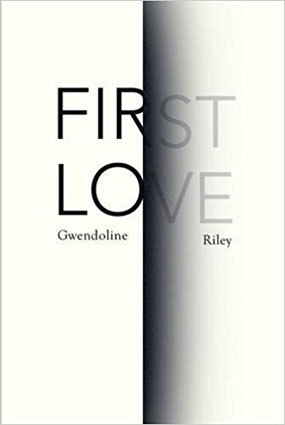
Gwendoline Riley is a well-regarded author who's received considerable award attention over the years, and plenty of readers and critics genuinely love her fiction. I am not one of them. I'd previously read her earlier novel "First Love," which I didn't just dislike but actively loathed, and that's a reaction I don't often have to a book. Going into "The Palm House," I really wanted to give it a fair chance; enough time had passed that I wondered whether my own tastes had shifted, or whether her writing had developed. I read it with as open a mind as I could manage, and found myself bored and frustrated, and at points genuinely agitated by it.
What Actually Agitates Me About Her Writing
I've spent a lot of time trying to work out exactly what it is about Riley's prose that provokes such a strong reaction in me, because normally if a book bores or frustrates me, I just put it down and move on without much further thought. I think it comes down to the cool, cynical, detached quality of her writing, the way we get so little of her characters' inner emotional lives or reflection, so that everything stays observational, looking outward rather than in. This novel is a bit different from "First Love" in that we do get a good amount of the protagonist Laura's backstory, which suggests some kind of development in Riley's approach, or maybe it's just this particular story. Even so, so much about the book frustrated me.
The best comparison I can make is to something that used to agitate me when I first moved to England from America. I struggled for a long time to get used to pub culture, which was so far removed from anything I was used to as a fairly introverted person who'd rather be home reading. My partner and flatmates would encourage me out for a few drinks, and I'd go, have an hour or two of polite conversation with relative strangers, their workmates, people I quite often just didn't have all that much in common with. But once you're at the pub, there's this unspoken expectation that you stay at the pub: someone buys you a drink, so you have to finish it, then it's your round, so you buy drinks for others, and on it goes for hours, long after the conversation has worn down to something completely banal, until you're just drinking for the sake of it. I once tried to leave early and a flatmate told me she'd be genuinely insulted if I did. That experience of being stuck making small talk with people I had little real connection to, listening to stories about people I didn't know and didn't especially care about, is exactly what reading this novel felt like to me.
That's not an abstract comparison, either; it's more or less what physically happens throughout much of the book. People are at the pub, having drinks, opening packets of crisps. There's a small, oddly specific detail I kept noticing, how the novel describes people tearing open crisp packets at the seams rather than just opening them, something I've genuinely observed as a very English habit, and it bookends the novel at the beginning and end. So much of the story unfolds through these conversations, rendered with a kind of sharp, realistic ear for the way people actually talk, repeating themselves, dwelling on details about their own lives that aren't especially interesting to anyone else or, at least, to me. Laura, the narrator, seems to have real patience for all of this. Much of the novel follows her long friendship with Putnam, a man who's just resigned from his position as deputy editor at a longstanding arts and culture magazine, interwoven with episodic glimpses of Laura's own life: her mother, and several of the men she's been involved with over the years.
A Question of Compassion
I don't object in principle to fiction that withholds a character's inner reflections rather than spelling out how the events of their life add up to some larger meaning. David Szalay's "Flesh" does something similar, portraying how people really interact with each other while still conveying a real sense of inner life and humanity underneath it. Riley's writing, by contrast, feels muted, glum and pessimistic to me, and even though Laura never explicitly judges anyone she encounters, that flat, cold observational quality starts to feel like its own kind of judgment: an implication that everyone, and society generally, is simply mediocre, and that this is just something we have to put up with. There's a real lack of compassion in it that I think is at the heart of what agitates me so much, a refusal to find anything in people worth redeeming despite their contradictions, absurdity and ego.
There's one scene that struck me as a rare exception: Laura talking with a friend's young child, who explains her own peculiar theory of how life began on Earth, and Laura simply takes it in, almost visibly absorbing the charm and wit of someone else's point of view. It's a small, genuine moment of warmth that stands out precisely because it's so rare elsewhere in the book. Laura's mother comes across as largely self-absorbed, as do many of the people Laura interacts with. As a teenager, Laura has a relationship with a comedian twice her age who uses her in a cold, clinical way; she never names it as abuse, simply relates what happened without visible judgment. There's a genuinely chilling moment later when her mother's own awareness of that relationship becomes clear, one of several lines in the book that land with real, sudden force.
Where the Novel Does Work
I did find myself engaged by some of the novel's later material, particularly around Laura's independence. When she's about to buy her first apartment, she has an interim period where she stays with a man who's offered her a place, seemingly out of generosity. Nothing untoward happens between them, but there's a genuinely uncomfortable scene where he seems to be quietly judging her, and it becomes clear that even a generous offer like his carries its own unspoken expectations, so that Laura only really finds freedom once she has, in effect, a room of her own. It's harder for me to square that thread of progression with the long-running Putnam storyline, which is driven partly by his own ego and partly by a changing media landscape: a new editor at his magazine wants to overhaul it entirely, leaving Putnam feeling like a relic, and though he resigns, the novel ends with him essentially going back. That's not much of a spoiler, since this isn't really a plot-driven novel so much as an attempt to trace a mood and present a grudging record of the ways we're obliged to be sociable with each other, even as Laura readily keeps showing up at the pub anyway. Putnam observes at one point that pub culture is changing, that people under forty are going out far less than they used to, which does track with a real shift in England, especially since the pandemic, even though the novel itself is set in late 2017.
The novel is carefully anchored in time and place: London's sky is described with the strange yellow hue it actually took on in 2017 from Saharan dust drifting into the atmosphere, and the story opens near the meeting of two bridges in Southwark, the same spot where Dickens's "Our Mutual Friend" begins, situating the novel within a lineage of London writing. As a Londoner myself I could appreciate nods to certain locations I’m familiar with such as The Tate and Gordon’s Wine Bar. But for all that grounding, the version of society it offers felt stripped-down and thin to me, without much real insight on offer, even as I've tried to think harder about what its themes actually amount to.
The Title and Its Symbolism
The title refers to the enormous Victorian conservatory at Kew Gardens, and I saw one mention in the Literary Review that suggests it as a metaphor for English arts and culture as something that has to be sealed off from the wider world in order to produce anything of beauty. Hands recur as a motif too: Putnam has eczema on his hands early in the novel, while Laura recalls a childhood holiday with her mother and grandmother during which she visited a palm reader who somehow caused the warts on her fingers to fall away, a small image of being made new. Inside the Palm House itself is one of the world's oldest potted plants, and a character notes that indoor plants like it need to be largely left alone in order to thrive, not entirely neglected, but close to it. That feels like an apt description of Laura's own life: left mostly to her own devices, including during that relationship with the comedian, which she entered as a fifteen-year-old fully aware of what was happening, even as you can't help wondering where any adult oversight was.
Verdict
There were individual moments and lines in "The Palm House" that genuinely landed for me, sudden and chilling in their effect. But so much of the novel is built from conversations and anecdotes about peripheral people I knew almost nothing about and had little reason to care for, which mostly just underlined a sense of mediocrity, hollowness and self-centredness in the people it depicts. That may well be my own interpretation more than Riley's intention, but it's the effect the book had on me. I don't need fiction to be full of profound exchanges, and I'm equally wary of novels that go too far the other way, the way André Aciman's characters sometimes fall into deep philosophical conversation on a casual night out, which never feels quite real either. But I want more than trivial exchanges about barely-there figures with little bearing on the larger story. I read this one start to finish and genuinely tried to meet it on its own terms, but for me it left an impression of cynicism and detachment I don't actually want more of in my life. Riley clearly isn't a writer for me, though I know plenty of readers feel very differently. I'd love to hear whether you've read her, whether I'm missing something in her work, or whether "The Palm House" might be worth your own time even if it wasn't worth mine.