A Wonderful Rediscovery
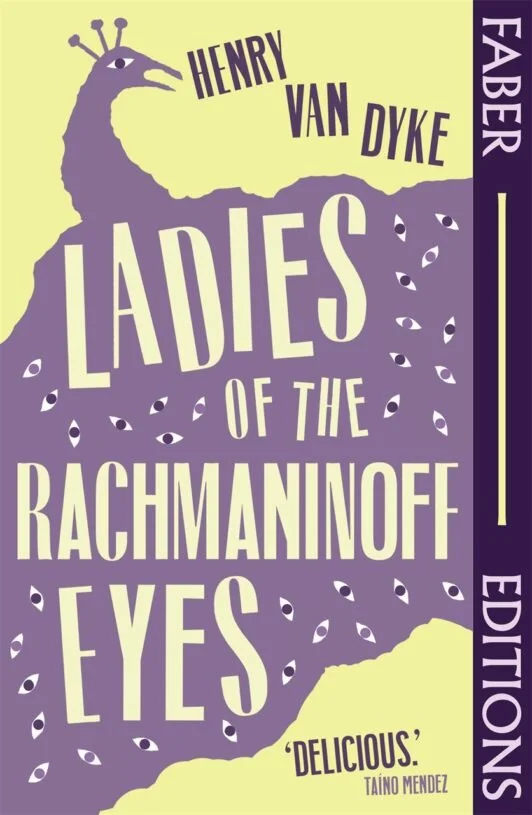
I loved reading this book so much, partly because it feels so singular, and partly because it's such a pure pleasure to read. It feels all the more extraordinary because this is a novel that's been around for decades, and yet I'd never heard of it until recently. Ladies of the Rachmaninoff Eyes by Henry Van Dyke was first published in 1965. It feels like it deserves to be a modern classic, and I hope many more readers discover it.
Premise
The story opens with tragedy but quickly reveals itself to be a farce: a comic romp and a coming-of-age tale. It follows the perspective of a teenage Black boy, Oliver, growing up in Michigan, orphaned and raised in a household with two older women: his great-aunt, Harry, and Mrs. Etta Klein, a white, Jewish widow who acts as Oliver's patron, paying for his education. The main engine of the plot is a charlatan spiritualist, a self-styled warlock named Maurice le Fleur, who arrives to conduct a séance in the household. We follow the fallout of that séance alongside the mystery surrounding the death of Etta's late son, Sargent, whom Mrs Klein is desperate to contact. There is a mystery surrounding his death which occurred five years earlier in New York. But mostly, this novel concerns Oliver's point of view and sensibility, one that any modern reader would immediately recognize as latently gay, or at least a burgeoning gay sensibility. His observations are so witty and cutting that following his perspective is a real pleasure, even as he remains genuinely naive about a great deal, being only sixteen.
Household and Craft
Oliver lives with these two older women, who bicker constantly despite being close, long-standing friends. Aunt Harry, though technically the household's housekeeper and employee, is deeply close with Etta, and there's a complex history and subtle tension between them that surfaces in their arguments. Oliver's narration, full of unexpectedly beautiful, poetic turns of phrase, reminded me of Truman Capote's debut, “Other Voices, Other Rooms”, which I happened to read recently too, but it also carries all the comedy of a drawing-room farce in the mode of Oscar Wilde or Ronald Firbank.
What's fascinating is that this book came out in 1965, right in the middle of the civil rights movement and the beginnings of the sexual revolution, and yet it doesn't engage directly with either. It feels almost like it stands outside of that moment, even while it's shot through with references to racial and sexual tension. Because Oliver is receiving a good education through Etta's patronage, his aunt Harry and the cook, Della, tease him for becoming "white" in his manner and references, and Della in particular teases him about his sexual naivety; at one point she tries, to very comic effect, to seduce him, and elsewhere Oliver clumsily tries to seduce another woman himself, underscoring his general confusion. There's also a scene with Etta's other, still-living son, Jerome, drunk to the point of helplessness, where there's a charged, if not quite attraction-driven, fascination on Oliver's part as he tries to manage this inebriated naked man. The book gestures at real racial tension too: there's a convivial atmosphere and a veneer of tolerance in this community, but once events reach a crisis point, real prejudice surfaces.
A Deliberate Choice of Subject
So many other books from this period deal directly with the civil rights movement and racial tension, from James Baldwin to Nella Larsen, and others engage directly with homosexuality, from Capote to Gore Vidal to Edmund White. It's fascinating that Henry Van Dyke, a Black gay man himself, chose not to address either directly here, and instead told this comic coming-of-age story. There's something genuinely defiant in that choice: Oliver isn't defined by the circumstances or the body he was born into. He's simply feeling his way through the world, trying to figure himself out while navigating life with two older women who are, in their own bickering, rum-fuelled way, wonderful and often very funny, even as he's clearly trying to find his own path beyond them.
I loved the atmosphere Van Dyke creates around the household in the fictional town of Green Acres, Michigan: the layout of the house, the sound of Della singing old blues lines like "how long, how long has that train been gone" from another room, and Oliver's pet peacock, which rarely flourishes its full colors, functioning as a quiet, effective metaphor for Oliver himself, still feeling his way toward his own self-expression. He has such clever, wide-ranging private thoughts, but he's growing up in genuinely isolated circumstances, and I felt a real longing throughout the book for him to get out into a wider world with people more like-minded than the sheltered, privileged but limited household he's confined to.
The Dialogue
So much of this book comes alive through dialogue. Each character's personality, prejudices, and desires really emerge through how they speak. Della wants to be so much more than a cook, but her options are severely limited, and when the medium arrives, she sees him as a possible gateway to the city and a different kind of living, even if that means sex work, one of the few paths she believes is open to her; she has real desires of her own, and describes being drawn to certain white men in her own vivid terms. Aunt Harry has a rich, complicated history that surfaces once the plot reaches its crisis point. Etta Klein is a closet drunkard, hiding bottles of rum around the house, carrying palpable grief and loss that she channels, in part, into treating Oliver as a substitute for her dead son Sargent. And Jerome, her surviving son, is something of a boor but also quite funny, chummy with Oliver and full of jokes, though his own deep-set prejudices resurface when things come to a head. I appreciated how, following Oliver, the novel also shows him wrestling with his own sense of right and wrong. At one point he lists out all of his own dishonorable deeds so far, working out his own code of justice as he tries to protect the women who've raised him from the charlatan they've invited into their home.
Verdict
What I loved most about this book was the sheer mood it creates through its descriptions and dialogue. It isn't a perfect novel: some sections feel a bit repetitive, and the ending plays out in a way I think catches some readers off guard. But it captures Oliver reaching a real point of independence, becoming his own person and stepping out into the world, and there's something genuinely beautiful in that.
Coming across this book for the first time, recently republished by Faber alongside a number of other rediscovered older titles, has made me newly curious about Henry Van Dyke himself: born in Michigan but raised for much of his childhood in Alabama, acutely aware of the civil rights movement through his parents' own involvement in it, and someone who wanted to become a pianist before eventually moving through the army and into a long career teaching creative writing. He was a contemporary and friend of Iris Murdoch, which I found surprising, though he never really broke into wider popular literature during his lifetime. There's a great piece about him written by his nephew that was published on Lithub a year or two ago, worth reading for anyone curious about his life. He wrote a sequel to this novel and a couple of other books, though they're apparently quite hard to find now, and I hope more of his work gets republished. If you've read this book, or if you've read any of Van Dyke's other work, I'd love to hear about it.