First Impressions
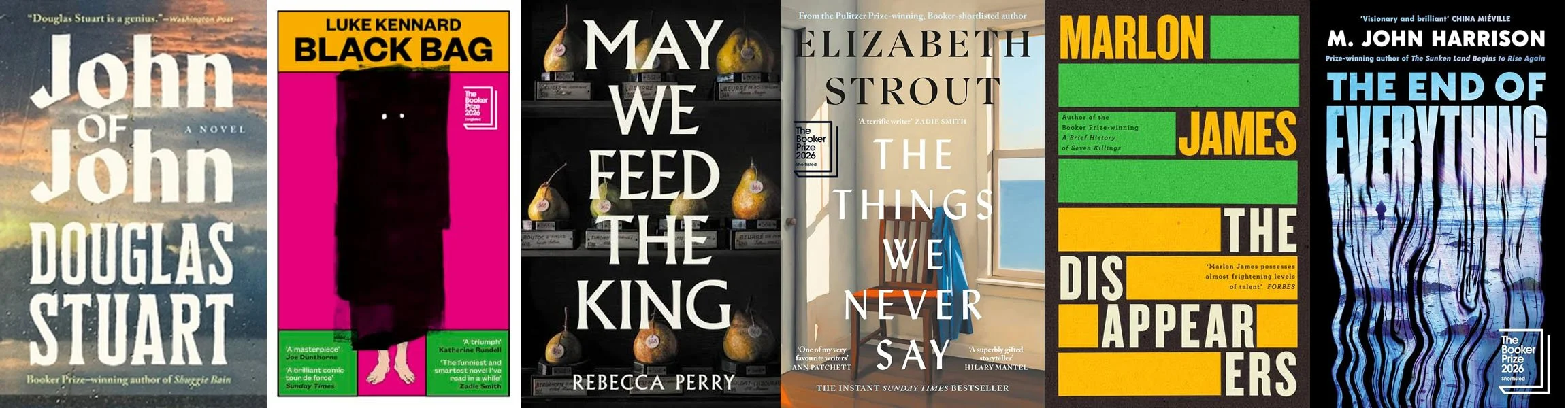
I just read "Black Bag" with my online book club, and it was such a pleasurable experience, both because the novel is genuinely fun and because it kept provoking deeper questions the whole way through, if you want to engage with it on that level. I also had the pleasure of interviewing Luke Kennard and we had a fun lengthy discussion about a wide range of subjects which you can watch here: https://www.youtube.com/watch?v=cIdBHDdJmN8
The novel has a wonderfully straightforward, almost absurd premise: an unnamed, down-on-his-luck actor takes a job in a university classroom for a psychological experiment, wearing a black bag that covers his entire body, unable to speak or interact with anyone. He's just a strange, silent presence in the room, and the experiment is designed to study the effects of that. We get his first-person account of it all, written as though it's unfolding in real time.
The premise is based on an actual experiment. In 1967, Charles Goetzinger at Oregon State University seated a figure in a black bag in his class to demonstrate the "mere-exposure effect," the idea that repeated proximity breeds affection, and watched his students move from hostility to curiosity to friendship over the course of a term. Kennard has said he came across it as a footnote in a social psychology article, and that he was more interested in the actor who took the job than in the finding itself. The real study recorded the students' reactions and left no account of the man inside the bag. Kennard gives us only the inside, updated for the present day and relocated to England.
A Man Who Wants Theatre on His Own Terms
I found the narrator endearing: his passionate love of theatre, his sensitive, arty English foppishness, and his pretensions and wry observations about the state of the current world. I pictured him as a young Hugh Grant. He considers theatre the highest art form and finds it genuinely bewildering that the rest of the world doesn't share his devotion to it, yet he can barely get work as an actor and has to default to dinner theatre and cheap detective-mystery performances just to pay the bills. There's a real contradiction in him that the novel is quietly aware of: he holds theatre up as the highest art and wants everyone to be as enthusiastic about it as he is, but when he does get more serious, socially engaged roles, he's just as critical of those as pretentious. He seems to want theatre to exist only on his own terms, which of course it can't, and that contradiction makes it entirely believable that once he takes on the role of Black Bag, he lets it feed his ego and become something much bigger than the psychological experiment it's meant to be.
So taking the job as Black Bag, with its steady salary, is a real relief for him financially, but it comes to mean far more than that. The day-to-day unfolding of it is consistently amusing: I could vividly picture the farcical sight of a man stumbling around in a black bag and the whole range of ways people react to him. But because we're experiencing it from his perspective inside the bag, I could also feel how physically uncomfortable, gross and restrictive it becomes, and how nerve-wracking it must be to be so conspicuous while being completely unable to respond to anyone. I love his observation that inside the bag it starts to feel as though his face and skin have become his internal organs. And against that discomfort, there's his growing psychological sense of freedom that comes from being completely anonymous.
Visibility, Anonymity, and the Internet Age
There's something pointed in the fact that the experiment anonymises the one figure least accustomed to it: a relatively handsome white Englishman in his mid-to-late thirties, exactly the type usually granted the centre of the room and the benefit of the doubt by default. Stripping that away becomes a kind of test of what happens when his usual privilege is removed, and how that changes both his sense of self and the way society interacts with him.
It also felt more personal to me than that. I'm naturally a fairly quiet person, even though I know I talk a lot in my videos, and I felt that being Black Bag partly reflects the way people project themselves onto someone who doesn't speak, interpreting that silence in a way that says more about their own personality than about the quiet person himself. I've noticed this in my own life, and I found the range of reactions to Black Bag over the course of the novel, from people who seem worried about him to others who are instantly hostile, a genuinely sharp piece of observation about how we treat quiet presences.
The novel also reads as a real counterpoint to our internet age, where anyone with any kind of online presence is expected to be conspicuous, whether that means constantly performing a personal brand or, at the other extreme, hiding behind total anonymity to troll people without consequence. Black Bag's radical anonymity cuts directly against both of those impulses. The counterweight in the story is his closest friend Claudio, an online gamer with millions of followers who is hyper-visible in exactly the way the narrator isn't, and who has to constantly balance the expectations of his audience against staying authentically himself. I related to that pressure in a much humbler way through my own experience of having a BookTube channel, wanting to respond to feedback without simply fashioning myself for an audience. Being authentically yourself risks becoming a target for criticism, but bending to the most popular demands makes a public persona feel soulless, and Black Bag's total refusal to offer any response, opinion or distinguishing feature raises the question of whether that's a different kind of soullessness, or whether it actually preserves something essential about him.
Despite being opposites professionally, Claudio, the capitalist who has learned to make his online identity profitable, and the narrator, who believes in an art form he can't make profitable, have a fraternal bond I found genuinely moving. Some of the funniest material in the book comes out of their friendship once Claudio starts trying to help monetise Black Bag: the scene where the narrator is paid in actual cash and the two of them are almost bewildered by physical money in an age of tap-to-pay, and his first instinct once he's flush with cash is to buy new curtains, which he then hangs while humming "Master of the House" from Les Misérables. It's such a small, specific, funny detail, and it's typical of how the novel builds character through moments like that.
Justine, and What We Project Onto Each Other
While he's playing Black Bag at the university, the narrator strikes up a relationship with Justine, an older professor there, and it becomes both a sexual and a romantic one, all while he remains inside the bag. It's mutually fulfilling in some ways but was never going to be entirely satisfying, and I became very curious about her motives. Since she doesn't know anything about the actual person behind the bag, what does she really want out of the connection: a genuine exchange, or complete control over someone who must play by her rules? The way their relationship plays out raises real questions about whether we're ever loving the actual person we're with, or simply projecting our own desires onto them, and whether we can ever truly know someone we're in a relationship with.
The Swedish Daydream and the Family He Won't Describe
To survive the lectures he has to sit through as Black Bag, which are themselves reproduced in places in the novel and cover the psychology of our current social atmosphere, the narrator invents an entire alternate life for himself in his head: a simple, humble existence in rural Sweden, complete with a sawmill job, an injury, and a woman named Birgitta who feeds him cake. These daydreams take up more and more space in his emotional life. It's genuinely strange and moving that some of the narrator's most honest emotional moments in the whole book happen inside a fantasy he's constructed and it says something real about how much of our imaginative life can end up carrying more weight than our actual lived experience, which felt like another quiet comment on how we live now, half in reality and half online or in our own heads.
It's a striking contrast to how he treats his own family: when he visits his parents, he refuses to give any real details about them at all, referring to them only as two stone pillars, guarding their privacy even as he's spilling every detail of his invented Swedish village. His imagined exchanges with the family dog, Elliot, who has a very funny personality of his own in these daydreamed conversations, felt like another way of the narrator talking to himself.
Where the Novel Gets Shakier
As the story develops, it edges into something closer to a conspiracy plot, almost a cult story and the narrator’s performance as Black Bag gets tangled up in a vague cryptocurrency scheme. This is where the novel felt slightly shakier to me, striving to do a bit too much. I can see the justification for it, though, since we're only ever inside the narrator's head, and he doesn't fully understand this secret order of people or the financial mechanics behind Claudio’s financial schemes any more than we do; his own information is limited to a slightly ridiculous spying mission. I think these elements of the novel mostly work as a kind of ego-check for him: a way of forcing him to recognise that he isn't special, that he isn't even the original Black Bag, however much he's come to believe otherwise.
His ego does grow across the novel, until he starts to think of himself as the original Black Bag, almost a prophet, which is a real irony given that he has no identity left to speak of. At one point he asks himself, "Isn't it time someone rescued me from the cult of myself for deprogramming?" The ending of the novel presents a real challenge to the narrator’s conception of himself and it leaves open whether affection that arrives purely through exposure is worth having at all.
Form and Style
On a practical level, the novel is built from very short, punchy chapters, rarely more than four or five pages, which keeps the whole thing moving at a brisk, pleasurable pace even when the narrator gets lost in his own ruminations about the death of serious theatre or his romantic failures. It's a world away from the density of something like "The Melancholy of Resistance," which my book club read together earlier this year. Kennard also doesn't use quotation marks for dialogue, and readers in my group responded to that differently, from finding it pretentious to barely noticing it anymore given how common it's become in recent literary fiction. There's even a case to be made that stripping the marks which usually identify speech mirrors what the novel does to its narrator, removing every marker that identifies him, though it didn't add much extra meaning for me personally; I don't think the novel would have lost anything by including them.
I read the book first in print and then went back through the audiobook, which Kennard narrates himself. A number of people in my book club who'd listened to the audio first told me it really adds to the experience, and I found that to be true: his own performance of the material brings out a layered quality in the reading. Rereading it that way, already knowing the plot, let me sit with the larger questions in more detail. This year's Booker chair, Mary Beard, has said her bar for a book is whether it's worth reading more than once, and I think "Black Bag" clears that easily.
Verdict
I found "Black Bag" an extremely enjoyable, genuinely clever read, funny and strange in equal measure, with far more going on beneath its absurd premise than it might first suggest. It raised so many questions for me about visibility and privilege, about how much of ourselves we perform online versus withhold, and about what we're really responding to when we love someone, whether that's another person, an anonymous man in a bag, or a life we've only ever imagined. I'd happily read this one again, and I'm curious now to seek out Kennard's other novels and his poetry.