First Impressions
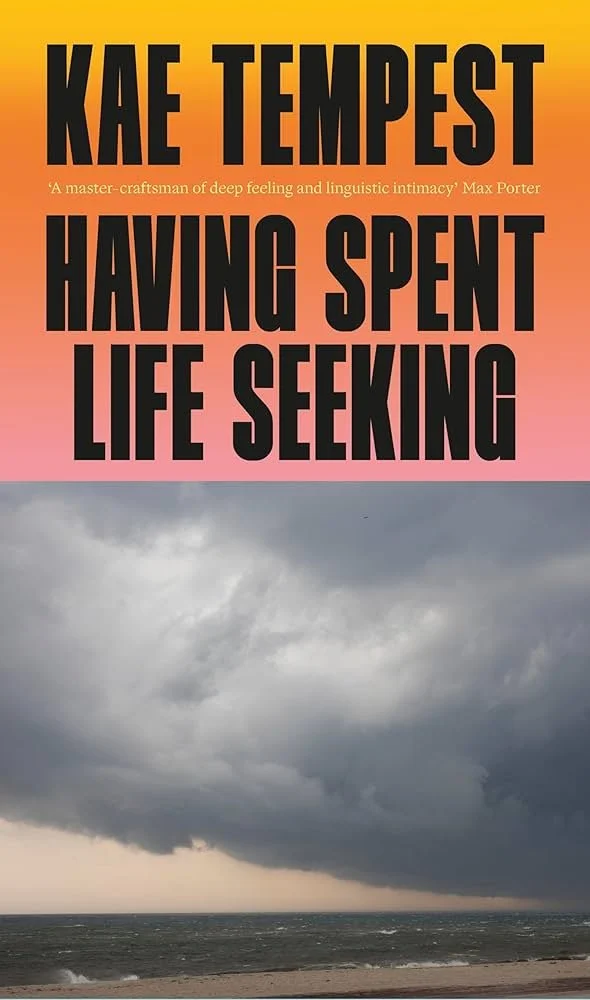
“Having Spent Life Seeking” is an incredibly powerful and beautifully written novel. I felt like I genuinely lived alongside these characters and went on a journey with them, which is exactly the experience I want from fiction. This is a story about the difficulty of self-acceptance set against the pull of social acceptance, a tension I think so many of us feel, especially in childhood and our teenage years, rendered here with great impact. It's also a novel about the importance of persisting through seemingly insurmountable challenges, because there will still be beauty, joy, love, and even tranquility to be found in life, even when the world feels like it's completely falling apart.
Premise
The novel follows Rothko, who at the very start has just been released from prison after twenty years. Rothko is slowly rebuilding a life in their hometown of Edgecliff, a fictional, slightly shabby English seaside town of the kind with plenty of lifelong locals alongside weekend holidaymakers. Rothko is trying to live and work independently, but the world has changed enormously in their absence. One of the most impressive things about this novel is how little interiority or direct self-reflection we actually get from these characters; we mostly get description of experience and dialogue rather than explicit inner monologue. Normally that kind of withholding frustrates me in fiction, because I want access to what a character is really feeling. But even without much of that here, I felt like I deeply understood these characters and could connect with what they were going through, which I think is a real feat of craft: conveying all this emotion without spelling it out on the page. It reminded me a little of David Szalay's “Flesh”, where a similarly withheld interior life still lets you feel exactly what a character is going through, though the styles of these two books are quite different otherwise.
Rothko's Story
Rothko has a difficult relationship with their mother, Meg, who struggles with her own addiction and the trauma of past abuse. We get Rothko's backstory gradually, and for a long stretch we don't actually learn why they were in prison for so long, which serves a couple of purposes: real narrative tension, but also a way of resisting the instinct to judge someone based purely on incarceration, when what actually matters is understanding the circumstances that led there. So much of this novel is about connection and disconnection, especially with strangers, capturing both beautiful, unexpected moments of human recognition between people who owe each other nothing, and moments where people judge and mistreat one another on entirely superficial grounds. Rothko doesn't judge others this way, even though they are far from a straightforwardly virtuous character and has made real mistakes; when they meet someone destitute, angry, or unpredictable, they tend to meet them on a purely human level, and those moments landed with real emotional force for me.
Rothko's nickname comes from childhood: they blush deeply pink or red when embarrassed or ashamed, and as a child this was described as their face "going like a Rothko painting." It's such a strong, simple visual image that stayed with me throughout, a way of physically rendering shame without ever spelling out the internal experience behind it. There's a similarly striking scene, a memory of riding in a car with a driver who's become so emotionally unstable that it feels like the car could crash at any moment, that hit me hard, since I've had a similar experience myself of being trapped in a car with someone who seemed to have lost touch with reality, desperate just to get out even on a dangerous highway.
Family, Gender, and Identity
I also appreciated how Tempest handles Rothko's relationship with their sister. I found the line “they might have come from the same people but they had never really been coming from the same place” to be especially poignant. Though there’s a shared origin there is also a fundamental, if imperfect, mutual understanding. Part of that distance is on Rothko, for not fully opening up to their sister about who they are, something tied to their lifelong struggle with gender identity and discomfort inhabiting a body which, for much of their life, read to others as more conventionally masculine, generating real confusion, suspicion, and hostility from people around them. There's a beautiful early friendship with a teenage boy, and later a love affair with a girl named Dionne. This novel is, in part, a genuine love story, but one that follows two people developing as individuals alongside their relationship, rather than staying fixed while navigating differences between two already-formed selves, which felt like a genuinely different, truer way of depicting a long-term relationship than most fiction manages.
Throughout the book, Rothko frequently refers to other people as "normal" and expresses how they feel alienated from the general population. Much of the novel traces Rothko’s path toward a real sense of self-acceptance, toward feeling that everything about them is simply right rather than something to keep measuring against other people. There's a genuinely important, difficult scene where Rothko, just wanting a quiet pint after work, has to decide which gendered toilet to use, aware that either choice risks a reaction from other people in the pub, and the fear and humiliation bound up in a situation that should be entirely mundane. There's an echo of this too when a group of teenagers openly discuss and speculate about Rothko's gender, dialogue that felt so vivid I could practically hear it. Given everything happening around trans rights and legislation in Britain right now, I think really feeling what that experience is like from the inside matters.
Language and Structure
Tempest is also a poet and musician, and that shows in the writing: mostly grounded and realistic, but with moments of real philosophical density where a single line opens out to convey an entire lived experience. There's a striking stretch, covering a long period of Rothko's life during a low point with addiction, that shifts into an almost musical, rhyming register, compressing a huge amount of time and despair into very little space. For instance, one line that stuck with me was "Using is its own universe." The novel conveys, through both Rothko’s mother Meg and Rothko themself, just how consuming addiction becomes, and how it can override every other relationship and responsibility in a person's life.
A Small Reservation
If I have one criticism, it's that the compressed, musical section covering Rothko's addiction and much of their prison sentence skips over a lot: twenty years is an enormous span of time, and the actual lived experience of prison doesn't get fully rendered, even though it shaped so much of Rothko’s life. The novel doesn't shy away from stating that prison was a genuinely horrible experience, even while acknowledging some of what Rothko gained there, skills, one significant connection with another person, but the difficulty of reintegration afterward, in a world that's simply moved on without them (self-checkout lines being one small, disorienting example), is handled really well.
A Personal Resonance
This novel feels genuinely personal for Tempest, who has undergone his own journey with gender in recent years, now identifying as a trans man and using he/him pronouns. Rothko is referred to as they/them for most of the novel, until a single moment where he's able to say plainly, "I am a man," to another character, after which the pronouns shift to he/him. It's a tender, powerful moment, and one I felt I'd really traveled toward alongside him: something so simple for so many people to say, and so hard-won here.
I got my copy of this book from the queer library that the shop Aesop runs every Pride month in London, turning their usual fragrance shop into a stock of free queer books for anyone to take. Tempest has spoken in interviews about being given a copy of “Stone Butch Blues” by a stranger early in life, and how transformative that was, and I think that same spirit runs through this novel and through initiatives like Aesop's library. This year I also marched in a Pride parade myself for the first time, with the small Rīga Pride contingent in London, drawing on my own Latvian heritage, and witnessed one of my fellow marchers run to embrace his mother on the sidelines in tears, a moment that felt like it echoed exactly what this novel is reaching for: real joy and connection persisting alongside real struggle.
Verdict
It’d be negligent of me not to mention that there's also a wonderful thread to this story involving Rothko's dog, Donovan. So much of the book is about how fleeting, even coincidental connections with other people can matter enormously to our own journey of understanding and accepting ourselves. The novel also raises poignant larger questions about the sheer strangeness of being alive; for example, one line that struck me was "“How could a thing as weightless as life be so fucking heavy so much of the time?” Life passes through us lightly, in the moment, and yet we carry so much weight: memory, disappointment, love, heartbreak, and the world's judgment. What matters, the novel suggests, is how we feel about ourselves and how much we allow those feelings to affect the way we actually live in the world.
I thought this was an absolutely incredible book and I loved reading it. I'd highly recommend it, and I'd love to hear from anyone else who's read it, or who wants to point me toward more of Kae Tempest's work, since I've read some of his poetry but haven't yet properly explored the music.