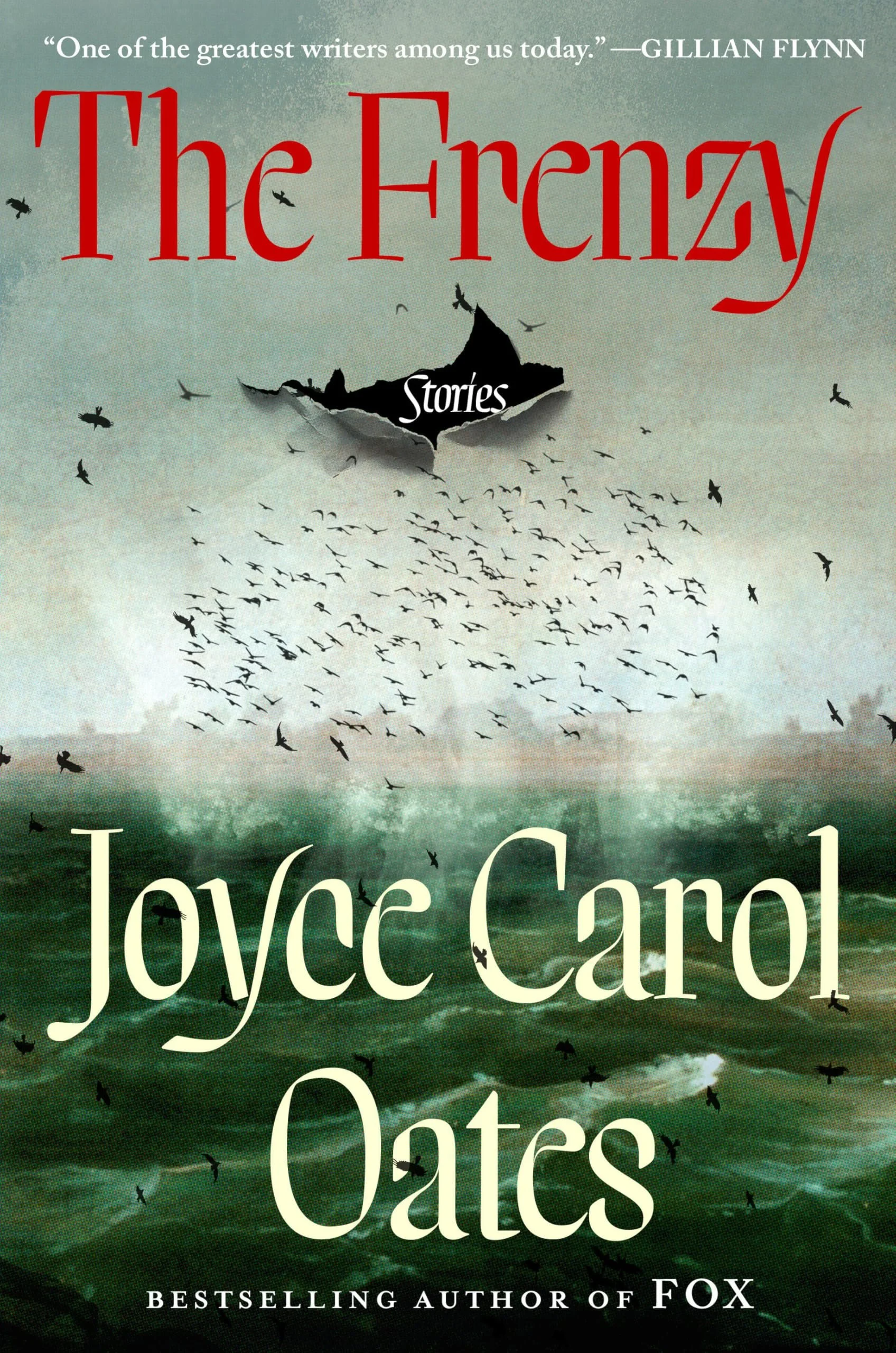
In this arresting new short story collection, Oates evokes the lives of a diverse group of characters, many of whom have reached a crisis point in their lives, in such a mesmerising way that I felt swept up in the momentum of these tales. From an abusive affair gone wrong, to strained parent-child relationships, to individuals who've lost their spouses, we witness the worlds of these characters being completely upended. The book is divided into three distinct parts, which move from stories that are piercingly realistic to the more hallucinatory or surreal. Some take place over a compressed amount of time, while others span a lifetime. Of course, each tale can be read individually. However, I read the book from start to finish, and when read together, these stories enter into a kind of conversation with each other. The result is very engaging, moving and haunting.
I especially enjoyed how there are many powerful descriptions of the natural world throughout these stories (especially of the sky and bodies of water). For example, in different tales Oates describes "Wintry Atlantic churning, frothing, glittering like a gigantic skin shaking itself, great galleon-clouds passing overhead torn and tattered by winds"; "mists rise languidly as exhaled breaths"; "the vast shimmering river... of the hue of molten metal, that could not possibly move swiftly, treacherously. But it does." I've read so many descriptions of rivers and skies throughout Oates' many books, yet she always has a way of presenting them from a unique angle which is packed with emotion. This creates an atmosphere akin to a stage upon which the various dramas of these stories unfold.
Some of my favourites include the title story, 'The Frenzy,' which details an ill-advised affair between a middle-aged man, Cassidy, and his friend's daughter, Brianna. Cassidy's affair is partly about longing for his own youth and how his options have narrowed at this point in his life. The end of this particular tale is so satisfying. 'The Bicycle Accident' also has a disturbing quality, in which a mother named Arlette is so concerned with social status and throwing a party that she neglects to truly see the challenges her daughter, Evie, is going through until it's too late. The stories 'The Call', 'The Return' and 'The Redwoods' have a fascinating way of considering alternative paths in life through a variety of narrative techniques and unique situations. 'Night Fishing at Antibes' poignantly considers two individuals' different approaches to grief and how they find an uneasy camaraderie with each other. The later stories also have a reassuringly hopeful quality, given how much hardship the characters endure.
It was a pleasure to interview Oates (who recently turned 88 years old) about this book: https://www.youtube.com/watch?v=pVNf6uh3vww