The story begins with a missing teenage girl named Lydia Lee and, while this mystery may sound like the premise of a thriller, “Everything I Never Told You” focuses more on the interior lives and complex relationships of the girl’s family members. Celeste Ng describes how Lydia maintained an image of being a popular and successful student, but in reality was a loner who was failing at the science and math courses which her mother Marilyn pushed her to excel at. Like many families, there’s harmony on the surface but dark undercurrents to the lives of these characters. Over time they’ve become so accustomed to not speaking about personal pain and emotional need that they become in some essential ways unknown to each other. The hidden nature of their lives becomes untenable when faced with the enormous tragedy of Lydia’s disappearance. Gradually we learn about their unexpressed desires and unacknowledged pain – especially in regards to both overt and more subtle racist treatment the children receive as the only mixed race children in their Middle-American town.

The father James is the child of Chinese immigrants and has worked hard to achieve a position as a professor, but struggles to be accepted as fully American despite being born in this country. The mother Marilyn is equally academically gifted, but didn’t receive opportunities to fulfil her scholarly promise. Nor did she obey her mother’s wishes not to marry an Asian man leading her to be estranged from both her family and her ambitions to become a doctor. As such both parents place different kinds of pressure on their children to succeed in ways they were not able to in their own lives. However, there is also a lot of tenderness in their attempts to connect and encourage their children. There’s a heart breaking scene where James buys a Christmas present for Lydia hoping she’ll appreciate it but realises how badly he’s disappointed her. Equally Marilyn frequently buys Lydia scientific texts hoping to inspire her, but her daughter has no interest in them. I found it moving how James encourages his children to keep up with the latest trends and fashions even though he was hopelessly disconnected from what’s really happening in the children’s world. The parents obviously mean well, but they don’t realise the negative pressure they place upon them.

There’s a tragedy at the heart of this story but I appreciate the way Ng creates an optimistic picture whereby the family can take steps to be more upfront about their feelings and form deeper connections to each other. Perhaps one of the most important characters is the youngest child of the family Hannah. Though she’s largely silent and doesn’t play much of a dramatic role she’s very observant and watches the changes occurring within her family life. I felt I could strongly relate to her in the way she often feels like an outsider, yet finds this advantageous in some ways as she’s not subject to the same pressures to conform. I appreciate how this novel shows that there can be a terrible silence at the centre of many families which prevents them from supporting each other in the ways that they should and how important it is to accept the unique qualities of every member of the family rather than trying to make them become something they’re not. I was encouraged to finally read this novel since it’s Ng’s debut and I just went to see her speak at the Southbank Centre in London a couple days ago. She has a powerful way of writing about families, motherhood and the pain of being made to feel different.

Posted
AuthorEric Karl Anderson
CategoriesCeleste Ng

There are some novels where I instantly feel connected to the narrator as if he were an old friend. Something about the way Ann Patchett presents her central character of Danny Conroy in her new novel “The Dutch House” hooked me to his consciousness. Maybe it's the tone of his wide-eyed innocence and ignorance as he looks back at his childhood, family life and the home he was cast out of. It's a sensibility I can relate to now that I'm in my early 40s and think back to the mysteries of my early life wondering why certain decisions were made. Danny and his sister Maeve grow up in a grand house with a prosperous father, but their mother abandoned them in their childhood. When their father marries a new woman named Andrea who brings her own two daughters into the house, the Conroy children feel themselves growing even more estranged from their aloof father. In their teenage years they are unceremoniously ousted from their family home and must fend for themselves. Danny recounts this story and the haunting way he and his sister often linger outside the house they've been cast out of ruminating about the past and the truth about their family. In a way, every adult must feel this way reflecting on what Joyce Carol Oates calls “the lost landscape” of childhood. Patchett also poses a number of tantalizing mysteries about this particular family which kept me gripped and I admire the subtle way she raises lingering questions to do with the meaning of family, belonging and home. 

The Dutch House of the title was purchased by Danny's father very cheaply in an auction after the family who built and inhabited it fell on hard times and eventually died out. He moves his whole family into this place which still contains all the furnishings and possessions of the previous owners. I like how on top of Danny's wonder about his own family circumstances there's the added mystery of the family that came before them. All their dramas and tribulations seem seared into the structure of the house so that we only see hints of it. This too feels very relatable in the way that we move into a new residence without knowing the story of those who lived their before but we have this odd intimacy with the people who proceeded us because we're inhabiting the space they lived their lives in before. But in Patchett's novel this has a kind of gothic feel as portraits of the previous family adorn the walls staring the Conroy family in the face and co-existing with them. It also has a bigger meaning when thinking about issues to do with capitalism, ownership and how the people who come to possess land and houses aren't always the people who are “justified” in inhabiting them. After all, aren't auctions and “bargain” prices on houses just legal ways of taking advantage of other people's misfortunes and unfortunate circumstances?

Patchett also perfectly frames a feeling of uncertainty and chaos in Danny's life. He grew up accustomed to a certain lifestyle and a belief in what he would become. But because things take an unexpected turn he's suddenly rudderless and doesn't know what direction he'll take: “There are a few times in life when you leap up and the past that you’d been standing on falls away behind you, and the future you mean to land on is not yet in place, and for a moment you’re suspended, knowing nothing and no one, not even yourself.” It's so powerful how Patchett captures this feeling of being suspended in nothingness and being tormented by a terrible unknowningness.

There's also a terrifying sense in the novel that no matter how bonded we feel to our families they can turn out to be strangers. Since their mother left them early on and their father is so emotionally distant, there's an absence of the love which is supposed to make Danny and Maeve feel secure. They're profoundly disconnected from their parents. So much so that Danny wonders if they're a family at all: “It sounded so nostalgic when he said it, the three of us, as if we had once been a unit instead of just a circumstance.” Even though the brother and sister find trust and rely on their relationship to each other, there's a sombre and haunting sense of loss that their parents never gave them this security. Danny also realises that the bitterness they feel about this becomes an addiction: “We had made a fetish out of our misfortune, fallen in love with it.” So part of their periodic vigilant sessions sitting in a car watching the house they grew up in is clinging to that sense of injustice while silently accusing their parents of abandoning them since their parents aren't there to emotionally stand trial.

There's a pleasure to the style of Patchett's story which has a fable-like feel and is in some ways a kind of modern Cinderella tale. But it also feels modern and relevant in how it reflects on deeper issues to do with our changing society by detailing how families have been made and disintegrated amidst larger economic fluctuations. The novel also creates a new kind of storytelling for which there isn't a precedent in how their mother leaves them for so long because “There is no story of the prodigal mother.” So, unlike “The Odyssey” which is driven more by a roaming father's ego and lust for conquest, their mother Elna's story is driven more by a compulsion to nurture a broken world rather than the children she's given birth to. I admire how these deeper meanings build throughout a novel which (on its surface) is quite a simple story with little plot, but after spending an extensive amount of time in Danny's consciousness I deeply felt their resonance. It proves how Patchett is an incredibly skilled and accomplished novelist.

Posted
AuthorEric Karl Anderson
CategoriesAnn Patchett

I always look forward to Bookshop Day in the UK as it makes a good excuse to visit local bookshops and pick up some titles I’ve been meaning to buy. This year it’s on October 5th and I’m already making a list to take with me to the shops. Bookshop Day is a campaign put together by Books Are My Bag which is a wonderful organization that encourages people to shop at their local bookshops.

They also work with National Book Tokens to host the BAMB Readers Awards which is now in its 4th year. I love that this book prize is curated by bookshops and chosen by book lovers. The shortlists for the Awards’ several categories have been announced today. You can see them all here and cast your vote on which book should win the Readers’ Choice Award: https://www.nationalbooktokens.com/vote

I’m taking a special look at the Poetry category for the BAMB Readers Awards because I always mean to read more poetry but tend to stick to novels. Today is also National Poetry Day in the UK! So I’m glad the award gives me a great prompt to discover new titles and this shortlist includes a fascinating range of poetry. “The Black Flamingo” by Dean Atta is about a mixed race teen who is going to university and his process of becoming a drag queen. “The Girl Aquarium” by famous booktuber Jen Campbell weaves dark fairy tales and issues to do with the possession of body and the definition of beauty into poetry. “A Year of Nature Poems” by Joseph Coelho & illustrated by Kelly Louise Judd considers changes to do with animals and emotional states over the course of a year. “The Flame” by famous singer/songwriter Leonard Cohen features his last collection of poems which he compiled in his final years. “Poems to Fall in Love With” by Chris Riddell pairs new illustrations against new and old poems by a range of writers from Sappho to Hollie McNish. “The Poetry Pharmacy Returns” by William Sieghart is a sequel which details how different poems can be applied to “treat” the human condition.

Let me know if you’ve read any of these poetry titles, what you think of the shortlists in each category and if you’re planning on visiting a particular shop on Bookshop Day!

Posted
AuthorEric Karl Anderson
2 CommentsPost a comment

I always enjoy going to events at the Southbank Centre in London as they often feature discussions with some of the best authors in the world. In the second half of October they are hosting the London Literature Festival which is in its 13th year. Among the events featured are two writers currently shortlisted for this year’s Booker Prize and this is your chance to win tickets to see them.

Bernardine Evaristo will be in conversation with Jennifer Nansubuga Makumbi on October 20th: https://www.southbankcentre.co.uk/whats-on/138680-bernardine-evaristo-jennifer-nansubuga-makumbi-2019

Elif Shafak will be in conversation with Louise Doughty on October 22nd: https://www.southbankcentre.co.uk/whats-on/138293-louise-doughty-and-elif-shafak-conversation-2019

I’ve been following the prize closely this year and have now read all six shortlisted novels. In my opinion, two of the strongest contenders are Evaristo and Shafak. So, to celebrate this year’s London Literature Festival and the Booker Prize, I’m giving away two pairs of tickets to each event as well as a copy of each book. This is a great opportunity to get a more in-depth personal understanding of the authors and their excellent novels.

To enter, simply comment below with the name of the author whose event you’d like to attend and contact details (either an email address or social media handle). The giveaway ends on October 6th after which I’ll randomly select two winners for these events. T&Cs listed below. Good luck!

T&Cs:

1.The prize will consist of two tickets to 'Bernardine Evaristo & Jennifer Nansubuga Makumbi' on Sunday 20 October at Southbank Centre's Purcell Room + one copy of Bernardine Evaristo's novel Girl, Woman, Other. 

A separate entry will be awarded two tickets to 'Louise Doughty and Elif Shafak in Conversation' on Tuesday 22 October at Southbank Centre's Purcell Room + one copy of Elif Shafak's novel 10 Minutes 38 Seconds in this Strange World  

2.There is no purchase necessary to enter. 

3. The prize draw opens September 29th and closes October 6th, 23:59. 

4. The winner will be contacted directly by Southbank Centre.

5. The prize draw is open to residents of the UK aged 18 or over except employees of Southbank Centre, their families, or anyone professionally connected to the giveaway either themselves or through their families.

6. The winner will be required to provide a contact email for Southbank Centre to facilitate transfer of the prize. Contact details will not be used for marketing purposes unless there is opt in and will not be shared with any third party except for the purpose of delivering the prize 

7. The prizes are as stated in the competition text, are not transferable to another individual and no cash or other alternatives will be offered. Tickets are not transferable to any other London Literature Festival event or any other Southbank Centre event

8.The prize will be allocated in the winner's name and must be collected by the winner in person at Southbank Centre

I’m ashamed to say I hadn’t come across Gayl Jones’ writing before learning about this new edition of “Corregidora” being reissued by Virago Modern Classics. It was originally published in 1975 with the help of Toni Morrison who was working as an editor at Random House at the time. Morrison famously stated “that no novel about any black woman could ever be the same after this” and the influence “Corregidora” had on Morrison is very evident. It certainly must have partly inspired her novel “Beloved” as Jones’ novel similarly shows how the past intrudes upon and shapes the present by invoking voices from earlier generations who suffered under slavery. 

“Corregidora” is the story of blues singer Ursa Corregidora. At the beginning of the novel she suffers a terrible injury after being thrown down the stairs by her jealous husband Mutt. The novel traces their tumultuous relationship over the years while Ursa recounts her early and later life. Interspersed throughout her story are accounts from previous generations of Corregidora women who can only relate the history of their difficult lives by talking to their daughters because physical records of their subjugation have been purposefully destroyed: “She said when they did away with slavery down there they burned all the slavery papers so it would be like they never had it.” Ursa carries the evidence of this past in the stories she’s received and she feels guilty that she can’t continue passing it on because she can’t have children. Both she and this novel are filled with the weight of history.

There’s a blunt honesty to Ursa’s story. I was frequently startled by the candour of the dialogue as well as the sex and violence portrayed. This is in sharp contrast to the figure of Ursa herself who is frequently passive and quiet – so much so that characters often chide her for being so listless. Yet this perfectly exhibits her crisis. Weighed down by the past and how it manifests in men’s attitudes towards her in the present makes her inert. The only way she can express how she’s really feeling is in song: “When do you sing the blues? Every time I ever want to cry, I sing the blues… What do blues do for you? It helps me to explain what I can’t explain.” Her music is the one thing she has that completely belongs to her when she feels the previous generations in her blood “we’re all consequences of something. Stained with another’s past as well as our own. Their past in my blood.” And her body and genitals are claimed as possessions by the men she’s with. Being so totally occupied she strives to achieve independence and her journey is artfully portrayed. 

Ursa is the embodiment of her family's past. So much so that they nearly become one another: “It was as if their memory, the memory of all the Corregidora women, was her memory too, as strong with her as her own private memory, or almost as strong.” This shows the way trauma can be carried and felt from one generation to the next. But Ursa is also her own woman and it's absorbing following the way she builds her own life and stays true to her music. The complexities of her uniquely powerful story are captured here with rare honesty and insight.

My reading experienced was informed and influenced by the particular copy I read. Since this is a novel about passing stories on, the publisher had the clever idea of passing a single proof copy amongst several readers to annotate and comment in it as they read along. My copy had notes from two different readers who underlined passages and wrote their thoughts in the margins. I appreciated the connections they made and the ideas they discussed next to the text. It made this quite a unique communal reading experience or maybe it reinforced how reading is both an individual and a communal experience. Anyway, it was an interesting way to experience the story.

I'm also so curious to know more about the author Gayl Jones now. She's still living but is reclusive, doesn't grant interviews and hasn't published anything new in twenty years. Her life has been incredibly dramatic including fleeing from the US for many years to escape a crime her husband committed and being involved in various protests. It's sombre to think her life has been troubled as that of her character in “Corregidora.”

Posted
AuthorEric Karl Anderson
CategoriesGayl Jones
2 CommentsPost a comment

I’ve been wondering lately: why keep blogging when no one reads blogs anymore? Of course, that’s not completely true because you are reading this now. I still get nice comments occasionally – even on books I posted about months or years ago from readers who have just experienced the book and want to discuss it (these are the best!) And probably most people who read blogs do so passively without commenting at all which is totally fine and understandable.

I guess I feel that no one reads blogs anymore because when I started blogging six years ago many of my “contemporaries” who used to regularly update their book blogs only post occasionally or not at all these days. Certainly there are still great bloggers I read regularly like JacquiWine, ALifeInBooks, Books & Bao and Years of Reading Selfishly. But many people only discuss what they’re reading on social media by posting a picture with a few words about it. For instance, the wonderful writer Max Porter will occasionally post a picture of a pile of books and write nothing more about them than “Good books.” This sometimes seems sufficient and it’s good that people pay attention to these posts because he has impeccable taste.

Many bloggers have also moved on to host events at literary festivals, open bookshops or publish their own books – which is all wonderful to see! And here I am still geekily posting about what I’m reading week after week even though no one may be reading it. So, in a way, I feel like the guy who hangs around at a party long after it’s over looking for someone who will finish a bottle of wine with him. This has created a different kind of loneliness to the one I initially felt when I first started this blog and had no one with whom to discuss what I’m reading.

I continue to have this yearning sensation and hope for a connection with other readers when I put my thoughts out there. I’ve just a memoir by Tove Ditlevsen and in describing her feelings of isolation in childhood she writes “I always dream about meeting some mysterious person who will listen to me and understand me.” I guess I still long for this. Though I’ve had many wonderful discussions with readers online, digital connections are often fleeting.

Certainly any social eco-system functions in this transient way – especially online ones. Groups of people connect for a period of time and then gradually disperse, grow apart, move onto other things. And new blogs still pop up all the time. And the media keeps changing – I’ve certainly enjoyed the pleasure of being part of BookTube and Bookstagram in addition to blogging. And there are always new readers hungry to discuss a good book. This is lovely and encouraging. But I still get a solemn feeling now and then that all I’m doing is talking to myself – which isn’t necessarily a bad thing.

The best thing about keeping a regular book blog is that it demands I sit down (often for hours) trying to articulate exactly what I think and how I feel about a book. There’s a deep pleasure in doing this rather than letting that rich reading experience disintegrate and be forgotten. In the six years since I started this blog the internet has grown even more fast-paced and consequently our attention spans get shorter and shorter. But writing blog posts and reading them demand extended contemplation. Good blog posts give much more than a simple star rating and I value bloggers who still thoughtfully write out their complex reactions to books. Because the experience of reading a book makes us think and feel so many things I believe they deserve a more nuanced reaction than a simple thumbs up or thumbs down.

That’s why I value this space for quiet reflection as well as the room it grants for meaningful discussions with other readers. So thank you for reading and thank you for being a reader.

Posted
AuthorEric Karl Anderson
53 CommentsPost a comment

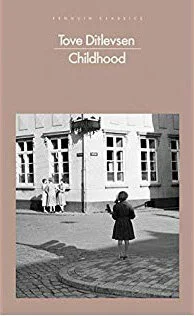
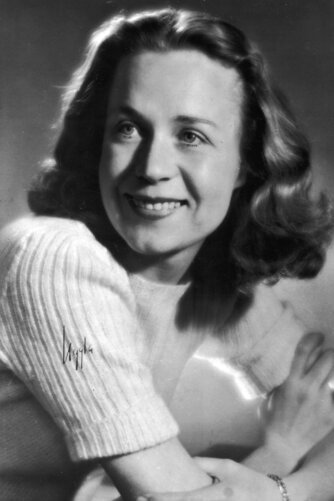
Tove Ditlevsen was a Danish author publishing books in the mid-20th century. Her poetry, novels and memoirs made her quite famous within her country and she's now accepted as part of the literary canon in Danish primary schools. However, she's little known in the English speaking world because few of her works have been translated until now. Penguin Classics have just released three memoirs concerning her early life grouped together under the title “The Copenhagen Trilogy”. The first book in this series “Childhood” concerns Ditlevsen's earliest memories and follows her childhood being raised in a working class family up until her confirmation. I was immediately struck by the powerful frankness of her prose style and was deeply sympathetic towards her as she felt like she was born out of place: “I feel like I'm a foreigner in this world”.

Ditlevsen movingly describes a feeling of loneliness in her childhood as well as a powerful drive to read and write – which were activities strongly discouraged for little girls within her community. When she expresses her desire to write her father bluntly tells her “A girl can’t be a poet.” Writing soon becomes a hidden activity which she practices keeping secret notebooks. In a way, it's amazing that she takes up this frowned-upon vocation especially because she wasn't taught about any prominent female authors so had no role models or precedent to follow. Neither was she encouraged to write during her education. Apparently her only inspirations were hymns she read and “a wonderful edition of Grimm’s Fairy Tales, without which my childhood would have been gray and dreary and impoverished.” Nevertheless, she resolves quite early on to become a famous writer and uses writing as an outlet to express the rich interior life which those around her don't understand. 

This private inner life is something that Ditlevsen grows to take enormous solace in. I admire how she recognizes that her own perspective only represents one side of the story: “I know every person has their own truth just as every child has their own childhood… Fortunately, things are set up so that you can keep quiet about the truths in your heart.” She almost seems to revel in her privacy and writing becomes a way to express herself to unknown friends that she hopes will one day understand her: “I always dream about meeting some mysterious person who will listen to me and understand me.”

It's perhaps not surprising that she takes such refuge in her writing given the limitations placed upon her because of her gender and the physical brutality she received from her mother: “My mother hit me often and hard, but as a rule it was arbitrary and unjust”. It's painful reading about these hardships but Ditlevsen is so upfront and unashamed in writing about her experiences that there's a boldness and survivor's strength to her tale. She also recounts her canniness at hiding her true intelligence amongst people who don't appreciate it and actively try to suppress it. There are times when she describes hiding under a mask of stupidity and how she adjusts her expression to appear dumb.

A hopeful aspect to this memoir is in the figure of her older brother Edvin. Initially he laughs at her literary efforts after discovering her poetry book (which, of course, is crushing for her to hear), but he concedes they are good and he actively tries to help her to get published for the first time. I think this shows how it's natural for someone who feels slighted and mocked to feel defensive, but some people can be surprisingly supportive and encouraging. Ditlevsen also clearly had an innate confidence that she was made for a life much different from the circumstances she was born into. For people like this who feel so out of place childhood can be like a prison or, as Ditlevsen describes it “Childhood is long and narrow like a coffin, and you can’t get out of it on your own.” It's heartening to know that she did, although there are also ominous passages which hint that paired with her bold self-assurance is a drive to self-destruction.

It feels so fortunate that the English speaking world is finally being given access to the self-told story of a writer who is clearly such a talented, distinct and fascinating individual. Her singular perspective reminds me somewhat of the bold but melancholy writing of Jean Rhys or Jane Bowles. I look forward to reading more about Ditlevsen's life in the next two volumes of this memoirist trilogy and I hope to see more of her extensive backlist of books translated in the future.

Posted
AuthorEric Karl Anderson
CategoriesTove Ditlevsen
4 CommentsPost a comment

Literary sequels are definitely a trend this year with the recent massive release of “The Testaments” and now the forthcoming publication of André Aciman’s much-anticipated sequel to his novel “Call Me by Your Name”. Readers naturally have a lot of scepticism about these beloved stories being extended. The very popular film adaptation of “Call Me by Your Name” brought the romantic story of sensitive teenager Elio and older graduate student Oliver to a much wider audience. This not only prompted fans to clamour to know what happened next between these lovers but it also encouraged Aciman to revisit their story as he said in an interview “The film made me realize that I wanted to be back with them and watch them over the years.” Many will instantly dismiss the creation of “Find Me” as a money-grabbing opportunity given the new-found popularity of the original book. Whatever the motivation for writing it, I can assure you this new novel doesn’t kowtow to fans. Rather, it thoughtfully explores the deeper meaning of desire when stretched over time and juxtaposes a few different kinds of romantic encounters which turn into profound life-changing events. That’s not to say this new novel is without its problems and it’s likely to delight and frustrate fans in equal measure.

I read “Call Me by Your Name” shortly after it was originally published in 2007 and swooned. Revisiting Elio and Oliver’s story by watching the film adaptation a couple of years ago reawakened my love for their story. But there’s an important difference between the book and film. The film ends with Elio receiving the news that Oliver is going to be married which prompts him to mournfully stare into a fireplace. However, the original novel ends with a flash forward far into the future when Elio and Oliver reunite in Italy and we learn the news that Elio’s father Samuel has died at a relatively young age. Whether their passion is reignited or not is left vague, but their reconnection is cemented. This poses an interesting dilemma for the sequel because it needs to either fill readers in on what happened up to this point or follow them after it. “Find Me” manages to do both in a way which is unique and clever.

The first section follows Samuel or “Sami”, now divorced, on a train journey to deliver a lecture and meet up with his son Elio who is now a pianist. Sami encounters a spirited much-younger woman on the train and through long intimate discussions they develop a surprisingly deep connection. The story then moves forward in time to follow Elio whose musical career has blossomed and in Paris he meets an older gentleman in an encounter which quickly turns romantic. The novel moves on again to a period when Oliver is throwing a leaving party as he’s moving with his wife to teach at another university. During this party he feels a mixture of desire towards a young woman and a young man. Only in the final (much shorter) section do we see what happens when Oliver and Elio reunite. No doubt many readers will be impatient with the long lead up to this reunion, but I admire the way Aciman patiently considers the role that time, distance, chance and the imagination play in the strange alchemy which results in desire and passion.

Nevertheless, I did have a couple of issues with the novel. There are many overt discussions between the characters about romance and the degrees of intimacy which we either allow or deny ourselves. They explore meaningful sentiments and these exchanges are not entirely unrealistic especially when spoken between new lovers who come from a certain rarefied and highly-cultured class. But they sometimes verge into such self-conscious and ponderous territory that they become ludicrously esoteric. For instance, at one point a character named Michel states: “Fate, if it exists at all,” he said, “has strange ways of teasing us with patterns that may not be patterns at all but that hint of vestigial meaning still being worked out.” This carefully-formed statement might be something a high-minded person would ruminate upon in the middle of the night but when pronounced aloud in the company of a new lover it could only be met with a slight snigger at its philosophical loftiness. I feel like it would have been more natural if we followed the characters thoughts rather than verbalizing them to each other in an occasionally pretentious fashion.

I also felt slightly disappointed with the way Aciman doesn’t grant as much space in either the original novel or its sequel to female desire. They both almost exclusively focus on the men’s romantic and sexual urges and there are multiple instances where women, girlfriends and wives are slighted in favour of a new partner. Of course, this isn’t an unrealistic depiction of what happens to many women but instead of granting a comparable degree of fictional space to their experience the author focuses almost entirely on the men’s shifting emotional landscape as if these women’s feelings don’t matter. As a consequence, many of his female characters get sidelined. The only female voice that’s granted much of a role in either of these books is that of Miranda who Sami meets on a train. But we only hear her speak rather than get access to her thoughts or a clear idea of what motivates her.

Despite my reservations about these aspects of the novel, I was drawn into the story and its emotionally complex depiction of desire and sex. Not only does the novel explore the romantic tension between people who may or may not ultimately stay together, but it shows how so many of these urges are sublimated and experienced in other ways – particularly in music. One plotline follows the existence of a secret musical score and each section of the novel itself is named after an element of music. These suggest the undercurrents of feeling which accompany us through life, especially when recalling people we still love but didn’t stay with. It’s moving how Aciman depicts this yearning which endlessly draws his characters into memories of the past, prompts them to speak subliminally to each other and hope for a possible reunion in the future – no matter how unlikely.

Timothee Chalamet as Elio

What Aciman captures so well in these novels is how the unexpected pull of desire forces his characters into a turning point. These potential trysts whether realised or not aren’t just about sex but about choosing a radically different form of life from what his characters were previously living. They’re about communing with an individual’s deeper intentions for what they want in life and who that individual always hoped to become. Of course, these novels are also definitely about sex and in “Find Me” Aciman continues with his famous erotic imagery. No fruit is sexually ravished this time, but he does use suggestive metaphorical language concerning another fruit: “an overripe fig that parted all the way without tearing.”

Aciman’s speciality seems to be in capturing all the heated and emotional dynamics of that first erotic encounter – which more often happens in the mind rather than in physical expression. In their distance between each other which takes place over many years and across continents Elio and Oliver are able to extend this blood-rushing sensation. It appears Aciman believes this wouldn’t have been possible if they’d always been a couple because he states in this novel “the more we know someone, the more we shut the doors between us”. In suspending the tension of their reunion he perfectly prolongs that spot between agony and ecstasy. In short, “Find Me” gave me all the feels (as the kids say.) It’s a story that encourages deep reflection and slightly mournful yearning for that moment of discovery when someone you meet completely unhinges you and arouses all the passion of new love.  

Posted
AuthorEric Karl Anderson
CategoriesAndre Aciman
8 CommentsPost a comment

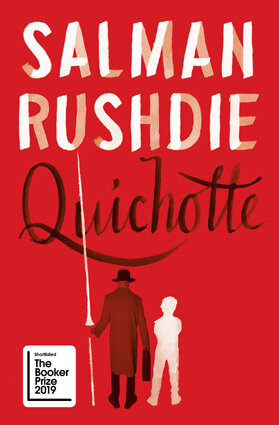
I was really looking forward to this novel as the subject matter intrigued me and I’ve been wanting to read more by Rushdie, but I ended up feeling mostly negative towards it. “Quichotte” is Rushdie’s modern day version of ‘Don Quixote’ and primarily concerns Ismail Smile (who dubs himself Quichotte.) He travels across the US on a foolhardy romantic quest to woo Salma R, a famous television personality. In the process he surveys how fiction has become fact and many facts are treated as fiction in this modern day America. This exposes the absurdity of this state of being and captures the tragi-comic position we’re now in while especially highlighting the contentious issues of gun control laws and a corrupt pharmaceutical industry. A certain character muses at one point, “America, what happened to your optimism, your new frontiers, your simple Rockwell dreams?” The novel is justifiably preoccupied with this doleful question.

If the novel had been confined to Ismail’s episodic tales I believe I’d have found this a much more satisfying and pleasurable read. However, Rushdie soon adds a meta-fictional layer where we learn that Ismail’s story is being written by another character named Sam DuChamp, a writer of spy thrillers who is trying out a new kind of novel. This creates another layer which begs the questions: are we writing our own stories or are our stories writing us? What happens when the stories we tell ourselves become both our mental and physical reality? While these narrative gymnastics might be good in concept they felt misjudged and too confusing to me. In addition, the stories of many other characters and sub-plots proliferate throughout the novel such as that of Sam’s sister, a famous London lawyer who has reached a pivotal point in her life. In itself her story is an interesting one but it felt swallowed by the grander self-conscious narrative being constructed. This results in all these tales feeling so over controlled (and sometimes contrived) that I seldom felt any emotional engagement.

It was difficult at times to intellectually engage with the novel as well except the occasional interestingly framed statement. For instance, many of the characters have family secrets and Sam feels this dilemma: “The narrative of your family which you had carried within you, within which in a way you had lived, was false. Or, at the very least, that you had been ignorant of its most essential truth which had been kept from you. Not to be told the whole truth, as sister with her legal expertise would know perfectly well was to be told a lie. That lie had been his truth.” So this builds to a larger question threaded throughout the novel which asks how much truth we’re able to bear both on personal, familial and national levels. If our fundamental beliefs about ourselves, our families and our national identity are shaken are we really happier believing in lies?

Too often these statements and ideas felt like they were pronouncements from Rushdie himself rather than any of the characters. The integrity of his characters is sometimes tested in Rushdie’s use of humour. There are some genuinely funny moments especially in scenes involving Quichotte’s whimsical frame of mind where his idea of the classics are TV dating game shows or when he becomes so delusional that he starts conversing through a TV with a newscaster. But, at other times, the humour feels like it’s being made at the expense of his characters such as when a doctor proposes treating Salma R’s mental health problems with shock treatments and she declares herself “unshockable” or how when she does receive those treatments she describes the experience as a Christmas visit from “sanity Claus”. These feel more like cheap gags rather than details building a believable character. Nor are they satirical statements with deeper meaning.

Since I primarily read this novel because it’s shortlisted for this year’s Booker Prize, it’s interesting to compare it to the novel “Ducks, Newburyport”. Both novels self-consciously consider topical political and social issues in America. And both novels have eerily similar climatic scenes of violence. But these books take a radically different approach to telling their stories. Ellmann’s novel is wholly consumed with the inner life and thoughts of her narrator (except for the sparingly-told tale of the mountain lion.) In contrast, Rushdie’s sprawling novel somersaults through the inner lives of many characters while self-consciously playing with narrative form. He even portentously declares his intention with this novel using the character of Sam who feels himself guided by Cervantes and Arthur C. Clarke. Sam seeks to frame his novel about Quichotte in a picaresque literary tradition: “the episodes of such a work could encompass many manners, high and low, fabulist and commonplace, how it could be at once parodic and original, and so through its metamorphic roguery it could demonstrate and seek to encompass the multiplicity of human life.”

Rushdie certainly manages to capture the multiplicity of life as well as many pressing issues, but this exhausting spoof about our tenuous relationship with truth loses a lot of the pleasure and solace to be found in fiction.

Posted
AuthorEric Karl Anderson
CategoriesSalman Rushdie
6 CommentsPost a comment

I can’t think of any other literary novel that has had such a build-up prior to its release. Details of the story were shrouded in secrecy and its shortlisting on this year’s Booker Prize all contributed to an anticipation which culminated in a midnight release of the book this week and a live interview with Atwood that was streamed to over 1,300 cinemas around the world. I have to admit, I jumped right on board the hype train and read the novel over the course of a day. Personally, I was especially excited to see how the story would continue 15 years in the future after Offred’s final scene and discover more about Gilead’s downfall because I reread “The Handmaid’s Tale” so recently. In “The Testaments” we get a lot more about the workings of this dystopian society because it’s narrated from three different perspectives who all have unique views and access to different layers of this totalitarian state. In doing so, Atwood offers further perceptive critiques on the nature of patriarchal society and presents moving psychological insights into how people survive (or perish) within oppressive regimes. I have to say the way the central characters’ stories come together is a bit forced and the plot is somewhat predictable. Nevertheless, it’s a continuously engaging and gripping experience reading this book.

Central to the tale is Aunt Lydia who appeared in the original novel in Offred’s memories as an imposing tyrant who trains her as a handmaid. In “The Testaments” we get Lydia’s secret account that she stows in her private library describing her journey from pre-Gilead times as a left-leaning judge to her imprisonment, torture and eventual position as one of the architects of Gilead society. She’s a complex and difficult character who hoards secrets as a means of maintaining her power: “I’ve made it my business to know where the bodies are buried.” Lydia experienced a traumatic wakeup call as she witnessed a democratic American society shift to a puritanical totalitarian state: “People became frightened. Then they became angry. The absence of viable remedies. The search for someone to blame. Why did I think it would nonetheless be business as usual? Because we’d been hearing these things for so long I suppose. You don’t believe the sky is falling until a chunk of it falls on you.” Rather than perish she proved her durability as a survivor and someone willing to compromise her morals in order to persist. She also takes pleasure in her power and position when denouncing her enemies or extinguishing those she views as weak: “I judged. I pronounced the sentence.” I appreciate the way Atwood depicts Lydia as an oppressor, but someone who is nonetheless sympathetic in her desire to live no matter the cost and becomes entombed in a perilous loneliness: “Having no friends, I must make due with enemies.”

The other two narrators are much younger and were born in Gilead so have no knowledge of a world without it. But they live on opposite sides of the border. Agnes lives in a privileged family within Gilead. She’s raised as a true believer and reared to become the high class wife of a commander. Daisy lives in the neighbouring democratic state of Canada and becomes involved with anti-Gilead protests. Both these girls experience severe disruptions when their intended paths in life abruptly change due to larger events and secrets are unearthed about their true origins. While their journeys are compelling the way Atwood brings together her three narrators’ stories relies too heavily on chance and convenience. The girls also perhaps serve too neatly as optimistic perspectives in contrast to Aunt Lydia’s position of corruption and vengeance. They are innocent as Agnes explains “We’d been protected… I’m afraid we did not fully appreciate the extent to which those of Aunt Lydia’s generation had been hardened in the fire. They had a ruthlessness about them that we lacked.”

Something I found really powerful about Agnes’ story is her friendship with a girl named Becka. While the other girls in their class enthusiastically embrace the idea of marrying a commander for the privileges such a position will bestow upon them, Becka adamantly refuses to marry because of her fear of sexual contact with men. It’s clear she’s experienced some unconfessed trauma, but Agnes doesn’t feel like she can discuss this with Becka because of her fear of the associated repercussions. While “The Handmaid’s Tale” meaningfully depicted the way women hesitate to be emotionally open for fear of being denounced, “The Testaments” further develops the way in which state pressure can reinforce these silences and prevent close friendships.

Atwood on the evening of the launch of The Testaments

More than the circumstances of the stories being portrayed, I probably felt more moved by the parallels between events “The Testaments” depicts and instances in the real world. Atwood has famously stated how “The Handmaid’s Tale” doesn’t portray anything which hasn’t already happened in human history and the same is true for this novel: governments “temporarily” take away citizens’ rights in a move towards totalitarianism; children are stolen from their birth parents and allocated to state-sanctioned couples; men use their positions of power to sexually abuse young females and sacred texts are wilfully misinterpreted for sinister motives. It’s all depressingly familiar and current. These universal themes about the deleterious effects of corrupt patriarchal governments reinforce the enduring power of “The Handmaid’s Tale” and show why it’s become such a well-known part of popular culture. That Atwood feels the need to further examine the machinations of such a brutal regime and the moral conundrums these societal shifts present to individuals feels prescient.

Atwood has stated that one of the reasons it’s taken her so long to write a sequel to her famous novel from 1985 is that it took a long time to decide upon a structure and choice of narrators. I can’t imagine any better trio of narrators to continue Gilead’s tale than the ones she’s chosen. But strangely I wish she’d concentrated less on building such a tightly woven plot and neat conclusions for her characters. Rather than being taken to the centre of Gilead I’d have been content to dwell in the periphery with characters whose lives have hardened from living in such a restrictive society. Part of the power of “The Handmaid’s Tale” was in the necessarily restricted view and understanding Offred had of her surroundings. It’s what heightened the horror because this experience more accurately reflects our own. This new novel will satisfy the curiosity many Atwood fans who want to know what happened next, but at the expense of that terrifying ignorance we felt dwelling in the restrictive cowl of a handmaid’s bonnet.

Posted
AuthorEric Karl Anderson
CategoriesMargaret Atwood
5 CommentsPost a comment

It was my birthday last weekend and my wonderful partner surprised me with a trip to the village of Haworth – the famous home of the Brontë sisters! This was an incredibly thoughtful treat especially since I’ve been reading the Brontës more in recent years as part of the celebrations marking the bicentenaries of the births of Charlotte, Branwell, Emily and Anne. I love visiting these historic locations and museums such as a trip we took to Virginia Woolf’s residence Monk’s House a few years ago. And anyone who has read the Brontës knows the important role the location and environment plays in the their novels – as Kate Bush so aptly describes singing about “the wiley, windy moors”. So it felt really special to see this landscape myself as an immersive experience and to discover how Haworth has capitalized on its famous literary sisters since the 1800s. It’s an endearing mixture of quaint English village and a kitch kind of Brontëland.

While I know it’s geeky, I got fully on board with this as we stayed in Dr McCracken’s bedroom in the Ashmount Country House (the old residence of Charlotte Brontë’s doctor), bought baked goods from the Villette coffee house, toured the Brontë Parsonage Museum and roamed for hours through the moors on public paths that the Brontës themselves once walked. I resisted indulging in drinking any of the Brontë beers offered at one pub! All this really brought the atmosphere of the novels alive and even if you haven’t read the novels the landscape is absolutely beautiful. The museum is fascinating and so thoughtfully presented with many of the rooms containing the Brontës’ actual furniture and many displays of their clothing, letters, artwork by Charlotte and the writing boxes that belonged to each of the sisters. In addition, there are many explanatory notices about the Brontë family, the context of the sisters’ publications, the tragedies of their early deaths (there’s even a morbid bracelet on display that Charlotte made from the hair of her sisters Emily and Anne after their deaths!) and information about the village life itself. Apparently disease was so prevalent in this area of the country during the Brontës’ time that the average life expectancy of villagers was only 25 years!

Walking through the moors has its own special pleasure and the atmosphere was heightened on the weekend we visited since the weather was so changeable. The skies frequently switched from stormy grey to blazing sunshine in the space of a few moments so it became confusing to know whether we should be cowering under umbrellas or stripping down to our t-shirts. The first stop we went to was the rather grandly labelled Brontë Falls (more like a trickling stream than a waterfall) and from there we ventured onto Top Withens, a dilapidated farmhouse which is widely considered to be the inspiration for the house in “Wuthering Heights”. Although there’s no actual evidence that Emily based her fictional house on this location, it’s easy to make the assumption it inspired her for its remoteness and position on quite a weather-beaten hillside.

Walking along the paths there’s gorgeous rocky terrain covered in colourful heather, fields of grazing sheep and carved stone books periodically appear along the way. As part of the #Bronte200 celebrations in recent years, there are also four specially commissioned stones dedicated to each sister and the Brontës as a whole with original poems written by Carol Ann Duffy, Jeanette Winterson, Jackie Kay and Kate Bush. These are set in different remote locations and it’d require a 9-mile walk to see them all. We only stopped to see The Anne Stone (written by Jackie Kay) which is conveniently set next to the Brontë Parsonage Museum. And we also took the perilous journey to see The Emily Stone (written by Kate Bush) which is set in a particularly wild part of the countryside that Emily apparently loved to roam. Although we bought a special map marking the location of each stone The Emily Stone is very hard to find (even though it’s on Google maps). Kate Bush’s words are carved into the cliffside of Ogden Kirk located near a deep gully. Once you get to the location there are no signs directing you to where the stone actually sits. Instead we had to clamber down the steep cliffside to find it. I’m sure many hikers miss this stone because it’s so hard to locate. Nevertheless, it made quite a fun adventure.

I’ve not read any books about the Brontës as a whole or any bios on the individual sisters. It’s not surprising they’ve become so legendary as their story is so irresistible and grimly marked by their early deaths. But I find it curious how many people like to “pick sides” as if it’s necessary to pick one sister as a favourite. The museum gift shop even sells badges advocating your support for Team Charlotte, Team Emily or Team Anne. I suppose the tone of their books marks distinct personality types so people feel inclined to “cheer” for one sister or another. I’m glad to have read a novel by each sister including “Jane Eyre”, “Wuthering Heights” and “Agnes Grey”. Out of these probably “Jane Eyre” is my favourite but I feel more spiritually aligned with Emily Brontë. Please let me know if you have recommendations of which other books by the Brontës I should read or if you have any good suggestions for nonfiction about the Brontës.

I loved this weekend trip and would heartily recommend visiting the village. While you can get a train to Haworth, we rented a car after getting a train to Leeds since this makes it much easier to travel around the area and venture out to some of the more remote parts of the moors without hiking for hours on end. Let me know if you’ve ever gone to Haworth or if you’re a Brontë fan what your favourite book is.

Posted
AuthorEric Karl Anderson

Lately it feels like Nicola Barker hasn’t been able to finish writing a novel without wanting to blow it up. Her last novel “H(A)PPY” was set in a future society where everyone’s mind was plugged into a single continuous stream and its hero’s consciousness became more hallucinatory while the text itself morphed into multi-coloured fragments and bizarre structures. It seems like there’s more tension in her narratives lately where the fourth wall is breaking down. Her new book “I Am Sovereign” is a self-designated novella. Within the story it’s stated “This is just a novella (approx.. 23,000 words)”. And its story is quite simple on the surface. The 49 year-old protagonist Charles creates customized stuffed bears and is seeking to sell his house in Wales. Over a twenty minute period estate agent Avigail presents the house to prospective buyer Wang Shu accompanied by her daughter Ying Yue who has come along as her translator. But the concept of this tale is merely a box within which Barker illuminates the artificiality of her characters and uses them as ciphers to discuss concepts of narrative itself. What little story there is soon breaks down – Barker even states at one point “Nothing of much note happens, really, does it?” Instead, Barker engages in arguments with particular characters and muses upon the nature of language, storytelling and authority. There’s a frenetic energy to Barker’s writing which is irresistible if you’re in a good humour or frustrating if you’re after an old-fashioned plot.

The thing about reading such a self-conscious and angst-ridden story is that it ought to be eye-rolling, but Barker has such clear affection for her characters that it feels like she really wants to grant them complete independence while also controlling them. “The Author can’t bear the idea of those four people leaving Charles’s tiny work room. They feel so alive to her.” Traits and details are assigned to characters but just as quickly they’re questioned because the characters believe differently. This complication comes most into play with the introduction of a character named Gyasi “Chance” Ebo who feels it’s an injustice that Barker has dragged him into her narrative. The character and author bicker and eventually his role in the story is replaced by that of another character. Barker toys with the limits of independence that characters can have to break free from an author’s designated plan and write their own story. This has obvious parallels to how we exist in society – especially in contemporary British society which is plagued with the question and democratically decided edict of Brexit. Are we creating the boundaries within which we want to exist or are those boundaries being written around us?

The characters are particularly inured to modern-day gurus found on YouTube who dole out advice. One such proponent advocates the goal “To be Sovereign. To be present, positive and boundaried.” There’s a resistance in Barker’s characters to be the screens she is projecting upon, but they are also aware there is no independence without their dependence upon her. It’s like the spiritual paradox of free will versus predestination. The comparison is very apt because Barker’s fiction is quite often consumed with questions of faith and spirituality. The characters in this novella are superstitious and seek revelation. However, the religious concerns expressed aren’t about indoctrination so much as they’re about searching and epistemological questions. Barker seems to take all this very seriously while also recognizing it’s absurd and her concerns are ultimately unanswerable. In her playfulness Barker is able to have it both ways in this novella. She states “shouldn’t fiction strive to echo life (where everything is constantly being challenged and contested)? Or is fiction merely a soothing balm, a soft breeze, a quiet confirmation, a temporary release? Why should it be either/or? Can’t fiction be exquisitely paradoxical?” I enjoyed the way this novella so joyously presents authorial problems and questions rather than a story with an affirmative arc. It’s like a teddy bear whose stuffing is oozing out, but you love it nevertheless.

Posted
AuthorEric Karl Anderson
CategoriesNicola Barker
4 CommentsPost a comment

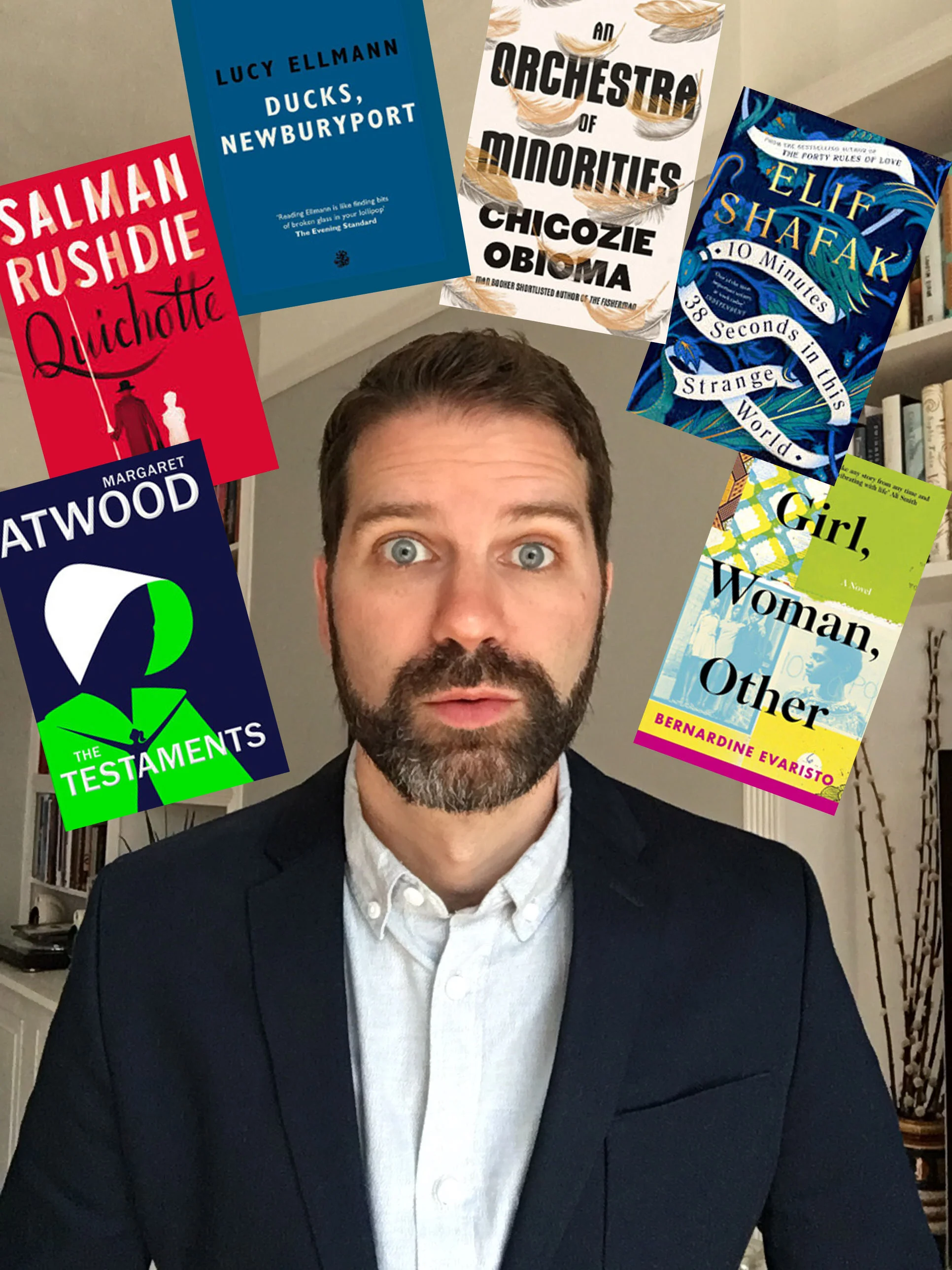
The Booker Prize shortlist has been announced and here are the six novels!

I’m ecstatic to see “Ducks, Newburyport” included! It’s a hilarious and immersive story and the narrator is really an everyman/everywoman of our time. Also thrilled to see “Girl, Woman, Other” as its filled with such rich tales and characters who make me want to reread the novel to better understand this wonderful latticework of storytelling.

Also very happy to see “10 Minutes 38 Seconds in This Strange World” as its such a moving tale about marginalized people’s lives. I have to admit, I wasn’t as struck with the story in “An Orchestra of Minorities” as some other people have been. It’s creative storytelling and a poignant tale, but the distinct narrative voice grew irritating and felt too grandiose to me.

I’m geekily proud to have guessed 4 of the 6 novels correctly as I discussed in my video about recent Booker Prize reading. As with all book prize lists, there will be some novels I’m sad didn’t make the cut. Particularly “Lost Children Archive” since this novel was also only longlisted for the Women’s Prize. It’s a shame that this tremendous novel probably won’t end up winning any major prize. It’s also a shame “Lanny” or “Frankissstein” didn’t make the list because these novels are so audacious and innovative in their storytelling making them such fun and so clever. Then there is the meditative brilliance of “Night Boat to Tangier” and I’m sad that Kevin Barry won’t be getting wider recognition.

I still have to read “Quichotte” & “The Testaments”, but having just reread “The Handmaid’s Tale” I’m so excited to read Atwood’s new novel!

What do you think about this list? Have you read any? Will you read them now? What novel do you want to win?!

In my late teens and early adulthood I had a particular fascination with both utopian and dystopian fiction – so naturally “The Handmaid’s Tale” made an appearance on my reading list. But that was many years ago. Rereading it now as a more socially and politically aware adult I think I’m sensitive to many aspects of it that I probably wasn’t conscious of when experiencing this story for the first time. Back then I probably primarily read it as a thriller about a woman torn from her husband and child and forced to live in sexual subjugation under nightmarish circumstances. But that wasn’t the only way I connected with the story. I related to it and understood the shroud of silence Offred must maintain in order to survive. When I came out as gay in my teenager years I was explicitly instructed by my parents, teachers and school guidance counsellor not to speak about this facet of my identity with people in general. So my strongest memory of reading this novel was in the canny way Offred chose her moments to reveal her true beliefs and feelings to others rather than toe the line.

When I first read this novel I was struck by the way Atwood describes how the Republic of Gilead punishes homosexual acts with hanging and, of course, I was aware that such executions have been carried out by many oppressive regimes over time. I was struck that Offred’s lesbian friend Moira was in a particularly vulnerable position. The bitter poignancy of Offred’s eventual reunion with her in a brothel felt particularly sad. It made me consider what compromises must to be made for the sake of survival. Like Offred, I had hoped she’d become a revolutionary fighting against the regime after escaping from the government-trained Aunts. I was aware of the cost of sacrificing one’s own safety and security for the sake of a larger cause, but I still thought Moira was cowardly for not taking a stand. But reading it now I feel Moira’s pain more acutely: the deleterious effects she must have felt smothering her own values for the sake of living and the crushing hopelessness knowing an act of rebellion would be futile because it would only end with her own death.

So my reactions to reading this novel that first time were mainly centred on the way I personally related to its story. While I don’t think that’s a “wrong” way to read the novel, I’m more conscious now (as Atwood has famously and repeatedly stated) that there’s nothing in this novel that hasn’t occurred in real life within some society. It’s a point which is even emphasized at the end of the novel when the speaker presenting a lecture regarding Offred’s transcribed tale describes how the Republic of Gilead’s policies are an amalgamation of different practices and regulations from a selection of governments. But I was reminded of the real-world relevancy of the novel again recently when reading the memoir “My Past is a Foreign Country” by Zeba Talkhani because the author remarks how she didn’t consider “The Handmaid’s Tale” fiction because it felt like her reality when growing up in Saudi Arabia.

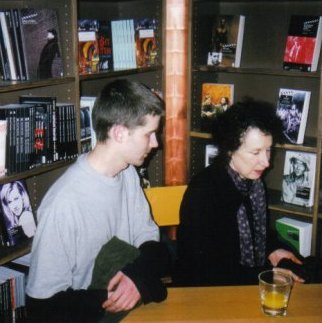
When I met Margaret Atwood on my first trip to London in 1999

When reading Offred’s tale this time I thought more closely about these parallels and the realities being portrayed in the story. Certainly there’s been a lot of progress in the world since this novel was first published in 1985. But, at the same time, I think many of us have a pressing awareness how the patriarchy will always try to control and regulate women’s bodies as well as suppress any voices which pose a threat to its power structures. So it feels not only relevant but entirely apt that Atwood has written a soon-to-be-published sequel to this novel called “The Testaments”. Sadly, it feels like there’s no better time to return to the fictional world of Gilead to gain a different perspective on the current state of the world. Since I reread this novel partly as preparation for reading this forthcoming sequel I tried to pay attention to how its story might continue. The tight embargo on “The Testaments” means all we know about this second book is that it takes place fifteen years after Offred leaves for an unknown destination and that it’s narrated from the perspectives of three different women from Gilead. The imagery of the new cover includes a green smock so I wonder if one or all of these perspectives will be narrated by Marthas who are older infertile domestic servants within Gilead that only dress in green. I’m also hoping this new tale will give some more clues about Offred’s real identity since we never know her true name or what ultimately became of her.

Rereading this novel also gave me a renewed appreciation for the beauty of Atwood’s prose in her use of metaphorical language such as when Offred describes an egg or the subtly of her psychological portrayal as Offred becomes more attuned to the mechanisms behind her oppression. While I’ve always been a fan of Atwood I haven’t read much of her fiction in the past several years except her novel “Hag-Seed” which is a fascinating remix of “The Tempest”. But this rereading also reminded me how richly imaginative and wild Atwood’s fiction can get. I was also surprised how gripping I found it though I already knew the plot. Each twist and revelation in Offred’s story felt fresh because we’re so closely rooted in the tense psychological reality of her experience. It’s made me even more eager to know what happens next!

Posted
AuthorEric Karl Anderson
CategoriesMargaret Atwood
2 CommentsPost a comment

I will sometimes enthusiastically purchase long novels with the best intentions of reading them soon but nonetheless they’ll typically remain on my shelf for many years before I get to them. But I was strongly tempted by the description of Lucy Ellmann’s monumental “Ducks, Newburyport” and its Booker Prize longlisting buzz got to me so I put it on my immediate reading list. While it's intimidating to read a 1000 page novel that’s mostly narrated in one unbroken sentence, “Ducks, Newburyport” is also hypnotic for the rhythm it develops, the frequent Laugh-Out-Loud humour and the moving way it builds a portrait of the life of an Ohio housewife and her many anxieties living in America today. Her story radiates a warm familiarity as we come to intimately know her sweeping stream of thoughts while baking a mountain of pies to sell and food for her family. It also inspired me to bake cinnamon rolls for the first time!

She ruminates on a whole range of subjects from her personal past to her immediate family life caring for four children to local news to political divisions in America to global environmental concerns. Usually these thoughts become mixed together and happen concurrently so she needs to periodically pause and clarify what she’s referring to. She’s also affected by what’s happening around her, the films she watches while baking and odd song lyrics which surface randomly in her mind. The trivial rubs up alongside what feels dearly important. This profusion of things running through her mind has a consistent rhythm so it becomes easy to follow and accumulates more meaning as certain subjects, memories or ideas resurface frequently. Thus they steadily acquire more resonance and also take on a humorous edge as the barrage of thoughts will sometimes become jumbled and absurd. There’s something mesmerising and hypnotic about this constant flow of words. It’s addictive and so tempting to emulate!

The chain of thoughts are frequently linked through the assertive words “the fact that…” This may just be a mental tic but it gives a feeling of plain-speaking sincerity as if she’s laying out exactly what she’s thinking and feeling. It also highlights the dubious relationship we have with “facts” in our current age as we often accept what we discover on internet searches as solid fact or opinions spouted on social media as sincere truth. Even if we are consciously aware that the information we find online is conjecture or rumour it still gets lodged in our consciousness as a point of reference when trying to interpret and interact with the world. So I think the narrator’s constant reference to “facts” which are more often ideas received from speculation or half-remembered news reports shows how we often only have a tenuous understanding about what’s really happening. This is something the narrator freely admits as she acknowledges she forgets a lot, misremembers things and “the fact that I remember all the wrong stuff”.

There’s also the surprising tale running parallel to her story which is narrated from the perspective of a mountain lion. The housewife's thoughts are periodically broken by short sections following the journey of this lion as she hunts and seeks to protect her cubs. The simplicity of the lion's life contrasts sharply with her own where she feels utterly overwhelmed, but their stories also intersect in a fascinating way. There’s also a symbolic importance to lions which occasionally appear in her narrative in the form of an old Christmas ornament or a recalled visit to the zoo. Notably the sections about the mountain lion are narrated in short declarative sentences as opposed to the unending sentence of the housewife. It made me think how burdened the housewife is by this inner monologue that she’s helpless to stop even though she knows it’s pointless: “the fact that what is with this constant monologue in my head, the fact that why am I telling myself all this stuff, since I know it already, the fact that I knew it all before I said it to myself, because I’M ME, Kraft Miracle Whip”.

Part of the beauty of this novel is that even if the narrator believes her thoughts unimportant the novel bestows importance to her life and her point of view. She’s aware that “a lot of people think all I think about is pie, when really it’s my spinal brain doing most of the peeling and caramelizing and baking and flipping, while I just stand there spiralling into a panic about my mom and animal extinctions and the Second Amendment just like everybody else”. So the narrative reveals how she feels the burden of both local and global concerns, but she doesn’t believe she has the power to participate in or change any of these problems. Part of what is so endearing and sympathetic about her is how she frequently puts herself down and diminishes herself. Her story also points out how this is just one of many such inner monologues occurring in the human population: “the fact that there are seven and a half billion people in the world, so there must be seven and a half billion of these internal monologues going on”. Through becoming so closely aligned with her subjective point of view we become aware of the singular integrity of everyone’s own perspective.

The cinnamon rolls I baked while reading the novel

The novel’s title refers to an occasion when the narrator’s mother almost drowned when she was a child running towards some ducks in a pond. This incident seems to haunt the narrator as obviously if her mother had died she’d have never come into existence. But ducks take on a bigger meaning throughout the novel because she’ll refer to how people are made to feel like “sitting ducks”. This highlights how vulnerable we’re made to feel in the modern world with frequent news of terrorist attacks or gun violence in America. There’s a randomness to this violence which makes it particularly nerve wracking. This is highlighted further with a description of how their house is positioned perilously close to a dangerous road and she fears that at any moment a car might come crashing through their home. It shows how we’re living in an anxiety-ridden age but “we all go on pretending things are fine, hoping everything’s a-okay, even though everything is nowhere near okay and we all know it, no matter how many candlelit vigils you hold”.

Does this novel justify its length? Absolutely yes, but it's hard to articulate why looking at the structure from the outside. There’s little plot, frequent repetition and extensive lists. Yet there's an accumulation of detail which builds to something truly monumental in its depiction of her life and the sympathetic way she shows how we're made to feel like we're burdened with the weight of the world on our shoulders today. But it's also incredibly funny and this humour adds a compulsive momentum to her story. There’s the pleasure of identifying with her so strongly because even though there’s so much about her experience which is particular she becomes a kind of everyman or everywoman. As a movie fan, I found all the commentary on particular film plot lines fun and when an occasional line from a film appears amidst her thoughts it gives an enjoyable jolt of recognition. I also particularly appreciated the wordplay - how the sound of one word will connect her to another disconnected word which will make her recall something entirely random sending her off on another tangent unrelated to what she was thinking about before. It’s what gives this style of narration such propulsion and makes it so tempting to emulate. The final sections of the novel also had me gripped and I was pleasantly surprised by the dramatic turns it took. I'm going to miss being inside her head.

Posted
AuthorEric Karl Anderson
CategoriesLucy Ellmann