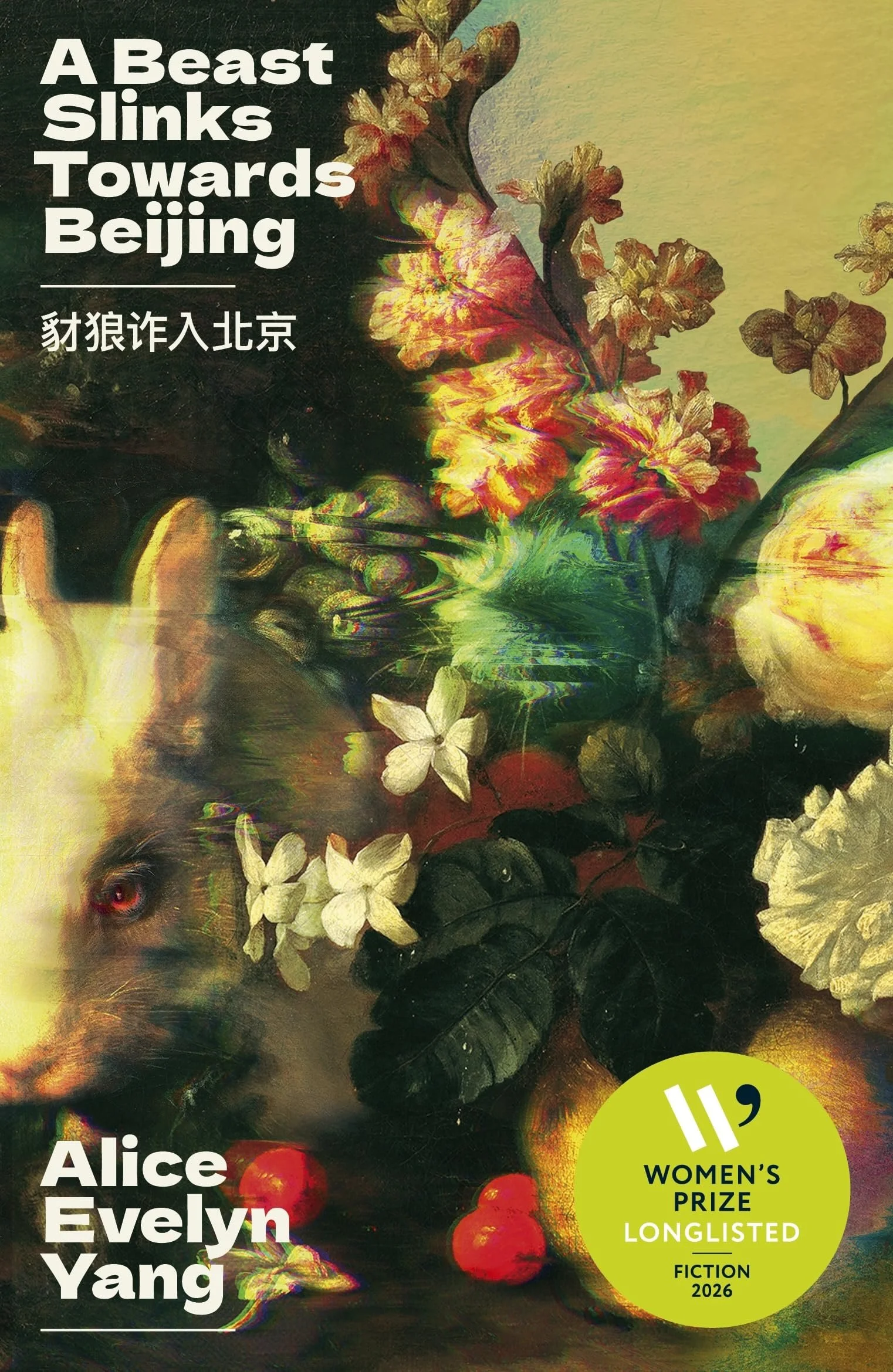
It took me a little while to settle into this debut novel though the author establishes some intriguing mysteries from the outset. At the beginning we meet Qianze who works a demanding job in New York City when her long lost father Weihong suddenly reappears. Where has he been? What is the prophecy that he's forgotten? Why is Qianze keeping Weihong's return a secret from her mother and boyfriend? What's the meaning of the apparitions which appear to Qianze? I really felt the monotony and claustrophobia of Qianze and Weihong's routines in her small NYC apartment with her gruelling financial office work days and his excessive drinking. Weihong's resentment towards her father abandoning them but her begrudging sense of obligation to look after him were palpable. I was glad when the story moves to Weihong and his mother Ming's history in China. However, as the narrative slides between periods of time I was initially confused about how this family tree fit together. It was only as more about their backstories were revealed that it made sense to me.
I felt it was impactful how the novel shows the terror of these periods of Chinese history including foot binding, the Japanese occupation of Manchuria and the Cultural Revolution. Though I was familiar with these aspects of the country's past, reading about them in this story and looking up brief overviews of them felt no less shocking. The widespread violence, betrayal, starvation, rape and murder which occurred during these upheavals is staggering. I felt the author did a good job of immersing readers in particular examples of these periods of time showing how it impacted her characters. In addition to the resentment her parents have that she was not born a boy and being betrothed to the physician's son from birth, Ming experienced the effects of food shortages and the Japanese reforms that were responsible for “turning girls' education into a sham”. The terrible emphasis and pressure placed upon her to “become a woman” and start getting her periods was particularly striking.
Equally the author shows in Weihong's upbringing that joining the Red Guard was a matter of survival for him, but also partly the result of inherited trauma taking the form of violence. The scenes where students butcher members of the community was horrific, but I felt one of the most striking sections in Weihong's tale was when he came after his sister Kangmei's beloved chicken. Though the shifts in time made it challenging to always know how this family fit together, it felt unique how the author braided the stories of these different generations to show that the past can't simply be forgotten because it manifests in their personalities and in the supernatural encounters they experience. The cumulative meaning of this only became clear to me towards the end of the novel. I don't think it was entirely successful for me, but the author was effective in making me feel the way this traumatic history severely wounded each individual and was carried between generations.
It was creative how the author incorporated mythological/magical realism into the story where supernatural elements appear, but some instances felt jarring to me. I appreciated the scenes where Qianze is “haunted” by nightmares and real world encounters in a subway station. It also felt effective when Ming first encountered an ominous hare with horns. However, I was less convinced by Weihong and Kangmei meeting the mysterious woman in the alley and how the woman's voice has a continued presence in Weihong's mind. Weihong's encounter with a man who sees people's auras was odd. And I was really put off by Ming's encounter with The Oni/demon while she's trapped in a comfort house and an odd scene where she seems to turn into a preying mantis. I suppose this could be a result of the massive amounts of opium she was imbibing, but I didn't know what to make of her reencountering this figure later and the role he plays in the plot. It felt like too much of a stretch for me to take this storyline seriously.
There are some powerfully evocative moments in this novel and I mostly enjoyed her prose style. However, parts of it felt overwritten. For instance, I got a real key into Weihong's character when it's stated “He was damned to continue circling his wounds like tub water around the drain, the old emotions still raw... his past resisted chronology. It looped. It wound.” but it felt unnecessary to further describe this as a “Fibonacci sequence” (which, of course, I had to look up to understand.) I felt the author used dough and hand-pulled noodles as a metaphor too often. A line I appreciated was when Weihong initially leaves his wife and daughter and Qianze hears “That creaky screen door that could never hide anything.” This really immersed me in what it was like to live in this house where certain sounds are so well known. I felt all the main characters of Qianze, Weihong and Ming were well developed. But I wanted to know more about some of the more peripheral figures such as Kangmei (who disappears for so long until the very end) and Ming's mother-in-law whose character/motivations could have been elaborated upon.
After all the horrors and heartache in this story I was glad the author also offers some hope but the ending felt a little too neat to me. Overall, I appreciated this novel and its ambition, but its somewhat convoluted structure wasn't entirely successful for me. I love a family saga and I understand why she used so many time shifts, but part of me longed for a linear tale. It was interesting to learn in an interview that she initially wrote the stories of the different generations separately and I wonder how its impact would have changed if she'd simply fitted them together chronologically. Nevertheless, it's impressive how much she did in this first novel and I think she's a promising writer.