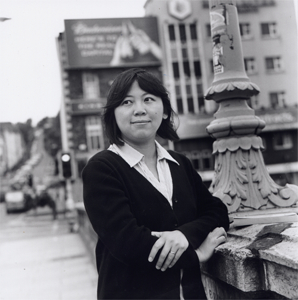
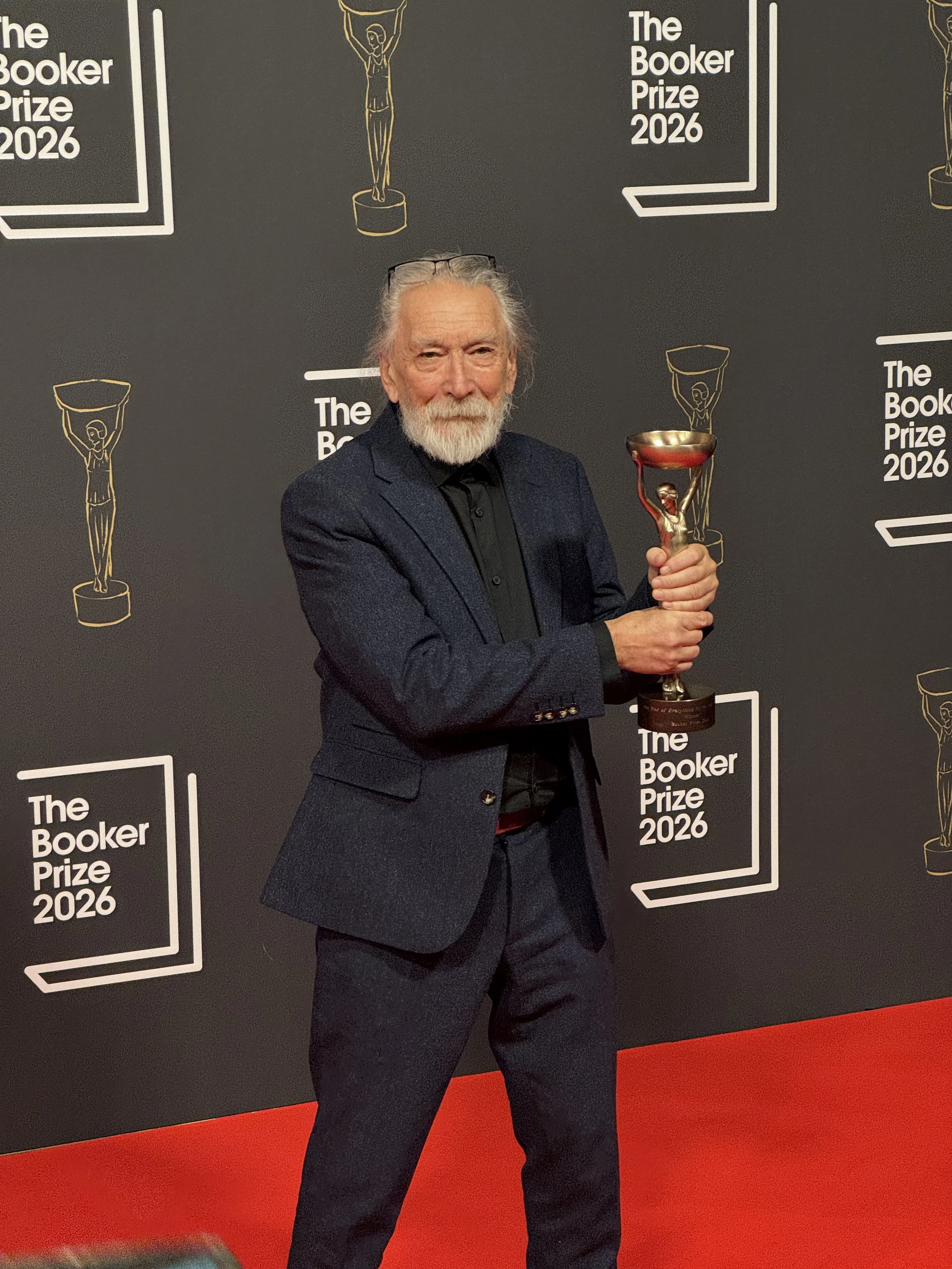
Every year the Booker Prize ends with a single name, and this year that name caught a lot of people off guard: “The End of Everything” by M. John Harrison. At 81, after a fifty-year career much adored in science-fiction circles but rarely courted by the literary establishment, Harrison became the oldest winner in the prize’s history — for what is, by common agreement, the strangest and most divisive book on the shortlist. I’ll admit I gasped along with the room. But I’d be lying if I said I didn’t see it coming.

Where it began

Back in July, when I made my longlist predictions, I flagged “The End of Everything” as a title that “might seem an outsider choice, but actually I think is quite likely.” Something about it felt like exactly the kind of book this year’s judges might reach for. So when Mary Beard, chair of the judges, read out the title, part of me was stunned and part of me was quietly nodding. That’s the strange pleasure of following a prize from the very start of its season: you get to watch your own early hunches either curdle or come good over four long months.

And what a season of reading it was. I read the entire longlist this year — something I rarely manage — simply because I couldn’t bear not to know. Prize season is the engine that drives me to books I’d otherwise never reach, and this year it delivered an embarrassment of riches: I had enough five-star reads to fill a shortlist of my own.

Ranking the shortlist with Bob

Before the ceremony I sat down with my friend Bob the Bookerer to rank the six shortlisted books, each of us revealing our cards at the same time like a literary game show. It was uncanny how closely we aligned — and tellingly, we both put the same book at number one: Marlon James’s “The Disappearers.” My heart was with it all season. I so wanted to see James take a second Booker; I even placed a bet on it (and, because I’d just discovered that his partner Nicholas Boggs was shortlisted for the Baillie Gifford with his Baldwin biography, a joint wager on the two of them winning their respective prizes — a lovely idea undone when the Baillie Gifford went to Edmund Richardson’s “Alexander” instead).

But the head and the heart are rarely the same in Booker season. My heart wanted “The Disappearers”; my head suspected the judges were leaning somewhere weirder.

The ceremony

I feel enormously lucky to have been invited to the ceremony itself, held at Old Billingsgate, and I spent the evening filming everything I could — the behind-the-scenes glamour, the nerves, and the pinch-me thrill of actually speaking to some of the shortlisted authors.

I talked with Marlon James about why queer experience sits at the heart of his novel — “subtract the queer, you don’t have much art left,” he told me — and about how, for all its harrowing subject matter, he sees the book as “an act of restoration.” I asked Luke Kennard whether the anonymous narrator of “Black Bag” would ever reveal himself at a ceremony like this; he decided the man would “attach an internal padlock” and double down on the bag. And I spoke with Douglas Stuart about whether the characters of “John of John” could handle all this attention — which led, joyously, to us agreeing that the novel’s Grandma Ella would be the life of the party and the evening’s natural “new gay icon.” I chatted with Elizabeth Strout and her lovely husband James about life back in Maine where I grew up and the fantastic success of her novel “The Things We Never Say”.

The speeches were their own pleasure. Last year’s winner, David Szalay, returned to reflect on the “terrifyingly fierce struggle for attention” that defines our moment, calling the Booker “an engine of attention” that chooses to bestow it on the nuanced, complex, ridiculously long-form things we call novels. The poet-judge Raymond Antrobus performed a commissioned poem in the voice of a dystopian AI that ended, movingly, “Tell me a story. Make it sacred.” And Mary Beard, in announcing the winner, gently dismantled the lazy line that this year’s shortlist was simply “about the crisis of masculinity in 2026” — brilliant books, she reminded us, are always more complicated than that.
The winner

So why “The End of Everything”? The judges, by their own account, wanted something strange — Jarvis Cocker said he’d come in looking for “something weird that only a human being could write.” Harrison’s novel is certainly that: a singular, uncategorisable dystopia set on the Kent coast, where society hasn’t so much collapsed as quietly surrendered its will to a force called the iGhetti that may be alien, may be the internet made flesh, and is never quite explained.

I read it before it was even longlisted, and I was bewildered, confused, and frustrated by it. And yet something about its vibe lodged itself in me — that uncomfortable, all-too-recognisable feeling of sliding into a future we can’t control while the big machines and corporations run the show and the rest of us scurry about in the background. It is not a book that hands you easy answers, and I completely understand why so many readers have been actively hostile towards it. Plenty will call this a wilfully perverse choice by the judges. In a way, it is. But it’s also a win for a book that refuses the templated and the simplified — and after a season spent reading so widely, I find I rather admire the nerve of it, even if it wasn’t my own hoped-for winner.

Why I follow the prizes

Here’s the thing I keep coming back to: for me, the Booker has never really been about the winner. It’s about the journey — the months of reading, the arguments and agreements with other readers, the way a single shortlist can pull you into six worlds you’d never otherwise have entered. This year gave me all of that, plus the genuine honour of standing in a room full of writers whose books have meant so much to me, and getting to tell a few of them so to their faces.

What a surprising end. What a wonderful season. Now — have you read “The End of Everything,” or are you tempted to give it a try? I’d love to know where you land on this year’s most divisive winner.

Posted
AuthorEric Karl Anderson

Not Your Usual Dystopia Novel

I've been feeling quite anxious lately, both about things in my own life and about the wider world. So I turned to this book that I wouldn't necessarily call consoling, but that offered me a different way of looking at things when it feels like the world is collapsing. This is unlike any dystopian novel I've read before. Yes, it's about technology outpacing the human race and reshaping society, but most dystopian fiction gives you a sinister, controlling government or a fascist dictator running the show. Here, set in a near future on the Kent coastline, there's no mention of government or any real governing body, no real police force. People are left largely to their own devices, living on the fringes, while the capital, London, has effectively been taken over by something referred to only as "the iGhetti" — possibly an alien force from outer space, possibly something that emerged out of the internet, it's never entirely clear. Its presence has pushed humans to the margins of their own society, left scurrying through the routines of their old lives while everything around them grows steadily shabbier.

I wouldn't just call this a dystopian story, either — it's literary science fiction, and it gets genuinely surreal in places, with sections that read more like a philosophical essay meditating on consciousness and what it means to be alive and human in relation to technology. There's a character named Hampson who leaves behind diary entries, since he's one of the few people who's actually gone into London and observed the iGhetti up close. He raises the unsettling possibility that the iGhetti may not even be aware humans exist — that people feel taken over, but no one is really clear on how, or whether, it's actually controlling the landscape at all. There's a pervading sense that rather than becoming alarmed at the world's deterioration, everyone has simply gotten used to the apocalypse — which felt very true to how it can feel being aware of huge, global problems while feeling powerless to do anything about them: accepting higher average temperatures, increasingly ineffectual governments and technology running our lives in ways nobody is actually steering.

Characters Over Plot

The novel doesn't have an urgent plot thrust so much as it spends time with a small group of characters. There's Philip, a man scraping out a living on the coastline by salvaging things from the channel and selling them, and his much older aunt, Marnie, an artist who has to leave her home and community early in the novel after a genuinely shocking event. There are surprising moments of violence in the story — not gruesome, but sudden, emerging out of nowhere in a way that makes them land harder — alongside a lot of weird, uncomfortable humor. It's a very strange book, and I won't pretend the central meaning or premise feels entirely graspable. I wasn't always sure what I was reading, but it produced a sensation that resonated with the current climate of things: this uncomfortable sense of sliding into a future we can't control and are just passively accepting.

Even without fully grasping it intellectually, I felt a real emotional connection to the story. One of the main threads follows an object Philip salvages from the channel early on, which he calls an "artifact" — something part robot, part humanoid, that grows and regenerates itself. As he spends time with it, it takes on more human qualities: it starts dressing in clothes, becomes more conversational, and seems to want an emotional connection with the people around it. I found it strange and moving how much empathy I developed for this biological gadget simply because it exhibits human traits, even though it isn't human — and there are startling moments when that distinction becomes brutally clear, including one where a character starts slicing pieces off it and eating them.

Marnie, Brexit, and Disconnection

I think part of the beating heart of this novel is Marnie, who drifts through the story staging her own quiet protest, at one point brandishing a placard reading "How can you misplace a continent?" — a reference to the sense that the UK has become disconnected from Europe and the rest of the world because of the iGhetti's presence. That obviously draws comparisons to Brexit, but it also gestures at something broader: even though we tend to believe technology and the internet have brought the world together, we're probably more disconnected from each other than ever. I found myself oddly, deeply engaged with this story even though I couldn't always say exactly what was going on — and I don't think it's meant to resolve into something fully clear. So much of it carries an underlying resonance with the current state of the world rather than commenting on it directly. Part of the real tragedy here is the sense that people's morality has been lost, that there's no governance driving our humanity anymore, and people are simply left to fend for themselves and take what they can. It's a gloomy story, but also compellingly weird as it gets more surreal — there's a later moment where a girl seems to transform into Shirley Temple, an absurd invocation of an old celebrity figure that becomes its own strange little beacon of optimism in this gray, deteriorating landscape.

In the Author's Own Words

The publisher kindly sent me a copy of the book along with a letter from Harrison discussing his thinking behind it, and I want to share some of it. He wrote that he started the novel in 2010, as "a disaster story told from the basis of a prolonged catastrophe, one that would to its victims seem to unfold so slowly that they were like the proverbial frogs in the pot, not noticing that their world is changing." He describes wanting to mirror our current situation through themes of environmental degradation and cultural change, with Brexit-linked subthemes and a strand that presents alien invasion as gentrification. The book is set along the seaside arts towns of the southeastern UK, from Hastings to Margate, where gentrification and generational change represent their own slow disaster for the culture of the original inhabitants. He wanted the book to be dark, both tragedy and comedy, landscape-oriented, with strong satire, parody, and mischief; a limited cast of characters and a simple picaresque structure, a journey along a coastline being geographically changed; a collision of the Gothic, the road movie, and the seaside novel. He said he hoped readers would feel empathy for Marnie and her nephew Philip in their confused attempt to understand a world that's no longer understandable, no longer theirs, and a creepy delight at the behaviour of alien overlords whose origins and motives are impossible to pin down. I think he really delivered on that.

Verdict

I really appreciated how this novel gave me a kind of touchstone for the underlying anxieties I've been feeling lately, offering a genuinely creative and different perspective on them. I'd recommend it, though I'm sure it won't be for everyone. If you've read it, or if you've read other books by M. John Harrison you'd recommend, I'd love to hear about it — he's a well-established author with a long body of work, and I want to read more of his fiction now.

Posted
AuthorEric Karl Anderson
CategoriesM John Harrison