First Impressions

About halfway through "Doom Painting", I realised I'd lost track of who was who and what was happening, so I did something I rarely do: I went back to the beginning and started again. That isn't a complaint. The writing was so rich and accomplished that I knew this was a novel worth taking the time to understand as fully as possible. I had a similar experience with Hilary Mantel's "Wolf Hall", whose beginning I reread before doing some additional reading around it to get the full context. On my second reading of the first half of "Doom Painting", I was much more plugged into what was going on.

A. K. Blakemore's third novel is an excellent, immersive account of the brief, infamous uprising known as the Peasants' Revolt. Over sixteen days in the summer of 1381, the "True Commons" of Essex and Kent rose against a punitive poll tax. They weren't only peasants: there were reeves, brewers, boatwrights, a Southwark smuggler and some disaffected officials among them. They seized Rochester and Canterbury, then marched on London, where they burned the Savoy Palace and breached the Tower itself. I knew very little about this history before I started. Now it feels like one of those crucial turning points where, if things had gone a little differently, the course of the country and probably the world would have changed dramatically.

Sixteen Days, Hour by Hour

The novel is structured as an hour-by-hour account of the rising, running from 30 May to 15 June 1381. In an interview with Foyles, Blakemore explained that the clock gave her guard-rails against the near-infinite ways of approaching such a sprawling subject. She tried to keep each "hour" to roughly one A4 page so she'd never linger too long with any single character. The result is a narrative that swings, within a few pages, from the Archbishop of Canterbury snoring in Lambeth Palace to a girl in a Canterbury gaol cell, and from the boy-king on his barge to an albino porpoise hunting fish in the River Blackwater. Every perspective is given equal weight. Blakemore even likes the idea of readers taking one chapter a day on the corresponding dates, which would be a wonderful way to experience it next summer.

It took me some time to get to grips with this ambitious and complicated narrative. There are a great many characters, and many plots, subplots and hidden schemes at play. Several of the characters also change their names as the story goes on. The ex-soldier Robert Crane rechristens himself Wat Tyler, is called "Waulter le Tieulier" by the authorities, and at one point is mistaken by a confused messenger for "Wat, the Tailor". His childhood friend Jack Shaw becomes "Jack Straw" (after his straw-coloured beard), and later "Jack Rakestraw". On my second attempt I created a character list to keep track of it all, and referring to it helped enormously whenever I reached a section where I wasn't sure who I was reading about. I'd recommend doing the same and you can download my guide here:https://drive.google.com/file/d/1ani0Sf1HSguNr0Y7j07I3cE5ivX_PGJj/

Who Was Wat Tyler?

Though the novel begins with a pair of friends, it feels like Robert Crane is the real heart of this story. So little is known about the historical Wat Tyler that Blakemore invents a backstory for him: a landless veteran of the wars in France with a burn scar across his cheek, who takes his new surname from the trade of his father, a roof-tiler. Early on, sheltering from a storm in an abandoned plague village, he encounters an unsettling, ageless crone. She calls herself an "instrument", claims to know his "regnal name" before he has even taken it, and has him drink a "milk of lightning" mixed with his own blood. She never reappears, but her words keep resurfacing in his mind and lend his whole journey an air of prophecy.

He's a flawed individual, yet I came to feel real affection for him as he suddenly finds himself at the centre of a revolt and gaining power beyond his wildest dreams. His storyline meaningfully grapples with the meaning of power and the expectations placed on him. It shows how he becomes prone to manipulation by more calculating allies like the smuggler Thomas atte Raven, and how all of this makes him a huge target. He's coarse and capable of horrible violence, but he's also sensitive, and there are moments where he shows real care for those who are vulnerable. The section where Robert recalls the dead and repeatedly alternates between calling them bodies, cadavers, carcasses or corpses takes on a movingly poetic quality. Shortly afterwards, sitting alone on a riverbank, he watches newly hatched crabs and realises he could crush a hundred of them with a single movement of his foot: "It's all relative, isn't it, power?" His exchanges with the preacher John Ball are down to earth yet contemplative, as they ponder mortality, the nature of governance and spirituality.

Robert and Jack

Robert's friendship with Jack, which opens the novel, takes many compelling twists and turns. Jack is the steady, prosperous family man, "the sensible one", and their bond is an uneasy mix of love and resentment, almost like brothers. There's also a steady, casual sexual attraction between these two longtime friends. I appreciated how the story doesn't seek to define their sexuality and presents their occasional physical connection as natural. I was also struck by how Jack comes to feel he has been absorbed by the name the crowd gave him, wondering whether we are only who the people around us make us. It's a question that hangs over Robert too as he steps into the role of Wat.

Face to Face with the King

It's dramatic and moving following Robert's journey as he edges closer to a meeting with the young King. One of the most powerful scenes comes at Rotherhithe. Wat wades waist-deep into the Thames, calling out to the royal barge, while the panicked lords literally pin Richard down in the stern and order the oarsmen to turn back. Each side's words are distorted as they carry over the water, so a plea for justice reaches the King as the howl of a wounded beast. It's a brilliant image of two worlds that cannot hear each other.

The royals and members of the court are interesting in themselves. Compellingly, there's an ongoing sexual relationship between King Richard II and his cousin Robert de Vere, the Earl of Oxford, and it's striking that Blakemore brings queer experience into her central characters' lives so prominently. In some ways King Richard is a comical figure, a naive boy with boyish impulses, but he also has a huge amount of pressure weighing on him. Like Robert Crane, he is prone to being manipulated and used by people with ulterior motives. Though he is spoiled and selfish in some respects, he's also canny in how he attempts to conduct affairs of state at such a young age. The novel captures the absurdity of a child not being allowed to be a child because he's born into the monarchy. His mother, Joan of Kent, is a terrific creation too: unsentimental, sharp-tongued and quietly frightened as she flees across the county that was her nominal inheritance. Blakemore notes in her interview that most readers will come to her Richard II via Shakespeare, and some of the novel's knowing, arch moments are a nod to the preconceptions we bring with us.

Why the Commons Rose

Above all, though, the novel is concerned with the working class and the destitute, who are ruthlessly taxed and used by those in power out of greed and assumptions about class. Though it's historically set, I think Blakemore is making a statement that there will always be a tipping point when the ruling classes abuse their power so badly that the underclasses will justifiably revolt. The entitlement of the upper classes runs up against the sensible notion that those who labour should enjoy the fruits of that labour, rather than handing their earnings to those in power and kowtowing to their demands. Yet there will also always be opportunists who see a period of upheaval as a chance to shore up power and wealth for themselves.

Blakemore makes the contemporary resonance explicit in her afterword, pointing out that nearly a third of land in England still belongs to less than one per cent of its population. In the Foyles interview she says that while writing she was thinking a great deal about the breakdown of trust in institutions, folk heroes and violence, and the ways power is distributed in a deeply unequal society.

A Poet's Eye

Some scenes have an almost cinematic quality as they zoom in and out. The narrator even invokes "the privileges of the deity or drone pilot" to lift us up and away from one scene to the next. Blakemore began as a poet, and her love of language is everywhere, from the earthy, swear-laden banter of the rebels to some gloriously obscure vocabulary. (I couldn't help noticing her particular fondness for the word "aperture".) She offers unique descriptions that capture the atmosphere of the period with humour, grittiness and wit, and she isn't shy about slipping in a modern phrase as a wink to the reader.

I especially appreciated her narrative trick of sometimes flashing forward to show the effect an individual or a dramatic clash has on the future. As Wat silently prays before meeting the King, the text cuts to a list of the modern roads, walks and country parks now named after him. A drover who pockets a pair of emerald earrings at the Savoy is followed sixteen generations down the line to descendants with private schooling and rowing machines. These moments emphasise the present-day resonance of events from the distant past. There are lovely cameos too: Geoffrey Chaucer, who really did live above the Aldgate in 1381, is glimpsed at his window watching the rebels' horses grazing beyond the city walls.

What's in a Doom?

The title itself is richer than I first realised. A Doom painting was a medieval mural of the Last Judgement, painted over the chancel arch of a church to frighten an illiterate congregation into obedience, with Christ enthroned above and the damned herded into hell below. In Middle English, "doom" meant judgement or justice as well as catastrophe, so the title points both to the reckoning facing the ruling class and to the justice the commons demand.

The image recurs throughout the novel, and each character sees their own version of it. Archbishop Sudbury dreams of a gory church mural from his childhood that was designed to keep labourers in their place. Joan imagines Kent spread out before her as a Doom, with the River Medway as its chancel arch. Richard pictures himself floating untouchable above the carnage, in the place where Christ would sit. Wat is more matter-of-fact: "Ain't the world a fucking Doom?" John Ball dreams of "Green Dooms! Gardens!", a renewal rather than a punishment. Like the great sprawling murals it's named after, the novel crams in figures from every rank of society and leaves you to decide where judgement truly falls.

What the Critics Said

The reviews have been glowing, though not without reservations. The Irish Times called it Blakemore's most ambitious and successful work yet, with a lovely description of Wat and his band going "medievally viral". The Historical Novel Society neatly summed it up as "history as poetic breaking news". In the TLS, Toby Clements praised Blakemore's poet's gift and compared the way she deals out her huge cast to shuffling a pack of cards. He also admitted to sometimes wishing she'd stop noticing things and describing them so beautifully. In the London Magazine, Joseph Williams admired how she makes Wat more central to events than the historical record ever does without turning him into "Forrest Gump in tights". He also notes how Ball's rallying cry, "we are many, and they are few", echoes Shelley and, much later, a Labour Party manifesto.

The most mixed response came from Sandra Newman in the Guardian. She called it "a work of reckless ambition" and recommended it very strongly, but she felt Wat's personality fluctuates too much from scene to scene, found some of the dialogue too much like action-movie banter, and thought the romance between Wat and Jack carried a whiff of modern fandom "shipping". I can see why she felt that way, but for me Wat's contradictions felt true to someone thrust from obscurity into leadership in the space of a fortnight.

Verdict

"Doom Painting" is a demanding read, and I'd recommend going slowly and keeping a list of characters to hand. As Toby Clements puts it, the trick is to take its richness in "small, grateful doses". But it rewards the effort enormously. It's a bold, vivid and politically urgent novel that made a distant chapter of English history feel alive, and it left me thinking about how much of 1381 is still with us. If you've read it, did you find the cast as tricky to keep track of as I did? And who would you cast as Wat Tyler in an adaptation? Blakemore's own suggestion is Will Poulter. I'd love to hear your thoughts.

Posted
AuthorEric Karl Anderson
CategoriesA.K. Blakemore

First Impressions

May We Feed the King is a really intriguing new kind of historical novel that quite surprised me. Going in, I'd seen a reader response saying it was difficult to follow, but I don't actually think that's true. I wonder if what that reader meant is that the novel deliberately withholds specificity and refuses to offer definitive answers, which can feel unsettling in its own way, but it serves a definite artistic and theoretical purpose in this novel. That was exactly what made it so enchanting, and I found myself completely intrigued by the details we are given.

A King With No Name

The novel follows a reluctant king from history who is never named. We get no character names, no dates, no country, though the setting is presumably medieval. What we do learn is that he came to the throne only because his two older brothers, both kings before him, died prematurely, making him the default heir. There's something almost absurd built into the very phrase used when a monarch dies, "the king is dead, long live the king," and the playwright Eugène Ionesco played on exactly that absurdity in one of his own plays. What it actually means, of course, is that the moment one monarch dies, the next person in line simply becomes king, as though kingship were an interchangeable role handed down a line, almost like selecting one apple from an anonymous barrel.

We're given plenty about this king's actions, his refusal to follow his council's advice, his reluctance to order executions or lead the country into war, his constant friction with a hated chief advisor who has likewise simply inherited his own role, but almost nothing about his interior life. We know he's deeply unhappy, doesn’t mind that his wife the queen is having an affair, that he barely eats and that he's essentially trapped. There's even a story of a previous king who abdicated outright, fled the palace, and was eventually caught throwing apples at the men sent to drag him back, earning him the nickname "the apple king." Our king is acutely aware that there's no real way out of his own situation, only this legend of a failed escape.

History, Curated

Alongside the king's story, the novel is bookended by a contemporary curator tasked with dressing the rooms of this same palace for a special event. She takes the job far more seriously than anyone around her expects, working with an archivist to dig into the palace's history and becoming completely engrossed in the king's story. Like the king, she's never named, but she has a real, almost fetishistic precision about which objects she selects and how she arranges them, wax apples included, believing that the right arrangement can let a visitor sense the history embedded in a room rather than just being told a flat set of facts.

I think it's very clever how Rebecca Perry builds such a strong sense of this king's identity without ever giving us direct access to his thoughts or feelings. Instead we get him only through side glances: what servants and councillors observe of him, the stories people tell about him, some possibly fabricated, possibly gossip, possibly politically motivated. That mirrors exactly how we receive history in general: we have to ask who's telling us a given story and what their motivations might be, because that shapes how we understand the facts we're given.

Judgment, Then and Now

There's a real, quiet tragedy at the center of this book: a man thrust into a role he never wanted, with no way out. And yet, he's just a king and privileged individual, exactly the sort history tends to remember over the ordinary people who lived decently and acted in small, unrecorded ways. But I think the novel's point extends well beyond monarchy. All of us are scrutinized, judged, and assumptions are made about us in ways we can't fully control, especially once we become any kind of public figure, and our own narratives can be told by others without our consent. Oddly, this made me think of Patrick Radden Keefe's recent book “London Falling” and the mystery surrounding the death of Zac, the nineteen-year-old at the center of that book, and how sympathetically Keefe reconstructs a story his grieving family still doesn't have full answers to. It also brought to mind Hilary Mantel's Thomas Cromwell trilogy, beginning with “Wolf Hall”, and the way she imaginatively fills in the interior lives of Henry VIII, Anne Boleyn, and Cromwell himself, offering a new slant on history while still leaving room for readers to draw their own conclusions. Maggie O'Farrell's “The Marriage Portrait” does something similar with another real historical figure, Lucrezia de’ Medici, refusing to let the known facts limit the possibilities of her inner life. Rebecca Perry seems to be doing exactly that here, deliberately withholding names and dates so that history feels like an open field rather than a fixed timeline of accomplishments and failures.

A Puzzle Worth Solving

I found real pleasure in trying to piece together what was actually happening, in a way that felt almost like solving a puzzle where some interpretations land better than others. In the contemporary strand, there's a quietly building romance between the curator and the archivist, a growing attraction handled with real subtlety in the background. The novel also plays with different kinds of looking: tourists passing through the palace rooms today, courtiers and servants once watching the king, and, in one lovely touch, the king himself becoming a kind of tourist in his own home, wandering into the kitchens, asking how cinnamon cakes are made, and picking up an egg in its shell for what is the first time in his life, utterly struck by it. That layering of who's observing whom, and how the reader becomes another observer entering into all of it, kept the ambiguity alive without ever making the book feel murky or hard to follow.

There's a nice tension, too, in how the curator resists pressure from the palace's overseers, who just want the rooms dressed quickly and generically. She insists on arranging them as though a specific person from history had passed through only moments before, which raises exactly the questions the novel is interested in: what we can actually know about the past, what we can never know, and how much room there is to hold multiple honest possibilities about the same set of facts.

Verdict

I'm glad I got past my initial hesitation, which turned out to be based on nothing more than one secondhand reader reaction. This novel has been greatly well received this year: Rebecca Perry was named one of the year's best debut novelists, despite coming from a background in poetry rather than fiction, and while the prose itself isn't conspicuously lyrical, I think it could fairly be read as an extended prose poem. It won the Waterstones Debut Fiction Prize this year and has since been longlisted for the Booker, and I wouldn't be surprised if it goes further still. I found it a real pleasure, full of tantalizing details I'm still turning over. If you've read it, I'd love to know whether you agree with my read on it, or if there's more you'd want to raise about it.

Posted
AuthorEric Karl Anderson
CategoriesRebecca Perry

Overview

“Transcription” gave me that wonderful experience where I felt completely mesmerized while reading it, and now that I've finished, I can't stop thinking about it. There were a couple of coincidences with things happening in my own life at the moment that made it feel like the perfect book for me to read right now, almost like the stars had aligned.

I also want to emphasize that this book contains so many ideas, and is incredibly smart and well-crafted, touching on technology, science, history, memory, art, literature, and dreams, that from descriptions alone or from other reviews, it might sound like an intimidating, intellectual novel. But I want to assure you it's also extremely emotional. There's a great deal in it about familial relationships, about anxiety for the next generation and their struggles, about fathers and daughters, and about adult men's relationships to a father figure or mentor. It's about grief, mourning, and romance.

Premise

The novel's unnamed narrator, who is 45, travels to Providence, Rhode Island to interview Thomas, a 90-year-old, weighty intellectual of both the arts and sciences, in what will likely be his last interview ever. The interviewer brings his smartphone to record the conversation, but accidentally drops it in a sink of water, breaking it. Unable to record the interview, he ends up, in a moment of quiet absurdity, setting his broken phone down anyway when Thomas insists he start recording — pretending to record while nothing is actually being captured. So everything we get from that interview is not a transcription at all, but the narrator's later reconstruction of it from memory.

Thomas's Voice

Thomas speaks in this wonderful, associative way, poetic but packed with references to art, science, and historical figures, his train of thought skipping from one thing to another almost the way the narrator of “Ducks, Newburyport” does. I loved reading his diatribes the way I love listening to some of my own favorite mentors: people so full of knowledge and ideas that it just flows out of them. Even though I probably only understood about half of what Thomas was actually referencing, I was completely mesmerized consuming it. That's part of the magic of what Lerner does here — you feel like you're really sitting attentively listening to someone speak following their winding train of thought with all its warm playfulness and humor. I found his sections extremely enjoyable.

But the way the novel is constructed calls into question everything Thomas has said, and whether what we're getting is really the truth, since the whole premise rests on an interview that technically never happened as a recording. It's smart in how it uses that situation to say so much more.

A Personal Coincidence

I happened to be reading this on a day when I was about to interview Joyce Carol Oates, someone I revere as an idol and mentor and who was about to turn 88. I felt that same thrill about being able to speak with someone I admire so much, and that same anxiety about the possibility of technology going wrong, since we've had instances before where a Zoom call wouldn't connect. Reading about the narrator's fraught relationship to recording technology while gearing up for my own high-stakes interview felt like an uncanny echo.

Unboxing Videos and Self-Consciousness Online

Later in the book, Thomas's adult son Max has a daughter, Emmy, who has almost no appetite and struggles to eat no matter what her parents try. Eventually she starts watching unboxing videos on YouTube, which lulls her into a comforting state where she's able to eat while watching, though Max speaks about these videos quite disparagingly, dismissing them as trivial. Coincidentally, I'd also made a recent video unboxing books for my own channel. So I felt very self-conscious reading a book that critiques these videos while I'm making them myself. It made me think about my own anxieties about participating in this kind of content: I know I didn't invent the unboxing video, I'd just seen others doing it and thought it looked fun, especially around books that publishers had sent me. I do sometimes worry whether I'm trivializing the experience of reading by making these casual videos rather than sitting down to formulate a more considered review — though I also know plenty of readers respond to that instantaneous, unfiltered reaction to new books just as much as, if not more than, a carefully composed one. Lerner's novel set me off on a long train of thought about performative reading online and my own place in it.

I also want to point out “Transcription”'s clever cover design: it has the appearance of a large smartphone with a record button.

Technology, Memory, and Dependence

The novel isn't condemning technology so much as genuinely interrogating it, weighing its pros and cons and situating recent technology within a much longer history of technological change. Thomas recalls getting a radio for the first time as a young man, and has strange theories about how even when a radio is off, the sound waves are technically still passing through the air, an idea that resonates with how our data now sits somewhere in "the cloud," a constant unseen presence in our lives whether we're actively engaging with it or not. There's real insight into our dependency on technology: even after the narrator's phone breaks, he compulsively keeps trying to turn it on, and keeps thinking in terms of the maps app to get to Thomas's house even though he already knows the way from memory. I recognized that in myself, too — I'll sometimes use maps to get somewhere in central London even after living here long enough to know the route by heart.

Fact, Fiction, and the Line Between Them

Because the interview was never actually recorded, what we get is not a transcription but a reconstruction, and the novel is remarkably smart about calling into question whether that reconstruction is even true, or whether the narrator has misremembered, improvised, or even fictionalized parts of it. The book is structured in three sections: the narrator's account of the interview; a section that interrogates that very interview, revealing in something like a memorial speech that it was reconstructed rather than transcribed; and a third section that shifts to Max, Thomas's son, and his anxieties about his daughter's condition (referred to in the book as "failure to thrive") alongside his own complicated relationship with his father.

I love how the title itself, Transcription, carries so much weight here — "trans" as a prefix meaning beyond or on the other side of, so that in some sense our memory itself becomes a kind of bridge between past and present, and the novel keeps asking what gets lost or altered in that crossing. There are also references throughout to literal borders, including the border between occupied France and Switzerland during the war, where Jewish refugees escaping arrest could not be captured once they crossed it — a reminder that borders are themselves agreed-upon fictions that nonetheless carry enormous real-world weight. The book uses small, concrete examples too, like the narrator touching what he assumes is an artificial flower in a hotel lobby only to discover it's real, while recalling elaborately designed glass flowers in a museum that look completely authentic but are actually constructed. All of this speaks to a larger, timely anxiety about how much we can trust the information we're given, whether online, in the news, or handed down to us as history — and the novel gently suggests this uncertainty isn't new, even if it feels newly urgent.

Voice and Connection

Set in recent times, the novel touches on the COVID pandemic, during which Thomas became seriously ill and Max feared, for a time, that his father was going to die. There's an incredibly emotional crisis point where Max speaks to Thomas on the phone believing he might be losing him, and everything spills out of him, years of tension between them, much of it rooted in the death of Max's mother by suicide when he was younger, a loss that hovers over the whole novel as an absence. It made me think about how much of what we say in moments of extreme emotional intensity is a true confession or actually authentic, and how much is shaped by the situation itself, and whether that even matters. So much of this novel is really about voice and connection: not necessarily the content of what we say to each other, but the meaning carried in simply speaking and being heard, whether that's Max on the phone with his dying father or the narrator worrying over trivial conversations with his own young daughter.

Verdict

There's so much in this book that just keeps prompting me to think further. It doesn't offer answers to the larger questions it raises about fact versus fiction, technology, memory, and authenticity, but it poses them so richly that I know I'll want to reread it. I love one line from the book: "You call this fiction, but it is more." I think that's true of the novel itself — Ben Lerner packs an enormous amount into a fairly slim book, and I found that genuinely impressive.

I absolutely loved reading this, and if you've read it too, I'd love to hear what you thought, or whether it resonated with anything going on in your own life. If you haven't read it yet, I'd highly encourage you to pick it up, and don't be intimidated by the perception that it's some grand intellectual work. It's smart, yes, but it's also, as I hope I've conveyed, deeply emotional and genuinely funny, and that combination is exactly why I loved it so much.

Since I initially posted a video about this book it’s also gone on to win the Orwell Prize for Political Fiction.

Posted
AuthorEric Karl Anderson
CategoriesBen Lerner
4 CommentsPost a comment

“Daughters of the Bamboo Grove” is journalist Barbara Demick's account of a particular pair of twin girls who were born in China in the year 2000. When they were very young one of the girls was taken by a family planning official, trafficked to an orphanage and adopted by an American couple who thought they were rescuing the girl from China's oppressive one child policy. The book recounts the girls' separate journeys being raised in America and China as well as giving a wider picture of how the one child laws created a corrupt system where children were forcibly seized from a huge number of families. This displacement was obviously heartbreaking for many involved and now with genealogical tests being more widespread difficult reunions can sometimes take place. It was enlightening getting a clearer view of this recent Chinese history and it was moving following the stories of these twin girls.

I enjoyed the way Demick weaves a clear-sighted view of Chinese politics, history and the tragic effects of the one child policy into snapshots into the lives of ordinary citizens and how their families have been personally impacted by these larger issues. In particular, I found it fascinating learning about some brave citizens who stood up to local authorities and demanded answers about what happened to their children. In one section Demick goes off on a tangent about twins and psychological studies about “twinness” which didn't feel necessary. However, the rest of the book is extremely compelling as an exploration of modern Chinese life and the deleterious effects and continuing impact of policing procreation. Moreover, it was emotional and impactful following the story of these twin girls' lives and Demick's surprisingly personal involvement in them.

Posted
AuthorEric Karl Anderson
CategoriesBarbara Demick

Recently I went on a trip to the beautiful Catalan town of Cadaqués in the North-East of Spain. I like to read fiction from different countries that I'm visiting and while my husband drove us around the region I read aloud to him the entirety of Irene Sola's dark and surreal new novel. This is the story of a farmhouse named Mas Clavell nestled in the remote mountains where a woman lies dying. She's surrounded by members of her family, mostly women, who are living and dead. The novel moves in sections throughout the day from dawn to night during which the rhapsodic narrative describes the house, its surroundings and the twisted tale of this family's history.

Ever since the family's matriarch made a deal with the devil to get a husband the subsequent generations have been cursed and are born missing either a physical part of their body or some essential aspect of their personality. The story flits between accounts of their history and fantastic/dark/farcical tales the women tell each other about the region. These lean heavily into the grotesque describing battles between good and evil, wild beasts of the forests and their hunters and wars fought in this country. Time seems to bend and blend within this household so that this sordid history is occurring in a loop while the women butcher a goat to create a feast (the preparation of which is described in stomach-churning detail.) Though this is an intense novel which is not for the feint of heart it's also darkly mesmerising. As Sola incorporates local legends and folklore into her narrative while focusing on the precarious position of women, this book would comfortably share a shelf with the work of Angela Carter and Ottessa Moshfegh.

One of the most conflicted members of the family is Margarida who is highly religious and prays for the absolution of her family but finds herself drawn down into the pits of hell in a scene so grotesque it feels reminiscent of a Hieronymus Bosch painting. Yet whether the women of this family side with the light or dark the novel shows how they are often used and abused by men in their desire to retain power and occupy the house. The bond the women share in their storytelling, housework and vigilance over one another is their true strength. Of course, there are also arguments, jealousy and betrayals as these spirited personalities all jostle for space. The story ponders the meaning of familial and national inheritance and how we reconcile the hand we’ve been dealt. While this book is suffused with repugnant descriptions it's often so over the top that it becomes wickedly hilarious. As I read it to my husband we frequently laughed aloud while also wincing and marvelling at the wondrous scenes Sola created. It's a twisted and curious tale enhanced by walking amongst the misshapen rock structures we marvelled at while hiking through the Cap de Creus National Park.

Posted
AuthorEric Karl Anderson
CategoriesIrene Sola

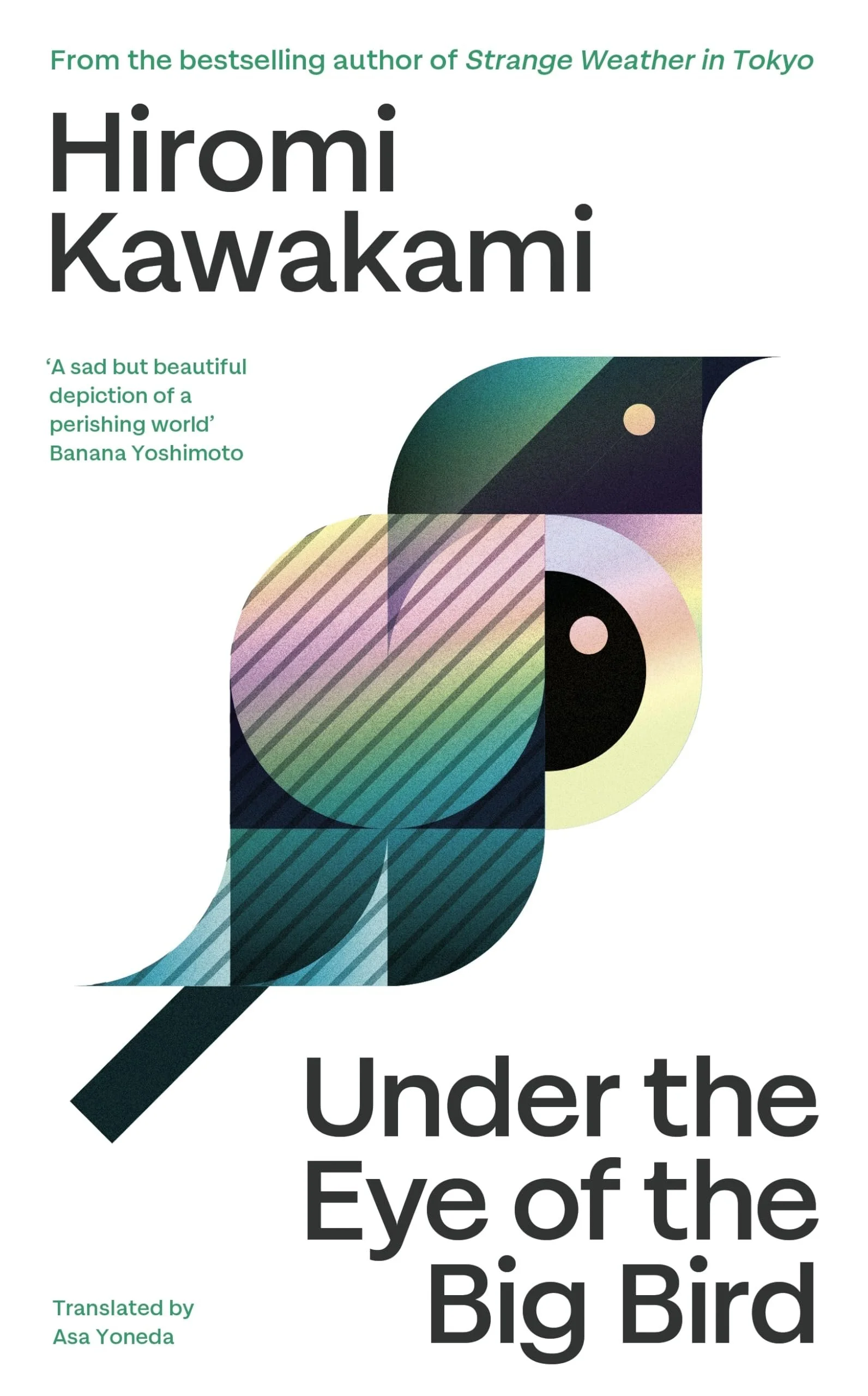
“Under the Eye of the Big Bird” is definitely not a traditional sort of novel but more like islands of events separated by space and time. Hundreds (or even thousands) of years sometimes pass between sections. The chapters aren't chronological either. These could be taking place far in the distant future or perhaps the past. Certain characters seem to overlap between sections, but often these turn out to be distant relations or clones of their predecessors who use the same name. Some advanced technological progress has been made (being able to sync consciousness with others, hovercrafts) but other technologies like flying airplanes has been lost and then later hovercrafts become outmoded. There are references to calamitous events which nearly wipe out the world's human population or periods of environmental instability, but the focus is on the experience of various individuals caught in the circumstances of their particular time and community. Some of their lives more closely resemble our own, but others have been genetically modified or evolved to have different physiological traits (extra eyes, the ability for photosynthesis, etc), extra-sensory powers or artificial intelligence. Lifespans drastically differ from story to story so that some individuals only live for a few decades while others live for hundreds of years. Rather than following any individual's story across the narrative, this book is more concerned with the destiny or a possible eventual extinction or rebirth of the human race. In its quest to survive and adapt throughout the ages questions are raised concerning identity, community, intelligence, creativity, motherhood, romance and religion.

While reading this book I felt like the ground was constantly shifting under my feet as whenever I thought I could almost grasp a timeline or character's trajectory things would change. At first I tried to map out what was happening but this soon proved to be too difficult and I decided instead to let the story wash over me instead of trying to follow it like a traditional narrative. I was glad I did this because it meant I was able to ease into and enjoy where the novel took me even though I felt very disorientated. The story also (somewhat) comes together in the final two chapters where previous events are somewhat over-explained. Now that I know the meaning of many of this story's puzzle pieces I think if I went back and reread it I'd see more clearly how they all fit together. I'd be eager to do so at some point because I think this book is quite a creative imaginative feat and I'm fascinated how it challenges many of our assumptions about free will and predestination based on genetics, social engineering or technology. Later on in the novel it's observed “While you may believe that you have freely adopted your values out of the entire field of possibilities, that is hardly the case. From the beginning, your limited value systems are built up only in a single, predetermined direction.”

A curious small detail which is mentioned a couple times in the early sections of the novel is a carousel. This image haunted me while reading the book because a carousel feels very reminiscent of childhood and this novel often focuses on young people trying to orientate themselves and develop in a world which is often strangely different from what we know. Like a revolving carousel when it stops the era where these individuals end up is subject to chance. And the carousel spinning around also comes to feel like civilisation itself going through the same cycles across thousands of years. Being spun around is also very disorientating – much like the experience of reading this book! Perhaps I'm reading too much into it but this came across as quite a symbolic image which stuck with me throughout the novel.

I enjoyed how a collective who jointly raise the children in many of the communities within the stories are merely referred to as “the mothers”. This feels quite mysterious at first but it's eventualyl explained. Except for the few great mothers “the mothers” are only referred to as a collective. This made me think of “Embers of the Hands”, the non-fiction book on Vikings I read recently. The author Eleanor Barraclough remarks how almost all the historical Viking personalities we know about are male warriors and male leaders because that's what is recorded in legends and history. However, there obviously wouldn't be a next generation if there hadn't been women there giving birth, raising children and caring for the family. I wondered if Kawakami was partly referring to this sense of limited historical knowledge when using the anonymous label of “the mothers” because there's often no other way for us to know these past generations of women who ensured the survival of our species. When the identity of “the mothers” is revealed it's fascinating how this challenges traditional notions of what form nurturing should take. Being guided through time by “the mothers” is different to the often-destructive unwieldy and war-torn direction where (often) male leaders take society. It's remarked at one point that “It is never guaranteed that those of you who hold positions of power are able to look firmly and unblinkingly into the future of their own. If anything, in fact, it is more common that once you gain such positions, you become disconnected from a rational point of view.”

Individual identity is also confused as specific people are cloned to continue throughout history and retain memories of the past. This uncertainty comes into the narrative with the use of pronouns where in one section there is little distinction between “you” or “me” and in another part it's declared “Every me is me.” One tribe only uses numbers rather than names. The genetic makeup of some are mixed with technology or animals so this raises the question of what makes us human and what makes us unique. In one section there's a question over whether a character named Emma Jackson is human because she has special powers but she declares “I was as human as they were, but I could never be one of them.” A popular topic in our culture at the moment is the concern about what impact AI will have on the entertainment industry – if music, novels and movies start being AI generated does this mean the death of creativity or won't that matter if they still produce satisfying experiences? I think Kawakami is encouraging us to contemplate all these issues. We see throughout the book how individuals spring up who are different and creative (even if they've not been raised or programmed to be so.) One child loves to dance and continuously expresses herself in this way. Other characters fall in love and/or feel inclined to mate with one another even if they've not been authorised to do so by the watchers or overseeing government. So the personality of individuals and innovation breaks through cracks in this oftentimes rigidly structured society. This is sometimes encouraged and other times it's repressed/eliminated – such as a shocking scene where an individual becomes violently intolerant about a certain tribe.

So this book obviously raises lots of interesting things to consider by contemplating human civilization over a long span of time, but does that make it a satisfying read or just an intellectual exercise? Personally I was delighted by its weirdness, surprising variations in human life/social organisation that pop up over the span of years and how it questions the nature of humanity. However, it required an adjustment of expectation about what I wanted from the story. There were certain sections I'd have liked to know more about and sometimes just when I was getting a clear understanding about the complexities of a certain character the novel moved on. Oddly horrific elements like an instance of consensual cannibalism aren't developed as much as they could have been. Because of the structure, it required a lot of explanation from whoever was narrating that particular section about the nature of the present reality. I felt some narrators worked better than others. When the narrator had to overtly explain the structure of the current society in order to make it clear for the reader it felt forced – such as the chapter 'The Lake' and also 'Destination'. While this later section helpfully explained so much it also came across as a little too tidy and information-laden for me.

I found it exhilarating how this novel encouraged me to think about big questions concerning civilisation from a unique point of view. Its ambitious structure means that character development is often sacrificed so I'm not sure it worked as well as “Oryx and Crake” by Margaret Atwood or some other far-future set literary sci-fi. However, it clearly does something different and the author didn't intend to develop a traditionally structured plot. I was impressed by its creativity and the surprising strangeness of various sections. It's also satisfying how the final chapter gives the book a pleasingly circular feel and turns it into a unique origin story.

What if you woke up one day to discover that your country no longer exists? That was the experience for East Germans and the protagonists of this novel in October 1990. However, the story begins in East Berlin in June 1986 when a chance encounter between Hans and Katharina spark a passionate romance which continues for years. There is a 34 year age difference between them. The first half of the novel follows the intensity of their affair where the age gap feels somewhat inconsequential when considering the span of history. Descriptions of their trysts are meaningfully paired with heart soaring pieces of music and mythology. The second half of the novel follows the unspooling of this romance which grows increasingly dark and abusive. Though this is a story of toxic love the central question of the book isn't whether their affair is right or wrong; it was clearly doomed from its inception. This couple remains together long after they clearly should have separated, but they also linger in the idea of their nation even as it crumbles around them. The real question of the book is why do we cling to our romanic and political ideals when we know they are inherently faulty and bad for us?

The novel is framed around a future point where Katharina inherits boxes of documents after Hans has died. She sifts through these remnants of the past recalling the years of their affair and the many cultural references they shared. So the book is structured like a piece of archival research, but it's also structured like a piece of music. These incongruous modes of telling would clash if it weren't for Erpenbeck's elegant way of combining them to reproduce these characters' deeply-felt experience. The narrative effortlessly flows between their viewpoints to mimic the way their consciousness has been fused amidst this passionate romance. It becomes a locked box and a territory of their own. But as their relationship sours this paradise turns into a prison from which they - and the reader - can't escape. It becomes increasingly uncomfortable to read this novel as the second half turns intensely claustrophobic and painful. This obviously isn't a pleasurable experience but it is an impactful one because it reveals how deeply lost these characters have become in the changing country and world around them. Erpenbeck brilliantly probes issues of belonging and nationhood as she did in a very different context within her novel “Go, Went, Gone”.

Hans and Katharina come from very different generations, but they hold onto one another longing for a life which is no longer possible. Hans has a shady past and part of his belief in the German Democratic Republic comes from wanting to distance himself from the armed forces he was a part of in his youth. Katharina was born long after the end of WWII, but the system under which she was raised causes her to gaze critically at the commercial and cultural imperialism which is absorbing her country. As their affair painfully persists so the marking of different anniversaries continues as if dedicating themselves to these dates can hold their imagined reality together. But they come to feel increasingly hollow and twisted. Following the dissolution of their private world is a melancholy endeavour. Persisting to the end of this novel felt challenging but I'm glad I did because the overall effect is haunting. It made me question my own assumptions having grown up with a Western mentality and probe what romantic notions I allow to unhelpfully steer my life. I'm also sure it would be valuable revisiting “Kairos” at some point to better understand the innumerable cultural and historical references it contains.

Posted
AuthorEric Karl Anderson
CategoriesJenny Erpenbeck

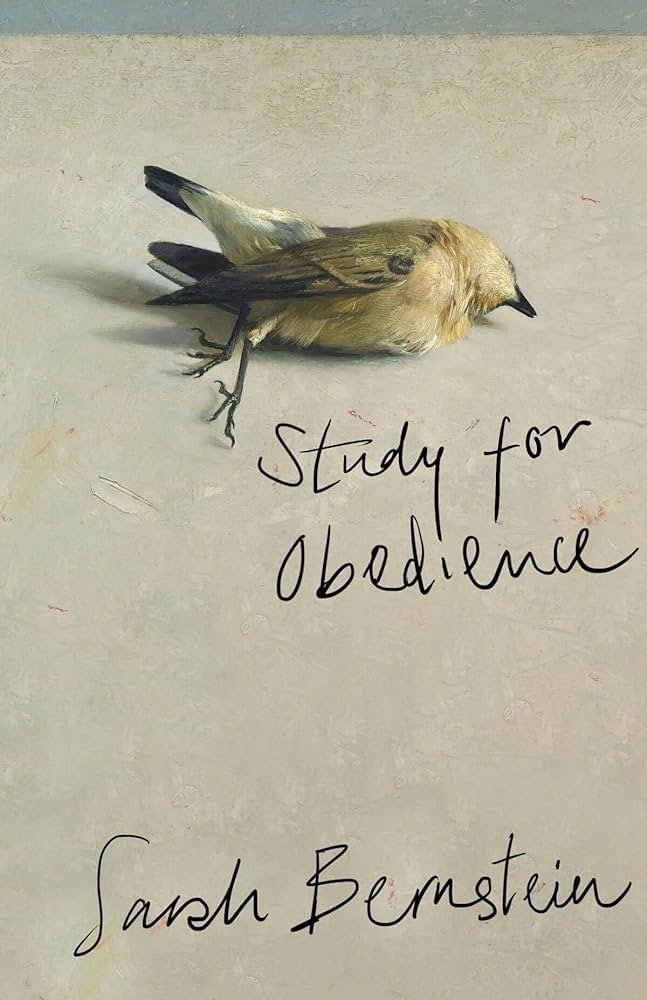
There are some books which I find difficult or disappointing when I initially try to read them. I don't feel it's necessary to finish reading a book I'm not enjoying or understanding because there are so many more titles waiting to be read. However, some books warrant a second attempt. When I first tried reading “Study for Obedience” late this Summer I found it so arduous I put it down after fifty pages. The protagonist's subservient personality and cryptic narrative frustrated me. However, many readers who've appreciated this novel urged me to give it another try and it's since won the Giller Prize in Canada as well as being shortlisted for the 2023 Booker. But, more than being intrigued by any hype, I primarily picked it up again out of a curiosity to see if I could understand the meaning of Bernstein's book. I'm glad I did because I subsequently appreciated it much more. I can't say it's an enjoyable experience because it's often frustrating and there are elements I still don't understand. However, it's worth persisting with it. I think it partly worked better for me because I went into it without the expectation I'd get a traditionally plotted story.

The premise of this novel is quite straightforward. An unnamed young woman moves to an unnamed northern country to become the housekeeper for her eldest brother. She doesn't speak the language of this rural territory though her ancestors came from this region. As she gradually tries to become part of the community she's treated with suspicion and blamed for unfortunate events which occur. That's really all there is to the story and that's all that happens. Readers who require more drama in their novels will be disappointed by this book. Instead, this tale embeds us in a discomfiting personality and creates a certain mood. It's difficult to sympathise with the protagonist because she makes herself compliant, accepts the blame for things which aren't her fault and remains wilfully ignorant (or appears to do so.) She's not so much a character I want to root for but shake and tell her to stand up for herself. Once I let go of the desire to like her I became more compelled by the alternative perspective she offers.

There is little overt violence in this story but there is a sinister edge and a building tension. She is perilously isolated and her best efforts to integrate only further ostracise her from the local population. In fact, actions such as spreading decorative twigs around the town and volunteering instead make her a target for the villagers frustrations. We're limited to her perspective so it may be that her actual interactions might be different from how she presents them. There's a question about how innocent she really is because she realises that “it seemed to me that my obedience had itself taken on a kind of mysterious power. And if I had been granted this power, by some grace, against my wishes, must I not then make use of it in some way?” The villagers overreact to her presence in an exaggerated way. This highlights the absurdity of groupthink in certain communities which needlessly ostracise people who are different or who aren't native to the region. It also shows how fear and superstition often lead to violence.

This meaning is underpinned by the fact that the narrator's ancestors from this area were persecuted for being Jewish and there are overt references to the Holocaust. However, the lack of names used for locations or people only emphasizes the universal nature of this struggle. It's easy to think of contemporary parallels where large groups are forced out of their homes or killed because another group of people believe they are entitled to that space. The narrator doesn't see herself as blameless in these ongoing struggles. Rather, she states “Every single one of us on this ruined earth exhibited a perfect obedience to our local forces of gravity, daily choosing the path of least resistance, which while entirely and understandably human was at the same time the most barbaric, the most abominable course of action. So, listen. I am not blameless. I played my part.” This naturally caused me to reflect on the ways I might minimize myself in order to comfortably get by or remain blind to horrors unfolding around me on both a local and global scale.

In this way, the novel compelled a level of self-reflection and contemplation that I wasn't expecting after first trying and failing to read the book. I believe there's a special power and uniqueness in this novel. However, unlike some difficult books which took me a lot of time to appreciate this isn't one I'll be eager to revisit anytime soon. It's unrelentingly bleak and the protagonist still aggravates me. Her meandering perspective is like listening to someone who has been isolated in a cabin for years that I want to make a stealthy escape from, but I suppose in that way it's faithfully representing what this character goes through. Despite all this, I found reading the entire novel a worthwhile experience and expect it will have a lasting effect upon me.

Posted
AuthorEric Karl Anderson
CategoriesSarah Bernstein
6 CommentsPost a comment

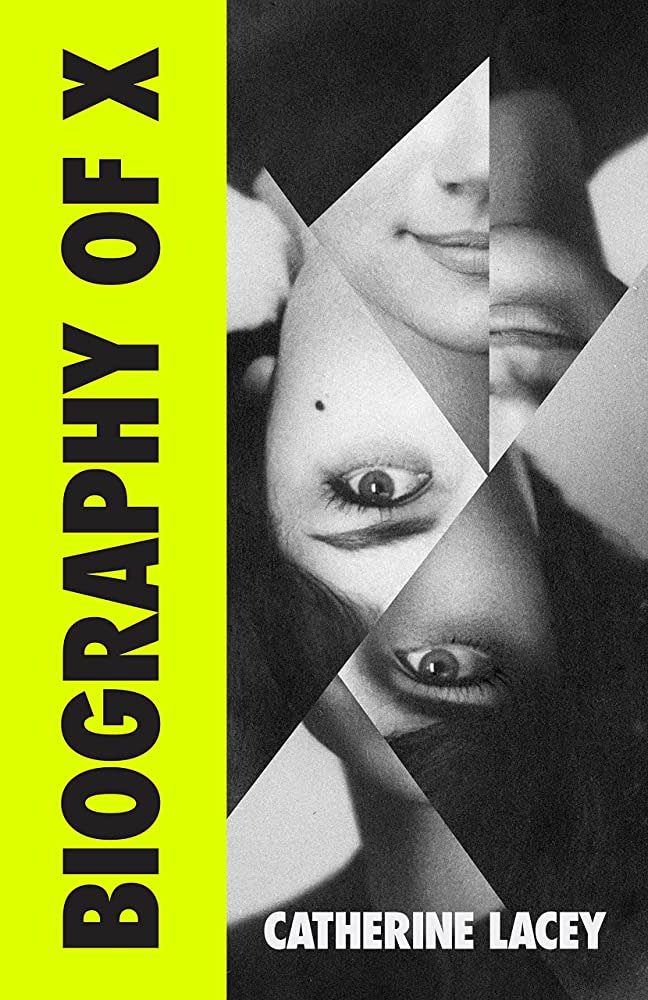
There are some novels that feel perfectly aimed at me. “Biography of X” is absolutely one of them because its story and central subject matter are the sort I most enjoy reading. Like in Hustvedt's “The Blazing World”, Lacey's new novel considers the phantasmagoric life of a fictional female artist. It's an intelligent exploration of the meaning of identity considering whether this is formed through inherent characteristics, self-creation or projections from other people. This is clearly a preoccupation for the author as her novel “Pew” explored this meaningful question from a different angle. Yet the premise of this new novel is in some ways more ambitious and expansive as it's a very playful mixture of fact and fiction which also pursues a central intimate mystery. Ultimately, this tale is also about the dilemma of how much we can truly know the people we love the most because no matter how close we feel to them there will always be aspects of their lives which will remain hidden and unknown.

A complex artist named X has died. Her widow CM embarks on researching X's life and interviewing people from her past in order to write an account to set the record straight and learn more about her own puzzling wife. In the process she describes how X's life intersected with a fascinating array of real historical and current artists, writers and cultural figures. It's so fun to see how personalities such as Susan Sontag, Andy Warhol and Max Porter enter the story. However, the more CW learns about her deceased wife the more she realises how little she understood her. X's elusiveness was part of her work as a shapeshifting figure in the manner of artists such as Sophie Calle or Cindy Sherman. Her process of radical reinvention from country life to cosmopolitan “it girl” is also akin to the character of Holly Golightly – if Capote's character were a radical artist. Additionally, X needed to escape her past as this novel presents a revisionist history where America became politically divided in a way even more outwardly extreme than what exists today. Like in the first section of “To Paradise”, in this version of America same sex marriage has been legal for much longer than it has been in reality. Gradually we come to understand the various ways in which X's artistic mission was both personally and politically motivated.

Alongside Lacey's text there are a number of photographs throughout the novel which further blend fact and fiction as well as illuminating the biographical detail of X's life. It's so creative how Lacey explores the way events in history might have differently played out and how certain figures such as Emma Goldman could have had a key political role if circumstances had been slightly different. As with many biographies, the text can reveal more about the biographer than the subject. CW must gradually separate what she wanted X to be from the person she actually was. As she's confronted with the versions of X that existed for the subjects she interviews a blurry understanding of the real woman appears. But how much can you truly know such a human changeling and how much can you really understand someone when, as the philosopher William James described, we have as many personalities as the people we know? These universal questions are poignantly applied to a wildly entertaining story that's like a masterful puzzle and an exposé of a sumptuous hidden history.

Posted
AuthorEric Karl Anderson
CategoriesCatherine Lacey

The unnamed protagonist of “I'm a Fan” isn't really the protagonist of her own life as she spends much of her time following online (and borderline stalking) two individuals. There is “the man I want to be with” and “the woman I am obsessed with” who is also having an affair with this man. Both the narrator and the man she wants to be with are in longterm relationships with other people that are pushed to the periphery of this toxic love triangle. It's a messy state of affairs and the narrator relates her (seemingly) unfiltered thoughts and feelings about this situation while commenting on the nature of social media/the internet as well as issues to do with class and race dynamics. In many ways the frankness of her voice discussing these subjects in short punchy chapters is very refreshing. The dedicated documentation of such a doomed love affair reminded me somewhat of Annie Ernaux’s “Simple Passion”. It’s also tantalising to observe how a private obsession can be poisonously fostered by the act of online following as small details are seized upon as clues to be scrutinized in detail. This is partly because Instagram updates from “the woman I am obsessed with” aren't so much capturing fleeting aspects of her daily life as they are glib public pronouncements of her values, aesthetics and commercial products since she is an influencer. While the narrator severely critiques and abhors this woman she also covets her status and following. It's compelling and challenging how Patel describes this modern conflict.

My issue with the novel isn't, as some readers have complained, that all the characters are “horrible” people – the most likeable people being the man's neglected wife, the narrator's neglected boyfriend and the narrator's mother whose marriage is a compromise. Rather, I became frustrated that in the narrator's rigorous analysis of power dynamics no room is left for genuine human interactions. Every in real life (IRL) meeting with both the woman and man are part of a ploy towards some goal of simulated closeness or strategy for achieving an advantage in this dynamic. This is partly because of the narrator's fragile self esteem which is partly the product of all these larger historical and social issues. It's meaningful how the novel shows this isn't just theoretical: part of the reason the man desires the narrator is because of the colour of her skin and the woman she's obsessed with blithely lives in luxury while the narrator struggles to buy a home. But there's no growth in her character which allows her to progress in her own life or establish any sort of meaningful connection with these figures she obsessively fangirls.

Perhaps Patel is saying in this story that the state of our society and the poisonous effect of social media mean that no true interaction is possible. But such pessimism is stultifyingly glum and not true to life where such borders between very different individuals can disintegrate when moments of honest connection form. Certainly such a relationship might not be possible with the figures that the narrator is fixated upon, but the story would have felt more radical if she could have found someone who she could establish a bond with that wasn't defined by division. It's a sad effect of relationships that are mediated through social media that so much is left unsaid (even though it's a medium which is all about making pronouncements.) I appreciate how this tale looks through the screen to focus on someone who is viewing and calling out virtue signalling. She also finds herself haplessly playing into a system that grants more advantage to those who are already advantaged. Instead of being able to progress she instead finds herself circulating in the vacuum. It's a position which will hopefully become quickly dated as more and more people eschew platforms that are all about hollow interactions. I'm (obviously) not against social media or the internet in general, but I hope there's a future where the major fallibilities of these platforms can be changed and more honest interactions can occur to bridge our differences.

Posted
AuthorEric Karl Anderson
CategoriesSheena Patel

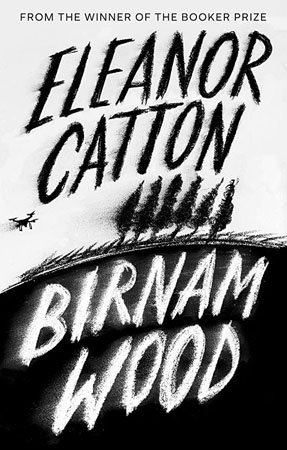
Eleanor Catton's prize-winning and best-selling novel “The Luminaries” has a special place in my heart – not only because it's a tremendous story which is brilliantly written – but because it partly inspired me to start this blog in the first place. When I finished reading that intricate and impressive book I felt so compelled to discuss it with other people I went online. It's the first book I posted about here and the conversations which followed encouraged me to continue engaging with the virtual book community. So naturally I'm thrilled that now (nearly 10 years after that novel first came out) she's finally published a new novel “Birnam Wood”. The title is taken from a line in the play 'Macbeth' when the weird sisters predict that “Macbeth shall never vanquish'd be until Great Birnam wood to high Dunsinane hill shall come against him.” It's certainly not necessary to know the implications and meaning of this to appreciate Catton's new novel. The story plays upon themes of ambition and power, but I don’t think the Shakespearian influence is explicit until very late in the book.

At the centre of the book is a New Zealand guerrilla gardening group or farming collective who use the name Birnam Wood. They utilize unused land to cultivate crops to be distributed to those in need. This is both a political act and environmental/humanitarian initiative whose methods aren't often strictly legal. So when the group's founder Mira researches a large tract of land bordering a national forest which has been seemingly abandoned following a natural disaster she sees an opportunity for a large-scale planting project. However, an American billionaire and pioneer in drone technology named Robert Lemoine is under negotiations with the land owners to purchase this tract of land – purportedly to build a doomsday bunker. When Lemoine proposes to the collective that he can charitably fund their activities some members of the group feel that they are making a deal with the devil. What follows is an ecological thriller, in-depth psychological study and social commentary about modern day politics/technology.

Many readers may grapple with getting into this book because Catton front loads the story with a lot of character detail. Long sections describe the primary characters' backgrounds, ideologies, mentalities and conflicts. This means that most of the initial scenes of the novel occur internally as a psycho-drama concerning members of Birnam Wood (especially central members Mira and Shelley), renegade journalist Tony, scheming Lemoine and newly anointed Lord and Lady Darvish who own the property. Reading such a rich portrait of these individuals and their relationship to each other is interesting but there is little action involved until some of the later parts of the novel. It's like spending a long time sitting in a revving car before it launches forward at great speed. But when it does get going the story is absolutely gripping – especially in the final 150 pages. The trouble is that there are 275 pages before getting to that point. I think some readers' patience will have worn thin by then. Again, that's not to say these early sections aren't interesting but they are slow moving. However, I found the thrilling ending and the larger meaning of the book that I was left with extremely compelling. So overall I think it's a worthwhile reading experience and I was glad I went on this journey.

I'm not sure why Catton chose to structure the novel in this way. Typically the information which she relates in great big chunks would be integrated more into scenes where the characters interact and more dramatic action occurs. Yet in this story most of their psychological makeup is related while they scan the internet or their phones or surveillance footage. Characters spend a lot of time justifying their points of view to themselves or projecting into the future how they want events to play out. When verbal exchanges occur such as in a group meeting (hui) or telephone conversation or a dinner party it's more like the characters are delivering monologues without really listening to others. This occurs in a Jane Austen style which makes sense given that Catton recently wrote a screenplay for a new film version of “Emma”.

I think perhaps Catton might be commenting on the way our online lives are so internally focused. When we think we're communicating on the internet we're actually talking more to ourselves or within a narrow group of likeminded people whose opinions are all in agreement. Catton has also commented that when planning the novel each character could be seen as Macbeth as it revolves between their perspectives. This is an intriguing idea to consider in regards to each character's ambition and their relationships to each other and power. However, if these were the things that the author was trying to convey it unfortunately sacrifices the theatrical impetus of a large section of the story. As a result I felt more intellectually involved with this novel rather than emotionally invested. Nevertheless, it's an interesting modern day tale that engages with many environmental and political issues. If Catton weren't an author I had read before I probably wouldn't have finished reading this novel, but this is a book that possesses a subtle power which means that it's worth sticking with till the end.

Posted
AuthorEric Karl Anderson
CategoriesEleanor Catton
6 CommentsPost a comment

People who are socially awkward often suffer from a sense of being alienated and not wanted – particularly in environments that are new to them. Most people experience this on some level but it's more acutely felt by certain people. It's difficult to know whether these feelings are self manifested or if this rejection comes from being different and not conforming to common social behaviour. At the start of Drnaso's latest graphic novel, we get snapshots of several such individuals who feel isolated in different ways. They come together in response to a general ad for an acting class which is described as a “unique opportunity” that is seemingly more about building self confidence than training to become a professional actor. The class is lead by John Smith, an affable man with a disturbingly commonplace name. He asks for no payment for the first set of classes and though his motives seem purely altruistic at the beginning his plans for these students become increasingly mysterious. Through a series of scenes which switch between these individuals' outside lives and acting prompts performed in class the line between reality and artifice becomes worryingly blurred. The story raises poignant questions concerning what constitutes an authentic self and the degree to which socialising inhibits or enhances self expression.

Any book that immediately gives short introductions to a wide cast of characters poses a challenge to the reader to remember and keep track of who all these people are while experiencing the story. This difficulty is increased by Drnaso's drawing style where many of the characters appear quite similar to each other. However, this isn't a criticism as this aspect of the book enhances the story's themes which probe the nature of individuality and whether our personalities are innate or self-created. The unsettling anonymous effect is somewhat similar to the film 'Anomalisa' where animated facial features and voices are disturbingly uniform. Naturally, as “Acting Class” continues the identities and personal histories of these characters become clearer as information is revealed through their interactions with each other. We also get a better sense of how these characters variously conceal, evade or manipulate when conversing with others. Equally, their insecurities and earnest desires to be good people spill out as they struggle to connect.

It's visually striking when the characters are acting in a scene and suddenly the background behind them will change from one panel to the next to show an entirely new environment to fit the imaginary space they're inhabiting. This feels like a playful commentary on the way in which we sometimes feel like we create our own reality. As these individuals improvise scenes the characters and situations they invent are naturally inspired by real life and disturbing things sometimes emerge. I enjoyed the ambiguity and discomfort of the moments where the other characters aren't sure if their acting partner is still acting or confessing something true. It explores the degree to which this occurs in real life where constructed social identities break down and real feelings emerge. One of the most poignant relationships in the novel is between a couple who are struggling to maintain their relationship and strategise to reignite the spark by starting over as if they're strangers. It reminds me of the protagonists of Vesna Main's “Good Day?” where a couple write a novel about a couple. Drnaso shows how certain tensions remain even when a long term relationship is reset as if they are meeting for the first time.

The central question of this novel revolves around the choice between fully inhabiting reality or committing to an imagined narrative. This is dramatically represented in a dilemma as the participants engage in a final immersive exercise. Naturally, the line between experience and the imagination is much more blurred in our day to day existence and Drnaso's amplifies the crisis to create an impactful and eerie effect. I found it very moving how the story plays out as the characters become lost in hostile landscapes of their own creations. As in his previous graphic novel “Sabrina”, Drnaso skilfully interjects small visual elements into certain panels such as tiny colourful stars or a frame around the panel which suggest there are deeper emotional changes occurring beneath the surface of certain scenes. It's also impressive how the themes of the novel build to such a degree where panels which show barely anything can become so emotionally charged. This novel is a striking and impressive meditation on the tension between being and becoming.

Posted
AuthorEric Karl Anderson
CategoriesNick Drnaso

Why would someone walk away from the life she's built and everyone she knows? That's the haunting question which hangs over the delicately-paced story of Sara Freeman's debut novel “Tides”. Mara arrives in a seaside American town just as the busy tourist season is waning. It's achingly appropriate that she chooses to go somewhere in a season out of sync with the pattern of most people's lives. She's fallen out of time's rhythm and now she's in a dangerous free fall. Though this community is affluent she is terrifyingly aware of her limited funds and she doesn't want to use any credit cards because she might be traced. She gets by on scraps of food, sleeps rough, swims in the sea at night and takes a menial job in a local wine shop. A connection she forms with a man who appears similarly adrift is less about starting a new relationship and more about acknowledging their parallel disconsolate realities. Though her existence seems perilously reduced “This is exactly what she wanted, she must remind herself: to slip into a blind spot, to run out on her life.” Written in a spare, emotionally-charged style, this novel gradually unfolds to reveal the aching truth of her past and raises stirring questions about the narratives we use to shape our lives. 

What's so moving about this story aren't the sombre facts of Mara's life, but the way it patiently lays bare the psyche of its protagonist. Ample blank space is allowed on the page between passages as if to represent the vacant spaces of time Mara's new wayward existence gives her. Her motives aren't necessarily to rebuild or to start afresh as with most characters who've experienced a devastating loss, but to disentangle her ego. Does her mother really resent her? Is she really inferior to her brother? Did she really fail her husband? These are issues which plague her and it's difficult to know whether this was her actual position in relation to those closest to her or if she's brutally recasting her role in their lives as a form of self punishment. There's a sense that she wants to lose her former self and become someone new but she's unable to shake her personal history. “She can feel it, the past, grabbing, pulling... It takes her wherever it wants her to go; this is the mind's undertow.” Physical encounters with the sea and imagery about the ocean are poetically built into the narrative. It's poignant how this suggests a daily pace to the world which Mara can no longer keep up with because of the enormity of her grief. Though this novel has an undeniably melancholy tone it's not devoid of hope and I appreciate how its extreme example shows how self doubt has the potential to utterly devour us if we don't meet society's expectations or reach the milestones set before us. It gives the reader a lot to quietly consider and reflect upon.

Posted
AuthorEric Karl Anderson
CategoriesSara Freeman
The Child Kjersti.jpg

Since the experience of pregnancy and motherhood is one I can never have it makes me all the more interested in reading about it. I've never even felt inclined to be a father but I want to understand the process and emotional repercussions of parenthood. Kjersti A Skomsvold is a Norwegian author who has published an utterly captivating, beautifully-written and poignant account of a woman in the first several months following the birth of her second child. What's so compelling about her point of view is the way her identity transforms amidst this new responsibility but retains a consistency. It's like the tectonic plates of her personality shift to lay bare the core of her being with all her passion, strengths and insecurities. She's an author who endeavours to keep writing amidst the responsibilities and emotional strain of her life. At the same time it's fascinating how her experience is paired against others such as her great aunt who is experiencing dementia, a writer friend who committed suicide and her partner Bo with whom she's had a complicated relationship. Through her interactions we glean an awareness of all the stages of life experienced at once as the roles she plays constantly switch and are paired against the lives of others. 

The narrative is composed of short impressionistic accounts of her daily experiences, memories and reflections. They are also directed at the child so it's written in the second person making it feel like both a confidential letter to her progeny and a hymn expressing her innermost soul. It gives an immediacy to this book which is emotional and moving. This style also creates a narrative tension as we only gradually come to understand her past and the circumstances of her life. I found it poignant how when comparing herself to her contemporaries she feels that she's come late to things like having a stable relationship and giving birth to children: “Becoming adult is so very much harder when you haven't the strength.” Gradually we come to understand her abiding feeling of loneliness and depression which have also hindered her ability to fully connect with others: “it's because of loneliness I can hear if my heart's beating. Even with a child inside me I was filled with loneliness, and after the child had come out I felt empty. Loneliness lingered like a phantom pain.” I appreciate how she honestly divulges the mystery of these emotions and allows us to connect with them without feeling the need to try to explain them. Though the obsessions and minute sentiments which attend a volatile relationship grew trying to read about at some later sections of the book I did find many observations very powerful such as “I thought love meant discovering a new person, but it's more discovering yourself, and that's painful.”

It's interesting to compare this novel with Jessie Greengrass' “Sight” which also describes a very close-to-the-core account of motherhood with all its trials and uncertainties. While these bravely honest and confessional testimonies yield a lot of insights they also present a consciously limited, subjective view of these characters which left me longing to understand some of the more practical circumstances of their lives. For instance, I wondered how Skomsvold's unnamed protagonist managed economically amidst the responsibilities of having children but we never get details about this. I'd have appreciated it if the author would have dropped in a line or two about whether she had savings or whether her writing enables her to fully subsist. As a point of comparison “Ghost in the Throat” by Doireann Ni Ghriofa gives a very intimate account of motherhood while also making the reader aware of the challenging financial strain of having a growing family. However, this was only a slight reservation I had about “The Child” because overall it's a very thoughtful, moving and poetic account full of candour and insights.

Posted
AuthorEric Karl Anderson
A Passage North Anuk Arundpragasam.jpg

On the surface it's easy to summarize what happens in “A Passage North”. Krishan, a young man who has returned to live and work in his native country of Sri Lanka after the recent Civil War, travels to the war-torn Northern Province to pay respects at the funeral of Rani, his grandmother's former care-giver who died suddenly. This journey comprises the bulk of the action in this story. Readers who prefer a novel with a lot of plot-driven physical drama won't find it in this novel. The power of this book and the complexity of its tale comes from Krishan's meditative process. He was absent from the genocide which resulted in the death of many thousands of fellow Tamils. Though his father was a casualty of one of the Tiger bombings in Colombo, he didn't directly witness or feel the effects of this calamity. However, Rani was a witness to these horrific events and experienced tragic losses which left her severely traumatized. The question for Krishan is how to reconcile what he knows with what he has not directly seen and what steps should be taken to positively contribute to his country which has been ravaged by war. While he is contending with this enormous issue he's also simply a young guy who likes to hang out with his friends and smoke. He spends long periods of time wandering while staring out at the horizon and pines for his lover Anjum who's become a committed activist. Through the course of this novel we get a poignant sense of his state of being at a significant crossroad in life.

The author is a student of philosophy and this is heavily reflected in the narrative which meaningfully considers a number of dilemmas to do with the nature of life, time and reality. This is clear from the opening page which begins with the question of inhabiting the present moment. His meditative process offers a moving and new perspective on a number of issues. For instance, the world now witnesses significant conflicts online through first-hand footage shared by individuals embroiled in the action. However Krishan is cautious about granting these images legitimacy: “his initial reluctance to acknowledge the magnitude of what had happened at the end of the war, as though he'd been hesitant to believe the evidence on his computer screen because his own poor, violated, stateless people were the ones alleging it, as though he'd been unable to take the suffering of his own people seriously till it was validated by the authority of a panel of foreign experts, legitimized by a documentary narrated by a clean-shaven white man standing in front of a camera in suit and tie.” The question of authority is now a difficult one as we're wary of being manipulated, but also want to empower the real experience of individuals and resist being swayed by subliminal racial biases. This signifies a difficult modern issue we now all face that is not just to do with the act of witnessing but about the validity of what we see, who we choose to believe and how we interpret it.

Krishan considers issues which are both universal and specific, but his point of view does feel very rooted in his youth and this is acknowledged: “thinking as he lay there, in that naïve and moving way of adolescents”. Obviously, he does not have all the answers – nor should he – but some of his diatribes are more meaningful than others. I found his insights into migration particularly striking - especially how the trauma of war means some citizens can't bear to live in their native country any longer. Equally, I appreciated his sensitivity in considering not only his own perspective as a young man in a heterosexual relationship but that of women, queer people and hijras. A scene where he makes eye contact with another man on public transport also gives a dynamic perspective on masculinity and how men respond to one another. However, I found some other meditations he indulges in less enlightening such as the meaning of sight loss as one grows older and an extended lesson in the difference between desire and yearning. His musings do occasionally stray into overly-ponderous and pedagogical Alain de Botton territory. His ruminations aren't wrong, per say, but I don't read novels to be lectured to. Similarly, some sections recount versions of mythology or folklore and, later in the novel, the stories of dissident political figures. These stories are interesting and have points which relate to the dilemmas Krishan faces, but aren't very artfully blended into the overall narrative.

Where this story comes most alive and feels three-dimensional is when it describes the characters of his grandmother Appamma and her carer Rani. Krishan's interactions with Appamma are funny and endearing so I wish we were given more of that in the story. Equally, Appamma and Rani form a unique relationship impacted by Appamma's failing health and faltering mental state as well as the serious trauma which Rani struggles to live with and the electroshock therapy she regularly receives to treat it. The descriptions of these characters and their scenes are very powerful and I'd have been glad to read a whole novel just about them. Krishan's dilemma is significant and he offers a refreshing point of view which I'm very sympathetic with, but I felt his detailed and extensive thought process often prevented me from really getting to emotionally connect with him as a character. His most endearing scenes concern the timid formation of his relationship with Anjum and the conflict they face as a couple where their motivation to make an impact in their country overshadows their ability to be together. Krishan's melancholy over this state is conveyed in a moving way, but felt secondary within a narrative that sometimes drifts into overanalysis. There are many sensitive and considered insights in this book, but I'm not sure Arudpragasam has yet found the sweet spot where his philosophical perspective blends with the art of storytelling.

Posted
AuthorEric Karl Anderson
4 CommentsPost a comment