First Impressions

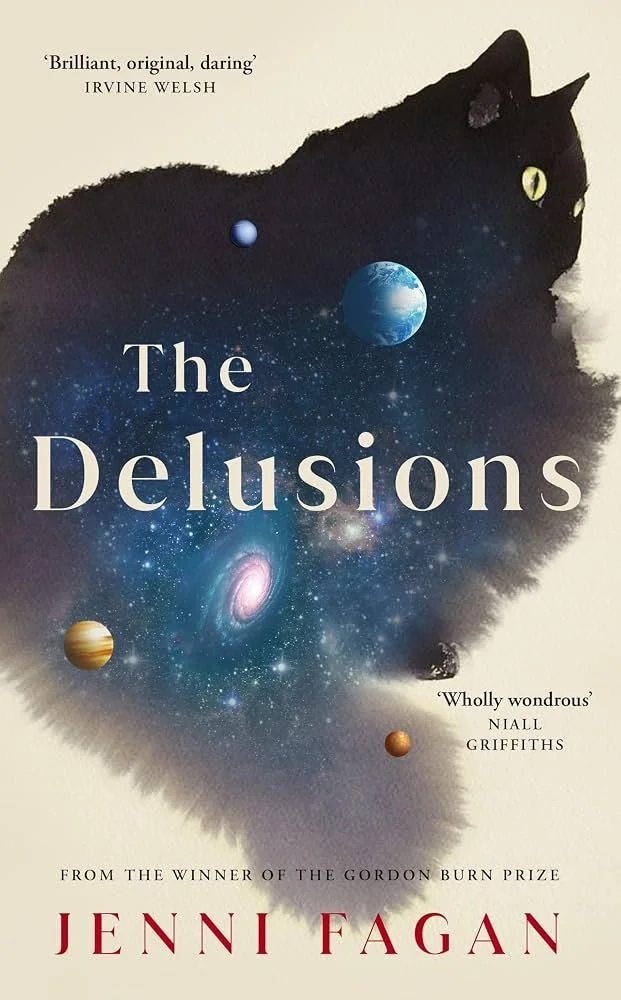
I absolutely loved this novel by accomplished Scottish writer Jenni Fagan. The story follows a woman named Edi who works in the afterlife, processing the recently dead. She holds a kind of admin position, and the queues she has to work through keep growing longer and longer. Her job is to confront each individual about what they actually did in their lives, since she has access to all of their secrets, and to extract from them their own self-delusion about who they believe themselves to be. It's an extremely painful process: extracting someone's delusion is described almost like pulling a thorny vine out from inside them.

A Premise That Earns Its Weight

On its own, this could read as a fairly fanciful construct, a morality tale dressed up in afterlife bureaucracy. But I found it so much more poignant than that, especially because I read Fagan's memoir “Ootlin” last year, which describes her own harrowing experiences growing up in the care system, where her whole existence was effectively reduced to paperwork, to being shuffled from place to place. Knowing that about her background gave this novel's premise a real emotional charge for me. I don't know how much that context matters to a reader coming to this book cold, but personally, it deepened everything.

Edi has held this position for forty-seven years, all the while hoping her son will eventually pass through her queue, since he was still young when she died. Her own death was horrible: she had cancer, went through an experimental treatment, and was essentially treated as a research subject by a doctor who mismanaged her care. That thread of real anger at medical malpractice reminded me of Sinéad Gleeson's excellent memoir “Constellations”, about an Irish woman contending with serious illness and the callousness of some of the doctors she encountered, a book that, like this novel, also finds a strange beauty in describing the cosmos.

The Cosmos and a Sense of Play

I loved the descriptions of the afterlife itself here, genuinely gorgeous passages about the universe and the movement of the cosmos, handled with real playfulness alongside real beauty. Animals pass through the afterlife too, and at one point an enormous wave of cats moves through, which explains the cat silhouette on the cover alongside the constellations. I was so taken with these descriptions that I ended up visiting the Science Museum's "Starstruck" VR exhibit in London, which walks you right through the cosmos. My headset was clamped on a little too tight, so I came out with a red mark on my forehead that lasted for ages, but it was a fun experience, standing at the edge of a virtual black hole and looking down on a volcanic planet. I'm fairly geeky about the science of space in general, so the novel's cosmic imagery really brought the story alive for me.

A Bureaucracy With No Comfort

There were stretches in the novel where the pacing dragged a little, since Edi spends a lot of time simply complaining about her job, and even given the extraordinary nature of that job, after a while it can start to feel like anyone grumbling about tedious work. But it builds to a powerful and dramatic ending, as changes on the planet start affecting the afterlife's operations, and Edi herself remains part of a system she doesn't fully understand, unsure exactly where the people she processes actually go. It's less a comforting afterlife than another layer of faceless, controlling administration, with no more say for the dead than they had in life. There's a line late in the book that struck me hard: “We have so much more to give and receive than the structures of humanity even vaguely allow.” That feels true of far more than just this story.

Verdict

I found this a really excellent, beautiful, and poignant novel, and it was interesting to read alongside George Saunders's recent novel “Vigil”, which also follows someone guiding the recently dead through a reckoning with what they actually did in life. I think “The Delusions” handles that shared premise in a more dynamic and creative way, though I'd say both novels have their own strengths. In Fagan’s story the people who have committed horrific crimes must face true justice in the afterlife by truly owning what they have done, but also the virtuous must wrestle with untangling the fiction they’ve created regarding their own lives. I appreciated the artful and complex way this novel meditated on these deeply personal issues.

Posted
AuthorEric Karl Anderson
CategoriesJenni Fagan
Luckenbooth Jenni Fagan.jpg

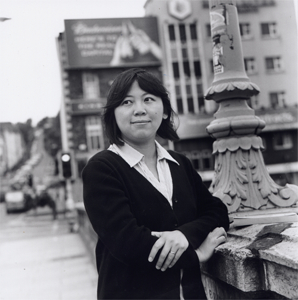
Everyone's experience of a city is different. As an outsider, I've only ever seen Edinburgh through the limited perspective of a tourist who has visited it numerous times for the famous late-Summer festivals. So it was fascinating to read Jenni Fagan's new novel “Luckenbooth” to see this great, historic city through the perspectives of nine very diverse and intriguing characters who inhabit the same tenement building at different points of the past century. They include a spy, a powerful medium, a hermaphrodite, a coal miner, the madam of a brothel and the beat poet William Burroughs. Though they are individually unique, they collectively embody an economically and socially marginalized side to the city not often seen or represented. Also, threaded through their individual tales is a curse placed upon this tenement building by a woman that was taken here to be the surrogate mother for a wealthy couple who want a child. We follow the compelling tales of all these individuals and, as time goes forward, there's an accumulations of ghosts in this steadily decaying building. Time becomes porous in this place: “It is entirely possible to slip through the decades in between these floors.” There's a creepy gothic atmosphere to this novel as well as sharp social commentary testifying for the disenfranchised citizens of Edinburgh. 

The novel is composed of three parts and each part revolves between the stories of three residents who inhabit the tenement building at different times. Once I figured out the structure I was better able to settle into the stories of these characters because without a rigid structure all these tales would have felt too unwieldy. However, there are nine different plots in this novel. Though they all centre around the same physical location and we occasionally glimpse characters from other parts of the book, each story is more or less self-contained. This felt frustrating at times because naturally I felt more engaged by a particular character or storyline over another – yet each tale is only allocated the same amount of fleeting page space. Most sections are intriguing and well written but I wanted to know more. For instance, I wanted more details about Levi, a black man from the American south engaged in the scientific study of bones. I also wished I could have stayed with Agnes who is a true psychic intent on preventing charlatans from practicing because they give her profession a bad name. There's the beguiling secret drag parties in Flora's section and the eccentric musings and theories of writer Burroughs lounging around with his recent lover. I'd have gladly spent more time with these characters rather than switching to the more generic spy-thriller plot in Ivy Proudfoot's section or the crime-thriller plot in Queen Bee's section.

All this meant that by the end of the book I felt like I'd consumed a series of amuse-bouches rather than a fully satisfying meal. Fagan is a talented writer and the more concentrated story of her novel “The Sunlight Pilgrims” made it all the more moving. There is a connecting message between the stories in “Luckenbooth” which is a burning anger on behalf of those who have been marginalized by the dominant society and erased not only from the history of the city but from literally being able to inhabit Edinburgh. A character named Morag comments: “One day nobody will be able to afford to live here but rich people.” I fully sympathised with the overall sentiment of this book and Fagan brings to light many tantalizing historical facts as well as creating many engaging storylines. But sometimes it felt like the author was coming through the narrative too strongly in order to preach rather than let her message be organically told by the characters. This detracted from the building suspense of the resurrected fury of the murdered women at the beginning of the novel who emerge to rattle the walls and seek justice. Fagan refers to the spooky unease she evokes in each section of this book when she writes “On every floor, something is just out of sight.” But the brevity and perhaps overly-ambitious nature of this novel means that the actual reveal is never quite as satisfying as the build-up.

Posted
AuthorEric Karl Anderson
CategoriesJenni Fagan
2 CommentsPost a comment

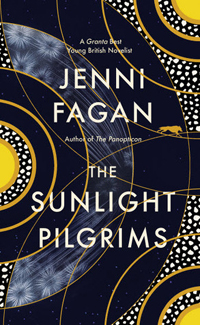
Apocalyptic visions of the future usually brim with dramatic conflict amidst large-scale destruction in society. Jenni Fagan takes a much more soft-treading and realistic approach to representing probable outcomes of climate change in her novel “The Sunlight Pilgrims” where a group of characters hole up in a Scottish caravan park for the onslaught of a cataclysmically cold winter in the year 2020. Rather than any explosive end to civilization, it seems much more likely that in the future life will still continue much as it does now until the effects of rising global sea levels make an unavoidable difference to our daily lives. Here it’s represented by a slow-moving iceberg making its way to the British Isles. Meanwhile many huddle within the commercial comfort of IKEA hoping that it’s not really happening. Amidst this coming crises, a fascinatingly unique group of characters at the margins of society deal with their own personal struggles while preparing for the coming of another Ice Age.

Central to the story is the beautifully realized character of Stella, an eleven year old who was biologically born a boy named Cael. Stella has been ostracized from the social groups she so recently enjoyed easy companionship with. She finds it particularly painful that a silence now exists between her and an attractive boy named Lewis who once kissed her. He bows to the peer pressure from his friends who mock and attack Stella for being transgendered while secretly still harbouring feelings for her. Stella also faces institutional challenges from a doctor who refuses to prescribe much-needed medication to block the hormones which are causing her to grow into a male with emerging facial hair and a deepening voice. Nor will he speed up a referral to a specialist who would hopefully be more sympathetic to her condition. This causes her internal anguish being trapped in the wrong body where “she feels like sprinting away from herself.”

Luckily Stella’s mother Constance rallies to her daughter’s support and fights for the justice that the vulnerable child isn’t able to insist upon herself. It’s touching how she exhibits total love for her daughter while struggling with private feelings of mourning for the son she has lost. It is also lucky that she’s strikingly capable in matters of survival ensuring that her family and those close to them are well prepared from the impending potentially lethal freeze. She’s someone that has been relegated to the margins of the community due to her unashamedly non-monogamous love affairs – for many years she maintained a simultaneous relationship with two men.

The mother and daughter meet a new neighbour in the park named Dylan who recently moved from London after the death of his beloved mother and grandmother. They left him a trailer in this remote village of Clachan Fells which he’s had to retreat to after the closure of the family-owned London arts cinema where he was raised. Dylan muses frequently upon his bohemian upbringing and the strong, compelling women who raised him. His grandmother Gunn MacRae won the cinema in a poker game when she was younger and maintained a bracingly liberal attitude towards sex stating in one dream-sequence: “always have a lover on the side or you might as well be dead.” Poring over things left by Gunn and his mother Vivienne, Dylan gradually discovers that his familial links to this little community are more complex than he first realized.

"Fronds of ice have all blown in one direction, creating feathers"

"Fronds of ice have all blown in one direction, creating feathers"

Fagan's writing has a remarkably poetic quality when she describes scenes of tremendous emotional conflict. In one of the most striking and emotional moments in the novel Dylan climbs up a mountain during particularly foggy weather. Troubled by his grief and memories his body seems to disintegrate into the haze. There follows a remarkable fluidity between the internal and external landscape which I found so beautifully moving and effective. Paired with these lyrically-charged passages, Fagan is equally skilful at writing punchy dialogue which brings life to the characters and grounds the narrative in realistic scenes.

“The Sunlight Pilgrims” is a beautifully written and chilling vision of the future with refreshingly original characters.

Posted
AuthorEric Karl Anderson
CategoriesJenni Fagan