First Impressions
I absolutely loved this novel by accomplished Scottish writer Jenni Fagan. The story follows a woman named Edi who works in the afterlife, processing the recently dead. She holds a kind of admin position, and the queues she has to work through keep growing longer and longer. Her job is to confront each individual about what they actually did in their lives, since she has access to all of their secrets, and to extract from them their own self-delusion about who they believe themselves to be. It's an extremely painful process: extracting someone's delusion is described almost like pulling a thorny vine out from inside them.
A Premise That Earns Its Weight
On its own, this could read as a fairly fanciful construct, a morality tale dressed up in afterlife bureaucracy. But I found it so much more poignant than that, especially because I read Fagan's memoir “Ootlin” last year, which describes her own harrowing experiences growing up in the care system, where her whole existence was effectively reduced to paperwork, to being shuffled from place to place. Knowing that about her background gave this novel's premise a real emotional charge for me. I don't know how much that context matters to a reader coming to this book cold, but personally, it deepened everything.
Edi has held this position for forty-seven years, all the while hoping her son will eventually pass through her queue, since he was still young when she died. Her own death was horrible: she had cancer, went through an experimental treatment, and was essentially treated as a research subject by a doctor who mismanaged her care. That thread of real anger at medical malpractice reminded me of Sinéad Gleeson's excellent memoir “Constellations”, about an Irish woman contending with serious illness and the callousness of some of the doctors she encountered, a book that, like this novel, also finds a strange beauty in describing the cosmos.
The Cosmos and a Sense of Play
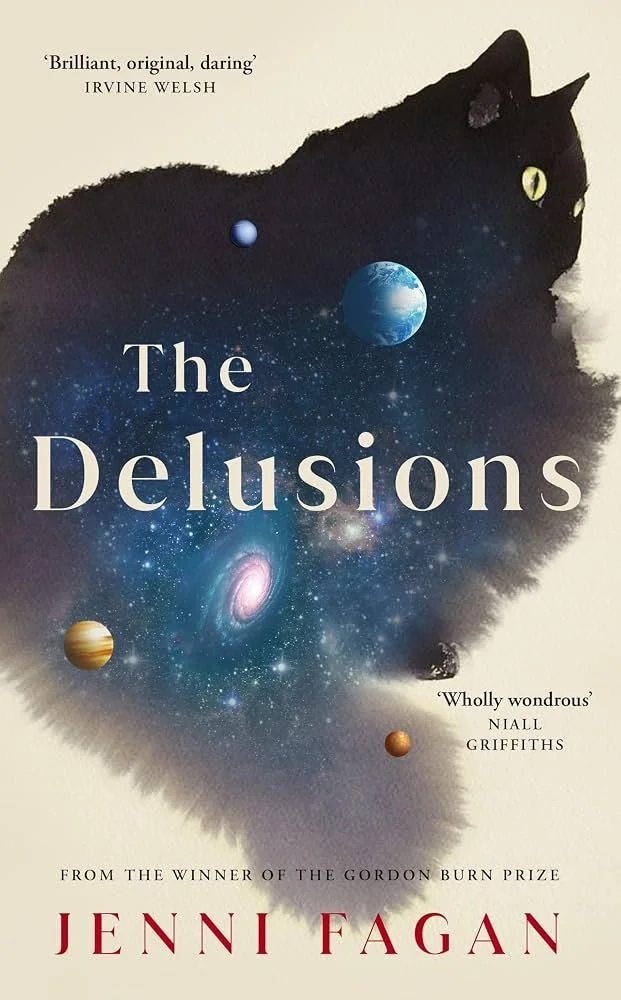
I loved the descriptions of the afterlife itself here, genuinely gorgeous passages about the universe and the movement of the cosmos, handled with real playfulness alongside real beauty. Animals pass through the afterlife too, and at one point an enormous wave of cats moves through, which explains the cat silhouette on the cover alongside the constellations. I was so taken with these descriptions that I ended up visiting the Science Museum's "Starstruck" VR exhibit in London, which walks you right through the cosmos. My headset was clamped on a little too tight, so I came out with a red mark on my forehead that lasted for ages, but it was a fun experience, standing at the edge of a virtual black hole and looking down on a volcanic planet. I'm fairly geeky about the science of space in general, so the novel's cosmic imagery really brought the story alive for me.
A Bureaucracy With No Comfort
There were stretches in the novel where the pacing dragged a little, since Edi spends a lot of time simply complaining about her job, and even given the extraordinary nature of that job, after a while it can start to feel like anyone grumbling about tedious work. But it builds to a powerful and dramatic ending, as changes on the planet start affecting the afterlife's operations, and Edi herself remains part of a system she doesn't fully understand, unsure exactly where the people she processes actually go. It's less a comforting afterlife than another layer of faceless, controlling administration, with no more say for the dead than they had in life. There's a line late in the book that struck me hard: “We have so much more to give and receive than the structures of humanity even vaguely allow.” That feels true of far more than just this story.
Verdict
I found this a really excellent, beautiful, and poignant novel, and it was interesting to read alongside George Saunders's recent novel “Vigil”, which also follows someone guiding the recently dead through a reckoning with what they actually did in life. I think “The Delusions” handles that shared premise in a more dynamic and creative way, though I'd say both novels have their own strengths. In Fagan’s story the people who have committed horrific crimes must face true justice in the afterlife by truly owning what they have done, but also the virtuous must wrestle with untangling the fiction they’ve created regarding their own lives. I appreciated the artful and complex way this novel meditated on these deeply personal issues.