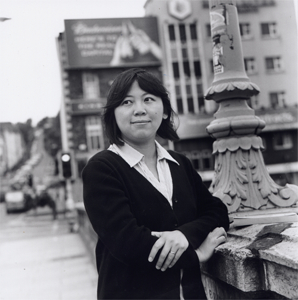
I was so delighted to see Anne Carson named this year's winner of the Nobel Prize in Literature. I watched the announcement live, cheekily typing "JCO for the win" into the comments as always. But Carson had been one of my top predictions, so when Ingrid Carlberg, in her first year as the Academy's Permanent Secretary, read out her name, I was thrilled. The Academy honoured her "for her bold and inventive oeuvre that, in playful dialogue with the classical tradition, has created new forms for contemporary literature." It was charming to hear that when they reached her by phone she was in Iceland "listening to the wind." I love picturing her running jubilantly across a glacier or, more likely, quietly sipping tea and staring out the window. She's the first Canadian to win since Alice Munro in 2013, the first poet since Louise Glück in 2020, and only the 19th woman to receive the prize. It's also one of those rare years when the betting got it right. The British bookies barely rated her, but the wider prediction markets had her as the favourite.
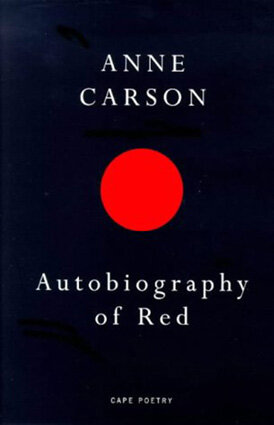
The only book of Carson's I've read is “Autobiography of Red”, and I found it incredibly inventive. It retells the myth of the red-winged monster Geryon as a gay coming-of-age story. She builds a modern, novel-like narrative out of the surviving fragments of the ancient poet Stesichorus. Although it's written in verse, I found it accessible and deeply moving. I connected with how she captures Geryon's alienation, his desire and his synaesthesia, and lines like "There is no person without a world" have stayed with me. My copy is even more special now because Carson signed it for me in 2019 when I saw her speak in London. It's striking how she mixes poetry, essay, translation, drama and visual art into new forms. Her elegy for her brother, “Nox”, is published as a folded facsimile in a box. She was reworking Greek myth with wit and intelligence long before myth retellings became a popular genre of their own.
This win has given me the push I needed to read much more of her work. Next I'd like to try “Nox” or “Norma Jeane Baker of Troy”. I also want to finally pick up “Glass and God”, which has been sitting on my shelf for far too long. If you've not read Carson before, I'd recommend starting with “Autobiography of Red”. Her UK publisher is Jonathan Cape, and I expect we'll see plenty of reprints in the coming weeks. Have you read Anne Carson? I'd love to hear how you feel about her winning, and which of her books you'd recommend I read next.