Exciting Times Naoise Dolan.jpg

Multiple friends of mine who’ve read Sally Rooney’s phenomenally popular novel “Normal People” have asked me for suggestions of what they can read that is “just like Normal People”. I think “Exciting Times” by Naoise Dolan might be the answer. Of course, to say that this debut novel is “just like” Normal People does a disservice to the originality of Dolan’s tale and the uniqueness of the authorial voice. But there are several similarities. It’s a contemporary novel about young people new to adulthood. Although it’s set in Hong Kong, it’s by an Irish author and the narrator is Ava, an Irish woman who moved there to teach English to rich children. There’s a difficult romance at the centre of the novel and a suspenseful element driving the story is about whether or not they’ll get together. Factors such as social class and money play into the tension of the central relationships. It concerns a lot of miscommunication or failed communication which is muddled by the medium of modern technology. It’s a poignant and oftentimes funny story. There’s also the fact that in the acknowledgements Dolan thanks Sally Rooney alongside a couple of other contemporary Irish writers. These aspects all mean that if I were an algorithm I’d offer up “Exciting Times” as an if you read and enjoyed Normal People suggested purchase. Thankfully, I’m not an algorithm so I have a bit more to say about what makes this novel great.

The novel fits into a tradition of Irish books which explore the subject of emigration. Ava seems to have moved so far away from her native country because she feels like an outsider and she’s not entirely sure what to do with her life. This distance gives her a unique perspective on her own sense of nationality and the way she’s viewed by others. Given that she teaches English as a foreign language, there’s a lot of wry commentary on language itself: the limitations of it but also the cultural significance of how and where it’s used. She meets an English banker named Julian whose upscale apartment she moves into and they have sex but they are not “together”. This is another fascinating way the novel tests the limitations of language. Everything about their actions fit into the definition of a romantic relationship, but neither Ava or Julian will label it as such. But, also, Ava makes a lot of pointed commentary about how Julian uses the English language verses how she uses it as an Irish person. This shows a tradition of cultural imperialism and also a grotesque snobbery on the part of the English. Growing up with the influence of English culture in Ireland leads her to observe “The English taught us English to teach us they were right.” And the self-consciousness she feels teaching English prompts her to sardonically reflect “Sometimes I wondered if I was actually a native English speaker.”

The crux of the story concerns a romantic triangle Ava becomes caught in when she enters into a loving relationship with Edith, a lawyer looking for the sort of emotional commitment that Julian denies Ava. For a while, Ava tries to maintain both relationships separately but the pressure gradually builds forcing this ambivalent individual to make some tough decisions. I often found myself very sympathetic to Ava while also being very critical of her actions and choices. So it’s engaging how Dolan treads that line and it’s refreshing to see a sympathetic portrayal of bisexuality in a novel. I can’t think of many books that have successfully done this other than Rooney’s first novel “Conversations with Friends” or Rowan Hisayo Buchanan’s “Starling Days”. It’s also noteworthy the way Ava looks with a somewhat critical eye at how Ireland has been changing in recent years. She comments how on social media many of her old school mates publicly supported the 1995 referendum on same-sex marriage, but these are also the same women who ostracised her by labelling her a lesbian when they were girls in school.

One of the most relatable things this novel does is describe the dynamics of online culture/social media etiquette and the feelings of self-consciousness this medium evokes. So much of Ava’s time and energy is invested in browsing the online history or status updates of the people she’s most interested in rather than trying to communicate with them directly. The novel also shows how a lot of exchanges or interactions are made indirectly through this medium. Ava is intensely aware when her stories on Instagram are viewed by Edith and she’s very nervous about viewing Edith’s stories because then Edith will get a notification that she’s viewed it. It reflects the absolute absurdity of this world but it also shows how difficult it is for people to be emotionally open and how they can grow dependent on the ambivalence romance offers. When Edith tries to confront Ava about this she notes how “she asked if I thought I'd gone for unavailable people because I knew I'd never have to face the reality that being with them would not solve all my problems. I told her she had no business saying something that perceptive.” This perfectly summarizes how Ava is an intelligent and funny, but flawed individual. “Exciting Times” is the kind of relatable and modern story that I hope to see in more new novels and (aside from obvious comparisons) Naoise Dolan is definitely a unique new voice in fiction.
Posted
AuthorEric Karl Anderson
CategoriesNaoise Dolan
A Saint from Texas by Edmund White.jpg

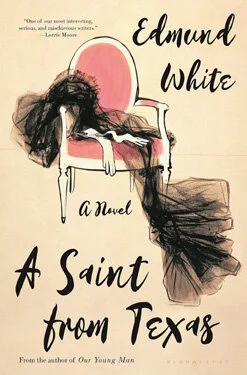
Edmund White has a writing style which instantly charms and bewitches me whenever I open his books. Though he's probably most famous for chronicling the gay experience in his invaluable series of autobiographical novels and memoirs, he's also very accomplished in writing great historical fiction such as “Fanny: A Fiction” and “Hotel de Dream”. He has a tremendous talent for intelligently dissecting social class and mores while delivering a gripping story. This is certainly true in his new novel “A Saint from Texas” which chronicles the lives of twins Yvette and Yvonne Crawford who are raised in rural Texas in the 1950s. Though they are identical their personalities couldn't be more opposite. Yvette is studious and pious where Yvonne is free-spirited and socially-ambitious. Yet they share an inseparable bond throughout the very different paths they take in life. Narrated from the perspective of Yvonne, we follow her ascent to the heights of Parisian society when she marries a Baron and takes a series of lovers. All the while she maintains a correspondence with Yvette who loses herself in charitable work with a religious organisation in Colombia. It's a brilliant study in duality and one of the most pleasurable stories I've read in a long time. 

There's a sympathetic tension at the heart of this tale. Most of us feel the tug between being “good” and “bad” throughout our lives and this novel entertainingly dramatises this struggle by following the stories of two individuals who take very different paths. But the way White delineates their stories abstains from assigning value judgements to their actions and natures. Yvonne unashamedly follows her desires whether it be sexually pursuing men or women she's attracted to or obtaining a noble title which will grant her the social position she craves. Yet, Yvette pursues her religious ambitions with equal determination as she desires to be utterly selfless and exceedingly holy. The seriousness with which White treats her piousness and belief in scripture shows an admirable broadmindedness. But the author is also careful to chronicle the pitfalls of both paths in life whether it be the shallow snobbery of high society or the way dogmatic systems of belief encourage people to dangerously repress their instincts. The novel shows there is certainly no “right” way to live. What shines through are these two high-spirited personalities who lift off from the page.

White excels at writing about sex in a way which recognizes its central position in both the imagination and in our social interactions. So Yvonne doesn't shrink from describing the physical details of the female friend she fondles under the cover of darkness or the submissive will of the man she confidently dominates. There's also an acknowledgement of the brash desires of young men who exhaustively try to make women comply and the taboo subject of incest. Yvonne observes how “In our family the worst things imaginable happened so fast they couldn't be understood. The horrors weren't unprecedented but were instantaneous.” So it's startling when their father violates his daughter by taking advantage of her naivety and piousness. It's also tragic and moving how a family secret like this remains buried and can persist throughout the women's lives. This shows how no matter what path the sisters take in life, the entitled and pernicious “righteousness” of the patriarchy is what trumps all behaviour.

Alongside these deeper issues, the intricate detail and living history of Parisian society is wonderfully described throughout the novel. No doubt White's own fascination and experience of this world which he brilliantly captured in his memoir “Inside a Pearl” informed Yvonne's education about the many layers of this milieu. I love how the novel simultaneously shows the strong allure and the hilarious absurdity of the strict rules and aristocratic levels of this society. For all Yvonne's earnest and skilled abilities to integrate into it, she remains an eternal outsider. The way that she ultimately conquers and triumphs over her adopted nation is thrilling and I was gripped throughout this lively novel. It's also poignant how White suggests that sainthood is not necessarily obtained through “good” acts but in the loyalty and love of true sisterhood.

Posted
AuthorEric Karl Anderson
CategoriesEdmund White
The Housing Lark Sam Selvon.jpg

London house prices are notoriously expensive. Many young professionals today have little hope of getting onto the property ladder without outside assistance. So it's fascinating to read Sam Selvon's novel set in the 1960s about of group of working class individuals of Caribbean descent who are fed up with their cramped, crumbling rented rooms in Brixton and hatch an ambitious plan to pool their money together and buy a house of their own. It's a good idea but this particular group of men struggle to concentrate and cooperate given their propensity for drinking, smoking and chasing women (or “birds” as they're often called in the novel.) They also often fail to support each other at crucial moments such as when one group member lands in jail for a crime he didn't commit. Selvon dramatises this tension well while creating a story that is so funny and witty that I felt totally engrossed by his characters' rambunctious conversations and farcical excursions. It's an invaluable portrait of a community in London at this time which was previously under-represented in fiction and it's no wonder that the writer Caryl Phillips commented “Selvon's meticulously observed narratives of displaced Londoners' lives created a template for how to write about migrant, and postmigrant, London for countless writers who have followed in his wake, including Hanif Kureishi and Zadie Smith.” 

Selvon poignantly observes divisions within the community where people from certain Caribbean islands receive preferential treatment over others. The black rent collector is viewed as a traitor to his community. Also, it's somewhat shocking to read about the way this group of men refer to women in their casual conversation. Battersby dreams of women who can be physically changed to suit his mood by twisting their breasts. When they go after a woman they refer to her as “a thing” and a character named Fitz claims “I beat she like a snake. All woman want is blows to keep them quiet.” However, this blatant misogyny is undermined by certain scenes such as a sexist man who is quickly domesticated or conversations between women in the community who are facing their own struggles. And, crucially, it's the women around the men who come together to get things in order towards the end of the novel. The men in the group also make fun of each other for their clumsy attitudes towards women such as a character named Sly whose foolhardy method of trying to seduce white women is to chase after them calling “Cur-rey? How would you like a good Indian cur-rey?” because he assumes this is the food English women like best.

There are multiple scenes in the novel which are so funny and also give social commentary on British society in a style which reminded me of Evelyn Waugh's “Vile Bodies” or “Scoop”. One hilarious highlight in the novel is a trip to Hampton Court that was conceived as a moneymaking scheme for the group. The chaotic nature of their trip and the way the men reimagine the historic location as it was in the times of Henry VIII is uproariously funny. However, the humour is punctuated by serious observations. It's noted of a West Indian named Charlie Victor that “in fact he fooling himself that he just like any English citizen, loneliness busting his arse every day.” And when their trip comes to an end the tone changes sharply as the bus driver coldly states: “They should put the lot of you on a banana boat and ship you back to Jamaica.”

One of my favourite characters from the novel is a man named Gallows who lost a five pound note a long time ago and spends much of his time walking through the city with his head down searching for it. This sort of dogged but ultimately fruitless attitude pervades the tone of the book which makes these characters very endearing in how it presents their strengths as well as their faults. “The Housing Lark” is a brilliant comic story of London life like none I've read before and it's also humbling to daydream of a time when someone could buy a house in London for £20-£30K!

Posted
AuthorEric Karl Anderson
CategoriesSam Selvon
3 CommentsPost a comment
Indelicacy Amina Cain.jpg

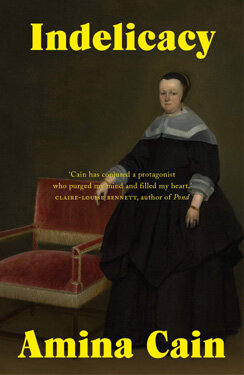
There have been many novels about writers grappling with the process of writing. So much so that it's almost become an eye-rolling cliché and could be considered the ultimate form of navel-gazing. But Amina Cain's “Indelicacy” does something very different with this well trodden subject matter. It's a retrospective tale narrated by Vitória who worked as a cleaner in a museum before marrying a wealthy man. Throughout her life she's been driven by a passionate desire to write. The form of her writing changes over time. She jots down striking observations and interpretations about the paintings she sees in the museum and many of these are reproduced in the text of Cain's novel. In doing so, this story builds to a fascinating meditation about the creative process and the way the imagination interacts with our subjective reality. It also shows how the impulse to create can be a motivation that both sustains and debilitates us as it can supersede every other form of human desire. This novel is also a fascinating character study of an abrasive personality who sometimes struggles or fails to connect with women and men in enticingly dramatic ways. 

The time and place of the story is never specified which gives the narrator's tale a kind of timeless quality. It also allows a more concentrated focus on her inner life and thought process as larger societal issues aren't involved. Yet this novel does also say something striking about class and privilege. Becoming financially secure through her marriage gives her more time and freedom to write, but it also creates new anxieties and problems for the narrator. Her connections with other women also provides an interesting contrast to her own experiences. Antoinette, a fellow cleaner at the museum, was a good friend of hers and driven by materialistic daydreams. But in her new marriage Vitória breaks their connection and they are estranged for a long time afterwards. As the lady of the house, Vitória tries to become friends with her maid Solange, but Solange rebuffs any form of intimacy which frustrates and dismays the narrator. Vitória also forms a friendship with a dancer who becomes very successful and seems to fully realise her artistic ambitions in a way which persistently eludes the narrator.

The novel forms an interesting extension to Woolf's assertion that a female writer needs a room of one's own. Vitória arranges her entire life in a way which makes space for her ability to write just as she endearingly describes her desire for a quiet space to read without interruption from her noisy family in her early life: “When I tried to read, I was always interrupted, so I had to do it where my family couldn't find me. Under a tree that took me thirty minutes to walk to.” She seems to believe that once she has attained the freedom and space to write the great work she's always felt was within her will fully emerge. So it's almost ironic that once she has finally attained this her most sustained piece of writing is about the long process of getting to this point.

It's also funny how she feels no connection with the literary community that surrounds her. At one point she attends a public interview with an author whose books she likes and finds the experience so disappointing that she bluntly insults the author and interviewer calling them “worms... of the worst kind. When you open your mouths, you are male worms eating from a toilet.” Vitória is so forthright and vociferous about what she's feeling she succeeds in alienating herself from almost everyone around her. Yet her response is also a reaction to the male gaze which she has always been hounded by and she's aware of the assumptions men make about her. So her solitude and rejection of men has a pointed reason. It's interesting to consider if this kind of isolation is necessary for the writer's creative process or if this is just symptomatic of an antisocial personality type. Whatever its meaning, this fascinatingly sharp-toothed novel gives a lot to ponder. 

Posted
AuthorEric Karl Anderson
CategoriesAmina Cain
XX by Rian Hughes.jpg

Recently I've found myself getting into reading science fiction. I've not previously been drawn to the genre – I don't have much interest in extraterrestrial life or fantasies about elaborate future civilizations. But I do have an affinity for the science of outer space, the complex nature of consciousness and the beauty of graphic design. Rian Hughes' majestic and innovative novel “XX” delivers all this and more while telling a story that consistently gripped and delighted me for all its 977 pages. The premise is fairly simple. An unnatural signal from outer space is detected and a small London tech company speculates that perhaps it's not a message from aliens but a code which actually contains the aliens themselves. From this spins a thrilling tale where not only life on Earth is in jeopardy but every living thing in the galaxy. 

But this novel is many many other things as well. It contains a science fiction story within a science fiction story – a wonderful ode to the kind of serialized sci-fi tale that might be found in a 50s pulp magazine which also connects with the larger novel. It's about the blurred line between artificial intelligence and human intelligence. It's a meditation on consciousness which pushed me to reconsider how we define memory and our perception of reality. It presents a convincing fictional theory about the formation and structure of the universe. It offers a new way of conceptualizing ideas about creation and fate in regards to religion. It's a history of technology's evolution. Woven into its story are an array of graphics and a variety of fonts (many designed by the author himself) which add meaning to the text in their very design. And it's also a philosophical meditation on the meaning and endpoint of human civilization itself. So there's a lot going on, but the novel is so well plotted and has a cracking sense of humour that it can successfully juggle all this at once.

At the centre of the book is Jack Fenwick, a tech wiz who is capable of seeing distinct patterns in seemingly random bundles of information. This comes in very handy when trying to translate what non-earthly beings might be trying to communicate. He's also somewhere on the spectrum as socializing is incredibly difficult for him. But I was relieved that this crucial character has little of the repellent macho swagger typically found in geek sci-fi heroes such as Mark Watney from “The Martian” or Paul Atreides from “Dune”. Jack is certainly bolshy and confident, but the novel acknowledges how the constrictions of his personality cause real emotional conflict within himself and for those he encounters. There's an equally compelling accompaniment of characters that surround him who excel at their speciality but also struggle fitting into larger society.

What most impressed me about this novel was that for all its complexity, tricksy stylistic quirks and thoughtful conundrums it is an absolute pleasure to read. I chuckled appreciatively as I had to turn the book on its side or upside down to follow the path of its text during a certain section where characters traverse the boundaries of three-dimensional reality. It inspires wonder as I was thoroughly drawn into the many exciting twists of its story which sparked my imagination. But Hughes is also very sophisticated in how he draws upon traditions in science fiction literature while utilizing recent developments in astrophysics and computer technology. It ultimately made me mull over the progressions and limitations of our society while thoroughly entertaining me along the way. Earlier this year I saw Rian Hughes speaking about “XX” at a publisher's event and from his elaborate description I thought this book would be either a work of genius or a messy failure. I'm pleased to say that I found it to be a triumphant work of literary fiction like none I've read before.

Posted
AuthorEric Karl Anderson
CategoriesRian Hughes
4 CommentsPost a comment
original_400_600.jpg

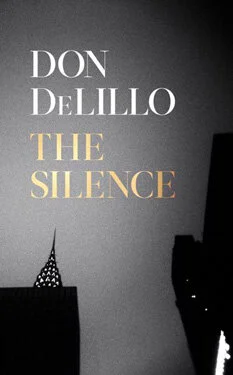
When I was at university it felt like Don DeLillo was one of the most important contemporary writers that you should be reading if you wanted to be serious about literature. His novels “White Noise” and “Libra” were hailed as brilliant critiques of American society and “Underworld” was considered one of the finest recent works worthy of that canonical accolade 'Great American Novel'. I have no quibble with his lofty position in literature's firmament, but I will say that while I appreciate and enjoy his novels I have never loved them. I've found it curious that over the past two decades he's produced a series of relatively slender novels compared to the girth and swagger of “Underworld”. I haven't read any of his books since the publication of “The Body Artist” in 2001 so I was excited to dive into his latest novel. 

“The Silence” is only 116 pages long with large type so I read the novel aloud in its entirety to my partner while we were on a recent cross-European car drive. Since we're in the midst of a pandemic we weren't allowed to stop in certain countries such as France or Switzerland (because their rates of infection are high and we'd have to quarantine when we got back to the UK if we interacted with anyone there.) So reading aloud from a dystopian novel that ominously predicts the breakdown of our technology-addicted world was quite a visceral experience. Luckily my partner and I weren't flying because the novel describes a couple's journey on a plane from Europe to America. During their flight an inexplicable technological “blackout” occurs across the world leading them to crash. However, after dealing with the administrative process that follows the wreckage, they continue with their planned trip to visit a friends' house to watch the Super Bowl despite the fact that their computers, phones and television don't work anymore. The year is 2022 and, though it appears the modern world has utterly collapsed, it feels like nothing is more important to this assemblage of people than carrying on with this great American tradition of watching a football game.

This dialogue-heavy novel has the tone of an absurdist play by Harold Pinter or Eugene Ionesco. Stripped of their virtual connection to the wider world, the individual characters are reduced to sputtering near nonsense acting out what they assume would have been announced on the television or conjuring conspiracy theories about the reason for this technological breakdown. Their thoughts are clouded with the jargon of advertisements and sensational news headlines. It's as if the characters have become so accustomed to virtual engagement that their ability for actual verbal and physical communication has atrophied. Amidst what has become our almost total reliance on technology, DeLillo overtly refers to Einstein's ominous prediction: “I do not know with what weapons World War III will be fought, but World War IV will be fought with sticks and stones.” This novel is posited on that precipice of civilisation's regression. It also asks timely questions about what's left of our personalities when our virtual identities disappear. 

I enjoyed the way this book paints a thought-provokingly surreal picture of the world and how its characters differently get lost in the echoing ruins of their interior reality. But it's a novel that's much more about its mood and atmosphere than forming a probing study of personality. I found it perplexing how one of the wives engages in a bungled erotic exchange with her esoteric former student who has crashed the Super Bowl party. Tessa Berens, a mixed-race character from the plane who obsessively records things in her notebooks, at one point “studies the backs of her hands as if confirming the color, her color, and wondering why she is here and not somewhere else in the world, speaking French or a kind of splintered Haitian Creole.” It's irritating to me when white authors include a non-white character in their stories and then inevitably make their skin colour into a point of identity crisis. This contributed to the sense that these individuals are just character sketches rather than fully fleshed out human beings. Otherwise, I appreciated the unsubtle way DeLillo hammers out his points concerning the modern world because in a political climate dominated by certain factions that barely bother concealing their contempt for humanity there's probably little need for subtlety in novels. In his later years, this accomplished author seems to have found his niche in producing slim finely-carved set pieces that dramatise his worst fears. 

Posted
AuthorEric Karl Anderson
CategoriesDon DeLillo
2 CommentsPost a comment
LonesomeReader_Seven.jpg

It's hard to believe I've only been blogging about books for seven years when it feels like I've been doing it my whole life. Not only is reading a pleasurable daily activity for me but now being on many different online platforms including YouTube, Twitter, Instagram and GoodReads there's barely ever a day when I don't have some form of online interaction with other readers. This is so different from my childhood and college years when I'd spend ages reading and thinking about books and had no one to discuss them with me. I'm thankful for people who are interested in my thoughts about books and I'm especially grateful for the opinions of other readers. Whether their ideas are aligned with my own or greatly differ, my perspective on many books is usefully challenged and shaped by our great virtual community of bookish folk. 

I’m going to sound like a broken record, but with the special challenges this year has presented I really don't know what I'd have done without books to provide much-needed solace. Of course they’re often entertaining, inspiring and informative. With the stress of the world and this extended period of time largely confined at home, I've also grown to value the sheer comfort books provide even more. While many readers have understandably found it challenging to concentrate on reading during this time it's also encouraging to know we can still discuss our zeal for books and connect online.

It was truly momentous for me to get to interview my favourite author Joyce Carol Oates about her life and writing this year. Who'd have thought such dark circumstances would provide an opportunity for a long, enriching zoom chat?! For the past few months I've also been preoccupied with reading entries for the First Novel category of the Costa Book Awards. Judging a book prize is an enormous time commitment and I take it very seriously so want to give each book submitted a fair chance. But this presents a dilemma for me as a blogger since I can't discuss everything I've been reading here since that obviously wouldn't be fair to the judging process. It's meant in the past few weeks I've been more quiet on here than I have been in years - ironic that I've been reading more than ever lately but also blogging less than ever! Nevertheless, I'm so excited to be part of this process and to share the shortlist my fellow judges and I come up with later this year.

I also think it's healthy not to feel it's necessary to analyse and comment upon everything you read. Sometimes I feel guilty when I've read a book and not blogged about it. This could happen for any number of reasons. Sometimes I simply don't have much to say about a particular title I've read or find it too difficult to articulate my thoughts about it or I might just not have the time to write a blog post. I made a resolution at the start of the year not to stress too much about this. The true pleasure of reading is in the act itself and it's impossible to ever fully capture the experience of that. Any reflections I post about here are just my geeky musings. But thanks for following along and I hope you're reading something good!

Posted
AuthorEric Karl Anderson
14 CommentsPost a comment
The Appointment by Katharina Volckmer.jpg

Confessional narratives such as tell-all magazine articles and dramatic reveals on talk shows frequently dominate the media. I could easily imagine the narrator of Katharina Volckmer's debut novel “The Appointment” inhabiting a similar scandal-hungry space as by the second page she admits she's sexually drawn to Hitler and muses “don't you think that there is something kinky about genocide?” But this book isn't simply trying to be sensational, exploitative or shocking. This is an unfiltered monologue from the perspective of a young woman who is a German expat grappling with unsavoury compulsions that consume her. She discusses her tumultuous relationship with a married man and how she lost her job after threatening a coworker. Over the course of the book she speaks to a mysterious individual named Dr Seligman who she's arranged to meet in a London examination room because she believes “the only true comfort we can find in life is to be free from our own lies.” The true nature of their appointment remains elusive, but over the course of their session she reveals her innermost desires and thoughts. In doing so we come to understand her ambiguous feelings about her family and relationships as well as her own national and gender identity. Through her unsparing honesty we're given a fresh perspective about the many instabilities at the centre of being. 

There are some books I'd enthusiastically recommend to absolutely everyone and there are others which I'd only recommend to a select few friends. Because of the explicit and prolonged meditative nature of her monologue, this novel would fall into the later category. But it's one I savoured mulling over as its narrator presents such a challenging point of view with many pithy comments and insights. It made me think more deeply about how the country and family I was born into have impacted how I perceive myself and the way I conduct myself. She also gives such an interesting perspective about desire and relationships – how our intense connection to others becomes its own distinct narrative because “Love, like blood, needs to be a story we can tell.” It reminded me somewhat of the equally short novel “The Collection” in the way it boldly discusses erotic desire in a meaningful way. Volckmer is so insightful about how a prolonged disconnection from others can inhibit our abilities to actually express what we really want: “I think that's what loneliness does to people, Dr Seligman; they forget how to articulate their desires.”

I also really appreciated how meaningfully this story looks at the development of gender identity. The narrator humorously describes how as an adolescent she believed she could simply go into a shop to purchase a penis. It's a similar sentiment to what Hilary Mantel described in the first section of her memoir “Giving Up the Ghost” where as a young girl she assumed that she'd eventually wake up one morning as a boy. There's a sense in our early years that these aspects of our identity aren't necessarily fixed so the way adults relate to us as if being a girl or boy is integral to who we are shapes so much about our attitudes towards gender. Given what a politically-contentious subject gender identity is in the UK at the moment, I think it's especially useful to read a narrative that so openly discusses these experiences. 

This novel also has an uneasy suspense to it given that the narrator is speaking continuously to the silent Dr Seligman. Of course, I initially assumed he was some kind of psychotherapist. But we're given small unsettling clues that this isn't all that's happening since she's positioned in an odd way while talking to him and at one point she notes how he's taking pictures of her. The mystery of what's going on adds a sense of drama because she's being so vulnerable, but there's nothing weak-willed about her because she actively speculates about Dr Seligman's identity and desires as well. It creates a curious atmosphere and sense of tension which engaged me beyond the overriding cerebral nature of this book. “The Appointment” certainly presents a forceful and welcome new voice in fiction. 

Posted
AuthorEric Karl Anderson

I haven't had the time to read as much from this year's Booker longlist as I normally would. I'm very busy reading lots and lots of books as a judge on the Costa Book Awards, but I have read six novels from the longlist including Hilary Mantel's giant end to her trilogy “The Mirror and the Light”. And what a surprise that this bookies' favourite hasn't made the shortlist! It's a shame in a way as it'd have been exciting for Mantel to be the first author to win the Booker three times. However, the novel certainly doesn't need the attention a book prize can give it as much as some of the other novels on this shortlist – 4 of which are by debut novelists. Equally, Dangarembga and Mengiste are authors who haven't received as much attention as Tyler, McCann or Reid. But, if I consider the novels I think are the most accomplished and my favourites, I'd have picked “The Mirror and the Light” and “Such a Fun Age” over “This Mournable Body” and “Real Life”. 

I'm so happy “Shuggie Bain” made the shortlist and I know it's a popular favourite and probably the most likely novel to win at this point. Of course, I can't really make that judgement yet till I've read all the books from the shortlist. I'm very eager to read “The New Wilderness”, “Burnt Sugar” and “The Shadow King”. I'm torn about whether to give “Real Life” another try as I simply didn't enjoy the first 50 pages I read from the novel. But there are so many competing opinions about it I'm almost curious to try finishing it just to see where I fall in the debate. The winner is currently scheduled to be announced on November 17th (that's later in the year than it's usually announced so more reading time!) but, as we all know, event dates can easily change this year. 

2020 Booker Shortlist.jpg

I'll be very interested to know what you think of the list. Let me know in the comments if you've read any of these six novels, what you think of them or which books on the list you're most eager to read. 

Posted
AuthorEric Karl Anderson
5 CommentsPost a comment
The Mirror and the Light Hilary Mantel.jpg

What a journey! I've probably devoted more time to Mantel's Cromwell trilogy than I have to any other series of books since I not only read all 2,009 pages of the novels but also biographical and historical writing to better understand this time period. Though it required a lot of concentration and effort it was definitely worth it. I'm going to miss Cromwell whose soul searching odyssey and unprecedented influence as righthand man to the King comes to a heart-wrenching conclusion in this final book. 

There's a building tension which Mantel incrementally ratchets up and impressively maintains as Cromwell's enemies increase and the politics become so heated over the course of this long novel. Factions within England plot against the ruling monarch amidst the new religious divide and the country's relations with other European nations always feels delicate. Although great promise comes with Henry VIII's new wife Jane Seymour, the King's dynasty is still not secure. The unashamedly classist English noblemen also grow increasingly resentful of Cromwell's influence and power; they never let him forget he's merely the son of a blacksmith without noble lineage. So there's a lot at stake. Mantel uses many fascinating historical details to describe this complicated period of time and bring it alive. It does take patience to follow, but Mantel tempers her narrative with a fantastic humour which prevents the story from becoming dry.

There's so much tantalising banter and innuendo between characters in the royal court or whispered in shadowy corners. This includes speculation about what happens in the royal bed, accusations of treason and hints about shifting loyalties. The dialogue is very funny and kept me consistently engaged, but it goes beyond mere gossip as Mantel shows how politics is so often about the spread of rumours whose presence gradually takes on such weight that the truth becomes irrelevant. It's what leads to countless (many innocent) people being imprisoned and executed in these novels. As was noted in “Bring Up the Bodies” those in power must also rewrite history to suit the ruling force's narrative and objectives going forward. So although this is a story very much rooted in the past, I can see parallels to how our current leaders use similar techniques to craftily mould the narratives of nations to suit their purposes.

As with the previous novels, although this story is closely based on history and the larger outcomes are known, Mantel includes a lot of surprising facts and occasionally she slightly tinkers with some of the historical elements to make Cromwell a more dynamic character. There are several shocking twists in this novel which are so engaging and add to the complexity of the story. One of the most notable is a figure who appears that Cromwell didn't know existed. But there are also delightfully weird details such as how Henry was in disguise when he first met Anne of Cleaves. So I found this a suspenseful story with many sumptuous elements. It's also obviously more emotionally involving than a reading a historical account as we follow Cromwell's emotions and the path of his thoughts as Mantel imagines them.

The author has a tremendous talent for writing about how the ethereal can intrude upon our psychological reality. As both Henry and Cromwell have got older over the course of the novels, the dead have a stronger presence in their lives. It's even noted how “He thinks the dead are crowding us out.” Naturally, their presence is felt more keenly when there are feelings of guilt and regret associated with those who have died and both protagonists wrestle with these unresolved emotions. Mantel has a fantastic way of creating an eerie atmosphere where the presence of the dead make themselves felt. It also gives a different perspective on history because if those people had lived the fate of many and the state of the nation would have had such a different outcome. Part of the tension is that in the moment obviously none of the characters knew what was going to happen and with so many potential ways that events could twist the reader feels their intense struggle to decide what to do. Of course, we have the privilege of knowing the ultimate outcome but in reading this novel we can see potential alternative histories such as if Jane Seymour had lived and convinced Henry to reconcile with the Pope.

However, the biggest point of tension in this particular novel is between Henry and Cromwell. While Thomas has always been a faithful servant, the King can't help being swayed by the whispers being made against him. Figures such as the crafty diplomat Chapuys ominously warns Cromwell about the perilousness of his position since he entirely relies on the King's favour. Equally, Thomas seems to develop a more refined understanding of Henry's position since no matter how close and personal their relationship becomes Henry is a monarch whose role occludes his state of being a mortal man. Thomas insists “What should I want with the emperor if he were emperor of all the world? Your majesty is the only prince, the mirror and the light of other kings.” But Thomas also realises that no matter how faithful he is “If Henry is the Mirror he is the pale actor who sheds no luster of his own but spins in a reflected light. If the light moves, he is gone.” It's only through exercising his deadly power that Henry is able to maintain his position as the absolute monarch. Thomas knows that “This is what Henry does. He uses people up. He takes all they give him and more. When he is finished with them he is noisier and fatter and they are husks or corpses.” Again, I couldn't help thinking of modern equivalents of tyrannical powerful figures such as the current US president or Rupert Murdoch whose colleagues often end up in jail and whose multiple children from different wives form a dynasty.

One of the most obvious questions with a novel this long is: does it justify its length? Certainly some sections felt slightly extraneous to me. Drifting too far into a side plot with yet another character I had to struggle to recall somewhat diluted the power of the central story. There's such a profusion of tales and fascinating figures surrounding this period of royal history that it must have been difficult for Mantel to sift through which ones to include and what to leave out. For instance, the story of Margaret Douglas and Thomas Howard could form a novel in itself and I wanted to know more about them. I can't really begrudge Mantel leaving it in because I'm sure if I reread the novel these characters would come more into their own, but perhaps including so many characters demands more patience from the reader than it needs to. I also think that reading this novel without having read the first two books would really lessen the impact of the story because many parts refer back to scenes from the earlier novels and the narrative assumes the reader is familiar with them too. Additionally, you really need to have read the two previous novels to fully see how Cromwell's character develops over the course of the series and why horrific scenes and figures from his childhood continuously haunt him.

Reading this magnificent series of books is such a worthwhile experience. If you're like me and feel slightly hesitant about how much they might demand from the reader I can assure you they certainly deserve the investment of your consideration and time. It's no accident they are so lauded and widely loved. The story of Henry VIII and his wives has been told and retold so often it seems nearly mythological, but by approaching the politics and meaning of this historical period through the lens of Thomas Cromwell is a brilliant way to explore the workings of power. It also reimagines the heart and mind of an individual who endured so much hardship and trauma I fell in love with his story. Mantel's writing shimmers with so much insight and beauty that becoming immersed in this historical world is a deeply pleasurable experience.

You can also follow a journey I took to the Tower of London while discussing this novel here: https://www.youtube.com/watch?v=HqAq-XYYiwg

Posted
AuthorEric Karl Anderson
CategoriesHilary Mantel
2 CommentsPost a comment
Dominicana Angie Cruz.jpg

Who would have thought the story of a fifteen year old girl who moves from the Dominican Republic to the United States in 1965 is exactly what I wanted and needed to read right now? Over the past several months I've been desperate to lose myself in some really good stories to temporarily avoid the difficult reality we're living through. It's such a blissful relief from the chaos and the magic of a great novel is discovering new love for a character I never could have imagined. “Dominicana” is a novel that swept me up in the immediacy of its story of young Ana Canción whose family pressure her to marry Juan, a man over twice her age. He brings her to New York City even though it was never her dream to live in America. Her family see this pairing as part of a strategic plan for them to eventually move to America as well. Juan and his brothers also seek their own benefits from this match. There's such an intense pressure built into this transactional marriage that made me whole-heartedly feel for Ana's difficult position where she essentially becomes a prisoner in a dank 6th floor apartment in Washington Heights. But I also revelled in the joys and passion she unexpectedly discovers in her accelerated maturity and as she gradually discovers what she truly wants in life. Angie Cruz evokes the intense feeling of this perilous coming-of-age tale with evocative detail. 

I enjoyed how as Ana immerses herself in American culture she begins to imitate and parody it. So after watching 'I Love Lucy' or 'The Sound of Music' she incorporates herself into their narratives in a way which playfully undermines their idyllic images. Equally, on a trip to the World's Fair she becomes aware that she must present an exaggerated image of her own culture in order to sell pastelitos to the American public. She also becomes aware of all the distinct ethnic neighbourhoods in the city and the stereotypes that develop alongside them which are perpetuated by Juan, but when she actually begins talking to different people those stereotypes are dispelled. I also thought it was moving how Ana naturally dreams of being saved by a knight in shining armour, but learns she needs to rely on herself as an independent woman to achieve what she really wants in life. Although both Juan and Ana's mother place unfair expectations upon Ana and take advantage of her, Cruz is careful to show how they are also subjected to pressures placed upon them. This certainly doesn't justify their actions, but it shows how they are all caught in a system which perpetuates different forms of oppression. There are also larger shifts happening in both America and the Dominican Republic which Ana is only slightly aware of but these are delicately incorporated into the background of the story. However, Ana is really at the heart of this novel and I was glad to be fully drawn into her solitary existence.

Posted
AuthorEric Karl Anderson
CategoriesAngie Cruz
The Enlightenment of the Greengage Tree Shokoofeh Azar.jpg

When I want to learn about world events and political revolutions there's a reason why I don't only read newspaper articles and history books. There's so much more to a country, its people and their culture than can be found in facts. “The Enlightenment of the Greengage Tree” describes an Iranian family splintered apart by the country's 1979 Islamic Revolution. They flee their home in Tehran and settle in a small village with the hope of continuing their lives in relative peace but find the new regime imposes changes which hinder or end their lives. The novel doesn't shrink from the brutality of what happens to people who are imprisoned, murdered or suffer wider violence because their beliefs and opinions run counter to the new order. But it also fills these stories with fantastic occurrences including encounters with jinns and a girl who morphs into a mermaid. These tales which draw upon Persian mythology are a way for the characters to process what's happening to them but they also keep their culture alive when it's being quashed by an enforced monotheistic government. A character named Beeta comments “when life is so deficient and mundane why shouldn't imagination supplement reality to liven it up?” So this novel's method of telling also produces an enthralling and beautifully inventive story. 

It's noted how many people in the country simply want to get used to the new ruling order but by situating their personal stories within the full breadth of their community's folklore the family commit a passionate act of defiance. Similarly, they seek to defend what is being censored or erased. They are great readers whose books include many titles from Western literature as well as Persian poetry. One of the most vivid and striking scenes comes when their library is being burned in a cruelly slapdash fashion. Bahar, the narrator of this novel witnesses its destruction and while it is perishing she recalls many characters and lines from the books going up in flames. It feels as if holding them in her thoughts will make them continue past the physical pages' destruction. Indeed, the father encourages the family to write down as much as they can remember from the books which have been lost.

Much later, a harrowing moment occurs when the imprisoned father is ordered to write a confession by the morality police and instead recreates the fantastical tales of his family life. It seems just as difficult for his captors to believe in the tragic losses he's suffered as a result of the regime change as it is for them to believe in vengeful spirits. It's powerful how Azar implies it's just as dangerous to be unaware of the full consequences of wider political changes as it is to blindly follow the dictates of a new order.

When revolutionary guards check the family's car for forbidden items they discover a copy of Gabriel Garcia Marquez's “One Hundred Years of Solitude”. The framework for “The Enlightenment of the Greengage Tree” is somewhat influenced by that novel's style but, as Azar has noted, it's also based in magical realism that can be found in Persian literature. Since I read this novel as part of the Booker International Prize shortlist, it's an interesting coincidence that another book on the list “Hurricane Season” was also directly influenced by another Marquez novel. An enjoyable part of following prize lists is noticing small parallels like this between very different books.

Overall, I felt this is a stunning novel which is full of passion and romance. It's also very effective in giving voice to those whose stories aren't accounted for in most history books. It makes me want to know more about the country's history as well as its culture and literature.

Posted
AuthorEric Karl Anderson
CategoriesShokoofeh Azar
5 CommentsPost a comment
Earthlings_SayakaMurata.jpg

When “Convenience Store Woman”, Sayaka Murata's first novel to be translated into English was published a couple of years ago it became a cult hit with many enthusiastic fans (including me!) She was already a well-established writer in Japan having published ten books and won multiple prominent literary awards. Now more of her books are being translated into English including “Earthlings” which explores a lot of this author’s familiar themes such as alienation and societal pressures but the story dramatizes them from a surprising new angle and contains more shocking twists. The novel centres around Natsuki, an adolescent girl who develops a strong bond with her cousin Yuu as the pair believe they are aliens who've come from a planet called Popinpobopia. Many years later Natsuki forms an unconventional marriage with a socially awkward man named Tomoya. They refer to society as The Factory wherein they are expected to function as mechanical parts by creating babies and serving specific functions: “Everyone believed in the Factory. Everyone was brainwashed by the Factory and did as they were told.” To escape this fate, the pair travel to Natsuki’s remote family home Akishina where they create a new connection with Yuu and try to establish a way of being outside of social expectations.

Murata’s writing is so compelling in the way she gives voice to outsiders - people who don’t quite fit into mainstream society and feel they must grudgingly obey unwritten social rules in order to survive. It makes it very easy to relate to the author’s central characters who take a weary view of people who do excel at being model citizens. For instance Natsuki observes of her friend Shizuka that “She had always been exemplary in learning to be a woman, truly a straight-A student. It looked excruciatingly tiring.” There’s an implicit humour in this wry view of others, but there’s a distinction between being socially-awkward and a sociopath. Murata’s characters tread that line and this makes her plots so compelling because it feels like at any moment the story might stray into violence, tragedy and madness.

This novel also exposes the hypocrisy of living in a patriarchal society where the authority of a good-looking man is valued over the testimony of an adolescent girl. During Natsuki’s childhood, her handsome teacher Mr Igasaki takes a predatory interest in her. However, nobody believes Natsuki’s account especially not the other women in her life – not even female friends she confides to in her early adulthood. It compounds her feelings of being an outsider and makes her even more mistrustful of following the expectations which are placed upon her.

Many will be shocked by the extremes this novel goes to. The ending of “Earthlings” is really wild and it’s likely to divide the opinions of different readers. Like with the novel “A Little Life”, I think many readers who initially feel sympathetic to the characters and story might become repelled by how far the author goes. In some ways, I found it frustrating as it does feel like Murata sacrifices a consistency with her characters for the sake of shock value. The attitude of Natsuki’s cousin Yuu changes very quickly and her husband Tomoya’s fear of physical contact is abruptly abandoned. But I don’t think this is simply a case of the author prioritizing a rhapsodic plot over the integrity of her characters.

There are a number of different interpretations you could make about the ending. It could be viewed in the realms of pure fantasy where the characters are what they believe they are. It could be seen as a form of joint hysteria. Or you could interpret it as a very intense example of how people will sometimes do terrible things to alienate themselves from society in order to violently free themselves from its rules. When his family try to take charge of him Tomoya desperately seeks a way to do something so shocking he’ll be permanently outcast. Similarly, at the end the trio go so outside the realms of convention they are absconding from any hope of being integrated into normal society again. It could be viewed as a radical form of liberation.

In some ways “Convenience Store Woman” felt like a more restrained and accomplished novel with hints of potential horror – whereas “Earthlings” tips into full-blown terror as its protagonists become lost in fantasy and violence. But it’s fascinating how this novel gives an interesting perspective on feelings of alienation. It’s common to imagine oneself as having been born in the wrong time or place when feeling crushed by expectations which go against one’s instincts. Here the characters really believe themselves to be aliens, but because we’re so entrenched in their perspective it’s so-called conventional people who come to seem like aliens with their banal rituals and rigid expectations. Murata inventively traces the way different outsiders cope by submitting to, rebelling against or escaping from the dominant ideologies of a society they are forced to live in. It makes for a vivid, thrilling and thought-provoking reading experience.

Posted
AuthorEric Karl Anderson
CategoriesSayaka Murata
3 CommentsPost a comment
ShuggieBain_DouglasStuart.jpg

This must be one of the most powerful accounts of alcoholism that I've ever read. “Shuggie Bain” follows the early life of its eponymous hero, but really this novel and Shuggie himself are dedicated to his mother Agnes. In the early 1980s she's raising her children in a Scottish mining town whose workforce has been stripped of its livelihood because of Thatcher's policies. With clear-eyed detail the story shows the reality of her increasing dependency on drinking: the self-deception and the faltering attempts to deceive those around her, the schemes to obtain a dozen cans of Special Brew, the blackouts and humiliation, the men who prey upon her or enable her, the women who gossip about her and join her in drinking sessions, the way drinking makes her unemployable and even more dependant on benefits, how alcohol takes priority over food when shopping at the grocery store and how her children are left with nothing to eat. All the while adolescent Shuggie maintains a steadfast belief that his mother will get better even after the rest of her family abandons her. He's a sensitive, effeminate boy labelled as “no right” by many of the locals and it's heartbreaking how Agnes' alcoholism eventually comes between them as well. But this novel also captures the warmth, humour and humanity in its characters' lives. This is an intimate, gracefully-told story about a very ugly situation which expands to say much larger things about the way social and economic issues affect the lives of working class families. 

The novel also poignantly shows how Shuggie is held to stereotypical standards of masculinity. The way he talks and walks is criticised and mocked by other children and adult men in the community. Part of what makes the men so insecure and defensive about their manhood is that their livelihood has been threatened. One character observes how in Glasgow “Men were losing their very masculinity.” So I appreciate the way the story demonstrates how this intolerance isn't just a product of traditional notions about gender being rigidly perpetuated. There's also a budding awareness of Shuggie's sexuality which is delicately portrayed in the opening section which is set in the 90s. He's aware of a man gazing upon his body with desire and it's an awareness of this desire (more than an impulse for anything physical to happen) that produces an awareness that he's gay. I found it very moving how Shuggie makes some rare connections with a precious few people who also don't fit the mould and who he's also able to connect with by being the child of an alcoholic. I also appreciated how in the background of the story it’s revealed the city of Glasgow has divisions along the sectarian lines of Catholic and Protestant. I've not seen this portrayed in other novels except “The Walk Home” by Rachel Seiffert. But overall the story shows how poverty amplifies and re-enforces this division and others in the community. “Shuggie Bain” is a very special, personal story and it also gives a dignified voice to a community and people who aren't often portrayed in literature.

Posted
AuthorEric Karl Anderson
CategoriesDouglas Stuart
7 CommentsPost a comment
Happening_AnnieErnaux.jpg

I've been wanting to explore more of Ernaux's writing since reading her extraordinary book “The Years” last year which so creatively blended autobiographical narrative with social commentary. Her slender book “Happening” is in a similar vein but about a specific period of her history. In 1963 Ernaux was twenty three years old, single and pregnant. She desperately wanted to terminate the pregnancy because of the social shame it'd bring to her family and the limitations it'd impose on her early life. Since abortion was illegal at that time she had to resort to other means. She describes the mindset of the time: “As was often the case, you couldn't tell whether abortion was banned because it was wrong or wrong because it was banned. People judged according to the law, they didn't judge the law.” For many years she didn't discuss this period from her past, but in this book she describes her extremely difficult experiences while also meditating on the process of grappling with her memories. In this she makes a short, impactful statement about changing times and the challenges young women face in particular.

It's one thing to read about a period of history in a specific location where abortion was illegal but it's quite different to read about an individual's own experiences. Part of the reason it took her so long to write about this was that it was a subject not often discussed in society, but Ernaux maintains her conviction that “any experience, whatever its nature, has the inalienable right to be chronicled. There is no such thing as a lesser truth.” Something which makes Ernaux's story so impactful are her feelings of ambiguity about her experiences – not that she didn't make the right choice but that she's still feeling through what this incident meant in her life and she's still trying to unravel why the process of getting an abortion was so difficult. For instance, she was treated very brusquely in the hospital and she eventually understands that this is because they believed she was working class rather than a university student. As with many social taboos, the process of overcoming obstacles and avoiding the attendant feelings of shame are made more difficult for poorer and more marginalized members of society.

She marks her experiences as a definitive point of transition in her life and what I found most moving were the melancholy images which have been pressed into her memories. The daily sense of fear and gloom she felt at the time resurfaces so sharply when recalling a small exchange or a physical object from the past. She describes how “Above all I wish to capture the impression of a steady flow of unhappiness, conveyed by a pharmacist's inquisitive attitude or the sight of a hairbrush by a steaming basin of water.” This narrative seems to be a way of disentangling the continuing effects of trauma. There's a straightforward honesty to Ernaux's writing I find so refreshing because she so openly discusses her process of composing her history and subject matter while she writes it. With some other writers this might seem too self-conscious but with Ernaux it takes on a meaningful clarity. She states how “Maybe the true purpose of my life is for my body, my sensations and my thoughts to become writing, in other words, something intelligible and universal, causing my existence to merge into the lives and heads of other people.” As with any great writer, she manages to do just this turning the extremely personal into something which has universal meaning.

Posted
AuthorEric Karl Anderson
CategoriesAnnie Ernaux