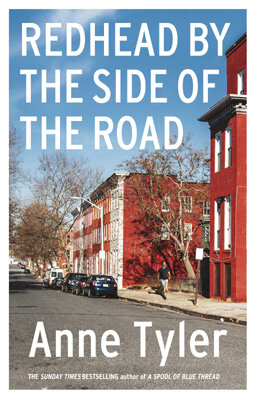
Like a lot of people I’ve sometimes found reading difficult during this period of national lockdown. It can be challenging to concentrate when there’s so much anxiety all around me. So the calm and measured thoughtfulness found in Anne Tyler’s new novel is greatly welcome at this time. Since she focuses on psychological nuance and a realistic portrayal of daily experience nothing very dramatic or distressing often occurs in Tyler’s novels. That’s true for this book as well although there is an imagined apocalyptic scene which felt surprisingly relevant for this current time. At one point the protagonist has a fantasy that his community has been hit by “one of those neutron bombs they used to talk about that wiped out all of humanity but left the buildings intact” so that he imagines himself as the sole survivor and, while he would occupy himself with his usual solitary activities, he’d eventually go out looking for other people and find “Nothing.” This is exactly the sort of existential crisis many are experiencing now when they venture outside to a normally bustling community and find no one around. So this added a touching poignancy to an all-around gentle story about a man caught in the humdrum routines of his well-established lifestyle.

The novel follows the daily experiences of Micah, a man on the brink of middle age who has a lowkey life working as a “glorified handyman” assisting local individuals with their computer problems. He runs his independent business under the name Tech Hermit which is a title all too appropriate for him. Although he has a long-term girlfriend and close connections with his family, his life is dominated by tidy habits which shield him from any messiness in his home or emotional messiness. Eventually this distances him from those closest to him and when the son of an old flame arrives at his doorstep he finds himself confronted by how severely circumscribed his existence has become. As often happens in Tyler’s novel, the mundane details of ordinary life gradually build to something much more moving, substantial and profound. Few writers can capture the way individuals are trapped in the steady flow of time the way Tyler does.

My favourite novel by Tyler is “Ladder of Years” which concerns a wife and mother who literally walks away from her life to enjoy some precious much-needed solitude. In a way, “Redhead by the Side of the Road” offers an opposite point of view about a man who has consciously built a self-contained solitary world for himself but finds when he’s left absolutely alone he needs others to provide a form of disruption to his orderly routines. This causes him to glancingly imagine others around him when there’s really no one there such as when he comes upon a fire hydrant that he regularly passes by: “He momentarily mistook the hydrant for a redhead and gave his usual shake of the shoulders at how repetitious this thought was, how repetitious all his thoughts were, how they ran in a deep rut and how his entire life ran in a rut, really.” While many of us long for a special kind of solace found in being entirely alone, an important aspect of human nature is maintaining some form of human contact. Yes, this will inevitably lead to disorder or even chaos but part of the pleasure of living is not being able to predict what these interactions will bring. This novel shows that Tyler’s humble story can provide a startlingly timely message.
Posted
AuthorEric Karl Anderson
CategoriesAnne Tyler
4 CommentsPost a comment

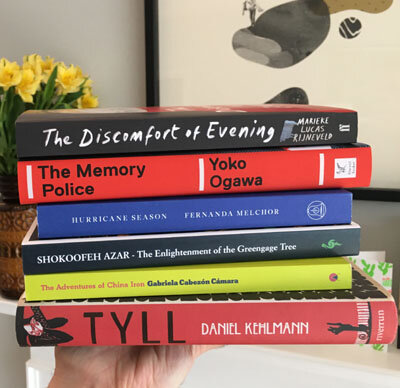
The shortlist for this year’s International Booker prize was announced online yesterday – the planned event for this had to be cancelled because of the global pandemic. If nothing else, recent events show how important it is for us to access literature from other countries to stay connected and in dialogue with each other during these uncertain times. It’s notable how the shortlisted novels reach out to many different corners of the globe including Japan, Iran, the Netherlands, Germany, Mexico and Argentina. The list is also largely populated by female authors and a few of the novels give radical new retellings of national myths, legends or origin stories. So I especially appreciate how this group of books gives voice to female, queer and working class perspectives from history which are often left out of historical accounts. You can watch my quick reaction to this year’s shortlist announcement in this video: https://www.youtube.com/watch?v=1udkZ9uMBTA

I’ve had the pleasure of reading a number of the nominated novels from the longlist over the past month and I’m delighted with the group of six novels the judges have chosen. Three in particular which stand out to me are the excellent historical novel “Tyll” which takes place during the Thirty Year War in central Europe, “Hurricane Season” which gives a panoramic look at life in a Mexican town centring around the death of an individual branded a witch and “The Memory Police” which creatively uses a dystopian story to ponder philosophical and psychological issues to do with memory. I enjoyed reading “The Adventures of China Iron” but had some issues with how fanciful the narrative became. And “The Discomfort of Evening” was an interesting book from a promising new writer but felt too meandering to come together for me. The only novel on the shortlist I’ve not read yet is “The Enlightenment of the Greengage Tree” but I’ve heard such excellent things about this novel from other people who’ve read it that I’m greatly anticipating it now.

I was surprised not to see “The Eighth Life” on the list because I’m currently caught in reading this sweeping epic and I was disappointed that “The Other Name” wasn’t shortlisted as this is such a movingly meditative novel. But overall it’s an excellent list. Let me know if you’ve read any of these novels and what you think of them or if you’re keen to give any a try now.

While there have been many think pieces about the potential joys, pitfalls and dangers of our social media age, I haven’t read much fiction which imaginatively and realistically tackles these issues. “Little Eyes” presents a society where mechanical stuffed animals called “kentukis” become a new craze for people around the world – from an idle boy in Antigua to a pensive artist’s wife in Oaxaco to a lonely old woman in Lima. The cute mechanized animals are fitted with a camera which links to an anonymous controller or “dweller” who voyeuristically watches the life of the owner or “keeper”. Samanta Schweblin puts her characteristic dark spin on this story as a series of characters find themselves entangled in connections which spiral out of control and threaten to overwhelm them. 

It feels entirely plausible that this is a device which would catch on and become a thing. It's like a cross between reality TV, social media apps and a robotic pet. The characters are initially confused about why they want to either own a kentukis or inhabit one, but they're drawn to it out of curiosity and gradually find themselves addicted. The anonymous connections they create introduce power plays between keepers and dwellers. It's clever how the novel shows hidden aspects of the characters' personalities emerging through their interactions with the devices in surprising and unforeseen ways. Some might become exhibitionistic or needy or amorous or jealous or even sadistic.

The kentukis come to fulfil what's lacking in many people's lives and thus provide them with a controlled double existence: “She had two lives, and that was much better than barely having one and limping around in free fall.” But the counter life that the kentukis provide gradually get out of control. A bit of indulgent fun becomes deadly serious as the virtual interactions spill over into real life. Several of the storylines become quite tense such as a kentukis who witnesses a kidnapping while others are more meditative such as a boy who completely loses himself as a dweller wanting only to exist within a liberated kentukis dragon.

Like with all new technology there are good and bad consequences to it becoming a fixture in so many people's lives. While it's easy to focus on the sensationalized negative consequences of the devices, I appreciate how Schweblin also explores the benefits they provide. I also enjoyed how this novel made me think more deeply about my own online interactions and my ambivalence about participating in so many social media platforms. Often we can plunge into various online activities and find ourselves swept into the novelty of recreating ourselves and participating in interactions with largely unknown people around the world. The consequences of doing so might be disappointingly banal or surprisingly revelatory, but they give us new ways to test the shape of our identities. Schweblin's novel is an entertaining, compelling and fascinating exploration of this.

Posted
AuthorEric Karl Anderson
2 CommentsPost a comment

A clichéd complaint about modern art is that it’s something a child could do – as if little or no thought has gone into the process behind it. In a way, “The Other Name” might serve as an extended riposte to this dismissive attitude as it details in 351 densely-packed pages an artist agonizing over two intersecting lines he’s painted on a canvass. Of course, it’s about much more than that but this is the primary dilemma at the centre of this deeply introspective novel. Asle is an artist living a sparse monastic existence in a small Norwegian village and his only real social contact is with a neighbour that clears the snow from his driveway. But he also occasionally encounters a doppelganger, an alcoholic artist also named Asle who lives some distance away and who he finds near death passed out in a snow drift. As Asle travels to assist his precarious double he moves in and out of memories and fantasies in a way which fascinatingly traverses the usual boundaries of time and space. The result is a moving and complex meditation on the meaning of art, faith and relationships.

It’s interesting how Asle’s thoughts frequently twist around themselves, repeat or meander in a way which can feel initially frustrating, but all of a sudden they take on a meaning which is profound and revelatory. For instance, a long strange scene where Asle observes two young people frolicking outside results in the statement “We’re making each other like children again” and helped me consider how deep intimacy between adults can inspire a kind of reversion to infancy in our behaviour and manner. It’s a poignant insight into the vulnerability and innocence adults still carry inside them and which is little shown in ordinary life but might be revealed to a significant other. However, the act of watching this couple also takes on strange and sinister undertones as it becomes an act of voyeurism whereby the pair alternately become Asle and his deceased wife or Asle with Asle himself. It’s as if he frequently wanders into shifting new landscapes which blend intense memory with fantasy.

It’s not only Asle who exists in a strange sort of duality, but a woman he meets and who takes charge of his double’s dog also takes on multiple identities. Her name might be Guro or Silje or Silja, but no matter how many times she introduces herself or refers to their previous intimacy Asle is consistency mystified by her. This might be another form of casual misogyny which is also made in that earlier scene when the pair he observes engage in hurried intercourse: “she liked it, even when she was saying she didn’t like it she was actually liking it, she says and he says yes well that’s how it often is”. This attitude is alarming but I’m guessing Asle’s obliviousness to the thoughts and feelings of women is part of his macho disregard for the reality of women and preferred reverence for the idea of them (as in the form of his late wife.)

The doppelganger acts as a distressed acquaintance who Asle strives to save, but he’s also a way of enacting an intense conversation with oneself. In some ways the narrator is an idealized self: faithful, sober, intensely dedicated to his art and lives a simple thrifty lifestyle. Yet he’s also emotionally repressed and actively blocks any thought or mention of his deceased wife. Whereas his double is reckless, unproductive and wants nothing more than to drink. Thus he represents an entirely different way of dealing with insurmountable emotion. While it appears nothing much occurs over the course of the novel Asle gradually works backward to a stage where these dualities can achieve some form of cohesion. There’s an extended sequence where he imaginatively journeys with his sister into places their mother forbid and the novel ends with a shocking and significantly traumatic memory. I’m still really uncertain how I feel about the final few pages. I can’t decide if it’s a crass way of explaining Asle’s psychological complexity or if it adds an interesting way of viewing everything that proceeded it.

Nevertheless, I enjoyed the thoughtful space this story patiently opens up over the course of the novel. It’s a book that you definitely need to be in the mood for, but I found it very relaxing to read and I especially appreciate the way it considers the creative process. Asle occasionally refers to a hidden light that can be seen in successful artwork and to realize this vision in a painting “it’s not the painter who sees, it’s something else seeing through the painter, and it’s like this something is trapped in the picture and speaks silently from it, and it might be one single brushstroke that makes the picture able to speak like that, and it’s impossible to understand”. Fosse’s reverence for the deep engagement and compelling mystery of art whether it’s in paintings or literature is poignantly portrayed in this soulful and searching story.

Posted
AuthorEric Karl Anderson
CategoriesJon Fosse

I sometimes find it challenging to read historical novels which concern particular wars or political movements when I don’t have much knowledge of these past events. I like to get fully immersed in a story and it’s hard to do that if I feel like I frequently have to check Wikipedia to understand a historical context or situation. This is why it took me so many years to get into “Wolf Hall”. Daniel Kehlmann’s novel “Tyll” concerns The Thirty Years War, German folklore and other subjects from 1600s central Europe that I have even less knowledge about than the Tudor period! But I didn’t mind that so much because the characters (many of whom are compelled by superstitious beliefs) are so engaging and its story of witch trials and the power struggles of self-entitled monarchs is so compelling. It meant I was completely charmed by the book even if I didn’t fully understand the intricacies of several sections. Also, while this novel begins like a biographical account of Tyll Ulenspiegel, a prankster from numerous German folk tales, it is Elizabeth Stuart, an English noblewoman who was briefly Queen of Bohemia and popularly known as the “Winter Queen”, who emerges as the true hero of the novel.

Tyll is raised in tragic circumstances. He's the son of a miller who is put on trial for being a warlock where a string of witnesses are forced to testify against him under intimidation and torture. From this Tyll comes through as a canny individual who has the ability to survive deadly circumstances. But also, as a prototypical trickster and professional jester, Tyll imbues this novel with a wicked sense of humour. He harbours grudges against those who abuse their power and subverts that by mocking them to their faces like a comedy roasting using satirical or even scatological jokes. It was probably the only way to speak truth to power at the time without getting your head chopped off. 

So he's an interesting character who avoids the fate of many who died at the time because of plague, war or religious persecution. But, just as Tyll evades being captured or killed in several situations, he also slyly slips out of the narrative for much of the later parts of this novel and only pops back into the story occasionally to disrupt or comment on the proceedings. The novel comes to focus more on Frederick V and Elizabeth Stuart, two high ranking figures of European nobility and royal blood who briefly ruled as King and Queen of Bohemia, but they were forced to abdicate these roles after only one Winter. The politics surrounding this are quite complex and it's something I did have to do a lot of extra reading on just to grasp the circumstances. That's definitely not a bad thing because it is really interesting, but it did pull me out of the story a bit and means a rereading would probably make the experience of this novel more pleasurable.

The main point is that Elizabeth Stuart is such a fascinating historical figure who I hadn't known about before reading this novel. She was the daughter of James VI and Anne of Denmark, highly educated, spoke several languages and had a special passion for reading and literature. I enjoyed how the novel depicts her tricky political status and the personal difficulties this caused for her as she realised she was in a position where she could dramatically alter the fate of history. She comes across as an astute figure who cleverly knows how to survive difficult circumstances just as Tyll does. Whereas some of the main rulers at the time such as her husband Frederick V and Gustavus Adolphus of Sweden come across more as bumbling or blowhard potentates playing with power. But Elizabeth is quite strategic in her movements during her extended exile after she and her husband are deposed. I'll be keen to read more about her and it appears several biographies and books about her exist.

With the shifts in focus and leaps in time throughout the novel it did come across as somewhat uneven to me. But overall I was enraptured by the story and writing which is moving, richly evocative and deeply thoughtful all at once. This novel is a strong contender from this year’s Booker International prize list and I'll be keen to read Kehlmann's previous novels.

Posted
AuthorEric Karl Anderson
CategoriesDaniel Kehlmann
2 CommentsPost a comment

Imagine you’re a writer who gets a phone call informing you that you’ve won a literary prize worth $165,000 and you didn’t even know that you were nominated for it! That’s what’s just happened for the eight recipients of this year’s Windham-Campbell Prizes. Part of what’s so brilliant about these literary prizes is that they don’t follow the traditional model of book awards by announcing their judges or lists of candidates beforehand; they are simply announced giving writers a previously unforeseen level of financial security to continue working on their artform.

Two winners are selected for the categories including Fiction, Non-Fiction, Drama and Poetry. It’s notable that this year it’s a female dominated winners list with seven women and one man. Since this is a global prize these are also writers whose origins span many different countries including India, China, Zambia, Australia and the United States. I’m especially thrilled to see Yiyun Li on this year’s list since I loved reading her memoir “Dear Friend, from My Life I Write to You in Your Life” and novel “Where Reasons End”. The other recipient of this year’s fiction prize is Namwali Serpell whose novel “The Old Drift” has received a large amount of praise and is a book I’ve been meaning to read.

In the poetry category the winners are Bhanu Kapil who is the author of several collections and is a fellow blogger at the brilliantly titled The Vortex of Formidable Sparkles. The other winner is Jonah Mixon-Webster whose debut poetry collection Stereo(TYPE) addresses the economic and health crisis in his native city of Flint, Michigan. The recipients of the drama category are Julia Cho, the author of nine plays which explore the power and frailty of human connection—between cultures, between individuals, between generations, between institutions; and Aleshea Harris whose two plays confront the physical and psychological wounds of misogyny and racism. The recipients of the nonfiction category are Maria Tumarkin, author of four nonfiction books which explore the interrelatedness of past and present; and Anne Boyer whose writing blurs the boundaries between different forms as exemplified in her most recent book “The Undying” which is a non-traditional memoir about cancer.

I’m looking forward to exploring the work of these authors. The Windham-Campbell Prizes are exceptionally good at highlighting and raising awareness for literary talent that is under-appreciated and under-represented in mainstream publishing. Let me know if you’ve read any of these winners or which you’re most interested in reading now.

Posted
AuthorEric Karl Anderson
2 CommentsPost a comment

This is a novel with such an uplifting energy to it as it follows the adventures of a young woman caught in a time of bloody conflict and the formation of a modern nation. But it's also a clever and self-assured historical satire in the way it upturns patriarchal values in favour of those who are marginalized – especially female and queer individuals. “The Adventures of China Iron” feels like a comedy in the classic sense of beginning in tragic circumstances and ending with a joyous resolution. Set in Argentina during the political turbulence of 1872, the story concerns a journey of a heroine born into nothing; she is an orphan without a name, raised by a tyrannical woman and forced into marriage during her adolescence to the gaucho Martin Fierro, a heroic masculine figure from Argentine folklore. After giving birth to two sons she is cast aside by her famed husband and this is where the novel starts with this heroine establishing her own name as well as naming a stray dog who has become her only friend. She reclaims the name China from its dismissive/negative connotations (it's a Quechuan term for a lower-class girl or woman) and maintains her husband's surname of Iron, the English word for Fierro. From here she bands together with Liz, a Scottish woman travelling across country and Rosario, a cattle farmer searching for somewhere to set up with his herd. We follow their entertaining journey to find a home and establish a family that is “linked by more than bloodlines.”

It's great reading how China Iron becomes her own individual hacking off her hair and how this allows her to tread more easily between a masculine and feminine sensibility. I also found it moving the way she gradually establishes a sexual relationship with Liz to form emotional bonds and discover bodily pleasures which were previously denied to her. But one of the most powerful parts of her education comes in her new way of mentally mapping the world to understand the underlying national and economic conditions which result in social disparities. When drinking a cup of tea she comes to understand the “suffering that also travels in tea” and that in drinking it “we drink the broken back of the man bent double as he cuts the leaves, and the broken back of the man carrying them.”

This also informs what's happening in her own country especially when they come to stay with a Colonel who has basically enslaved a number of gauchos and tortures those who do not submit to the colonial powers. These are people whose labour is exploited because the attitude towards the gauchos is that “the only country they were going to get was the one they were building for the colonels and landowners”. Therefore it's no wonder that the narrative of Martin Fierro which depicts the abuse of the gauchos and their role in the country's independence from Spain was so desired by the people and he became a celebrated figure. But while doing so it also valorises a certain image of masculinity and relegates female participants like China to being little more than a footnote. So it's inventive how this novel rewrites this foundational text recasting the myth of Martin Fierro and how the epic poem came to be created.

I enjoyed how China's relationships with both Liz and Martin becomes more complex over the course of the story. But an issue I had was when China and her crew finally arrive at a community of Indians. The prose comes to feel so exaggerated in its lushness and overly romanticised. China believes that she becomes one of the Indians so much so that the narrative takes on a collective voice “we don't want to crush anything underfoot... Our rivers are alive and the streams are animals, they know that we live as one, that we only kill what we need to eat”. This idealized view of a community feels so over-the-top that it came across as ridiculously simplified when I'm sure the reality was much more nuanced and complex. I appreciate that the story was keeping to a more comic tone and it's refreshing to read a historical novel where queer individuals aren't fated to a life of misery or death. But, for me, the later part of the book undermines the power of the story thus far. Nevertheless, this novel is very clever in how it offers an alternative view of a nation's mythology and overall it's a very pleasurable read.

I have a special fondness for novels that are about actresses/actors. Two of my favourite books are Joyce Carol Oates’ “Blonde” about the actress Norma Jean Baker who becomes the persona Marilyn Monroe and Susan Sontag’s “In America” about the Polish actress Helena Modjeska who helped found a utopian community in the late 1800s. I even wrote my MA dissertation on these novels and how both writers explore the borders between identity and performance in their stories. I also have a love for Anne Enright’s writing as few other current authors are able to write about family, love and national identity the way she can as exemplified in her previous novel “The Green Road” which is a fascinating depiction of all these things.

This means that “Actress” is the perfect novel for me and it fully delivered because I absolutely adored it. It’s told from the perspective of Norah, a writer who has written five novels and now feels ready to tell the story of her mother Katherine O’Dell who died at the relatively early age of 58. At the height of her mother’s career she was a great actress of Broadway and Hollywood and, at the lower end of it, found herself doing TV commercials and became the focus of a tabloid scandal. Though her mother’s star faded long ago and Norah herself is much older, the effects of that celebrity and the uneasy relationship it created between them are still something Norah wrestles with. In this story Norah tries to piece together a history of Katherine’s life and the real impact of her fame.

Something I find so engaging about Enright’s writing is that almost every sentence feels like it’s layered with a delicious form of irony. Norah’s backward glance at her childhood and Katherine’s life is coloured by this humorous point of view where certain things seem obvious now when they may have not been at the time. For instance, she understands now that her mother struggled with her finances though she continued to live as if she were affluent, many of the romantic men who hovered around her mother were in fact gay and when her mother made excuses for not spending time with her daughter after a show it was really because she wanted to be alone. These are things she probably intuitively knew at the time, but seeing things in retrospect makes them much clearer – or apparently so because it’s easy to place an interpretation on events which are long past. Nevertheless, I found Norah’s cynical tone about the whole artifice of fame and the theatrical world very amusing.

Part of Katherine’s struggle as an artist is that she finds herself typecast as embodying a certain romanticised view of old Ireland. Norah frequently comments on how Katherine feels pressured to uphold this image in her dress and dyed red hair. It’s upheld even more when her mother makes an advertisement for Irish butter which becomes infamous and Enright’s description of the over-the-top ad is hilarious. But it’s interesting how Katherine’s struggle to break away from this image also mirrors the country’s shifting politics and characters over the decades. Norah poignantly recounts her experiences during The Troubles and how these events make everything change but, at the same time, nothing changes: “A funny thing happens when the world turns, as it turned for us on the night we burned the British Embassy down. You wake up the next morning and carry on.” Through this story Enright gives a fascinating view on an evolving sense of what it means to be Irish.

I also really appreciate the dynamic way Enright writes about love and sex. The public endlessly speculate about Katherine’s sexual life as does Norah herself as she’s not entirely certain who her mother slept with or who her own father is. But the reader is drawn more into Norah’s own sexual history and relationship with sex as she describes her uninhibited views about it. When pondering the nature of sex she poignantly describes the complicated interplay between the imagination and reality and points out that there is a “difference between what happens in your head and what happens in the room. The big difference.” Interestingly, the novel is largely narrated in the second person as Norah is directing her recollections at her husband with whom she has a very complicated relationship.

Finally, I very much enjoyed the occasional commentary Enright makes about sleep and sleeplessness throughout the novel. She makes very relatable points about the inner struggle everyone has when waking up in the night and whether to go to the toilet or try to get back to sleep. I also liked her observation about how uncomfortable a bed feels when you’re trying to get to sleep but when you wake up in the morning it feels like the most comfortable place in the world. Enright excels at such pithy down-to-earth observations while also creating a larger family story with compelling ideas about identity. It’s what makes reading this author such an enriching and enjoyable experience.

Posted
AuthorEric Karl Anderson
CategoriesAnne Enright

When I saw the books listed for this year’s Dylan Thomas Prize one that I was most eager to read was Kirsty Logan’s new collection of stories “Things We Say in the Dark”. Logan is a writer who has produced a number of fictional books which creatively engage with traditions in horror writing and fairy tales to innovatively say something which is both current and personal. These new stories continue in this vein focusing specifically on themes to do with the home, family and birth. Many invoke imaginatively creepy imagery involving ghosts, haunted houses, witches, seances and animalism. Certain stories are dynamic retellings of folklore or classic stories such as ‘Hansel and Gretel’ or ‘Snow White’. In doing so, Logan gives an intriguing new perspective on gender, sexuality, relationships, parentage and violence against women and children. It’s deeply thoughtful how she engages with all these themes, but, most importantly, the collection as a whole revels in the deep pleasure of storytelling itself and how our nightmares function as a deeper form of self-communication. It celebrates the drive for riveting new kinds of tales which confront our worst fears as well as querying why these fears are an essential part of us.

The book functions as a series of self-contained stories, but there is also an overarching narrative where many stories are proceeded by an italicised account by a writer who is creating these tales in an isolated Icelandic location. While each story works just as well in isolation, I enjoy how this gives an added layer to the book for someone who reads them all sequentially. At first the author of these short reflective pieces seems to be Logan herself, but then it becomes clear it’s another creation and the dilemma of this (untrustworthy) fictional author is as eerie as the plight of many of the stories’ characters.

This adds to this collections’ overall propensity for creating stories within stories. Frequently characters are telling each other stories or telling stories to themselves of hidden pasts, powerful memories or fantastic dreams. And often personal obsessions or deepest darkest fears are revealed through how these stories are told and retold. At one point the “author” wonders at the philosophical meaning of all this: “We tell ourselves stories, we stoke our fears, we keep them burning. For what? What do we expect to find there inside?” Whatever catharsis or release is found from all this storytelling it’s clearly a trait of human nature and one the author wholeheartedly believes in as does the reader who boldly ventures to read on knowing some horror might be waiting.

Logan is careful to point out in the final story in this collection ‘Watch the Wall, My Darling, While the Gentlemen Go By’ that these tales aren’t merely flights of fancy but also deal with real world issues. This story’s narrator who is abducted and repeatedly raped thinks “Any minute now the story will be over, the credits will roll, he’ll say it was all a joke, run along home now. But the story isn’t over, because it isn’t a story”. Rather than being lost in the labyrinth of the imagination this is the stark reality of violence and it doesn’t symbolise anything; it’s the cruelty of misogyny and an abuse of power. Although she has a great reputation for reinventing fairy tales, Logan has an exceptional ability for portraying such difficult truths as she did so masterfully in her short story ‘Sleeping Beauty’ which appeared in Logan’s previous collection “The Rental Heart”.

A cabin in Iceland

However, I also admire the sheer creativity, playfulness and lowkey sense of humour contained in many of these tales. Some of my favourites include ‘Stranger Blood is Sweeter’ about a female Fight Club, ‘Girls are Always Hungry When all the Men are Bite-Size’ about a sceptic who sinisterly seeks to prove that a psychic girl’s seances are a hoax, 'The Only Time I Think of You is All the Time' about the mysterious pull/compulsion of love and ‘The City is Full of Opportunities and Full of Dogs’ about a librarian whose self-consciousness about working in a building made of glass results in a disarmingly existential conclusion. Other stories are more conceptual in their form but no less emotionally impactful such as ‘The World’s More Full of Weeping Than You Can Understand’ which is a very short “nice” story which contains extensive footnotes detailing the terror which underlies simple descriptions or nouns. Also ‘Sleep Long, Sleep Tight, it is Best to Wake Up Late’ is written in the form of a questionnaire about sleep patterns and nightmares which raises disturbing uncertainties about the nature of reality and dreams.

All the tales in this excellent collection exhibit a wonderfully layered sense of storytelling. Often what seems disorientating or simply bizarre at first takes on more meaning and resonance as the story continues. While some stories may be too brief to create a truly lasting impact most give enough of a glimpse through the keyhole to reveal multiple dimensions and form a wider picture within the reader’s imagination. This takes a great deal of craft and talent. I thoroughly enjoyed losing myself in the darkness these stories unleash and discovering what Logan chooses to illuminate.

Posted
AuthorEric Karl Anderson
CategoriesKirsty Logan

Every now and then the publishing world believes it's found a new literary wunderkind – someone whose prose and voice is so daringly original it breaks the mould of fiction. Marieke Lucas Rijneveld is being touted as such a writer. Born in 1991, Rijneveld has previously published a book of poetry which led a Dutch newspaper to declare them the literary talent of the year. “The Discomfort of Evening” is their debut novel and it has also been acclaimed in the Netherlands having been nominated for the Libris Literature Prize and won the ANV Debut Prize. And now it's been longlisted for the Booker International Prize. Rijneveld identifies as “in between” genders and their reputation as a fresh and cool new literary talent is further enhanced by the fact that they give public poetry performances while continuing to work at the dairy farm where they were raised. 

“The Discomfort of Evening” follows the story of ten year old Jas who (like the author) is also raised on a dairy farm and whose elder brother Matthies dies in a tragic accident. We follow her life over a couple of years while her family wrestle with the grief of his loss and the tragic consequences of Foot-and-mouth disease which leads to the enforced decimation of much of their livestock. More than this, the novel is about the bizarre discoveries and transformations which accompany adolescence as Jas and her surviving brother and sister explore their emerging sexuality and the contours of their imaginations. Jas has her own curious peculiarities including a red coat she constantly wears and refuses to take off, the frogs she keeps under her bed in the hope they will mate and a secret belief she maintains that she's both a paedophile and Hitler. She also believes her mother hides Jewish people in their basement. It's the kind of weird logic which forms when a burgeoning awareness of history and the facts of the world are translated through an adolescent sensibility.

While Rijneveld undoubtably presents a refreshing point of view, their writing actually strongly reminds me of Jane Bowles, a writer from the mid-20th century who was another original (and sadly mostly forgotten) literary voice. Bowles' novel “Two Serious Ladies” explored the peculiarities of adolescent experience and a descent into debauchery. Both authors present a decidedly non-saccharine view of childhood filled with intense unwieldy emotions, religious fervour and dangerous play. Jas' parents are devoutly Christian and her actions becomes mixed with a spiritual feeling as she and her brother Obbe perform outlandish and sometimes terrifying rituals to invoke their lost brother Matthies. As Jas states when putting her sister Hanna through a weird initiation she feels “this isn’t a game, it’s deadly serious.”

I appreciated Jas' offbeat point of view, but a difficulty in representing her adolescent impressions of the world so comprehensively is that occasionally wondrous bouts of childhood experience can be mixed with long periods of banality. Subsequently, I felt a bit bored when reading sections of this novel. As someone who grew up in a rural area I understand such aimless wandering, interacting with nature and toying with the power of the imagination, but seeing it extensively represented can feel less meaningful and aimless. Also, there's a lot of blunt representation of issues like constipation and sexual experimentation between the children which just felt unsavoury to read about. I'm not prudish but there's only so much I want to read about a girl struggling to defecate. And when Jas' friend submits to a horrendous act of sexual violation this traumatic experience is simply dropped in and the consequences aren't dealt with. This left me with mixed feelings about the novel and that it wasn't crafted as well as it could have been.

What I found most meaningful was some of the simple imagery which would recur throughout Jas' story. A rope shaped into a noose is hung over Jas' bed like a grim reminder that death could take her or her siblings at any time just as it took Matthies. There are also occasional reminders of the brother's absence which strike the family in unexpected moments like seeing Matthies' jacket still hanging alongside their own jackets: “Death has its own coat hook here.” I also appreciated the way the parents' actions reflect an unexpressed grief such as the mother who steadily loses weight and the father who continuously threatens to leave their home. It's poignant how in her adolescent confusion Jas flirts with the idea of death as a way of coming to grips with Matthies' absence – especially because her parents don't talk about emotions directly. Unfortunately the ending of this novel reaches for an unnecessarily dramatic climax which detracts from the book’s subtler qualities. Overall, I agree that Rijneveld is an exciting new voice in fiction but I think they need more time to refine the raw power of their prose.

Posted
AuthorEric Karl Anderson
7 CommentsPost a comment

I’m always keen to see what books are listed for the Rathbones Folio Prize each year because they consistently pick high quality literature. The books are nominated by an Academy made up of writers and critics meaning the judges are always actively involved in creating or critiquing new fiction, nonfiction and poetry. So I have faith in their choices which are judged solely on the criterion of excellence. The judges this year considered over eighty books in total and have selected only eight for their shortlist.

Two are among my favourite books that I read last year: “Lost Children Archive” by Valeria Luiselli and “Constellations” by Sinéad Gleeson. While Luiselli’s novel has already achieved book award attention being longlisted for both the Women’s Prize and the Booker, it’s wonderful to see Gleeson’s deeply personal and artful book of memoirist essays receive prize recognition.

Other books that have received other award attention and that I’ve been keen to read are “On Chapel Sands” by Laura Cumming which explores the mystery of her mother’s disappearance as a child. This has been shortlisted for the Costa Book Awards Biography category and shortlisted for the 2019 Baillie Gifford Prize for Non-Fiction. I saw Fiona Benson read from her poetry collection “Vertigo & Ghost” at the Forward Prize readings at the Southbank and have been keen to read it since. It went on to win the 2019 Forward Prize for Best Collection.

In surveying the best books of the year lists from various critics last year two books which consistently mentioned were Zadie Smith’s first collection of short stories “Grand Union” and Ben Lerner’s third novel “The Topeka School”. I’ve previously read a few stories from Smith’s book and have meant to read more. Coincidentally, my partner just finished Lerner’s novel a few days ago and highly recommended it to me.

One of my favourite things about following book prizes is that they often introduce me to books I’ve never heard of before. The remaining two shortlisted books are ones I’ve not come across but which sound really fascinating. “Guest House for Young Widows” (which was also shortlisted for last year’s Baillie Gifford Prize for Non-Fiction) by journalist and academic Azadeh Moaveni investigates and reports on the accounts of women who left their comfortable lives to join the Islamic State. Finally, James Ladun’s “Victory” is made up of two novellas which explore male sexual violence, power and corruption.

I’m looking forward to reading some of these books and discussing them soon. Let me know if you’ve read any or which you’re keen to read. The winner will be announced on March 23rd.

Posted
AuthorEric Karl Anderson
2 CommentsPost a comment

Having read “Wolf Hall” for the first time recently, I wanted to keep up the momentum by jumping right into reading the second book in Mantel’s trilogy on Cromwell. Like I said with the first novel, it’s impressive how the author creates such a suspenseful narrative despite my being aware of what was going to happen because it’s based on history. Having dealt with the sprawling mechanics of the events leading to Henry’s marriage with Catherine of Aragon being invalidated and England’s break from the authority of the Pope in the first novel, “Bring Up the Bodies” does feel like a more concentrated story because it deals almost solely with the downfall of Anne Boleyn. It’s clear she’s fated from the beginning of the book as Henry is casting around for excuses to dispose of her. But, again, I felt gripped wanting to know how events would unfold through Cromwell’s political manoeuvring. It’s both compelling and horrific seeing how his schemes lead some people to become entrapped in a bloody fate or compromise those close to them to save their own skin. Mantel is brilliant at dramatizing how, as the proverbial saying goes, ‘power corrupts; absolute power corrupts absolutely’. 

Yet Cromwell also emerges as such a fascinatingly complex figure in her portrayal of him as a man of committed Christian faith who also feels such a strong loyalty to England and the King. Henry’s edicts mean these two convictions should be at odds with each other but Cromwell must act as if they are not. He must also rewrite history as they go in order to keep pace with Henry’s tyrannical desires: “Now our requirements have changed and the facts have changed behind us.” As seen in the hyperbolic pronouncements of world leaders in recent years, facts are something which people in positions of great power believe they can simply invent despite contrary evidence.

In a way Cromwell seems magnanimous in encouraging people to follow the path of least resistance in order to literally survive even if it means they must surrender their own ambitions, beliefs and freedom. Perhaps the key to his success is his willingness to cede all these things to the will and might of the monarchy and hope the benefits will follow. In this novel he does profit heavily from such loyalty, but it’s a dangerous game. It makes me even more curious to find out how he’ll inevitably fall out of favour in the third book. But Cromwell is also monstrous in selecting the most convenient people around to charge alongside Anne to bring about her downfall: “He needs guilty men so he has found men who are guilty though perhaps not guilty as charged.” In his position he's able to strategically orchestrate the removal and disposal of people in a way which best suits the King and his own interests. 

Alongside a reinforcement of the Tudor line it feels as if in these acts there is a simultaneous self-conscious anxiety about the meaning of Englishness and national identity. The disruption of England breaking away from the Catholic church in Rome has caused unrest which will continue to be felt in multiple ways and this creates an atmosphere of unease: “The feeling is that something is wrong in England and must be set right. It’s not the laws that are wrong or the customs. It’s something deeper.” Already it feels like there is a myth-making occurring as if there is some essential Englishness which can be got at or returned to which will join the nation together as a whole. But Henry, in his selfish wielding of power for his own lineage and vanity, has violently divided the country rather than given it a sense of cohesion. These are historic tensions which I think are still felt and manifest in different forms today.

This feels like a more reflective novel than the first as both Cromwell and other characters recall formative moments of their lives. And perhaps even more than the first book there is a feeling of the dead's presence amongst the living. Mantel chillingly creates an atmosphere of gloomy tension populated by ghosts: “When the house is quiet, when all his houses are quiet then dead people walk about on the stairs.” Yet, at the same time, many characters who've been targeted and accused of conspiring with or having affairs with Queen Anne are practically dead men walking since they will soon be tried and executed. The title itself refers to prisoners being brought out from their cells as if they were already corpses.

Perhaps it's because of the more concentrated story-line or the fact this novel is only two-thirds the length of the first novel, but I found reading “Bring Up the Bodies” a more brisk and easier experience. Again, there was some momentary confusion about the meaning of certain events or who particular characters are on my part but this narrative has a momentum to it largely due to the inevitability of Anne's downfall. I enjoyed it immensely and found many scenes gripping as well as chilling. I now feel primed and ready for Mantel's conclusion to this monumental epic.

Posted
AuthorEric Karl Anderson
CategoriesHilary Mantel
2 CommentsPost a comment

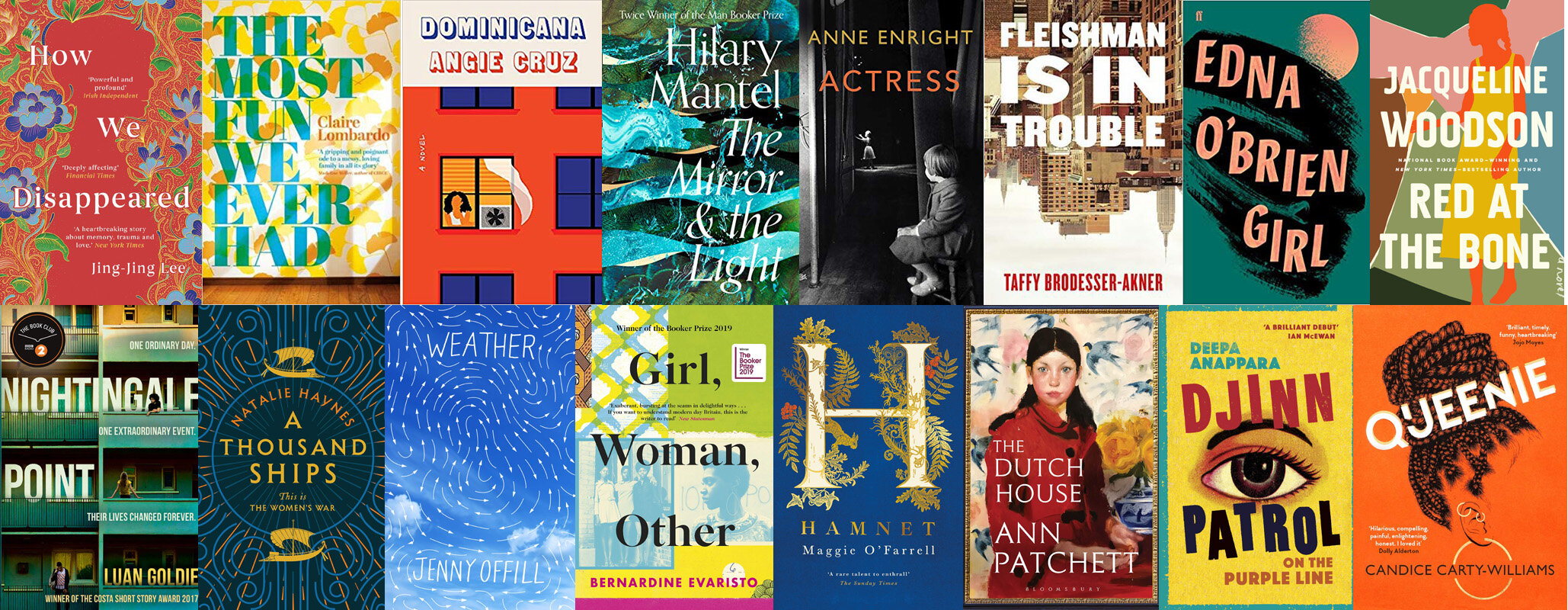
As usual, I’ve been greatly anticipating what will be listed for this year’s Women’s Prize for Fiction and this year’s list was announced at midnight. Anna and I made a video speculating what might be on the list and between us we managed to guess eight out of the sixteen titles correctly! I’ve only read three of them but I am thrilled to see “Girl, Woman, Other”, “Weather” and “The Dutch House” listed as I think they are all brilliant in different ways. The rest of the novels are a great balance between books I’ve been eager to read and a couple (“Dominicana” and “Nightingale Point”) that I wasn’t previously aware of.

I’ve been meaning to read “A Thousand Ships” since Anna enthusiastically endorsed it before it was even published last year. “Queenie” is another one that’s been high on my TBR since it published and one I wanted to get to when it was listed for the Costa Book Awards a couple months ago. I was given a copy of “Girl” for Christmas and now I can grab it off my shelves. Anne Enright is one of my favourite authors so a new novel by her is always a cause for celebration and I’ve heard great things about “Actress”.  Jacqueline Woodson is an author I’ve always meant to read and “Red at the Bone”, her most recent novel for adults, has received great critical acclaim. As Anna mentioned in our video, “Dominicana” is a novel that’s often been mentioned amidst the whole “American Dirt” controversy within the lists of alternative suggestions for books by Latinx authors.

In the past couple of weeks I’ve been reading the first two novels in the Cromwell trilogy so I’m now fully on the Hilary Mantel train and ready for “The Mirror and the Light” which is coming out this week and without a doubt one of the publishing events of the year. The only trouble is that it’s over 900 pages long so it’s going to be a challenge to balance my reading of this alongside the other longlisted titles as well as books listed for this year’s International Booker Prize. Lots of reading ahead! The novel I’m most looking forward to is Maggie O’Farrell’s “Hamnet” which has amazing advance praise and is an author I’ve meant to read again since I loved her novel “This Must Be the Place”.

There’s an impressive mixture of really famous authors listed from recent Booker prize winner Bernardine Evaristo to previous Women’s Prize winner Ann Patchett as well as popular favourites such as Candice Carty-Williams and Claire Lombardo whose “The Most Fun We Ever Had” I’ve heard is a very funny novel as well as one of great quality. One of my favourite things about the prize is how it always presents a balanced group of novels that encourage readers to try books they probably wouldn’t have read otherwise. I’m planning to read most of the list and hope to discover some great fiction I might not have got to otherwise.

A shortlist of six novels will be announced on April 22nd and the winner on June 3rd. What do you think of this year’s list? Any favourites you’ve already read or books you’re keen to now read?

For many years I’ve felt ashamed about not having read “Wolf Hall”. I know it’s silly to feel shame about not reading or enjoying certain books even if they are some of the most critically acclaimed and lauded books of our time. There will always be great books I won’t have time to get to and I was initially put off from this novel because I started reading it when it was first published in 2009, but felt confused by the complicated politics of the Tudor period. It can feel tedious reading certain historical novels where I have to frequently put the book down to look up the meaning of a certain person or event on Wikipedia to feel like I really understand what’s going on in the story. So after about 150 pages I put it aside and didn’t go back to it. But, now with the third book of Mantel’s trilogy coming out soon, I felt it’s time to really immerse myself in it.

I’ve also greatly appreciated other books I’ve read by Mantel so she’s a writer I’m glad to make an effort for. This time I took steps to better prepare myself for it by reading the very detailed biography “Thomas Cromwell”. While I found MacCulloch’s book quite a bore it did give me an understanding of the most important people, events and politics portrayed in Mantel’s novel. So I read “Wolf Hall” straight through without stopping, even though the broader meaning of some scenes still went over my head. To my delight, it was a wonderfully enriching and enjoyable experience and I’m now eager to read more!

One thing that was really memorable for me the first time I tried reading “Wolf Hall” was the magnificent, emotional opening scene Mantel writes where Cromwell is a boy who has just been savagely beaten by his father. She captures the heart-wrenching physical and emotional pain of this incident. The image of Thomas as a vulnerable rejected young lad casts a shadow over the rest of his fascinating life and informs later scenes of the novel as Cromwell carefully navigates the choppy waters of court life, serving Henry VIII and being a key negotiator of the English Reformation.

It’s powerful how Mantel portrays his resilience, innate intelligence and ability to use his ingenious political skills to execute the King’s will where many of his predecessors failed. She describes how he understood better than most how to gather as much dirt on people as possible and how to use and ration out that knowledge in a way which would best benefit him and the people he represented: “A man's power is in the half light, in the half seen movements of his hand and the unguessed at expression of his face. It is the absence of facts that frightens people, the gap you open into which they pour their fears, fantasies, desires.” Because Cromwell came from relatively humble beginnings, his savvy ability to ascend to such prominence and become one of the most powerful men in England is impressive but he clearly never forgets where he came from and people of the royal court never let him forget his origins either.

It’s moving how Mantel occasionally writes Thomas recalling his boyhood and the threat of his father so much so that the long-dead patriarch takes on a ghostly presence in his life. In fact, there many hauntings in the novel from Henry dreaming of his dead brother and Thomas feeling the continued presence of his deceased wife Elizabeth. It feels like death is an ever-present spectre in this time period as Mantel describes continuous threats of deadly fever/plague and public executions. Given the fearsome prominence of these threats it’s no wonder that the author writes her characters as if they constantly tread the line between life and the after-life.

Mantel interweaves a wicked humour throughout the narrative as well. She portrays scenes where characters will darkly parody the downfall of others such as the arrest of Cardinal Wolsey or mockingly re-enact dramatic conversations. Late in the novel she even pokes fun at how English weather is notoriously grey and rainy when Cromwell reflects how he would have been a better man if the weather were better. This adds a wonderful levity to a story which is weighted with so much bloodshed and seriously reflects on a pivotal turning point in England’s history.

Towards the end of the novel I found it poignant how Mantel depicts the larger significance of the monumental changes of this time. Many fictional and historic accounts of the Tudors have revelled in the salacious scandal of Henry’s many wives and the political implication of England breaking from the church in Rome. But Mantel gets at subtler implications about where the general population would henceforth put their faith. The English Reformation forced people to choose if they would follow God or the King. This conflict obviously played out in many bloody battles, but also reverberated through the hearts of the entire nation. So I think it’s brilliant the complex way Mantel captures the larger psychological and social evolution to show how “England is always remaking herself.”

But, of course, the bulk of the story is made up of small moments and meetings between a few individuals who would steer the direction of the country: “The fate of peoples is made like this, two men in small rooms.” Through the dialogue of her characters Mantel shows the various powerplays at work, the promise of comradery or the making of enemies – when people will bend such as Henry Percy surrendering his engagement to Anne or when they will not bend such as Thomas More who refuses to plea for mercy. It’s especially exciting seeing what’s at stake in the meetings and exchanges between Cromwell and Anne Boleyn as well as Catherine of Aragon. And Jane Seymour appears in many scenes as well as if hovering in wait. Though this first novel only follows the tale up until the execution of Thomas More even I understand enough about the history to know that she will eventually become the third wife.

Admittedly, there were still sections of the novel which went over my head. Because of my ignorance about some of the intricacies of this historical period I wasn’t always certain about what events were taking place or who was being portrayed. There are many characters to keep track of and this can be especially difficult when so many are named Thomas, Mary or Henry. There’s even a semi-joke made at one point when Thomas becomes confused about whether Anne is talking about her sister Mary or Catherine’s daughter Mary I. But this didn’t really detract from my enjoyment of the novel as I could follow the general progression of the story through the main players.

I’m glad I put in the effort to return to “Wolf Hall” because reading it was an exciting and rewarding experience overall. Even though I obviously know what larger events will happen in the second and third books because they are rooted in history, I’m very keen to see how Mantel further develops the characters she’s made out of these figures from the past. It’s strange to say, but I feel a deep tension now wanting to know what’s going to happen and how Cromwell will eventually meet his tragically inevitable conclusion.

Posted
AuthorEric Karl Anderson
CategoriesHilary Mantel
7 CommentsPost a comment

The Booker International Prize has become one of my favourite literary awards to follow as it’s fascinating reading a wider variety of literature from around the world, it gives a much-needed platform for many independent publishers and, of course, the quality of the books chosen are often top notch. Last year’s winner “Celestial Bodies” was an excellent family saga about three very different sisters in modern-day Oman. I’ve had especially high hopes for this year’s award because it has such an excellent group of judges including Jennifer Croft, who translated previous winner “Flights” by Olga Tokarczuk; brilliant writer Valeria Luiselli whose most recent novel is the outstanding “Lost Children Archive” and the group is chaired by Ted Hodgkinson who is Head of Literature at the Southbank Centre in London which hosts discussions with many writers from around the world.

So I trust their taste and it’s a thrill to see these 13 novels which they’ve selected for this year’s longlist. I’m especially happy “The Memory Police” and “Hurricane Season” are listed as I think they’re both fascinatingly inventive novels with brilliant story-telling. I’m also very glad “The Eighth Life” has been included. This is a sweeping family epic set over a century in Georgia and is by far the longest novel on the list at 944 pages. Now, I guiltily have to admit, that because of the length this was a novel I started last Autumn but paused reading after around 200 pages. I was really enjoying it but because I try to read other books while reading such a long novel I let myself get distracted and didn’t go back. I’m looking forward to returning to it with vigour now to read it in its entirety.

Out of the remaining titles some that I’m most looking forward to are “Little Eyes” by Samanta Schweblin (which I included in a video list of my most anticipated books of the year.) Schweblin was previously listed for the Booker Prize with her creepily surreal short novel “Fever Dream”. I’ll probably also prioritize reading “The Enlightenment of the Greengage Tree”, “The Adventure of China Iron”, “Tyll”, “Faces on the Tip of my Tongue” and “The Discomfort of Evening”. But I’d be curious to read all the novels – except perhaps “Serotonin” as I’m not sure Houllebecq will be an author I enjoy. If you think I should give him a try let me know.

Two of the novels haven’t yet been published in the UK: “Little Eyes” is due to be published on April 16 and “The Discomfort of Evening” is due to be published on March 19. When this occurred last year the publishers rushed them to print so that may happen again (especially because Schweblin’s novel currently won’t be available until after the shortlist is announced).

I’m sure many people will note that this year’s list (yet again) has a very European focus with 7 titles nominated. I’m not sure why this would be, but I’m guessing that more translated books from the continent get published in the UK leading to lists which lean more in Europe’s favour. However, it should be noted that nearly half the list comes from countries around the rest of the world. This is also the year that Great Britain is officially leaving the European Union so perhaps the judges are making a point that we’re still culturally connected to the continent.

A couple of novels I was hoping to see on the list were “Love” by Hanne Orstavik and “The Collection” by Nina Leger. But, based on pictures that have been posted on social media of the piles of books the judges have been feverishly reading through, it appears there was an enormous amount of competition for this year’s award. There were 124 novels submitted for it.

I’m looking forward to reading and seeing what books make it to the shortlist on April 2nd. You can also watch me discuss all the novels listed in a video here: https://www.youtube.com/watch?v=4YmBowiwEDM

Let me know which novels your most interested in reading from the list.

Posted
AuthorEric Karl Anderson
8 CommentsPost a comment