First Impressions
“John of John” is extremely moving, immersive, and skilfully written. It's already received a lot of praise from other readers, and I think deservedly so. I want to explain exactly why I think it's so good, and why I finished it eager to talk about it with other readers.
This isn't just a story about secrets and repression, though there's plenty of both. Every character here is harbouring something. It isn't simply duty versus desire either — it's about the subtlety of emotion, and the real difficulty of finding a level on which we can truly connect with and understand one another, including understanding people in ways they don't realize we do, and struggling to help the people we love embrace desires they might be too afraid to embrace themselves.
Three Generations on a Scottish Island
The novel follows three generations of one family. At the center is Cal, a young man in his early twenties whose full name is John Callum — he goes by Cal because his father is also named John, hence the title. He grew up on a rural and deeply religious farming island in Scotland with a very small population, but has since left for the mainland, where he's just graduated and is struggling to find work. The novel opens with a phone call: Cal's father John tells him he needs to come home because his grandmother Ella is ill. Cal returns out of love for her, only to discover she isn't actually ill at all — he's been brought back for other reasons entirely.
Cal is at an uncertain point in his life, with limited options given his family's financial circumstances, and he ends up back working the farmland. He's full of pent-up desire, wanting to go out into the world and fully embrace life as a gay man, discovering opportunities he never had growing up on this island. That makes his return deeply conflicted. His father John, meanwhile, appears strict and controlling on the surface, guided by rigid religious belief, but is harbouring his own secret: his own repressed sexuality. That's revealed fairly early in the novel, so it isn't really a spoiler.
Subtle Expressions of Desire
What struck me most about Cal and John is how, unable to fully express their desires, they find subtle, coded ways to do so anyway. This story is set in the 1990s and Cal tries to meet other gay men through personal ads, knowing there's almost no one else on the island he could realistically connect with. His father, meanwhile, has been carrying on a long-term relationship with another man in complete secrecy, operating within a private code the two of them have developed just to allow the relationship to exist at all. I found it fascinating how the novel tracks these different levels of expression. I naturally felt frustrated with both characters at different points in this novel, wanting to shout at them to just come out to each other. But what Douglas Stuart captures so well, through dialogue and action, is exactly why that's not simple — how difficult radical honesty is within families, and especially within the constrictions of a small community with its own expectations about unwritten rules guiding their behaviour.
Ella
I loved the character of Ella, Cal's maternal grandmother, so much. She's eccentric, expressive, and caring, living in the same household as these two closed-off men. At one point she remarks that “if the women round here just left it, this place would be nothin' but men living in caves, scowling out at the sea.” There's a lovely line describing her: “somewhere deep inside, Ella was still an eight-year-old girl.” Even as an older woman starting to face real health difficulties, that sense of a girl still living inside her comes through vividly in how she expresses herself. She's harbouring her own secrets too, both about her past and her intentions for the future.
Craft and Atmosphere
Douglas Stuart gets at real nuance in these characters: what they understand about each other, what they don't, the things one person knows about another that the other doesn't even realize they've given away, alongside crucial misunderstandings, many of them shaped by the expectations placed on the next generation about how they should look, act, and conduct themselves within the community. This isn't simply a condemnation of older generations, either, but also an exploration of how those generations are themselves misunderstood, and how everyone is trying to find a way to actually connect and reach understanding.
The descriptions of life on this small Scottish island are wonderfully atmospheric: bleak, stark, and flat, which creates real practical difficulty for characters wanting to meet secretly or simply find a moment of privacy, since almost everyone can see almost everything. But Stuart also brings out how beautiful and wondrous the landscape is, and it doesn't feel like a coincidence that religion runs so deep in a community that witnesses every day how sunlight transforms a landscape to become so breathtakingly strange and gorgeous. That atmosphere extends into the work people do — John and Cal keep sheep and weave tweed, and the detail Stuart brings to that industry felt so naturally integrated into the narrative, never like research dropped in for its own sake, but like something lived.
I was also struck by the novel's use of language: characters speak both English and Gaelic, since this is one of the corners of Scotland where Gaelic is still spoken regularly, complete with translated lines. That becomes part of the plot too, since not everyone on the island speaks it, and characters sometimes switch to Gaelic deliberately to conceal what they're saying from others in the room — a quiet power play. There's also a memorable detail about neighboring adult brothers who haven't spoken to each other in something like sixteen years despite living under the same roof, forced to communicate through an intermediary. The novel captures how, in an environment this small and claustrophobic, people are either forced into ongoing civility with one another or cut ties completely, with grudges that can last decades or generations — which speaks to why religion and its rules matter so much here: without some shared order, communication in a community this reliant on itself could simply collapse.
Violence and Tenderness
I was struck, too, by the range in the relationship between Cal and John — moments of real, frightening violence sitting alongside moments of real tenderness. Their work is physically punishing, and there's a scene where Cal's hands are so sore from a day's labor that his father massages oil into them for relief. Then, elsewhere, something switches and there's genuinely horrifying violence between them. It felt true to a relationship this tense: an underlying love that coexists with real volatility, tensions that inevitably reach a boiling point given everything simmering beneath the surface.
The Peripheral Characters
Some of the supporting characters struck me just as much. Cal's lifelong best friend, nicknamed Doll, is someone he's known his entire life, their friendship partly born of necessity since there simply weren't many other young men around as they grew up in a community with an aging, dwindling population. Their dynamic is genuinely interesting because it shows Cal isn't an entirely virtuous character — he has real flaws in how he uses and manipulates his friend. There's real love there, but also a failure to fully see Doll's complexity, and I appreciated that the novel is willing to explore how gay men can manipulate straight men for their own desires, knowing those men's own desires can be leveraged — something I don't think a lot of stories, gay stories especially, get into. I felt real tenderness for Doll's predicament, and how his own options and standing in the community grew more restricted as the story goes on.
Cal also has a friend named Isla, whom the whole island has long expected him to eventually marry and settle down with, even though both of them know that's never going to happen. Her own dilemma, navigating obligations to her family alongside wanting to fulfil her own potential, especially once she runs into real trouble of her own, is handled with great nuance. So many characters here are drawn with a level of sympathy and complexity — wanting to shake them and ask why they couldn't just say what they felt — while also understanding exactly why they couldn't, given the fears they're carrying and the smallness of the world they're operating within.
Literary Echoes
I appreciated the literary references woven through the book too. Cal is repeatedly shown reading an old copy of “The Wasp Factory”, the classic Scottish novel about a small island and a young man prone to violence, and I liked thinking about how that book plays against this one. There's also a reference to Thomas Hardy near the end, and having recently reread “Tess of the d'Urbervilles”, I could clearly see Stuart writing a kind of modern Hardy story: tales that look bleak on the surface, full of characters in a rural setting undergoing real strife because of social obligation and the expectations of their time, but shot through with clear moments of joy and love that make it feel lived-in and true.
Verdict
There was so much I appreciated and connected with here, even in a story so different from my own life — moments that made me laugh, and moments that felt genuinely heart-wrenching. I found the ending gripping, with gripping twists that kept me completely absorbed. My one small criticism is how Ella's storyline resolves — I won't give anything away, but I wished there had been a bit more of her, since I loved her character so much, even though I understand why the novel ends the way it does. The actual final pages, though, I thought were achingly beautiful.
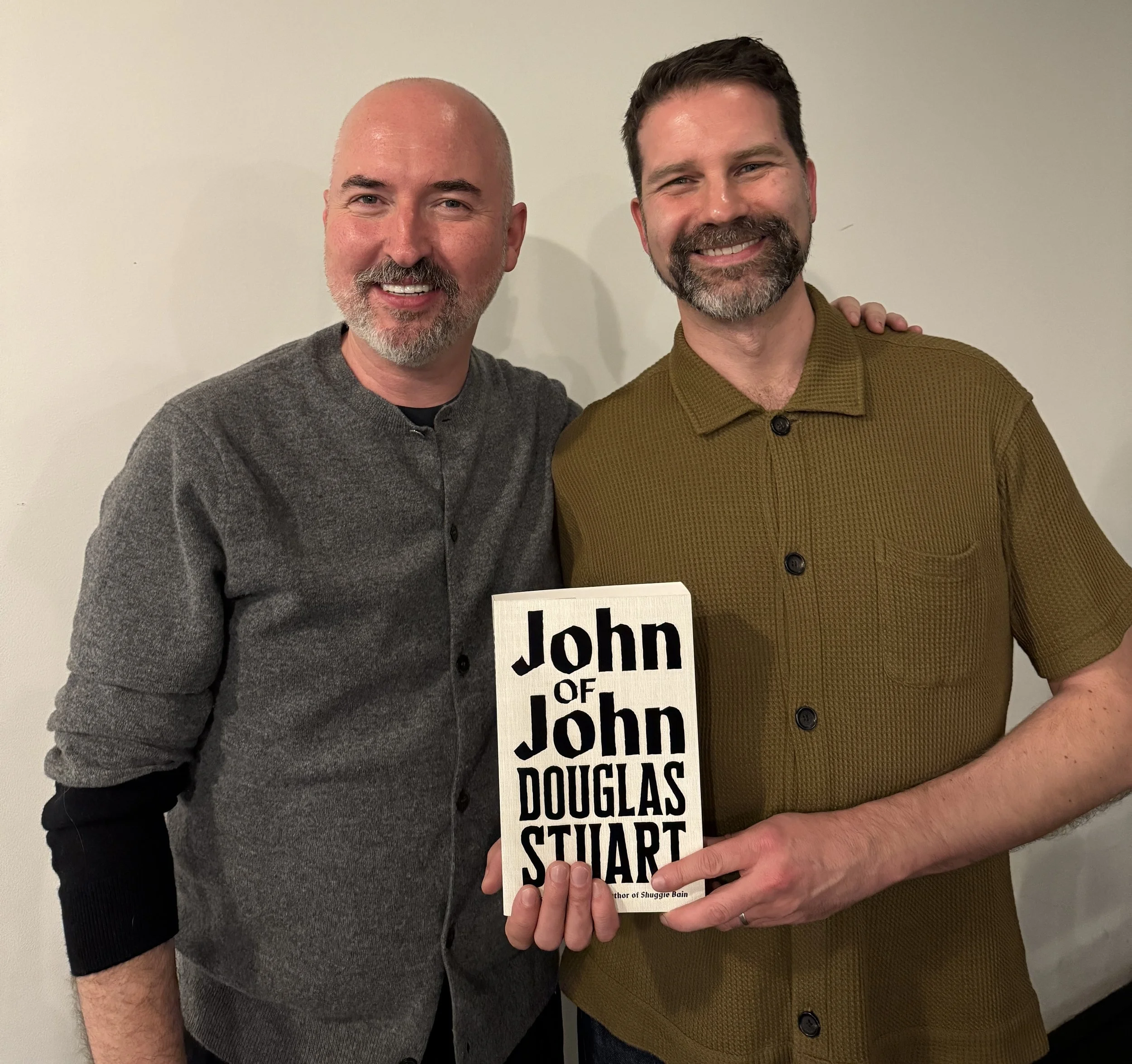
If you've read this, I'd love to hear what you thought, whether you agree or disagree with me, and whether there's anything I didn't touch on that you'd want to discuss. I also loved “Shuggie Bain” and “Young Mungo”, and this novel only cements for me Douglas Stuart's talent for writing.