First Impressions

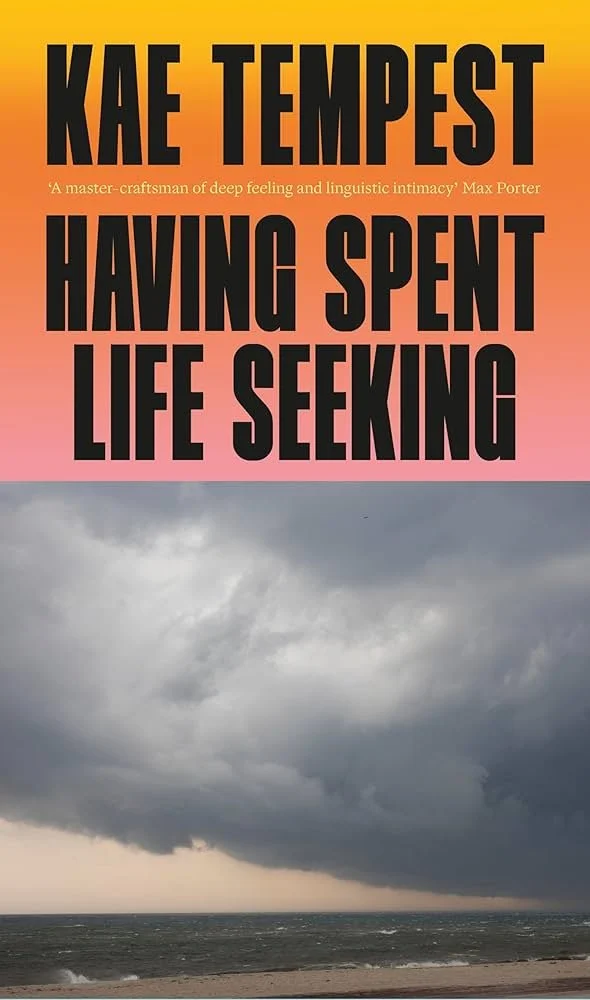
“Having Spent Life Seeking” is an incredibly powerful and beautifully written novel. I felt like I genuinely lived alongside these characters and went on a journey with them, which is exactly the experience I want from fiction. This is a story about the difficulty of self-acceptance set against the pull of social acceptance, a tension I think so many of us feel, especially in childhood and our teenage years, rendered here with great impact. It's also a novel about the importance of persisting through seemingly insurmountable challenges, because there will still be beauty, joy, love, and even tranquility to be found in life, even when the world feels like it's completely falling apart.

Premise

The novel follows Rothko, who at the very start has just been released from prison after twenty years. Rothko is slowly rebuilding a life in their hometown of Edgecliff, a fictional, slightly shabby English seaside town of the kind with plenty of lifelong locals alongside weekend holidaymakers. Rothko is trying to live and work independently, but the world has changed enormously in their absence. One of the most impressive things about this novel is how little interiority or direct self-reflection we actually get from these characters; we mostly get description of experience and dialogue rather than explicit inner monologue. Normally that kind of withholding frustrates me in fiction, because I want access to what a character is really feeling. But even without much of that here, I felt like I deeply understood these characters and could connect with what they were going through, which I think is a real feat of craft: conveying all this emotion without spelling it out on the page. It reminded me a little of David Szalay's “Flesh”, where a similarly withheld interior life still lets you feel exactly what a character is going through, though the styles of these two books are quite different otherwise.

Rothko's Story

Rothko has a difficult relationship with their mother, Meg, who struggles with her own addiction and the trauma of past abuse. We get Rothko's backstory gradually, and for a long stretch we don't actually learn why they were in prison for so long, which serves a couple of purposes: real narrative tension, but also a way of resisting the instinct to judge someone based purely on incarceration, when what actually matters is understanding the circumstances that led there. So much of this novel is about connection and disconnection, especially with strangers, capturing both beautiful, unexpected moments of human recognition between people who owe each other nothing, and moments where people judge and mistreat one another on entirely superficial grounds. Rothko doesn't judge others this way, even though they are far from a straightforwardly virtuous character and has made real mistakes; when they meet someone destitute, angry, or unpredictable, they tend to meet them on a purely human level, and those moments landed with real emotional force for me.

Rothko's nickname comes from childhood: they blush deeply pink or red when embarrassed or ashamed, and as a child this was described as their face "going like a Rothko painting." It's such a strong, simple visual image that stayed with me throughout, a way of physically rendering shame without ever spelling out the internal experience behind it. There's a similarly striking scene, a memory of riding in a car with a driver who's become so emotionally unstable that it feels like the car could crash at any moment, that hit me hard, since I've had a similar experience myself of being trapped in a car with someone who seemed to have lost touch with reality, desperate just to get out even on a dangerous highway.

Family, Gender, and Identity

I also appreciated how Tempest handles Rothko's relationship with their sister. I found the line “they might have come from the same people but they had never really been coming from the same place” to be especially poignant. Though there’s a shared origin there is also a fundamental, if imperfect, mutual understanding. Part of that distance is on Rothko, for not fully opening up to their sister about who they are, something tied to their lifelong struggle with gender identity and discomfort inhabiting a body which, for much of their life, read to others as more conventionally masculine, generating real confusion, suspicion, and hostility from people around them. There's a beautiful early friendship with a teenage boy, and later a love affair with a girl named Dionne. This novel is, in part, a genuine love story, but one that follows two people developing as individuals alongside their relationship, rather than staying fixed while navigating differences between two already-formed selves, which felt like a genuinely different, truer way of depicting a long-term relationship than most fiction manages.

Throughout the book, Rothko frequently refers to other people as "normal" and expresses how they feel alienated from the general population. Much of the novel traces Rothko’s path toward a real sense of self-acceptance, toward feeling that everything about them is simply right rather than something to keep measuring against other people. There's a genuinely important, difficult scene where Rothko, just wanting a quiet pint after work, has to decide which gendered toilet to use, aware that either choice risks a reaction from other people in the pub, and the fear and humiliation bound up in a situation that should be entirely mundane. There's an echo of this too when a group of teenagers openly discuss and speculate about Rothko's gender, dialogue that felt so vivid I could practically hear it. Given everything happening around trans rights and legislation in Britain right now, I think really feeling what that experience is like from the inside matters.

Language and Structure

Tempest is also a poet and musician, and that shows in the writing: mostly grounded and realistic, but with moments of real philosophical density where a single line opens out to convey an entire lived experience. There's a striking stretch, covering a long period of Rothko's life during a low point with addiction, that shifts into an almost musical, rhyming register, compressing a huge amount of time and despair into very little space. For instance, one line that stuck with me was "Using is its own universe." The novel conveys, through both Rothko’s mother Meg and Rothko themself, just how consuming addiction becomes, and how it can override every other relationship and responsibility in a person's life.

A Small Reservation

If I have one criticism, it's that the compressed, musical section covering Rothko's addiction and much of their prison sentence skips over a lot: twenty years is an enormous span of time, and the actual lived experience of prison doesn't get fully rendered, even though it shaped so much of Rothko’s life. The novel doesn't shy away from stating that prison was a genuinely horrible experience, even while acknowledging some of what Rothko gained there, skills, one significant connection with another person, but the difficulty of reintegration afterward, in a world that's simply moved on without them (self-checkout lines being one small, disorienting example), is handled really well.

A Personal Resonance

This novel feels genuinely personal for Tempest, who has undergone his own journey with gender in recent years, now identifying as a trans man and using he/him pronouns. Rothko is referred to as they/them for most of the novel, until a single moment where he's able to say plainly, "I am a man," to another character, after which the pronouns shift to he/him. It's a tender, powerful moment, and one I felt I'd really traveled toward alongside him: something so simple for so many people to say, and so hard-won here.

I got my copy of this book from the queer library that the shop Aesop runs every Pride month in London, turning their usual fragrance shop into a stock of free queer books for anyone to take. Tempest has spoken in interviews about being given a copy of “Stone Butch Blues” by a stranger early in life, and how transformative that was, and I think that same spirit runs through this novel and through initiatives like Aesop's library. This year I also marched in a Pride parade myself for the first time, with the small Rīga Pride contingent in London, drawing on my own Latvian heritage, and witnessed one of my fellow marchers run to embrace his mother on the sidelines in tears, a moment that felt like it echoed exactly what this novel is reaching for: real joy and connection persisting alongside real struggle.

Verdict

It’d be negligent of me not to mention that there's also a wonderful thread to this story involving Rothko's dog, Donovan. So much of the book is about how fleeting, even coincidental connections with other people can matter enormously to our own journey of understanding and accepting ourselves. The novel also raises poignant larger questions about the sheer strangeness of being alive; for example, one line that struck me was "“How could a thing as weightless as life be so fucking heavy so much of the time?” Life passes through us lightly, in the moment, and yet we carry so much weight: memory, disappointment, love, heartbreak, and the world's judgment. What matters, the novel suggests, is how we feel about ourselves and how much we allow those feelings to affect the way we actually live in the world.

I thought this was an absolutely incredible book and I loved reading it. I'd highly recommend it, and I'd love to hear from anyone else who's read it, or who wants to point me toward more of Kae Tempest's work, since I've read some of his poetry but haven't yet properly explored the music.

Posted
AuthorEric Karl Anderson
CategoriesKae Tempest

I had such a fantastic time reading this book! It's smart, joyful, scary, sexy, challenging, weird and messy in the best possible way. The three short stories and novella included in this collection range wildly in style and subject matter, but all of them imaginatively inspire different ways of thinking about gender and trans experience. There's a manufactured contagion where everyone must choose and maintain whether they are female or male. At a boarding school a popular guy pursues his secret desires with the soft body of his roommate while boisterous lads demonstrate their masculinity. A week-long Las Vegas event for cross-dressers and trans women leads a vulnerable individual to make an extremely tense decision. And, in the book's titular longest story, a group of lumberjacks perform a unique ritual to satisfy the simmering repressed desires which accompany living in an isolated remote forest. These tales dramatise how none of us simply inhabit pure masculinity or femininity but exist in different shades which are constantly changing. The collection also cleverly probes the blurred lines between being cis and trans and questions whether such lines even exist.

After Torrey Peters' breakout “Detransition, Baby” many have been eagerly awaiting the next book and some will no doubt be disappointed that this follow up isn't a novel. However, the imaginative range found in these stories make each of them memorable. They show how the strength and support which can be found within communities, friendships, relationships and sisterhood are also accompanied by instances of jealousy and backstabbing. Within all groups there are hierarchies based on relative beauty and power, but especially amongst marginalised communities. These things can be difficult to discuss and it's brilliant how Peters gets into the nuance of individual experience in this imaginative fiction. I admire that she doesn't feel the need to sanitise this complexity or present virtuous examples of queer life. There are desires which some can only admit online or under certain circumstances and which morph as they leak into reality. I found it highly relatable the vulnerability some of these characters experience as they tentatively step into a like-minded community and relationships. It can be so disorientating and frightening trying to forge real connections while still trying to figure yourself out and avoid those who want to take advantage of naïve newcomers. Peters presents all this in a way which doesn't shrink from this darkness but it also feels celebratory and so very funny. This is queer excellence.

Posted
AuthorEric Karl Anderson
CategoriesTorrey Peters

When I was in my late teens I got a temporary job in a bookstore. I've often thought I could have spent my life at this retail gig that I wasn't particularly skilled at simply because I like to be near books. This is the employment Maria, the protagonist of Imogen Binnie's “Nevada”, has settled into. She describes in brilliant tragi-comic scenes how she's settled into working at a large old bookstore in New York City. Most of her days are spent lingering around the most obscure shelves of books and occasionally sneaking out to buy a bagel. She observes how “Her job exhausts her and her girlfriend exasperates her.” Her only real passions beside reading are riding her bicycle around the city and blogging about what it's really like to be a trans woman. She's both trying to understand her own experience and demystify what it means to be trans because “Maria is transsexual and she is so meek she might disappear.” Though she's extremely forthright in her opinions concerning this, she's so emotionally inhibited her girlfriend is fed up. A confrontation with her and taking one too many liberties at her job propels Maria out of her static existence. She spontaneously journeys across the country in her girlfriend's “borrowed” car and meets an individual she views as a younger version of herself who she hopes to inspire.

This novel was originally published in 2013, but it was reprinted last year as a trans fiction cult classic replete with endorsements from leading queer writers such as Torrey Peters, Andrea Lawlor and Brontez Purnell. There's a real charm to the narrative voice which uses a vernacular that is both self-deprecating and self-assured as it honestly describes the perspective of its heroine. She's completely aware that she's caught in a rut, but can barely muster the energy to take her scheduled estrogen injection – let alone build a more fulfilling life for herself. This is partly because her thoughts are so consumed with issues around her trans identity it exhausts her. As we learn about her development and her challenges of achieving self acceptance, this preoccupation seems totally justified. But, on the other hand, she allows it to overwhelm her to a degree where she perpetually feels on the brink of tipping over into chaos and losing her hard-won autonomy. Amidst this struggle she lays out and clarifies so many commonly misunderstood notions about what it's like to be a trans woman it's wonderfully refreshing reading her frank account.

Though this book presents itself on the surface as a road trip novel it subverts this concept by barely showing the actual trip and doesn't aspire to any neat notions of self discovery or inspiring connections. It's quite surprising how the narrative perspective shifts to the younger and equally inert figure of James in the later part of the book and the novel's ending is daring in how resolutely it avoids a tidy conclusion. But this made it feels all the more realistic and poignant for me. Maria and James aren't individuals who can find direction in their lives based on clear goals. Instead their meandering paths are more often steered by chance in a world that is largely mystified by their complex true identities and cruelly unconcerned with their well being. The information and sense of community they glean is mostly found online as there are so few points of physical connection available to them. Naturally, the internet is a behemoth of unsubstantiated knowledge and conflicting opinions. Maria's own closest in-real-life friend Piranha is wonderfully supportive but has her own serious issues to contend with and guidance can't be foisted upon Maria. So I grew to dearly care for these characters in their precarious situations and greatly appreciated receiving Maria's forthright and funny point of view.

Posted
AuthorEric Karl Anderson
CategoriesImogen Binnie
Detransition Baby Torrey Peters.jpg

Pregnancy is a traditional storyline that's part of many domestic dramas. With the prospect of a child those involved must decide whether to see this pregnancy through to birth and, if so, how they will make room in their lives for a baby and organize themselves as a family unit to support the child whether that's as a single parent, a married (or unmarried) couple or an extended family. Torrey Peters portrays this universal situation with the inclusion of a trans woman and an individual who has detransitioned. Katrina is a successful businesswoman who discovers she's pregnant while having an affair with her employee Ames. Neither are certain they can handle the full responsibilities of parenthood. Meanwhile, Ames reveals to Katrina that he'd previously transitioned to being a woman before transitioning back to being a man. While he was a trans woman he had a serious relationship with a trans woman named Reese. Although Reese has a tempestuous personality she has strong maternal urges so Ames proposes she could help them both raise the child. Peters brilliantly traces the compelling and complex story of these three characters in the time leading up to and proceeding conception. 

I'd been wanting to read this novel since it was first published but was encouraged to prioritise it after it was longlisted for this year's Women's Prize for Fiction. There's been a controversy around the book being listed for this prize because the author is a trans woman and some readers object to the way female identity is portrayed in the story. I almost don't want to mention these claims as I don't believe they are credible and demonstrate damaging and prejudiced views against trans women. Yet to completely pretend the furore surrounding the novel isn't happening is to ignore the political questions this story wholeheartedly engages with. Peters addresses many issues to do with transphobia and trans identity within the story showing the full complexity of arguments that are occurring within the trans community, the overall queer community and society as a whole. The story skilfully represents many perspectives while also portraying views that are particular to these specific characters. The novel fully deserves recognition on this prize's list because it engages with an important dialogue about womanhood and how the concerns of many different women often intersect, but moreover it's an extremely enjoyable and well crafted novel.

The tension in this story emerges not just out of the question of this pregnancy but the many explosive or contemplative scenes where the characters have tense conversations or an inner dialogue about their circumstances. There are so many funny and tender moments as well as instances of emotional vulnerability where characters grapple with complex issues to do with sexuality and gender identity. It's pleasurable how pop culture references are frequently integrated into the characters' metaphorical understanding of the world. Humour often arises from the snappy dialogue but also the way characters frequently trip over their own contradictions and the irony of their situations. This makes them very relatable and I felt like I intimately knew all three main characters by the end. I also felt close to Ames and Reese as we get memories of their development which portray the pain, pleasure and hope both experience amidst their personal evolution. A scene where Ames (when he was Amy) first goes to a clothing store for transexuals felt particularly vivid as it's both a liberating and shameful experience. I also admire the way the novel boldly portrays the way people can act in self-destructive ways – especially when it comes to sexual relationships and how what we desire can contradict our moral beliefs. Most of all, it's such an engaging, intelligent and compelling story that takes seriously the dilemmas and struggles of its individual characters and the political issues which arise out of this family affair.

Posted
AuthorEric Karl Anderson
CategoriesTorrey Peters

Sometimes real happiness can only be found through a radical process of self reinvention. It takes a considerable amount of courage to move to a new country on your own, leave behind everything that’s been familiar or change your name to become another person. “Sergio Y” is powerful novel about how some people aren’t able to really be themselves or fulfil their potential within the family, community or even the body that they were born into. It’s about the extensive lengths some must go to and the hardships they must endure to fully inhabit the life they were meant to live. This novel is also a compelling mystery whose story becomes more and more intriguing with every new bit of information its obsessive narrator tracks down. 

There can be something really powerful in a good tale told in a simple direct prose style. “Sergio Y” is narrated in short sections by a seventy year old therapist named Armando about incidents surrounding his client Sergio Yacoubian. Armando boasts that he is one of the most respected doctors in São Paulo, but Sergio's case haunted him for many years and became something of an obsession. Sergio came to see him as a teenager troubled by a sadness he didn't understand. After months of sessions in which they discussed his life, particularly his great-grandfather's emigration to Brazil where he escaped the massacres which occurred during the Turkish war in the early 20th century, Sergio alighted upon a path towards happiness. He moved to New York City and went through the process of transitioning from male to female. However, Armando wasn’t aware of the fact Sergio was transgendered when he treated him. Consumed with guilt about a case he didn’t fully understand, Armando investigates what happened to Sandra by speaking to her family, American therapist and her troubled neighbour. Gradually he comes to a better understanding of what it means to seek real happiness in life.

Although this novel has a deeply tragic element to it, it’s admirable how Porto makes of the story something ultimately hopeful. He shows that strength of will and determination can triumph over circumstance. Here he movingly describes the state of mind required to initiate radical change: "Many manage to improve on the first drafts of the lives they are given. But for that they need the courage to jump off a diving board fifty meters high, blindfolded, not knowing if it is water or asphalt that awaits them below." This novel is also a sympathetic and refreshing portrait a transgender individual. Even though I read about an equally compelling transgender character in Jenni Fagan’s recent novel "The Sunlight Pilgrims" it still feels as if dynamic and interesting characters that were born with the wrong gender don’t often appear in many books. I would love to see more novels where transgender characters appear where their transition isn't necessarily treated as an "issue" but a simple fact. This is something I believe "Sergio Y" somewhat achieves because Sandra herself doesn't struggle with her transition process; it's the doctor who must come to terms with it. It was a great pleasure reading this emotional and fascinating new novel.

Posted
AuthorEric Karl Anderson
3 CommentsPost a comment