First Impressions
This is a book that radically altered my perspective, and I think it's genuinely going to change how I inhabit the world going forward. I don't say that lightly. I read a lot of books, and this doesn't happen to me very often, but there is greatwisdom in this memoir. Even though it's a very specific, individual story, it carries such a real universal application that I'd recommend it to pretty much everyone. This is a memoir about this celebrated author's life and her very difficult relationship with her mother, Mary, over the decades. But it's also about so much more than that.
A Different Way of Reckoning with the Past
I think we often reach a certain point in life where we start looking back, both on the households we were raised in and the country we were raised in, and we interpret the limitations of those things as having permanently inhibited our ability to fully inhabit the world, as having damaged our emotional well-being to the point that we feel defeated by having originated under circumstances that involved neglect, abuse, discrimination, or corruption, whether within a family or within larger institutions. It's a very seductive frame of mind to take, essentially deciding that's why we can't fully live and be as happy as we want to be. But that isn't the perspective Arundhati Roy takes in this book, and I don't think it's one she arrived at easily or lightly over the course of her life.
The way she describes growing up with her mother, whom she mostly refers to formally as Mrs. Roy, there's a real distance in that naming itself. Her mother severely emotionally abused her throughout her childhood and was constantly putting her down. Roy recounts many of the things her mother said to her, including that she'd wanted an abortion when she was pregnant with her, that she actively hadn't wanted her. For so many people, hearing something like that from a parent would confirm a deep sense of being unwanted in the world, and it would understandably lower their self-esteem and their ability to participate in and enjoy life. But Roy has such a different way of holding it. She writes that her mother was both her shelter and her storm, and that these two ways of seeing her mother can coexist: appreciating her mother and the difficult circumstances she came from, while not denying or glossing over the fact that her mother treated her, and many people around her, abysmally, and still admiring her mother's genuine accomplishments.
Mrs. Roy's Extraordinary, Contradictory Life
What her mother did was, in its own way, extraordinary. She left her husband, who'd become an alcoholic, to raise her children alone, and she campaigned to overturn a prejudiced law in India that prevented daughters from inheriting their father's property, taking her own case all the way to a higher court. She also built a genuinely progressive school from nothing. So she achieved so much in her life, while also not being a traditionally nurturing parent, often antagonistic toward her children, making them feel like nothing. Roy understood this was simply who her mother was, and still loved her and remained an active part of her life, though there was also a long period of estrangement between them, no contact at all for a stretch of time. So many people have had to sever ties, either with a parent or with their own country, because of how they were treated by one or the other, and I think that parallel is really at the heart of this memoir.
From Family to Nation
The book moves in two halves. The first focuses on Roy's childhood and her relationship with her parents, up through the point where she writes her first novel, “The God of Small Things,” which became an international bestseller and won the Booker Prize, turning her into a globally recognized figure. From there, the second half follows her engagement with Indian politics and society: calling out corruption, campaigning against prejudice, and helping to bring about positive change in India. She feels a love for her country even though she is clear-eyed about its imperfections. Interestingly, she doesn't favour being called an activist, doesn't really see a clean distinction between that label and being a writer, even though everything she does: contributing money, contributing her intellectual work, writing articles, raising awareness, protesting, engaging with different groups, reads to me as activism in every meaningful sense.
I'm not trying to draw an exact equation between someone's experience with their parents and their experience as a citizen of a nation; they're not the same thing. But there are real parallels here, because in all of this work, Roy has faced persecution from corrupt police and governmental forces, including a short imprisonment, simply for trying to stand up for what's right. For many people, facing that kind of opposition might lead them to disengage, to stop trying to enact change, or to simply leave and live somewhere else, which Roy could certainly have done. She's chosen not to. There are so many specific instances in the book, decisions she's made, mistakes she freely admits to, that add up to something like a lesson in how to inhabit one's life positively without being defeated by circumstances that, in so many cases, would make it entirely understandable to become apathetic and cynical.
A Specific, Absorbing Life
Beyond the larger message, I found this an absorbing memoir simply for the specificity of her story. She writes about the real struggles, joy, and defeat of leaving home, of a number of different relationships, of the prejudice she's faced as a woman. There's an extraordinary section where she describes how, riding public transport, it's simply accepted as the norm that men will treat attractive women as available for the taking, to grope, to make salacious comments toward, and how that's just the daily reality for so many women. There's also her time in the film industry, her development as a writer, and the overwhelming experience of “The God of Small Things” earning so much attention and love. I read that novel many years ago and really ought to reread it.
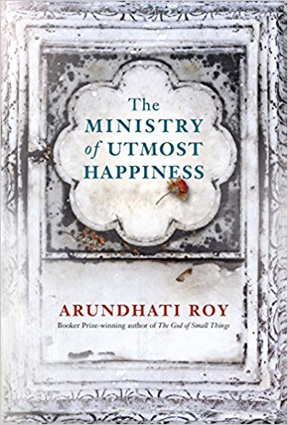
She also writes about her second novel, “The Ministry of Utmost Happiness,” which came many years later, and the circumstances and inspirations behind finishing it. I found all of that fascinating, and it made me think back to when the novel was first published, when I was lucky enough to attend an event where she signed my copy. Thinking back now, knowing everything she was going through while writing it, has given me more appreciation for that novel which I felt quite mixed about at the time. I'd like to reread both at some point.
Her Father, and the Deaths That Prompted the Book
Alongside her mother, there's also her father, whom she didn't know for much of her life. There’s an extraordinary scene describing their eventual reunion. The book follows the emotional journey through to both of her parents' deaths, and I understand the initial impulse to write it came from her mother's death and the intense, complicated grief that followed, complicated precisely because Mrs. Roy was such a difficult figure. I felt genuinely devastated toward the end. There are some extraordinary coincidences she recounts around her parents' deaths that, if she'd invented them for a novel, would seem unbelievable, but they actually happened, and it's hard not to feel there's some larger meaning in them, one she's clearly sat with and meditated on, both for herself and for how she moves through the world.
Verdict
This book offers such a powerful example of how to process and emotionally reckon with the circumstances we're born into, while recognizing that we remain independent beings who can determine our own course and choose how much the past is allowed to shape what we do next. That message goes far beyond the specific details of Roy's story, even though that story is, on its own terms, enthralling: a genuinely fascinating life that left me with enormous respect for her and eager to read and reread more of her work, fiction and nonfiction alike. We live in difficult, worrying times, and I think recognizing that our influence is limited but real, that we do have agency to stand up for what we believe in and to live a fulfilling life despite the circumstances we face, is exactly the kind of message I needed right now. I was genuinely blown away by this memoir. If you've read it, or read any of Roy's other work, or have your own book that completely changed how you inhabit the world, I'd love to hear about it.