Laline Paull’s novel “The Bees” is the story of an ordinary low-level worker bee named Flora 717 and her extraordinary journey. It sounds like a dubious premise upon which to base a novel and I was sceptical at first. The concept felt to me to be too similar to the 1998 movie ‘Antz’ in which Woody Allen is the voice of an existentially-troubled worker ant who questions life’s meaning when you are an anonymous being amongst millions. The movie was a fun way to express aspects of human angst in an indirect way via anthropomorphism, but it didn’t give you much appreciation for the way consciousness must work differently amongst insects compared to humans. Paull’s novel does this by showing you the way Flora 717’s thoughts and feelings are inextricably tied to the collective hive. In doing so she creates a compelling tale which gives a fascinating perspective on social interaction, hierarchies in society and will likely spark a keen interest in melittology (the study of honey bees) that you never thought you’d have.

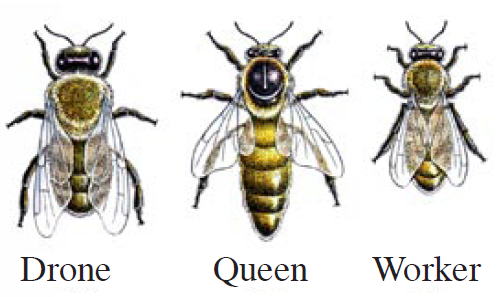
The author vividly captures the extraordinary way in which bees communicate not strictly through language but more through scents and chemicals. Information is communicated through their antennas and dances are performed to let other bees know where to locate the best places to collect pollen. There is also the “hive mind” which seems to be a sort of collective intelligence that lets the bees know how to act – especially in times of crisis when the hive is being invaded or there is an insidious illness. Don’t make the mistake in thinking that because this novel depicts the lives of honey makers it’s going to be cute. There are scenes of really gruelling savage horror when there is conflict between sects of the hive or rivalry or bees that need to be disposed of because they’ve lost their usefulness. The drones (male bees) are amusingly portrayed as swaggering, greedy and bullying. I particularly appreciated how the female majority which kowtow to them in a really sickening way when exposed to their masculinity take on a very different attitude towards them when these males lose their place amongst the hive.

Since the hive is a monarchy the queen is a figurehead worshiped by the masses but she also bears the largest practical use to the hive as she is the only one that lays eggs. Without her the population would rapidly diminish and collapse. It’s fascinating the way she is for the most part a benign presence whose dirty work is carried out by a sage elite class of the hive which also has the support of the militant ants. Paull impressively demonstrates the complex politics which go into maintaining power and keeping the masses in check with slogans and prayers. The only time I felt this didn’t work so well is in one section where the bees give a revised version of the holy prayer in praise of the queen bee which felt like a bit of a silly appropriation. There political conflicts with wasps and there are negotiations with spiders who have access to a more in-depth knowledge that bees don’t possess because of their limited life span; the payment needed for this information is also impressively horrific. The queen maintains a library with stories which aren’t understood by the bees but whose importance into play over the course of the hive’s life cycle.
At times it does feel like a bit of a stretch that the character of Flora 717 who is born in the lowest social group can so rapidly rise up through different levels of the hive. Through demonstrations of a range of talents and the encouragement of other workers she participates in almost every aspect of the hive from cleaning waste to nursing eggs to attending the queen to making wax to gathering pollen to defending the hive from attackers. I assumed that the rigid social structures of the hive would prevent her from moving so freely amongst these different levels of workers, but it is true that worker bees can adopt a number of different responsibilities within a hive during their lives. But it does feel that there are some instances where the author is ushering her character through these layers of bee society simply to show the fascinating inner workings of a hive. The novel does give this validity by hinting that Flora 717’s sometimes rebellious behaviour is supported by secret dissenters in the ranks. Also, it didn’t really bother me as I felt myself so swept up in the sheer adventure of the story as complex politics play out amidst a year in the life of the hive.

Along with the thrill of the story, “The Bees” does give an interesting perspective on individual will versus the collective need. Those entrusted with directing the hive at times abuse their power out of self interest. It offers up numerous ways of looking at how the political philosophy of a monarchy versus that of democracy has different pros and cons. Flora 717 is a true royalist and worships as the other bees do, yet she is guided by an inner logic that isn’t self-servicing so much as directed by an interest in the survival of her kinfolk. Her role has a compelling trajectory when the bees’ carefully ordered society begins to break down. It’s also so refreshing to read a story that is all about a female-dominated society. This is a very creative, intelligent and entertaining novel which is a joy to read.

Posted
AuthorEric Karl Anderson
CategoriesLaline Paull
6 CommentsPost a comment

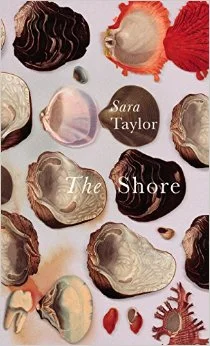
What does looking at a family tree tell us? We see ourselves linked by blood lines to a group of names, but usually there is little else to connect us to lives from the distant past other than an assemblage of faded photographs, a few heirlooms and a smattering of oral history. Rather than treat a family tree as a certainty, Sara Taylor does something quite extraordinary in her novel “The Shore” whereby she presents a family’s history as if the outcome of a family line was not the inevitability we see so neatly graphed out at the beginning of this book. The author jumbles all the pieces of one sprawling family tree up together like a jigsaw puzzle and delivers two centuries worth of tales about individuals leaping backwards and forwards in time. This effect says something much more meaningful about the will of the individual and the meaning of family connections than a straightforward linear novel could ever say. This is a family saga like none other I’ve read before.

As much as this novel is about family it is also about the land and the way in which the environment is shaped and reborn with every succeeding generation. An isolated small group of islands off the coast of Virginia is the base from which the stories of each character branch out from and round back to. It’s fascinating to see how the perilous course of the family blood line also follows the near destitution of the island itself as the economic circumstances change over time. In one memorable scene a boy watches as the community’s church is floated across the river after it is sold off by the fading population. When first confronted with the family tree at the beginning of the novel you’re aware that there are two distinct branches of the tree stemming from a single fascinating matriarch named Medora. The conflicted identity of this fiercely independent woman reverberates down through the generations. One line lives under perilous and desperate circumstances while another is more firmly established and prosperous. This is a family that is comprised of con artists, rapists, murderers, drug sellers and witch doctors. It’s high drama. Their stories make for an enthralling and emotionally compelling read.

As well as giving the reader a fascinating variety of lively stories, the novel makes larger meaningful statements about the plight of women. There is a great deal of sexism and violence exhibited by the men in this novel especially among the economically disadvantaged members of the family. It’s noted that it seems to be a tragic inevitability of a male’s development that “something happens in the gap between boy and man to turn all that sweetness bitter. You wonder if it’s a necessary hardening, like a tree’s shedding of leaves as winter approaches.” Certainly not all the male characters in this novel are villains and there is a balanced, complex view of both sex and sexuality here. But many female characters’ suffering is perpetrated by men who seek to dominant them. 

One generation of the family ferments apples to produce brandy in defiance of Prohibition laws.

One generation of the family ferments apples to produce brandy in defiance of Prohibition laws.

One of the most troubled and tragic characters named Ellie soberly remarks of her dangerous partner at one point: “He hates me and he wants me and he hates that he wants me.” As beset by some of the female characters become by their circumstances and the men they are with there is a knowledge gained from the next generation of women who take dramatic measures to ensure they aren’t entrapped by the same sexism that their mothers experienced. This effect is mirrored in both the start and end of the family line in a way which says something quite tragic about the persistent state whereby men will always try to control women despite the progression of society. Yet it also says something hopeful about the resilience and ingenuity with which bloodlines survive through the willpower of women.

Most of the stories which comprise this novel are firmly fixed in the nitty-gritty of life concerning work, love and establishing a family. But some of the tales dip into the fantastic so one woman is haunted by the spectres of ghostly boys that both threaten and support her. In another tale we learn about a secret talent of the family line for controlling and altering the weather. Sometimes the style feels like Charlotte Bronte and other times it’s reminiscent of a more modern sensibility like what's found in David Mitchell's writing. The narrative voice varies more wildly as some chapters stay inside a character’s uniquely-voiced point of view while other chapters are narrated from a more even-handed impersonal distance. I didn’t feel this was always successful particularly in a chapter told in the second person which had some very effective passages but became quite confused. Part of me wishes Taylor maintained a constant narrative style throughout the novel as it would seem less chaotic and make it easier to follow. However, part of the fun of this book is trying to locate who you are following now based on the date given and names around the characters involved. A reader’s participation is required. The book ends with an entirely new style of narration and takes the story into a whole other kind of genre that adds a level of poignancy when looking back on that initial family tree.

It’s challenging for an author to write a novel from the point of view of someone in a state of psychosis. There is the danger of romantically characterizing them as being simply misunderstood in their unique perspective of the world. Of course, sometimes this is true and people are institutionalized for the wrong reasons. Yet when representing it in fiction simulating their perspective runs the risk of seeming patronizing and disrespectful to the cruel reality of mental disability. It can easily run into “aren’t we all a bit wacky?” territory. Grace McCleen skilfully avoids doing this by writing her narrator Madeline as being canny and withholding to both the psychologist who treats her and the reader of this novel. In doing so, her character retains an essential integrity.

Madeline is a woman in her mid-thirties who has been in a mental infirmary for over twenty years. We first encounter her in the summer of 2010 where she’s looked upon with fear by the staff around her. It seems she’s committed a heinous crime, yet she seems unaware of any wrongdoing. The novel traces the months leading up to this point by showing her treatment under a doctor who tries to use hypnotism to get her to confront her past. But Madeline is a career patient who has learned to modify her answers when necessary and reveal only what she knows the doctor wants to hear. Interspersed with her sessions we’re given accounts of Madeline’s childhood through her memories and diary entries. When she was a girl her fundamentalist Christian parents move to an island where they hope to convert and save the population. But this horrendously backfires as they are treated with suspicion and shunned to the point where they become quite desperate to maintain a home and livelihood.

It’s touching the way Madeline naturally fears the other children on the island when they first move there and takes their silent observation of her as a damning judgement. She’s granted no chance for social interaction as she’s homeschooled by her mother. The lessons break down as her mother increasingly suffers from her own mental and physical problems leaving Madeline to formulate her own theories about the way her father’s religious ideas can be incorporated into the real world. In the places they move to there are leftover images of Christ and a statue of the Virgin which the father destroys because ‘We don’t need idols,’ my father said. ‘We’ve got the real thing.’ Madeline assimilates this belief about having a direct communication with God into the way she interacts with the nature around the farm they move to. She tragically misinterprets natural stages of human development as having religious significance and formulates her own beliefs about what God wants offered to please Him.

While I enjoyed the way McCleen develops her characters and elements of the storyline, there’s an intriguing plot point which I felt wasn’t really followed through with. When the family move to their farm a strange man suggests to them that a former owner who committed suicide on the property is still there. While I’m glad the novel didn’t turn into a kind of ghost story, it felt like this detail could have been incorporated more into Madeline’s increasingly skewed perspective of reality and the elements around her. What McCleen does most effectively is depict the deterioration of Madeline’s relationship with her mother and father. Communication breaks down as she slips increasingly into her own abstracted reality while they must face a slide into poverty which could leave them desolate.

This novel reminded me somewhat of Claire Fuller’s recent novel Our Endless Numbered Days because it shows the way a particularly fanatical parent can traumatically impact their adolescent offspring. In both books a child is removed from the social environment where they were exposed to a plethora of points of view and physically isolated so their perspective of the larger world is damagingly narrowed and their memories become distorted. Although these are extreme examples, both stories have universal meaning particularly because they show the way a dominant patriarchy both subtly and forcefully tries to psychologically enforce dogmatic rules upon women. In the case of “The Offering”, Madeline is subject to both her father’s stringent religion in adolescence and Doctor Lucas’ rigorous new psychological treatment. Both try to dictate to her how she should feel rather than inspire self expression.

“The Offering” is a beautifully written novel which artfully combines different narrative elements which placed against each other offer a unique perspective on memory and belief. Perhaps the Proustian reference in the protagonist’s name is a bit unnecessary. But the novel has a clever way of pairing Madeline’s experiences in her diary against her recollections as an adult. As she observes at one point: “Memory is a strange thing. It doesn’t always retain what we think it will.” There is a fascinating compression of time and experience as the narrative becomes increasingly more hallucinatory. Grace McCleen has a talent for portraying a character that eludes being defined as a certain sort of person, but who nonetheless has convictions which she nobly upholds – however misconceived they may be. Madeline’s great crisis is that she’s not respected as an individual. More than gaining divine favour, Madeline’s offerings say more about the experience of giving oneself in love and experiencing disappointment. There’s a sad kind of resonance and ominous warning when Madeline realizes that “not all offerings are accepted, not all bargains honoured.”

Posted
AuthorEric Karl Anderson
CategoriesGrace McCleen
3 CommentsPost a comment

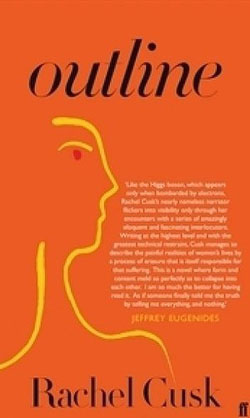
It’s unsettling and frustrating at first. Rachel Cusk’s novel “Outline” begins with a narrator (who remains nameless throughout most of the novel) taking a plane to Athens in order to teach a writing course. She strikes up a conversation with an older semi-wealthy man in the seat next to hers. Despite a long monologue where he divulges the most intimate details of his failed marriages, family strife and financial struggles, he is only referred to as her neighbour and continues being labelled as such throughout this novel even after several lunches and boat trips she takes with the man. The narrator also has a series of meetings with other teachers, writers and the students of her class where she prompts them to outline possible stories they could write. All the while personal details about the narrator remain largely unknown.

Why the aversion to giving her central characters names or filling in plot details about these characters’ lives in the present? Maybe it’s because the narrator senses that there is something inauthentic about this thing we call identity. When she plunges off a boat into the water she “felt that I could swim for miles, out into the ocean… it was an impulse I knew well, and I had learned that it was not the summons from a larger world I used to believe it to be. It was simply a desire to escape from what I had. The thread led nowhere, except into ever expanding wastes of anonymity.” So she is trying to lose herself. As fervently as she wishes to remain a mere sketch, the more ardently I wanted concrete details about her identity. We know she’s divorced and has estranged children. There are occasional flashes of personal memories like a beautiful description of being a child dozing in the back seat of her parents’ car while being driven home from the seaside. Larger issues in the narrator’s life remain unclear. She checks her phone as she’s tense about receiving approval on a loan, but we don’t know what it’s for exactly. The need for physical escape, money and anonymity are what she wants. The awareness of this is the tantalizing thing about her which will alternately frustrate and intrigue the reader throughout the experience of this novel.

Souvlaki is a recurring meal in the novel

Souvlaki is a recurring meal in the novel

There is a lot of pleasure to be had in this book. There is light and dark humour. For instance, in a scene where the narrator imagines falling off the boat driven by her neighbour she imagines becoming part of just another anecdote that he relates to his new neighbour on his next plane ride. She imagines him referring to the incident as “the full disaster” - the turn of phrase he uses to describe monumental tragedies in his life. The exchanges between her writing students are particularly funny and well observed. Potent symbols are scattered throughout the novel such as a photograph of a couple in a cafe outside the comfortable apartment she’s allowed to stay in while teaching. The couple are suspended in a pose of intimate conversation where a joke or anecdote is being shared and seems “terrifyingly real.” This couple suspended in a moment of exchange is repeated in different forms throughout many of the narrator’s experiences in the novel where people’s stories are told over drinks and meals of Greek food. The ceaseless, searching, self-justified speeches accumulate into a kind of yearning people have to give structure and meaning to their lives. Yet, once they’ve defined their personal histories into a certain shape they become frozen as in a photograph. 

I found myself highlighting many passages throughout the book as there are so many intriguing thoughts and clever observations to ponder. They range from thoughts about the writing process to the meaning of identity. “Outline” is predominantly a novel about ideas, but unlike Tom McCarthy’s recent “Satin Island” (which I somewhat harshly critiqued) I was mesmerized by it because of the way these thoughts are framed within the distinct identities of a revolving set of characters. The chorus of voices builds to a moving understanding of the tension between living one’s life in the moment and maintaining a frame around it like a constantly running narrative where you’re the protagonist in your own movie. The neighbour follows his passions through one disaster after another, steadily building the story of his life that he can relate to strangers he meets on airplanes. He remarks at one point that “I discovered that a life with no story was not, in the end, a life that I could live.” Yet this is the only kind of life that the narrator seems to want. She’s desperate to avoid the crisis the next teacher who comes to replace her in Athens experiences where a man made her into “a shape, an outline, with all the detail filled in around it while the shape itself remained blank.” Through an immolation of the self the narrator (eventually referred to as Faye) achieves a defiant freedom to define her life as she pleases. The outline of who she is cannot be filled in by the interpretation of any listener within the story or reader of this novel.

Posted
AuthorEric Karl Anderson
CategoriesRachel Cusk
2 CommentsPost a comment

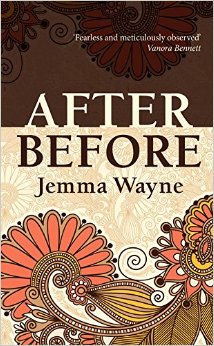
The question of how to reconcile the past is at the centre of Jemma Wayne’s debut novel “After Before”. What’s fascinating about this book is the way the author approaches this dilemma through the lives of three very different kinds of women. Emily is a young, Rwandan-born woman living in England. She struggles to survive on low-paid work and lives in social housing. Having abandoned her real name Emilienne because English people have difficulty pronouncing it, she’s effectively invented herself anew and blocks out memories of her past as much as possible. Vera is another young woman who is a recently-converted Christian trying to live her life on the straight and narrow. During her early life she lived a more reckless existence that was freely-sexual and drug-fuelled. She desperately wants to be the kind of virtuous individual worthy of her extremely virtuous fiancé Luke, but she’s hampered by a horrific secret from her past. Luke’s mother Lynn is in her late 50s and recently been diagnosed as being in the advanced stages of a terminal cancer. She filters her disappointment about all the compromises she’s made in her life into her hidden passion for painting. The stories of these women’s lives twine around each other as they variously come together and change the way each woman understands her own past.

It’s interesting how Wayne effectively captures the way individuals maintain a constant narrative about their lives in the present. Vera likes to believe herself to be the protagonist of a larger story being viewed and commented upon: “If Vera’s life were a film, there would be a lot of voiceovers.” She’s making earnest efforts to become what she understands to be a better person, yet she can’t fully believe in her reformed self because of the hidden guilt she carries over the (moral and legal) crimes she believes she’s committed. Rather than seeking out the truth about the effect of her actions, she distances herself from her past and mentally self-flagellates herself which prevents her from becoming the person she really wants to be or have an authentic relationship with the man who has asked her to marry him.

Lynn has very conflicted feelings about her future daughter-in-law Vera. She’s particularly offended by the way her sons have decided she requires help in her house given her medical condition. Vera is elected to spend her days with her, yet all Lynn wants to do is foster her secret passion for painting which Vera’s presence prevents. There are incredibly socially-awkward scenes where the two women try to make conversation over civilized cups of tea. Painting is the way in which Lynn is trying to make up for lost time. She feels that she’s sacrificed any prospect of a career or making a cultural impact upon the world by spending her life raising two sons. No doubt many people can relate to the way Lynn feels proud of the family she’s nurtured, yet trapped by the domesticity of it. Looking back she hilariously decides that: “She should never have taken such joy in baking.” Although Lynn comes across initially as a venomous individual she’s gradually shown to be a woman with an enormous amount of compassion. Lynn reminded me very much of Elizabeth Strout’s character Olive Kitteridge. She’s someone who can be very hard and difficult on the outside. Yet, she harbours a tremendous kind of empathy and has an instinct for recognizing damaged individuals who need help. This is the case when Emily comes to care for her as part of a social home caring program after Lynn and Vera come into conflict with each other. Lynn senses that this girl has a difficult past which she is mentally blocking out.

Emily attempts to use her isolation and the anonymity of living in the city to forget the past. But simply coming to a new country and taking on a new identity doesn’t save someone from the physical and mental scars of experience. As the author astutely observes: “real rescue wasn’t possible simply by escaping a place. Memories weren’t rooted in the soil.” It’s heartbreaking the way that Emily tries to level out her life so she has no prospects for joy or sorrow in her life. She shuts herself out from possibility because “The good is only a reminder of the bad. The past is a reminder of what has been. She can only survive by not thinking. And therefore the not seeing has to be borne.” But when Emily can’t stop herself from encountering things which vividly recall incidents and people from her past she is jolted into an awareness of what she’s lived through. What she has survived through is terrifyingly awful and most readers will probably be aware of what is coming, yet it feels necessary to face this past as a way of progressing forward as a fully aware individual.

Interview with Jemma Wayne

One of the great qualities of reading fiction is that it allows you to access complex events from history on a very human level. When reading figures on the news or historical accounts about the upwards of a million people killed in the 1994 Rwandan Genocide it’s difficult to feel the full gravity of this catastrophic event. The author brings this mass conflict to a personal level where we read about Emily living a normal adolescent life in her Rwandan town. Like many young people, her attention is mostly taken up by her family, school, friends and the early burgeoning of romantic feelings. She is aware of the growing conflict between Hutu and Tutsi, but this is just another story which is talked about: “stories, the kind that hovered tauntingly on the brim of their consciousness but they would never truly see: like monsters, or landing on the moon, or America.” Because it has no effect upon her day to day life, this tension between ethnic groups is as unreal to her as any myth or well-reported global events. Therefore, when we read Emily’s memories about armed Hutu civilians and militia coming to her door the shock feels all the more real because her life is so relatable and close to our own. Most strikingly, there is not only the horror of being in the centre of such a perilous situation, but the devastating betrayal of seeing one’s friends and neighbours trying to kill you and your family. It makes for very distressing reading yet it is admirable the way the author so effectively situates the reader in Emily’s position to understand how she came to be so traumatized and distrustful of allowing people into her life.

The way in which these three women’s lives play out through their encounters with each other is oftentimes surprising. By doing so Wayne gives an interesting perspective on the way identity is a constantly shifting process of sifting between one’s past, self-perception and the way others perceive you. Emily most keenly feels a crisis over this where she wonders “What was she? The only thing she wanted to be was human, and sometimes she wasn’t even sure about that.” It’s through different levels of interaction and compassion that the characters in this novel come to a more resolute understanding of themselves and feel fully human. The author is tremendously sympathetic towards her characters and skilled at creating an involving story so the reader cares about them as well. However, there are a few occasions where the scenes feel stretched and overlong. And occasionally Wayne’s prose style goes slightly sour from unnecessary flourishes such a scene describing the water in Venice: “She and Luke bounce malleably between the two worlds of density and translucence.” But overall the author has a keen sense of distilling observations about human nature into artful and poignant sentences. There were many times I felt emotionally affected by the story of “After Before” and it’s an accomplished brave first novel.

Posted
AuthorEric Karl Anderson
CategoriesJemma Wayne

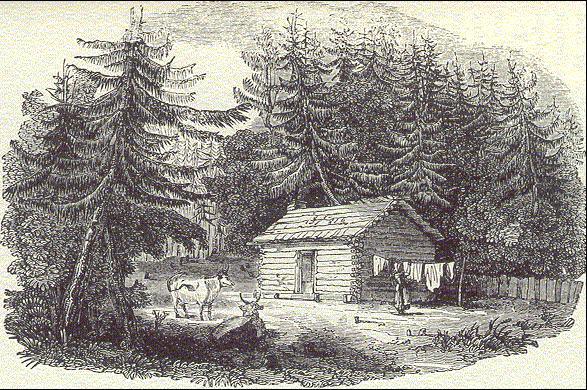
How would you cope if you were suddenly cast out from your home, family and everything that’s familiar to start a new life from scratch in the wilderness? It’s a terrifying prospect for anyone. This is exactly the position author Patrick Gale’s great grandfather found himself in when, under the threat of disgrace; he was pressured into leaving his family and comfortable life as a gentleman in the UK to start anew as a pioneer farmer in rural Canada. In “A Place Called Winter” Gale fictionally recreates a heart-wrenching tale of tenacity in the face of the unknown using this very personal tale from his family’s history as inspiration. What I’ve always found so mesmerizing about Gale’s writing is how close he makes me feel to his central characters so that their struggles feel entwined with my own. Nowhere have the dilemmas which trouble his character felt more immediately real than in this new dramatic and intimate novel.

Harry Cane is a young man living at the turn of twentieth century London. He has a life of leisure as he subsists solely on the proceeds of his inheritance after his father’s early death. He’s a naturally shy man who suffers from an occasional stutter. But through his gregarious younger brother he meets a woman named Winifred who seems like a natural match that he can marry and settle down with. Things go along companionably for some time, but soon buried passions come to the surface. Gale movingly writes about the way both Harry and Winifred have desires which they’ve had to suppress due to social pressures. Harry believes he can negotiate his way around the scrutiny of the public to satisfy his needs, but when the truth about his actions is uncovered he’s strongly pressured into defecting from his comfortable life or face the social and legal ramifications of exposure.

Under the pretence of seeking his own fortune, Harry sets out for a rural area of Canada where pioneers are offered the chance of securing free land if they inhabit and farm it for three years. Here the story is set rapidly in motion as this vulnerable individual must forge a new life for himself. Practically overnight Harry goes from being an established person in society to a place where “he was an unregarded nothing.” It must take a lot of strength of character for someone who has lived a pampered existence to move to a new country and learn the physically arduous existence of farming. You might think one of the few benefits such a new life would involve is the freedom to live as one wants to in relative solitude. But faced with the dangerous elements of this new land, Harry relies more than ever on being accepted. He finds that “even in such a small and scattered community, it was better to be known a little than to be thought odd and avoided entirely.” The necessity to be a part of and accepted by a community demand that a person is subject to that society’s conventions – at least, on the surface.

Gale cleverly frames his story with descriptions of Harry’s life at a future point when he’s been detained in a psychiatric hospital. Fragments of his life in this institution are scattered throughout the book and it’s only in the later chapters of the book that the reader is made aware of how he ended up at this point. For some time, it feels as if there is no way Gale can reconcile the parallel narratives he’s created. But it’s ingenious the way the stories of Harry’s past and present come together in a way that is so unexpected it made me feverishly read the last seventy pages to find out what happens. Without giving any spoilers, it’s sufficient to say the ending is a tremendous and emotionally-arresting surprise.

The thing which makes this novel especially moving is the way Gale writes about the different ways people were inhibited within society at that time from expressing how they really wanted to live. By considering the diversity of people institutionalized in the mental hospital these issues are brought into sharp focus. This facility isn’t inhabited only by patients with debilitating mental illnesses, but by people who don’t fit the mould dictated by society. There are interesting parallels found here with the mental institution described in the novel “The Morning and the Evening” by Joan Williams which I read recently. Stressed and abused housewives are labelled as “insane” as are transvestites and homosexuals. Native Americans are corralled into specific areas and pressured into not integrating with the farmers who settle around them. Intelligent women who simply have no desire to marry are outcast as are women who are raped or abused. Gale shows the way in which those who don’t conform are persecuted and more importantly the impact this has on how these individuals understand their own identities. It’s remarked that “When a thing has always been forbidden and must live in darkness and silence, it’s hard to know how it might be, if allowed to thrive.” When people are pressured into suppressing aspects of their identities they don’t even know how instinctual behaviour will manifest if allowed to be expressed openly.

Gale delicately portrays how his protagonist Harry struggles to establish a life for himself when forced to abandon everything that’s familiar. Alongside his newfound awareness for how to make a living off from the land, Harry’s psychology changes so that he better understands his own desires and what he wants in order to find true fulfilment. It’s a struggle most people face in less dramatic circumstances and without having to be ousted from everything they call home. Reading about Gale’s carefully rendered portrayal of the time makes me thankful for the considerable freedoms I have to express myself and openly search for what I really want in life. Filled with joy, humour and sorrow, this book probes into what gives us our humanity. In short, “A Place Called Winter” is a novel with a tremendous amount of heart.

Posted
AuthorEric Karl Anderson
CategoriesPatrick Gale
10 CommentsPost a comment

Anxiety over the “right” way to be a man is something many men face. Pressure is frequently placed upon men to continue a legacy for the family by taking on the father’s business and creating progeny to carry on the family name and bloodline. This is something that the central character of Mattie in “Wolf, Wolf” by Eben Venter has refused to do. Rather than joining his father’s successful motorcar business, he’s spent his twenties travelling, engaging in sexual escapades and indulging in narcotics. When the novel begins he’s back at his father’s home in South Africa where he’s become his Pa’s primary care-giver. His terminally ill father has lost his sight and his physical health is rapidly declining due to the chemo-therapy he’s been receiving. Before his Pa dies, Matt wants to prove to him that he can be a responsible man with a successful business of his own. His father is a committed Christian and disapproves of Matt’s homosexuality and his relationship with a teacher named Jack. Matt needs his father’s financial backing to get his plan to establish a healthy food stall. With each man wanting the other to compromise their beliefs about what a man should be, father and son are embroiled in a battle of will.

Venter writes about family relations with great sensitivity and insight. In particular, the connection between father and son feels very heartfelt. Matt tenderly cares for his father during the elderly man’s severe illness, yet becomes too possessive about it and wants to assume all the responsibility over other members of his family. He admires a certain kind of manliness he sees in his father’s character and even in his signature: “It’s pure, that’s what it is. It is masculinity, the essence of it, that engenders such a signature.” Yet, he instinctually knows that this isn’t the same kind of man he could or would want to become. The father Bennie appreciates his son and dearly wants to support him to establish himself. At the same time, he’s torn apart by knowing “Our bloodline stops with you, Mattie… I suppose that’s the will of the Lord, I don’t want to kick against it. But let me tell you this today, Mattie, it’s a bitter pill for Pa to swallow.” As the novel progresses, you question whether the caring and support they show each other is genuine or if each man is motivated by the desire to be the dominant one to assert how masculinity is defined.

The novel also presents a unique representation of a long-term gay relationship. Through no real fault of his own, Jack encounters trouble at the school he teaches at which causes him to lose both his position and residence. He secretly takes up living with Matt at his father’s house and plays a game where he hides under a wolf mask to disguise his presence. This game takes on a weightier kind of symbolic meaning as the novel progresses – where men who are counter to the mainstream become the threat which lies in wait outside of the house or society in general. Matt and Jack’s relationship has its own difficulties as their intimacy flounders due to Matt’s addiction to porn. Rather than confront the issue by speaking directly to each other, Jack takes the issue up with friends by posting public messages on Facebook. Throughout the narrative we get the projections of his consciousness in these messages rather than reading his unmediated voice. Similarly we’re given the messages Matt’s father records on tape for his son where he speaks with a confessional sincerity he can’t use with Matt in person. It’s a complex way of presenting ongoing emotionally-stilted relationships between men.

“Wolf, Wolf” is ultimately a tragic take on the way dominant ideas about masculinity can overshadow the feeling between a father and son. Looming over Matt’s relationship with his Pa is “an arrogance as hard and cold as an old, old mountain; orthodoxy elevated over love.” This novel has a fascinating perspective on what being a man means and how men can be filled with such contradictory behaviour. As Matt’s father observes “Men are such odd creatures… A man is a strange thing.” It’s also a multi-layered portrait of a new South Africa with its own particular difficulties to do with class, religious and racial differences. This is a strikingly original novel that has an unsettling, haunting effect.

Posted
AuthorEric Karl Anderson
CategoriesEben Venter
6 CommentsPost a comment

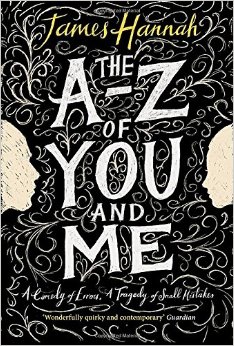
Lately I’ve been thinking a lot about the way novels are structured and if too rigid a structure can be detrimental to a reader’s experience. Sometimes when reading a novel once you see you’re being drawn along a particular path the author has created it can feel too heavy-handed or predictable. However, debut novel “The A to Z of You and Me” by James Hannah feels to me like an excellent case where the author’s clear structure fits perfectly with his subject and the trajectory of his story. Ivo is only forty years old, but he’s now living in a hospice due to complications of diabetes and kidney failure. He knows that he probably won’t recover. In order to help distract him from this fact and “keep the old brain cells ticking over”, a colourfully-spoken and encouraging nurse named Sheila gives him a game to play where he has to think of a part of the body for each letter of the alphabet. In the process of doing so, Ivo has memory associations with each part he names which encourages him to recall the past, deal with his guilt and mentally converse with his former girlfriend Mia. The result is a beautiful-composed representation of one man’s sadly-interrupted life conveyed through fragmented memories that are both highly comic and tragic.

Although the reader knows what letter will come next throughout the novel, some letters receive multiple words with short or extensive connections attached to them. Despite sometimes anticipating what body part he might name to go with certain letters, I was thoroughly immersed in Ivo’s story because of the surprising shifts between past and present. While Ivo struggles with the onset of debilitating symptoms associated with his illness as he’s confined in his hospice bed, he recalls aspects of his life ranging from very early childhood to his courtship with the woman he loves to his problems with substance abuse. In this critical point of his life he observes “There’s not many times when all things fall away and you start to see yourself for what you are, but that’s what I’m feeling now.” His condition gives tremendous focus to what’s important in life and sharpens his understanding of how he came to this point. The reader is cleverly led through several mysteries which are hinted at within the glimpses we’re given of his past; this creates suspense drawing you along and making this novel a compulsive, fast read.

I have to stress that although Ivo’s condition is tragic and the book explores many dark aspects of life, Hannah maintains a tremendous lightness of touch and gives brilliant humorous moments which lift this novel out of being a morose read. There are multiple funny descriptions of body parts and banter between the characters as well as more sophisticated amusing observations. For instance, when describing the awkward call and response of habitual declarations of love he writes: “I always feel a bit defeated when I have to follow up with ‘I love you too’. It’s like the sequel to a film: I Love You and I Love You Too.” Hannah also captures a sort of absurdity about the human condition reminiscent of Beckett plays. In particular, sequences in the hospice play out in a dramatic form where Ivo is in a state like Winnie from Happy Days as he is confined to his bed making him acutely aware of the circumscribed environment surrounding him. Irritating lights outside his window come on and off. There is a female patient next door who emits frequent groans. He feels “lost in a world of regular hums, distant beeping, the periodic reheating of the coffee machine in the corridor, and that steady kazoo.” The reader is frequently made aware of all that he senses around him while his memories swirl in a vortex within him. All the while he is attended by the perky, wise and spirited Nurse Sheila who is warmly optimistic and tremendously caring. It elevates his game of naming body parts to a form of elegy which memorializes his experiences and the great love of his life.

Late at night Mia yarnbombs her neighbourhood hanging knitted hearts from trees

Late at night Mia yarnbombs her neighbourhood hanging knitted hearts from trees

This novel is also a tragic romance. Although we’re made aware early on that Ivo is no longer with Mia we don’t know why until near the end of the book. The story of their courtship is depicted in refreshingly realistic detail which adeptly avoids ever becoming soppy. The connection between them happens quite quickly, but Ivo knows there is something special and real about their relationship when he doesn’t fall back upon old ways of describing his past and identity. He tells Mia about his father in a way he hasn’t a thousand times before so “It felt for the first time like I was telling it in a way that I wanted to tell it.” Serious trust and caring for someone inspires us to speak from the heart rather than falling back on rote descriptions of our lives. This sort of connection made me feel emotionally invested in it and tense to find out how their relationship played out. The way Ivo speaks directly to her in the narrative and the manner in which this lost love is conveyed in pithy short declarations such as “You’re everywhere. The memories of you, the shape of you” affectingly brings this romance to life. Other relationships within the novel are depicted with equal care – particularly Ivo’s antagonistic exchanges with his older sister Laura and how their connection changes due to traumatic experiences.

James Hannah has really written an impressive debut. It’s particularly admirable the way this novel powerfully captures the visceral pain and fear of being in a hospice while being beset by severely debilitating ailments. I felt drawn into and affected by Ivo’s experiences in a way similar to how I felt reading Rachel Joyce’s “The Love Song of Miss Queenie Hennessy”. There’s wisdom in Hannah’s depiction of the way we’re drawn at times towards self destruction and what’s bad for us (even when we know better). He writes: “Sometimes, you know, when you see the worst of everything lined up before you, you’ve just got to go for it. See how badly you can crash it.” By taking responsibility for his actions, Ivo is able to touchingly honour the love he shared with Mia. “The A to Z of You and Me” is a deeply moving story that skilfully depicts a complex spectrum of human emotion.

Posted
AuthorEric Karl Anderson
CategoriesJames Hannah
4 CommentsPost a comment

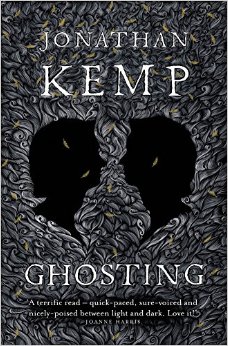
Despite its beautiful dark-gray cover with haunting silhouettes and suggestive title, “Ghosting” isn’t anything like your typical formulaic ghost story. This novel is more an elegiac tale of age-worn love, loss and a maverick quest for authentic selfhood. It begins creepily enough with the central character Grace, a 64 year old woman, glimpsing the ghost of her long-deceased first husband Pete. This encounter brings with it a flood of memories accompanied by unresolved emotions which have been mostly repressed since settling down to live a quiet life on a house boat with her second husband Gordon. Rather than being fully present in her daily life she’s merely going through the motions like “an impersonator of her own life.” Although Grace is spiritually strong her psychological state is somewhat fragile due to unusually traumatic incidents she’s lived through. Grace pursues the ghost of her first husband which leads to unusual new encounters and pushes her to make dramatic decisions about her life. This novel isn’t supernatural, but expresses the way in which our yearning for the past and hoping for a different future makes us dare to believe in something other than the mediocrity of our present life.

The narrative in this novel is linked very closely to Grace’s consciousness. She emotionally excavates her past through her encounters in the present trying to make sense of what she’s felt and better understand what she really desires. It gives a tremendously intimate feel to follow Grace’s logic as poignant touchstones in the present such as the sound of birds or the feeling of raindrops draw her back into the past to recall her courtship with Pete, their children and difficult marriage, the journey to Malaysia to join Pete when he was stationed there and grappling with her tempestuous daughter Hannah. Hampered by guilt, these memories oppress her so that she feels “My life. Only I feel like it happened without me, and I want it back so I can do it differently.” By confronting the mirror ghost-image of her husband who appears in the form of a charismatic gay performance artist Grace is able to reconcile her feelings about the past and escape the confines of her mental prison. This culminates in a particularly chilling moment reminiscent of Charlotte Perkins Gilman when Grace is left alone at a party in a slightly intoxicated state and senses a woman trapped in the wallpaper.

Blackpool Pleasure Beach where Grace and Pete first meet

Blackpool Pleasure Beach where Grace and Pete first meet

More than most writers I can think of, Kemp is skilfully adept at capturing the intensity of feeling involved with desire and intimacy. I’m not necessarily referring to writing that is sexually frank, although he is able to vividly portray such scenes that convey this experience without tipping over into indulgence. What’s more impressive is the way he conveys the tenderness of touch and physical longing. At one point Grace ponders how she misses Pete “Not for sex, necessarily, though she did miss that – more a vague desire for arms around her and the nearness of a body.” As a woman who has been abused, there is a complexity of feeling involved in recalling moments of physical security alongside moments of physical pain. These emotions become linked to her feelings of self worth. In several poignant scenes Kemp describes how the sexual imagination spills into her present transforming how she sees the world and how physical contact yields a more assured sense of what she wants.  

Jonathan Kemp’s first novel “London Triptych” was an ambitious brilliant story of three gay men’s lives at very different points in a century. With "Ghosting" it’s fascinating reading this honed down style of storytelling which precisely depicts a single character’s floundering quest for a more authentic state of being. It has a more concentrated, personal feel to it. Despite dealing with many serious social and psychological issues there is an entertaining flow to the story as Grace disrupts her normal existence with trips to a flamboyant psychic or stumbles through a wild party of modern artists. I found it to be a highly sympathetic story which made me reflect upon my own past and what I want in life – a surprising thing considering how dissimilar my life is from Grace. But there are measures of feeling here which touch upon common experiences ranging from relationships to ambition in life. The assured writing style in “Ghosting” has a way of teasing you out of your shell.

Posted
AuthorEric Karl Anderson
CategoriesJonathan Kemp

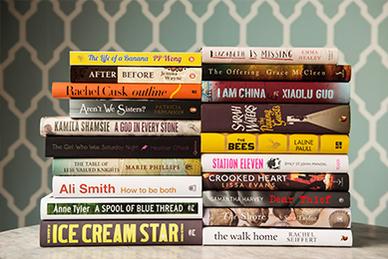
The longlist has just been announced! It's a fascinatingly diverse group of books for this year's Baileys Women's Prize. I correctly guessed the below eight out of the twenty correctly. Click on the books for links to my reviews.

Lissa Evans: Crooked Heart 
Xiaolu Guo: I Am China
Emma Healey: Elizabeth is Missing
Emily St. John Mandel: Station Eleven
Rachel Seiffert: The Walk Home
Ali Smith: How to be Both
Anne Tyler: A Spool of Blue Thread
Sarah Waters: The Paying Guests

I've read positive things about these seven books, but haven't read them yet. 
Rachel Cusk: Outline
Samantha Harvey: Dear Thief
Grace McCleen: The Offering
Sandra Newman: The Country of Ice Cream Star
Laline Paull: The Bees
Kamila Shamsie: A God in Every Stone
Sara Taylor: The Shore

These final five books I've not even heard of before.
Patricia Ferguson: Aren’t We Sisters?
Heather O’Neil: The Girl Who Was Saturday Night
Marie Phillips: The Table of Less Valued Knights
Jemma Wayne: After Before
PP Wong: The Life of a Banana

Although I'm disappointed some of my favourites such as Marilynne Robinson, Joyce Carol Oates and Rachel Joyce didn't make it on I am really happy with the choice of longlist. I'm especially pleased to see three of my top ten books from last year on the list: Waters, Smith & Seiffert. I love how prizes like this give me an extra push to get to books that have been in my TBR pile for a while and also give me books I probably would have never found otherwise. After getting high recommendations from other bloggers on Newman, Paull and Shamsie's novels I'm probably going to start with these. However, I'm looking forward to reading through the rest of the list in the upcoming weeks and conferring with the other members of the shadow panel of judges. 

Posted
AuthorEric Karl Anderson

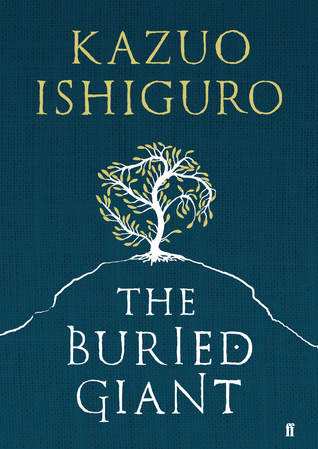
I came to love Ishiguro’s writing when I was studying at university. Reading “The Unconsoled” I was astounded by the way he could stretch narrative to act like a dream in order to say so much about ambition, love, creativity and fear. I still think of it as one of my favourite novels. At the same time, I could understand why some people were put off by the book because of its lack of a totally coherent story. Perhaps if I first came upon it earlier or later in life I wouldn’t have been as dazzled. But, as it was, I became a committed fan and I especially appreciated the variations of story and subject he exhibited in his book of short stories “Nocturnes” – another book which received uneven responses. Since 1995, he’s only published a book about every five years so any new one comes as a major event for me and his legions of fans. On the day “The Buried Giant” was published, I was one of the first people queuing up to buy a copy.

One thing is for certain: Ishiguro never writes in the same style and this novel is no exception. This is a journey tale set in early Medieval Britain with fantastical elements. It focuses on an older couple who the narrator refers to as Beatrice and Axel. The two travel through the countryside trying to reunite with their son. It takes place in a post-Arthurian age where Britons and Saxons who had so recently been in heated conflict have now formed a somewhat peaceful co-habitation within the countryside. This is a revisionist mythical version of Britain’s history and one which Ishiguro only makes possible by having an unsettling mist cover the country to fog the memories of its inhabitants. King Arthur’s famed cousin and Knight of the Round Table Sir Gawain features in an elderly state wandering the land in search of purpose now that he’s lost his beloved king and is sworn to a solemn secret duty. The majority of the novel comprises of a sort-of quest to find a feared she-dragon with a group comprised of Sir Gawain, the older couple, a Saxon knight named Wiston and a boy rescued from ogres named Edwin. Their stories diverge in different ways as they encounter many other characters along the way. Each central character has his/her own secrets and forgotten past. As these are gradually uncovered we come to question the meaning of memory and how it impacts our relationships to our families, communities and sense of national identity.

The relationship between the old couple Beatrice and Axel is written about in such a tender way with Beatrice fretting about Axel’s welfare and Axel lovingly referring to her as “princess.” But an unsettling sense of foreboding hangs over their story as their pasts are so unclear to themselves. Without any good or bad memories all that’s left is their habits of togetherness. At one point Beatrice ponders: “I wonder if what we feel in our hearts today isn’t like these raindrops still falling on us from the soaked leaves above, even though the sky itself long stopped raining. I’m wondering if without our memories, there’s nothing for it but for our love to fade and die.” The novel draws into question whether love is something which becomes embedded within our identities or if it is a behaviour which fades away if there is no sense of a shared past. Joined with their encounters with distraught widows and boatmen who pose questions which challenge the strength of their love, there is a troubling question of whether their relationship will endure if they realize the truth about their past and the location of their son.

Perhaps relationships which function well can only do so if certain resentments and frustrations are forgotten. Equally many relationships can grow stale because of a fear of being alone after so long or turn into a habit too hard or difficult to break. At one point the old couple go to visit a wise elderly fascinating monk named Jonus who asks Beatrice: ‘Yet are you so certain, good mistress, you wish to be free of this mist? Is it not better some things remain hidden from our minds?’ Because, if you think constantly about all the niggling problems (small and large) you’ve had with your partner of many years, you’ll no doubt live in a state of perpetual anger at that person and yourself for staying with her/him. It’s only with forgiveness and letting go certain things from the past that anyone is able to maintain a relationship over a great span of time.

Ishiguro raises this problem to a societal level as well in his depiction of the relationship between Britons and Saxons. Sir Gawain likes to extol the virtues of King Arthur for bringing these disparate groups together to a point where they can co-exist in relative harmony. Yet, at what expense was this fellowship built and if the truth about crimes against humanity are known should reparations still be made even all these years later? Amidst speculation about why the mist is making everyone forget there comes another point of view: “The stranger thought it might be God himself had forgotten much from our pasts, events far distant, events of the same day. And if a thing is not in God’s mind, then what chance of it remaining in those of mortal men?” Rather than any celestial power, this got me thinking about the way national memory works. If things are not commemorated by state or taught in history there is a large chance it will fade from the public memory. Is this what helps civilization to continue reasonably peacefully or does it cause buried resentments to fester and go unresolved? In the novel, there is the question of whether the Britons and Saxons are still furtively planning to conquer each other. The knight Wiston ominously states: “When the hour’s too late for rescue, it’s still early enough for revenge.” When two large communities of people have been in such heated conflict it feels that a certain balance of forgetting and mindfulness is necessary. Otherwise the groups will constantly feel in opposition to each other and battles will frequently be rekindled. However, the novel opens up these questions with the threat of potential violence which once laid waste to the land lying buried just beneath the surface.

The novel includes an interesting approach to telling the story over the course of the book. Much of it has the tone of folklore with descriptions explaining directly to the reader the way society functioned at that time. There is a heavy amount of dialogue between Beatrice and Axel which reveals what they are like as people and how their relationship functions. Then there are some points which switch to first person accounts narrated by Sir Gawain or come from the point of view of the adolescent boy Edwin so we see their own motives and back stories which aren’t revealed when they are with the larger group. The last section of the book goes to another place entirely. This could come across as a hodgepodge of storytelling, but it gave me different access points for coming to a larger understanding about the collective history of these characters. There are naturally several characters or particular parts of the story which I would have liked a more complete picture of, but it felt like Ishiguro preferred to leave many of these intentionally mysterious.

It feels too soon to tell how I rate this novel against other books by Ishiguro that I’ve read or even if I feel like the novel was successful on its own or not. There is a haunting quality to the book which has left me with certain vivid images found in the story and it’s left me pondering the nature of memory. It’s interesting to compare this novel against recently published “The Chimes” which speculates upon a dystopian future where memory is also erased. These books call into question what role memory plays in the formation of identity and whether we are freer when we’re not weighted down by the positive and negative aspects of our past. Whatever conclusions can be made from reading “The Buried Giant”, it did make me feel like I was boy again being read a particularly engrossing bedtime story which felt emotionally real and just beyond my understanding.

Posted
AuthorEric Karl Anderson
CategoriesKazuo Ishiguro
3 CommentsPost a comment

Next week on March 10th the long list for the Baileys Women's Prize for Fiction will be announced. I’m always excited about this prize which celebrates female writers, but I’m particularly enthusiastic this year because I’ve been asked to be part of a shadow panel alongside other bloggers and authors who will be reading books listed for the prize and debating about who the winner should be. This has been organized by the fantastic blogger Naomi over at TheWritesofWomen. She has made a list of predictions here as has fellow-panelist Dan here.

I’ve read so many fantastic novels by women in the past year it’s difficult to narrow down a list of what could be considered the best. The long list last year was 20 books strong so I’m giving a list of my 20 favourites below. Some of these books I loved so much I will be sorely disappointed if they aren’t on the list.

2015 Judges: Cathy Newman, Helen Dunmore, Shami Chakrabarti, Laura Bates and Grace Dent

2015 Judges: Cathy Newman, Helen Dunmore, Shami Chakrabarti, Laura Bates and Grace Dent

Last year I was shocked to see that Siri Hustvedt’s The Blazing World which was one of my books of the year wasn’t on the long list. Equally this year I think Marilynne Robinson’s "Lila" and Joyce Carol Oates’ "The Sacrifice" are both brilliant and really must be listed. There are also some great novels by writers like Rachel Seiffert, Susan Barker, Catherine Hall and Lissa Evans which I feel haven’t had the recognition that they deserve. I’m aware there are many novels such as "Some Luck" by Jane Smiley, "Euphoria" by Lily King and "Outline" by Rachel Cusk that I haven’t yet read and I’m sure when the real list comes out I’ll be reading some of them. But, for now, here are my predictions. I'd like to note that after the shortlist was announced in 2014, I did successfully predict that Eimear McBride would win so watch this space for future posts and predictions!


Click on the titles below to read my thoughts about each of these great reads:

The Walk Home – Rachel Seiffert
Upstairs at the Party – Linda Grant
Elizabeth is Missing – Emma Healey
I Am China – Xiaolu Guo
The Incarnations – Susan Barker
House of Ashes – Monique Roffey
Thirst – Kerry Hudson
The Paying Guests – Sarah Waters
How to be Both – Ali Smith
The Love Song of Miss Queenie Hennessy – Rachel Joyce
The Sacrifice – Joyce Carol Oates
Our Endless Numbered Days – Claire Fuller
The First Bad Man – Miranda July
The Chimes – Anna Smaill
A Spool of Blue Thread – Anne Tyler
The Repercussion – Catherine Hall
Academy Street – Mary Costello
Station Eleven – Emily St John Mandel
Crooked Heart – Lissa Evans
Lila – Marilynne Robinson

Have you read any of these books? Are there other books by female authors published in the last year you'd prefer to see on the list?

Posted
AuthorEric Karl Anderson
4 CommentsPost a comment

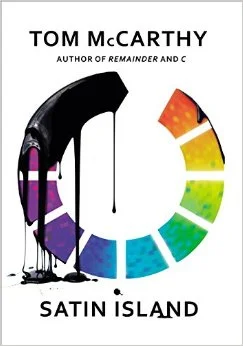
Tom McCarthy is a writer who I find fascinating to read, but I don’t often enjoy his writing. In fact early on in “Satin Island” his narrator makes a proclamation which might as well be speaking directly to the reader: “events! If you want those, you’d best stop reading now.” McCarthy comes across more as an essayist than a novelist. The American cover for this book even plays upon the definition of it with words struck through like A Treatise, An Essay, A Report, A Manifesto, A Confession; the unimpeded declaration in the upper left corner insists that this book is A Novel, but I found it to be more like the other forms it claims not to be. That’s not to say there isn’t creativity to McCarthy’s cerebral treatises about the human condition and modern life informed by continental philosophy and post-modern literature. There is story here, but his fiction is definitely more firmly rooted in ideas. The only other book I’ve read by him is his novel “C” which I recall very little of except a particularly vivid séance scene which is revealed to be a total sham. In this new novel too there is a particularly fascinating section where a heretofore scantily-sketched female character named Madison comes to the forefront with an absurdly weird and meaningful story of her own. It’s the scene which I’ll probably take away with me and continue to mull over after having finished this novel where most of the other ponderous theorising will drip away.

The narrator U works at a company as a modern anthropologist where he sells to commercial enterprises their own narrative. He tells them stories about their customers’ relation to their products while borrowing heavily from concepts of structuralism and, in particular, his hero Claude Lévi-Strauss. This portrait of a corporate culture that likes to validate its marketing techniques with a vaneer of intellectualism is well observed. There is an arrogance to their task where the narrator believes “The world functioned, each day, because I’d put meaning back into it the day before.” I particularly appreciated the way U has a general lack of understanding about the multifarious work and developments which make his company successful. The company pioneers a new form of modern anthropology which they dub: “Present-tense anthropology; anthropology as way-of-life. That was it: Present-Tense Anthropology; an anthropology that bathed in presence, and in nowness – bathed in it as in a deep, bubbling and nymph-saturated well.” The trademark symbol in the name seems particularly important as the driving factor behind all this “pure” research is profit-motivated rather than defining fundamental truth(s) about the culture. However, the narrator takes his profession seriously and sees himself as a scientist gathering clues about the modern age to feed into his larger project.

As a special assignment from his boss Peyman, the narrator’s real task at his company is to compile a great report which Peyman hopes should be “The Document, he said; the Book. The First and Last Word on our age.” Of course, this is an impossible task and no matter how vigorously the narrator follows several threads which he views as significant and make up the bulk of this novel: news of an oil spill, a crime of a sky diver whose tampered parachute never opened, the cancer which afflicts his colleague Petr or a vivid dream of a prosperous city paired with an island of refuse. Ultimately, his ambitious plans to compile a magnificent document crumble as the reader always knows they will from the moment he sits down at his magnificently cleared pristine desk. It seems appropriate that the novel begins with the narrator stuck in an airport. In this liminal space he is neither here nor there which neatly reflects his understanding about the influences which inform the news story which flicker across the screens he studies. Perspective influences all understanding so it’s an impossible task to collate “bundles of relations” into one objective point of view. Meaning remains hidden behind endless layers. All this amounts to narratives which we sell ourselves into believing we truly understand what is happening in the world and where we are going. As the narrator’s boss observes: “Everything, as Peyman said, may be a fiction – but the Future is the biggest shaggy-dog story of all.”

In his acknowledgements McCarthy explains that the gestation of this novel originated in a residency which he spent “projecting images of oil spills onto huge white walls and gazing at them for days on end.” The novel reads like a story formulated by someone who has spent a lot of time gazing at a wall and thinking hard about complicated matters. The narrator isn’t so much a protagonist who goes on a journey to be transformed, but a cipher through which the reader can be intellectually led from A to B to C. Presumably, since the narrator's name is abbreviated to the single letter U, the reader is meant to see himself mirrored there, but I saw little reflection of myself. The crucial difference between this novel and other novels of ideas such as Ali Smith's "Artful", JM Coetzee's "Elizabeth Costello", Joyce Carol Oates' "I'll Take You There" or any of WG Sebald's books is that these novels have an emotional crux which makes those ideas urgently relevant to the characters involved. The narrator is so emotionally removed from his quest that it feels he doesn't relate to the ideas he's contemplating other than to get his report into his boss. Personally, I like to feel more heart in the story I’m reading and I didn't find that throughout most of this novel. For the majority of the book, McCarthy is Serious with a capital S. A particular kind of masculine sense of humour exhibited in scenes such as one in a Frankfurt anthropology museum’s archive where Madison calls the narrator to arouse him with talk of “sex scenarios involving poles and savages” fell flat for me. However, the final scene does build to a touchingly climactic moment of indecision and haunting sense of loss. If you’re looking for thought-provoking intelligent debate, McCarthy has some serious and engaging things to say about modern life. But if you want to be swept up in an engaging story, there are plenty of other novels that are more satisfying.

Posted
AuthorEric Karl Anderson
CategoriesTom McCarthy

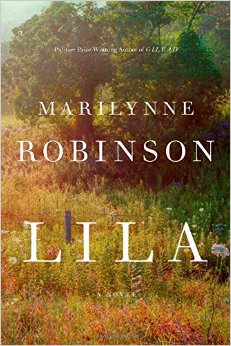
Don’t you love those moments when you are reading and the text seems to be speaking directly to your heart? Suddenly you’re so struck by the story that it feels like there can be nothing more important in the world than reading this book right now. I had that feeling consistently throughout reading “Lila.” I’ll make a feeble attempt to try to explain here why it struck me so deeply, but of course it’s impossible to summarize. Something about it must resonate in a deep way with my life right now and I feel so enriched for having read it. I was aware of this book when it came out last October, but for some reason I was wary of reading it. Marilynne Robinson is such a well-respected figure in the literary establishment and, while I read “Gilead” and remember appreciating it, it didn’t leave a lasting impression. But, sitting here now, reeling from having just finished reading this majestic, beautifully written novel I won’t be forgetting it anytime soon.

“Lila” begins with the story of a young girl who is poor, sickly and unwanted. She’s living in a house with a group of people who she most likely isn’t related to. The year at the start of the novel is never specified, but it’s probably around 1921 because there is a reference to The Crash several years later – something which doesn’t dramatically affect the people who have always been poor. When she contemplates the depression: “It was like one of those storms you might even sleep through, and then when you wake up in the morning everything’s ruined, or gone.” The girl is taken up by a woman with a scarred face who calls herself Doll. This woman values her in a way no one has ever cared for her before. She nurtures the girl back to health when she probably would have otherwise died unnoticed. The girl is dubbed Lila which is a name chosen by an old woman who the pair live with for a short amount of time. Her identity is gradually formed from scratch because she began with nothing.

Names have a tenuous connection with the things they are attached to in this novel because the thing exists before a name was needed. It’s as if Robinson has absorbed Plato’s Cratylus dialogue and incorporated this argument about the relation between language and the things they signify into a story about a life. So, in a sense, Lila is entirely self-created making everything she learns and experiences feel fresh for the reader as well. We’re so accustomed to being called our names since childhood, it’s startling to think what it would be like to be unknown/unloved all your life. When Doll takes her on and they decide upon a name to call her: “That was the first time she ever thought about names. Turns out she was missing one all that time and hadn’t even noticed.” Lila’s wide-eyed practical approach to the world makes us question the way language impacts how we perceive everything around us.

Normal
0


false
false
false


MicrosoftInternetExplorer4


 /* Style Definitions */
 table.MsoNormalTable
	{mso-style-name:"Table Normal";
	mso-tstyle-rowband-size:0;
	mso-tstyle-colband-size:0;
	mso-style-noshow:yes;
	mso-style…

“That credenza was the shape of a coffin, with little legs on it, and flowers of lighter-colored wood on the front of it, some of them peeling off, some of them gone, just the glue left. It was always locked.”

Lila may not be aware of the way most people understand and interpret the culture and society around them, but she is not stupid. Robinson reveals throughout the novel how Lila is capable of complex feeling and tremendous depth of thought. To represent someone so under-educated yet still in possession of such intelligence is a tremendously skilful and difficult challenge for a writer. Later, when Lila is a young woman, she meets and marries a much older man, the Reverend John Ames. Through him and their conversations about life and the bible, Lila’s brilliance really shines through: “She knew a little bit about existence. That was pretty well the only thing she knew about, and she had learned the word for it from him. It was like the United States of America – they had to call it something. The evening and the morning, sleeping and waking. Hunger and loneliness and weariness and still wanting more of it. Existence. Why do I bother? He couldn’t tell her that, either. But he knows, she could see it in him.” Through their exchanges about the meaning of life and referencing Lila’s brutal experience of the world, the novel reveals startlingly clear insights into fundamental questions about existence.

The story is told in a curiously circuitous way so that references are frequently made to events in the future or people from other areas of Lila’s life. Yet, Robinson carries the reader along with such skill I never felt disorientated. It’s known from early on that Lila will marry the Reverend, but the way in which they meet and come together is revealed only gradually. What’s so radical and thrilling about the way this relationship is presented is that, even though they are married and Lila has the first real stability in her life, it’s never perceived by the characters as something that will continue with certainty. Lila has always planned to save money to take a bus to California – an amorphous dream of another life she always carries with her. In beautifully touching and heart-wrenchingly tender scenes Lila and the Reverend openly discuss the possibility of her leaving and their separation. This uncertainty about their future gives insight into the ambivalence everyone feels about their own direction in life and relationships. Despite any declares of eternal devotions, relationships can be abruptly ended by either partner. But love is a declaration of hope. As Robinson states: “Wife is a prayer.” This creates suspense in the narrative as well as showing a deeper understanding of the complex psychology of the characters.

Lila’s journey in this novel is one in which she slowly formulates a certainty about her identity and right to be despite her impoverished and neglected origins. Robinson sums up brilliantly the way in which her existence has been like an imitation of a life: “Her name had the likeness of a name. She had the likeness of a woman, with hands but no face at all, since she never let herself see it. She had the likeness of a life, because she was all alone in it.” There is a frequent sense throughout that Lila possesses a deep loneliness because of the solitary necessity of relying only on herself and the hardened nature she’s acquired from growing up in desperate circumstances. It’s a constant presence that Lila feels: “She had told herself more than once not to call it loneliness, since it wasn’t any different from one year to the next, it was just how her body felt, like hungry or tired, except it was always there, always the same.” This complicated emotional state has been a part of her existence for so long it’s become something she even feels in her body.

Robinson reads an extract from Lila and takes questions.

I was greatly moved by the beautifully delicate way Robinson goes about evoking Lila’s deep sense of aloneness and how it naturally makes her want to stop herself from fully trusting or revealing herself to others. It’s resignedly observed “That’s one good thing about the way life is, that no one can know you if you don’t let them.” Thus Lila is very careful about committing herself to anyone or anything because she understands how transitory and untrustworthy life can be. She’s defensive even when she’s offered kindness because “That was loneliness. When you’re scalded, touch hurts, it makes no difference if it’s kindly meant.” It’s startling to me how complexly Robinson crafts her character delineating Lila’s thoughts, feelings and motivations with short poignant phrases that perfectly capture a state of being.

Lila’s journey is very specific, but Marilynne Robinson has an extraordinary capacity for making her story feel universal. I would normally be hesitant about a novel which contains so much dialogue with religious text, but there is nothing prescriptive or preaching in this novel. The character of Doll is adamantly against religion. Yet, it’s the way in which she and Lila’s husband, the Reverend, both exhibit a beautifully patient sense of kindness for no other reason than out of human decency which is truly inspiring. Gradually Lila feels inspired to show kindness herself. It’s what lifts what would otherwise be a terribly bleak novel out of the depths. As I mentioned before, I’ve read “Gilead” which is an epistolary novel from the Reverend Ames’ perspective so I was already somewhat familiar with his character, but I haven’t read Robinson’s follow-up novel “Home” which is about Reverend Robert Boughton (a close friend of Reverend Ames). I don’t feel it’s necessary to read either of these before reading “Lila” but there are references to Boughton which I’m sure would have more meaning if I had. Like Rachel Joyce’s extraordinary “The Love Song of Miss Queenie Hennessy” which is a companion novel to her earlier book, “Lila” is powerful enough to stand on its own. It’s is a deeply profound novel full of uncompromising truth and human spirit which I’m sure I will return to again and again.

Posted
AuthorEric Karl Anderson
10 CommentsPost a comment

Quite often I like to start the day reading a short story. Even if I’m knee-deep in a good novel it’s enjoyable to get a taste of an entirely new perspective that can be consumed in one sitting before going about my day or plunging back into reading a longer narrative. Sometimes the results can feel slight and forgettable. At other times I’m left reeling at the profundity of what I’ve just read and wanting more. Reading through the stories in Tom Barbash’s “Stay Up With Me” made me greedy. I wanted to put off going to work and stay in bed reading through the whole book. The stories are fantastically entertaining and moving in the way they effectively delineate a character’s complex life in a few short pages. His fiction uses a variety of narrative styles capturing a range of perspectives from divorced parents to con artists to teenage boys. Each story empathizes with where that character is in their life at that point in time to give you a refreshingly new perspective.

Many of the stories have to do with family dynamics. Several of the stories deal with a parent’s relationship with their child or a son’s relationship with his mother/father. Barbash captures the way that the wavering romances of family members can affect the rest of the family. In ‘The Women’ a son warily observes the large amount of women his father dates after his mother’s death. His father moves on in his life in a way that he cannot. In thinking of his mother’s passing he observes “When she was on her deathbed, I was still deciding who to be like, and who to rebel against, though I still had time to fail them both.” Because he doesn’t feel like he’s reached a point of success or failure in his life, it feels like his parents have raced forward into death or new relationships without him and left him behind. The story ‘The Break’ in many ways shows this same perspective from the opposite generation where a woman only referred to as “the mother” suspiciously witnesses her college-aged son philandering around with an older woman she considers to be low class. Her life as a divorced woman feels somewhat suspended where she’s resigned herself to believing there won’t be any further enjoyment for her whereas her son is just starting to find his. When thinking of her son “It occurred to the mother that he was better suited for enjoying the world than she was.” While the son is busily transforming into a new role in life as a man, she is trapped in the false belief that she can only be a mother. These stories show the way our identities as members of families can be a kind of trap if we don’t understand ourselves to be continuously evolving multi-faceted individuals.

Other stories detail the experiences of non-traditional family units. In ‘Howling at the Moon’ a character named Lou is introduced to his new family now that his mother is having a serious relationship with a man who has several older children. “It’s a funny thing to meet a group of people older than you and be told that they are your family, you will live with them and not hate them or ignore them or fall in love with them.” There is a haunting sense of possible alternate futures if family relations had worked out differently. His brother died in a car accident when they are very young and this underpins the sibling absence caused by the daughter whose room he inhabits while she’s in Paris. This story speaks so powerfully about grief, emotional distance between family members and the oddity of assimilating into pre-formed family units.

One of the most profound and heartbreakingly poignant stories ‘Somebody’s Son’ depicts a pair of men who visit an old couple who own a farm in the Adirondacks. They try to use underhanded psychologically-manipulative tactics to get them to sell their property at a price substantially below what it is worth to developers. The increasing intimacy between one of the men named Randall and the old couple makes him into a kind of adopted son where the elderly couple have been neglected by their own children. It’s a tragic tale about the devious effect money has upon relationships. When it comes to commerce, caring and love simply become leverage for getting a better deal.

The stories are as equally forceful in their depictions about the complexities of romance. One of my favourite stories ‘Balloon Night’ is about a man named Timkin who throws an annual party in his upscale Manhattan apartment where people can watch the Thanksgiving Day Parade balloons being inflated through the windows. His wife has just left him, but he continues with the celebrations regardless. Ironically he observes: “It was part of being a successful couple, he believed: the capacity to adapt.” Yet, Timkin finds it difficult to adapt now that his wife has left and pretends to the guests that she simply had to be away for work. The setting of the story gives an extremely meaningful perspective on his own life as he observes the party both from within and outside of the apartment. There is an ominous sense of doom as he watches it and struggles to accept his marriage might be over: “It felt like the moment in a movie before something terrible occurred, before the iceberg or the rogue wave. If only I could stop the film right here, he thought.”

Tom Barbash discusses his book Stay Up With Me and reads his story 'Somebody's Son'

Another powerful story which has a deceptively whimsical tone ‘How to Fall’ is narrated by a woman who hesitantly joins her female friend on a ski weekend for singles. The language in this story is much more casual and vernacularly-specific than the other stories. But its insights are no less meaningful in the way it depicts how she continuously thinks back to a past relationship she can’t let go. It touchingly shows the complex feelings experienced through being hurt by romance and learning to endure. Another difficult narrator tells the story in ‘Spectator’ where a man describes his relationship with a girl eighteen years younger than him. He realizes they probably wouldn’t be having an affair if she didn’t come from a hard background or had an abusive mother, yet he persists with the relationship despite how morally dubious it is or her evident desire to move on. Tragically he believes “Things weren’t perfect between us, but I thought being parents would ground us in a good way – rid us of the threat of possibility; I am not good when I have too many options.” His wish to create a new family unit on such a flimsy foundation speaks of the way he desires to trap himself in an idealized situation which is destined to fail.

Barbash uses different forms in certain stories to get his message across. For instance, in ‘Letters from the Academy’ an official from a tennis academy writes to the father of a sixteen year old student who he perceives to possess great potential. The story is only told in letter form where the man writing the letters becomes increasingly creepy and possessive about the boy in his charge. The story offers multiple twists while saying a lot about obsession and insecurity, yet I felt it could have been strengthened if the letters were dated so the reader could see how the transformation in tone is stretched over a defined time period.

The title story ‘Stay Up With Me’ is entirely different from the other stories in the way it wavers between reality and hallucination as it’s protagonist Henry dreams about his young life, difficult relationship and aspirations of becoming a screenplay writer. When describing the characters’ intimacy Barbash writes “They are fluent in each other’s faults and wounds and hypocrisies, and so sleeping together has the feel of sleeping with a failed part of themselves, like pornography with familiar dialogue.” This is one of the most striking things I’ve read about contemplating the rollicking interplay of emotions that can feed into sex and how intimacy can be indelibly tied with frustration.

Tom Barbash short fiction has appeared in many highly respected American publications. It’s fantastic that these meaningful stories have been collected into a single book rather than remain loose in various journals. His extraordinary talent is for giving a panoramic perspective of his narrators’ lives so both the past and possible future are spread around the present. His characters are touchingly presented as being caught in moments of time where their identity is wavering between transformation or becoming locked within an immutable form. “Stay Up With Me” gathers together an extremely robust group of complex impassioned stories.

Posted
AuthorEric Karl Anderson
CategoriesTom Barbash