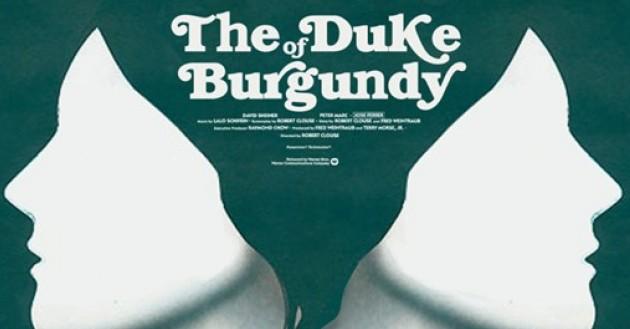
It’s London Film Festival time and, since my boyfriend is a massive movie buff, that means for the next two weeks I’ll be seeing a film every night and sometimes as many as three films in a day. The first film I went to see last night was The Duke of Burgundy starring the imperial looking Sidse Babett Knudsen and Chiara D’Anna (who was styled like the character Audrey Horne in Twin Peaks). I was interested in seeing this film as it was directed by Peter Strickland whose previous film was the bizarre and atmospheric Berberian Sound Studio. What’s so striking about this director is the way he uses sound and music to trigger the viewer’s imagination and cause submerged emotions to well up out of the darkness.

The Duke of Burgundy is set in a seemingly fantasy world on a rural palatial estate overloaded with dusty books and entomology specimens – illustrations of insects and cabinets filled with pinned moths and butterflies decorate the rooms. The scene opens with Evelyn (Chiara D’Anna) arriving at the house and being swiftly told off by the woman who appears to be the mistress, Cynthia (Sidse Babett Knudsen). What is established as a strict and formal atmosphere is swiftly turned into something else altogether as the plot twists to show this pair has a very special sort of relationship. What on the surface appears to be a stark ordinary reality is revealed to contain falsehoods. For instance, during a lecture hall session about the characteristics of insects, a slow panning shot records the bland expressions of the attentive audience and reveals this group is partially made of dummies.

It took me a bit of time to get into the mood of this film. I have no doubt some people will find it controversial or might consider it to be just about titillation – although the type of people who go to see art house films like this probably won’t feel this way. At first, I thought it was all a bit of a gimmick and just revelling in being a tale about kinky lesbians. But gradually a subtle sort of humour is introduced and this brought a welcome dimension to the film. It also introduced a complication as I think it’s a little pat to have a story about a sub-dom relationship where it’s all revealed to be strained, a bit ridiculous and unsustainable over any extended length of time. Certainly this is the case in many kinky relationships, but I don’t think it makes a very interesting story line.  

What is interesting, where this film really excels and the thing that makes it a memorable experience is the way it artistically portrays the way desire, the sexual imagination and love function in relationships. It sounds harsh, but any romance is a kind of lie that the people involved are complicit in perpetuating. The truth is that nothing binds two people together no matter how fiercely they declare their love or bond themselves in public displays of matrimony. It’s all just words. And a few words like “I don’t love you anymore” or “I’m leaving you” can blow it all away. Yes, there are sincere emotions and chemistry which keeps people harmoniously together for many years and that’s a beautiful thing. But, beneath it all we remain solitary individuals trapped in our own heads and slaves to our own desires. It’s natural for love to waver over time.

The Duke of Burgundy portrays the way two people grapple towards a sustainable relationship making allowances for each other’s transforming needs. This is portrayed in subtle glances between Evelyn and Cynthia. They voicelessly yield to each other’s whims – sometimes grudgingly and sometimes indulgently. The play for power is the way they establish that one person still cares for the other – that they are willing to make sacrifices when needed and stymie the gluttony of the sexual imagination – or, in fact, pander to it. It’s about the way relationships are bound together through mutual respect and caring. It acknowledges the tension and the essential unknowingness of the other so that this vulnerability turns into a source of strength. Through long shots of seemingly placid expressions and bleakly-coloured sets the seriousness of these women’s exercises in lust is established. Imagery of fluttering moths or slow-moving insects shows the way desire inveigles itself into the texture of the couple’s relationship. The sound of heels clicking on wooden floorboards or the gasp of someone choking on fluid ricochets within the imagination of the characters and the viewer. It not only creates narrative tension but makes us aware of the tension in their relationship.

This is a fascinating, arresting film that left me pondering its meaning long after leaving the cinema. It’s like Jean Genet’s play The Maids crossed with Joyce Carol Oates’ novel “Solstice.” It was a great way to start the film festival for me as it’s the kind of challenging movie which won’t make it into the mainstream.

Posted
AuthorEric Karl Anderson

I’ve always found Colm Toibin’s writing mesmerizing even though his stories seldom involve high drama. “The Story of the Night” is a novel packed with suppressed emotion about a young man in Argentina who ingratiates himself with a politically-motivated conservative family while hiding his homosexuality - it’s always struck me as strange that no one ever noted the plot resemblance this novel bears to Alan Hollinghurst’s later-published Booker-winning “The Line of Beauty.” Toibin’s novel “The Master” about Henry James’ inner life is a quiet masterpiece. You’d assume his slender book “The Testament of Mary” would be full of biblical action, but it mostly involves the embittered reclusive Mary grumbling about her son and the way his disciples try to put words in her mouth and hound her. As I discussed at the time when I read it here, I didn’t find this last novel as impactful as Toibin’s other books that I’ve read. However, his novel “Brooklyn” left me reeling. This is another beautifully languorous story of a woman who emigrates from Ireland to NYC in the 1950s. Despite this, the crisis of choice that the protagonist Eilis encounters at the end is incredibly gripping. Now, in his new novel “Nora Roberts” which is a sort of sequel to “Brooklyn” – the two have little to link them except mention of Eilis at the beginning of this new novel - Toibin has employed a similar story-telling device but it has an even subtler effect.

“Nora Webster” is set in an Irish town in the late 1960s and early 70s. It’s described as “the town where everybody knew about her and all the years ahead were mapped out for her.” The titular protagonist Nora must readjust to an unexpected new future which is now unmapped and contend with the expectations of the community which both supports and inhibits her. She is a woman in mourning for her husband Maurice, annoyed by the ceaseless parade of good-meaning visitors offering their condolences and trying to adjust to her new identity as a widow. Rather than lingering in regret over what has been lost she has a cavalier attitude about marching into the future: “That was the past, then, she thought as she walked into the living room, and it cannot be rescued.” She is understandably worried about money having two boys at home to raise on her own and two elder daughters who live away but still require her support.

I always admire novels that deal frankly with the financial pressures people experience and how this filters into and informs their choices. Barely asked if she wants the job, Nora is given a position at an established local company she worked at prior to her marriage. The experience is chillingly described: “Returning to work in that office belonged to a dream of being caged.” The scenes of office politics are expertly written with Nora caught between a fearsome matriarchal office manager and the talkative work-shy daughter of the owners. She is subservient to neither and determinedly maintains her independence despite the risk of losing this much-needed source of income.

The novel includes many cleverly observed moments of the struggles of motherhood. Nora is sometimes struck by how she may have been guilty of emotional negligence towards her children – especially during the painful process when Maurice was dying. Yet she is determined not to have her identity inhibited by her role as a mother and is careful not to fall into the nagging attitude she experienced from her own mother. Regardless of what course of action she takes with her children she is aware that “No matter what she did now, she would be playing a role.” It’s a problem people experience frequently when wanting to help someone yet finding themselves defined by their position to them. Whatever stance Nora takes in regards to her troubled son, her identity is inextricably linked to being the mother.

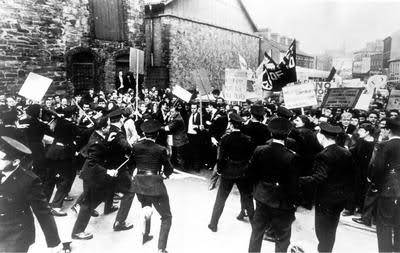
The 1968 march in Derry which ended in violence referred to in the novel

The 1968 march in Derry which ended in violence referred to in the novel

Perhaps the most emotionally compelling aspect of the novel is the way Toibin describes Nora’s new profound sense of aloneness which accompanies the loss of her husband. Being suddenly cut off from him is tantamount to experiencing an existential crisis: “So this was what being alone was like, she thought. It was not the solitude she had been going through, nor the moments when she felt his death like a shock to her system, as though she had been in a car accident, it was this wandering in a sea of people with the anchor lifted, and all of it oddly pointless and confusing.” Yet, it is in this space where she’s unmoored from the obligations of being a wife that she’s able to pursue her own interests in singing and music. Here she tastes what her life could have been if she’d made different choices early on. Her music teacher Laurie describes how “We can all have plenty of lives, but there are limits. You never can tell what they are.” There are endless possibilities in this world and our identities are constantly evolving, but whatever choices we make will necessarily cut us off from following other possibilities. For those who have lost people they love, it’s a tragic and ever-present fact that they are now excluded from this range of potential experience. Nora solemnly observes that whatever decisions she now makes “He would be the one left out.”

“Nora Webster” is an elegiac hymn to everything we could be and everything we’re not. The novel moves at a leisurely pace, but its power accumulates over time as the dynamics of Nora’s character intensifies. I fell hard for this feisty individual who refuses to be defined by her circumstances. It provides an interesting contrast to the protagonist Eilis of Toibin’s novel “Brooklyn” who forges a very different sort of independent path for herself. Amidst the political instability of the time and pressure from those around her, Nora remains an uncompromising fixture in her community. Intelligent, strong and soulful.

Posted
AuthorEric Karl Anderson
CategoriesColm Toibin
4 CommentsPost a comment

Catherine Hall has a skilful power for building a story around people hampered by emotionally turbulent pasts in her novels. She did this with beautiful effect in her novel “The Proof of Love” about a shamed academic who tries to lose and find himself in a remote location. In her new novel “The Repercussions” she takes this a step further providing a double portrait of two women at opposite ends of a century. In the present, award-winning war photographer Jo arrives in Brighton from a recent journey through Afghanistan where she was working on her own self-driven photography project. She's inherited a house from her aunt Elizabeth who recently died and here she holes up writing letters to her ex-lover and reading the diary her aunt left. While waiting for her husband to return from the Western Front, Elizabeth works as a nurse at the Royal Pavilion in Brighton during the 1914-16 time periods when it was used solely for Indian Corps soldiers who had been wounded while battling for Britain. Her plans for the future are challenged when she encounters the difficult effects war has on returning soldiers and the strife over the social conventions of the time. Each woman’s story is told in alternating chapters drawing unique parallels over matters of love, racial prejudice, gender inequality, sexuality and personal integrity.

Read my full review of The Repercussions at http://shinynewbooks.co.uk/fiction03/the-repercussions-by-catherine-hall/

Posted
AuthorEric Karl Anderson
CategoriesCatherine Hall

Many of Joyce Carol Oates’s works have featured the complexity and malformations of the American legal system, most notably her novels Do With Me What You Will (1973) and The Falls (2004). Moreover, it seems fitting that Oates has taken on the project of editing an anthology of prison fiction as her own writing has been recently engaged with the hidden reality of America’s prison system, particularly in her latest novel Carthage (2014). Here the wayward protagonist Cressida becomes an assistant to a loquacious and idealistic character dubbed the “Investigator” who is assembling material for a journalistic exposé about the prison system. In a particularly vivid scene Cressida enters a prison execution chamber while undercover and experiences a psychological crisis. No doubt Oates’s interest in representing the reality of prison life has, in part, stemmed from her time teaching at San Quentin State Prison in California. Prison Noir marks Oates’s continuing engagement and fictional exploration of such significant American institutions.

Read my full review at the online journal Bearing Witness: http://repository.usfca.edu/jcostudies/vol1/iss1/4/

Posted
AuthorEric Karl Anderson
2 CommentsPost a comment

Several years ago when social media sites were first becoming a thing and everyone was flocking to MySpace, I received an unexpected message one day from someone I had known as an adolescent. He was someone in my boy-scout troop that was a bit younger than me. He was also weedier and geekier than I was so an easy target. I have memories of being quite nasty and bullying (verbally, definitely not physically) towards him in the way kids act when they've been bullied themselves. I now recognize I did this in order to boost my own self confidence and try to impress other people as I felt so insecure myself. When I received his message I was overcome with guilt recalling the way I treated him. I wrote him a long message apologizing for my inexcusable behaviour in the past. His response was one of total surprise and bewilderment because as he recalls I was nothing but friendly and helpful towards him. In fact, he thought of me as a mentor and someone he admired.

So whose memory is correct? Was I mean to him and he’s forgotten? Was I only ever mean to him in my head or behind his back? Was I nice towards him but have supplanted these memories with bad behaviour because of complicated feelings to do with my own insecurities? The answer is unknowable. This is what “We Are All Completely Beside Ourselves” is about. The narrator Rosemary questions her own memories of her family life which was cataclysmically torn apart at a young age. At the beginning of the novel an event occurs in a cafeteria where she meets an emotionally unstable girl named Harlow who triggers instincts and memories within Rosemary that have lain dormant since her childhood. While Harlow serves as an interesting character in counterpoint to Rosemary at the beginning of this novel she becomes less interesting the more the novel progresses. When Rosemary begins living independently at college she tries to sort out her story starting in the middle, moving back to the beginning, coming back to the middle again and finally ending closer to the present day when she’s much older. Her process is methodical but the memories keep getting muddled up as she can’t be sure whether to trust them or not. Feelings of guilt, anger, shame and despair colour the past to such an extent that what she recalls is sometimes totally at odds with what other members of her family claim happened or what physical evidence shows happened.

A Madame Defarge 
 
Normal
0


false
false
false


MicrosoftInternetExplorer4
 
marionette puppet makes a strange unsettling appearance in the novel

A Madame Defarge marionette puppet makes a strange unsettling appearance in the novel

Fowler writes intelligently about the way memory is so often distorted by our own aspirations and motives. We can look back upon events and wish that they had occurred one way or another depending on what we’re feeling at the time. She writes, “There are moments when history and memory seem like a mist, as if what really happened matters less than what should have happened.” Rosemary has thought over events from her early life over and over again so much that they’ve been unconsciously recast to suit her feelings. She has composed the story of her and her family’s life in language which confuses the facts. It’s something everyone can relate to in the way we have certain stories about our lives we’ve told time and again so that they’ve been refined into a certainty that may or may not match what actually happened. Fowler observes that “Language does this to our memories – simplifies, solidifies, codifies, mummifies. An oft-told story is like a photograph in a family album; eventually, it replaces the moment it was meant to capture.” The reader must try to wade through Rosemary’s honest-intentioned account to try to disentangle the reasons why her family really splintered apart.

Many reviews and discussions around “We Are All Completely Beside Ourselves” have centred around the fact there is a big twist in the plot this novel. This is a case where we have a really forceful narrator who only chooses to release information in her own time. The point at which she reveals the twist in her story seems to me as significant as the twist itself. It challenges us to question our own assumptions. I love how Andrew Sean Greer’s novel “The Story of a Marriage” also did this well. I think that plot twists shouldn’t only be included to surprise and thrill the reader, but to make us question how we think and reconsider the limited way we sometimes look at the world. Karen Joy Fowler does this eloquently in her skilfully constructed narrative. This novel is a pleasurable, thought-provoking read that will leave you feeling quite emotional – especially if you equate the conundrums it presents about memory to instances in your own life.

Posted
AuthorEric Karl Anderson
2 CommentsPost a comment
a pile of some of the books I've read in the past year

a pile of some of the books I've read in the past year

I’m throwing myself a little blogger’s birthday party because I began this site exactly one year ago today. I wasn’t sure if I would have the stamina to keep it going but now this is my favourite personal project. This seems like a good time to stop and assess why I’m putting so much time and effort into the blog. It was also a little over a year ago that I became a qualified massage therapist – a practice I’ve kept up on weekends and weeknights in addition to my full time weekday office job. I do love the sense of connection and satisfaction I find in body work. Since I don’t earn anything from doing this blog I should really concentrate my efforts into building my practice more and expanding my skills. The thing is I’m not much of a businessman and money isn’t everything. Honestly, I'd rather be lost in a book.

Reading and discussing books is nourishing for the soul. I’ve made some wonderful connections with other bookish folk. And I genuinely appreciate all the lovely people who read and comment here. The blog has opened up some wonderful opportunities for me. I now contribute reviews to the wonderful book site Shiny New Books and review all new Oates titles for the academic journal Bearing Witness: Joyce Carol Oates Studies. I’ve met some brilliant writers I really admire and have even cooked tofu for a current Booker shortlisted author at my house. But what I enjoy most is the world of books that I’ve been introduced to by reading other blogs, communicating with readers and gathering recommendations. There will always be stacks of new books I’m aching to read. Even if I feel overwhelmed at times by the amount of books that are added to my To Be Read List, this isn’t a contest. No one is keeping score. This is about reading with care, giving time to fully appreciate the author’s intention, reflecting what it means to me and sharing with a wonderful community of readers. By necessity, reading will always an alone activity but it's good to share feelings and thoughts afterwards.

Now tell me what you’re reading and what I should read next.

Posted
AuthorEric Karl Anderson
13 CommentsPost a comment

I always admire a novel that is wise enough to raise questions about the central dilemmas of our lives without feeling the need to give definitive answers. It shows a mature understanding for how we really stumble blindly through it all though we pretend that we can see. To me it feels there is no greater mystery than our relationships to each other. How do we really see the people we love? As they are or as we believe them to be? How do our memories of them colour our feelings towards them? How do they really feel about us? In what way do our own feelings inform what we think others think about us? “All the Days and Nights” challenges us to consider these queries with the story of aging ailing artist Anna and her younger husband John who has left her for good.

Anna narrates the novel directly to John recalling their life together and the way his image has been made famous in the multiple portraits of him she’s produced. In their New England home she struggles to produce a new painting of her friend and agent Ben who has descended upon her because she has broken off communication with the outside. She has a combative relationship with her assistant, fellow artist and sometimes muse Vishni – a bond that feels as spiky and co-dependant as that which existed between Virginia Woolf and her cook Sophie Farrell. The difficult relationships between the characters are depicted evocatively with pointed conversations and emotionally-jarring reminiscences. 

It’s admirable the way that Govinden writes of the relationship between Anna and John as being totally unique. It seems an obvious thing; after all, every relationship is unique. But we so often affix the labels of marriage or friends or lovers or parents to the people we know and in doing so reduce the complexity of these bonds. So much of what we feel for each other lies in between these notions and mutates as we grow older with each other – yet the labels so often remain the same. Govinden breaks through these restrictions. He conveyed this ambiguity of feeling beautifully in his depiction of another couple in his previous novel (which I reviewed here last year) “Black Bread, White Beer” as well. To Anna and John the word married seems something of a farcical label affixed for convenience rather than as an accurate way of describing the deep bond that they share.

The novel beautifully asserts the central mission of the artist: to memorialize what is ephemeral and fleeting. For Anna the process of creating “is an ongoing act of revelation” giving to her an understanding of her subjects and also fixing an interpretation of them which memory by itself cannot. Anna’s attempts to capture John have resulted in multiple portraits which catalogue their life together and the feelings that have passed between them. Now John is on a mission to discover what these really mean while leaving Anna behind. He also leaves actual photos of them together which Anna thinks are “a happiness you [John] no longer wish to remember.” This all sounds rather mournful and tragic. But I think that rather than destroying what remains of their relationship by leaving, John’s mission is more a desperate act to reclaim their life together and better understand how Anna really sees him.

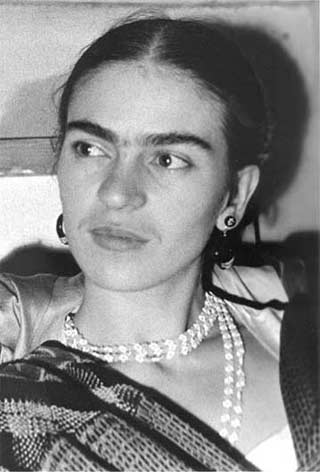
novel's epigraph by Frida Kahlo "I leave you my portrait so that you will have my presence all the days and nights that I am away from you."

novel's epigraph by Frida Kahlo "I leave you my portrait so that you will have my presence all the days and nights that I am away from you."

Memories are planted throughout this novel like questions which exist only to garner other questions. Rather than acting as touchstones to arrive at neat reconciliations and resolutions, Anna and John’s recollections make them grapple more for an understanding of the full complexity of what has passed. It’s observed that memories take on a ferocious charm in the way they hound the mind in our advanced years: “The torturer and salve that memory becomes in old age.” The characters noble method of dealing with this accumulation of experience is to create because art is also what we produce and consume to make sense of the impossible joys and tragedies of life. For Anna: “This is the only way that I can understand things, using order and method to make sense of chaos” It’s an inspiring mission, but also a fervently possessive one as Anna also acknowledges “something to be shared inevitably comes from a selfish hand.”

This short, powerful novel depicts a relationship so skilfully condensed that it blossoms in the reader’s mind suggesting experience far beyond what the pages contain. It expounds upon the complex mission for creating art and the transformative experience of viewing art. Govinden shows his characters’ quest to transcend the detail of life and reach for a better understanding of its meaning. It’s a book where certain images and moments really linger in the mind. Since it’s under 200 pages if you can spare a morning and afternoon to devote to reading it in full I’d recommend it. This way you can really immerse yourself in the cumulative power of the prose and swallow this moving story in one greedy gulp.

Posted
AuthorEric Karl Anderson
CategoriesNiven Govinden
2 CommentsPost a comment

I think a lot of atheists at times feel envious for those who can believe and the spiritual comfort that religion brings. I’ve always been an atheist and I don’t want to subscribe to any religion. Nor do I think anyone should. But there can be a clear sense of community and solace that comes with having convictions in a higher power. It can feel lonely at times refusing that comfort when you find yourself caught on the end of an existentialist tree branch. In Joshua Ferris’ new novel “To Rise Again at a Decent Hour” he takes a man trapped in this sort of quandary and tests him. You could almost take this quote from another novel I read recently “Em and the Big Hoom” by Jerry Pinto “being an atheist offers a terrible problem. There is nothing you can do with the feeling that the world has done you wrong or that you, in turn, have hurt someone” and say that Ferris has written a protagonist with exactly this problem.

Paul O'Rourke is a hard working dentist with a successful practice in Manhattan. He has an aversion to using the internet other than anonymously posting on some forums about baseball so he doesn't have a website or profiles on any social media sites. He emphatically rants: “I was a dentist, not a website. I was a muddle, not a brand. I was a man, not a profile. They wanted to contain my life with a summary of its purchases and preferences, prescription medications, and predictable behaviors. That was not a man. That was an animal in a cage.” It's a frustrated position that many people who willing engage online can certainly sympathize with. However, one day Paul's staff discover a website for his dental practice in addition to a Twitter account for Paul and responses to prominent newspaper articles online in his name. His identity has been convincingly stolen, but the person posing as him rants about a religion that no one has heard of. Paul angrily tries to reclaim his online presence and gets caught up in bizarre theological mind games with a man who is convinced Paul belongs to an ancient sect of persecuted people who actively doubt God's existence.

There is a section in the novel where Dr O’Rourke examines the mouth of a respectable businessman at his office. He finds a few cavities. Although he can see the cavities clearly on his x-ray, the man refuses any treatment because he doesn’t feel like he has cavities. No reasoning from the doctor can get him to change his mind. This sort of inverse logic based on immediate feelings rather than rational thought seems central to the novel. We can know there is a problem and it could be staring us in the face, but we don’t feel like it will really affect us until it does. After his father died early in his life, Paul is a man who has always desperately wanted to belong to a family and established group with all the accompanying traditions and sense of security. By ignoring the real motivation behind his desperate attempts to attach himself to his girlfriends’ families and their religious traditions he isn’t able to admit what he really wants and never finds real happiness.

This all is beginning to make this novel sound too ponderous. While it engages with these issues it's also fantastically funny and full of wry observations. Ferris' style of writing is very easy to read with a narrator that has a conversational tone of voice. He rants about his patients, modern life and American culture. Since he finds himself longing without knowing exactly what he wants he wishes for the immediate comforts that commercialism can bring: “a mall returned me to a time when desire was easy to resolve.” He goes to eat at the Olive Garden as a nostalgic treat. Paul is very sympathetic but the reader learns to not entirely trust him either based on the reactions of people around him who find him increasingly erratic in behaviour and disassociated from what's happening. His past is gradually revealed, particularly his bizarre obsessive behaviour with certain girlfriends and it becomes clear something is very wrong with Paul. A particularly clever trick that Ferris employs is when Paul converses with his office secretary who is an older religious woman. He cuts out Paul's speech and only gives her impatient responses which allows the reader to perfectly imagine the comic scene with Paul grouchily ranting at her.

“To Rise Again at a Decent Hour” is a thoroughly enjoyable read. Ferris cleverly encapsulates a lot of issues about modern life in his story. At times the narrative about the new religion seems to gallop at a pace which becomes confusing. But what Ferris is most successful at is making Paul's observations about his patients and issues around dental hygiene take on a comic universal meaning. While a statement like “pain forgets within the hour what it learns in an instant” may instantly apply to the way people forgot to care for their teeth after experiencing difficult dental work, it also applies to the way we physically and emotionally engage with the world. I'm eager now to go back and read Ferris' two previous novels as his writing technique and sense of humour are truly admirable.

Posted
AuthorEric Karl Anderson
CategoriesJoshua Ferris

Intense passion often leads to desperate behavior in several stories included in the new Joyce Carol Oates collection Lovely, Dark, Deep.

One of the most intense and hallucinatory narratives, Distance, describes how a woman named Kathryn has crossed the country in an attempt to wean herself from her addiction to loving a man. Her range of self-deception and self-destructive behavior is seemingly boundless as she attempts to contact him in a manic frenzy. This heated inner-psychological drama directed at a seemingly anonymous person shows how the expression of love can often make more of a statement about the individual than about the object of affection. It also shows how vulnerable one is made by loving as is described in the story “‘Stephanos is Dead’” which acknowledges, So risky, to love another person! Like flaying your own, outermost skin. Exposed to the crude air and every kind of infection. Part of the reason one is made so fragile by admitting to love another person is that you might not be loved in return or that the one who is loved might stop loving you as much. This is a dilemma addressed in many stories in Oatess earlier short story collections such as The Wheel of Love (1970), Marriages and Infidelities (1972), and Will You Always Love Me? (1996), and this question is explored further in the story "The Disappearing" where a woman grows increasingly paranoid her husband is having an affair. Here she is aware that If marriage is a masquerade, there is the very real danger that masks may slip. She longs for total candor, but cannot give the trust necessary for a long term relationship to really function.

Read the rest of my review here on the site Bearing Witness: Joyce Carol Oates Studies: http://repository.usfca.edu/jcostudies/vol1/iss1/3/

Posted
AuthorEric Karl Anderson

For a few years I kept a book club going where we would meet almost every month to have a chat about a specific book. It was really fun and enlivening, but the group mostly consisted of women and over the course of a year they all became pregnant. This meant the group naturally fragmented and gradually dropped off. The other day I was thinking about how it’d be nice to be reading books as part of a group that physically meets again. Then I started daydreaming about what celebrities I would like to be in a book club with. Of course, there are lots of writers I’d like to sit down and have a good natter about books with. I was thinking more about people who aren’t authors themselves but individuals in the media who are known to have a serious intellectual side to them. This is the list I came up with. Wouldn’t they make the best bunch to sit down with over cups of tea and plates of cake to discuss the latest read?

 What about you? What are the five celebrities you’d like to be in a book group with?


Carolyn Porco

Planetary scientist and the woman who Neil deGrasse Tyson calls “Madame Saturn” is responsible for giving us a unique view of our world. She was one of the scientists alongside Carl Sagan who enabled the Voyager 1 spacecraft to turn around and take a picture of Earth when it was 3.7 billion miles away from us. The photo is only of a “pale blue dot” smaller than a single pixel, but it challenges us to think about our place within the universe. In interviews she’s always perceptive and engaging so I’m certain that Carolyn would also have fascinating perspectives about literature.

Nigella Lawson

As a former newspaper literary editor, Lawson has always been deeply engaged with books. She’s well known for her cookbooks, tv programs and had been the unfortunate victim of many tabloids scandals of late. But all you have to do is look at the size of her library to see how serious she is about reading. Here is an interview with her about her favourite books: http://www.chatelaine.com/living/chatelaine-book-club/nigella-lawsons-reading-list/

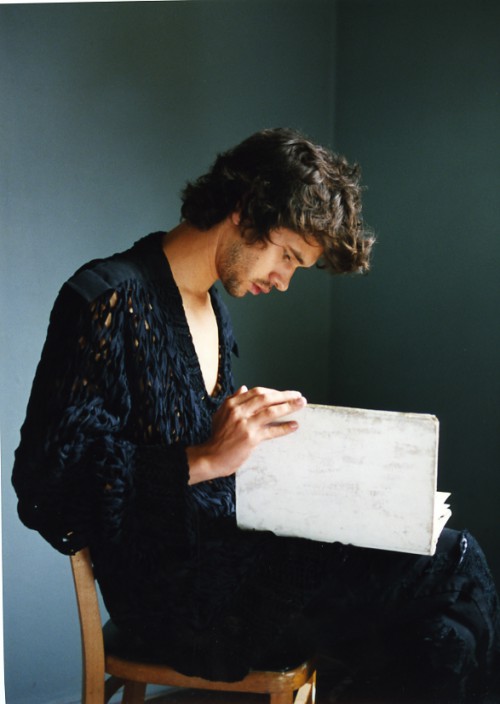
Ben Whishaw

Whishaw has appeared in many films and theatre productions with a literary bent. He portrayed the poet John Keats in the 2009 film ‘Bright Star’, the central character of Jean-Baptiste in the adaptation of Patrick Suskind’s novel “Perfume” and he will soon be appearing as the first voiced version of the animated bear Paddington in a new film of Michael Bond’s famous children’s book. Shy, intelligent and thoughtful, Whishaw is also rather easy on the eyes.

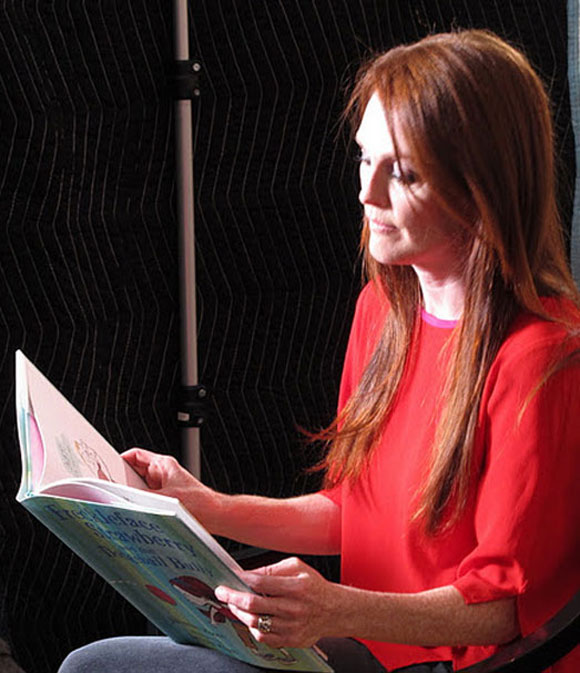
Julianne Moore

Speaking of children’s books, actress Julianne Moore has written one herself called “Freckleface Strawberry.” She’s spoken in interviews before about how important books are to her and what an inspiration literature was for her growing up. This is another movie star that has appeared in many adaptations of great books such as “A Map of the World”, “The End of the Affair”, “The Shipping News”, “What Maisie Knew” and, my favourite, “The Hours.”

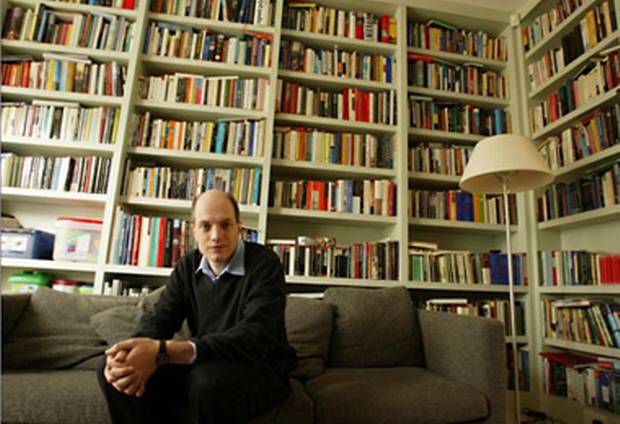
Alain de Botton

This is slightly a cheat as de Botton has written novels and more popular philosophical books as well. But I think of him more as a presenter and educator known for orchestrating his successful establishment called The School of Life. He’s received a lot of flak for his work which I think is undue as he’s a serious intellectual concerned with helping people engage with the humanities and their life in a more positive way. The only School of Life event I’ve been to is a secular sermon given by the artist David Shrigley about vice. It was both hilarious and fascinating.

Posted
AuthorEric Karl Anderson
10 CommentsPost a comment

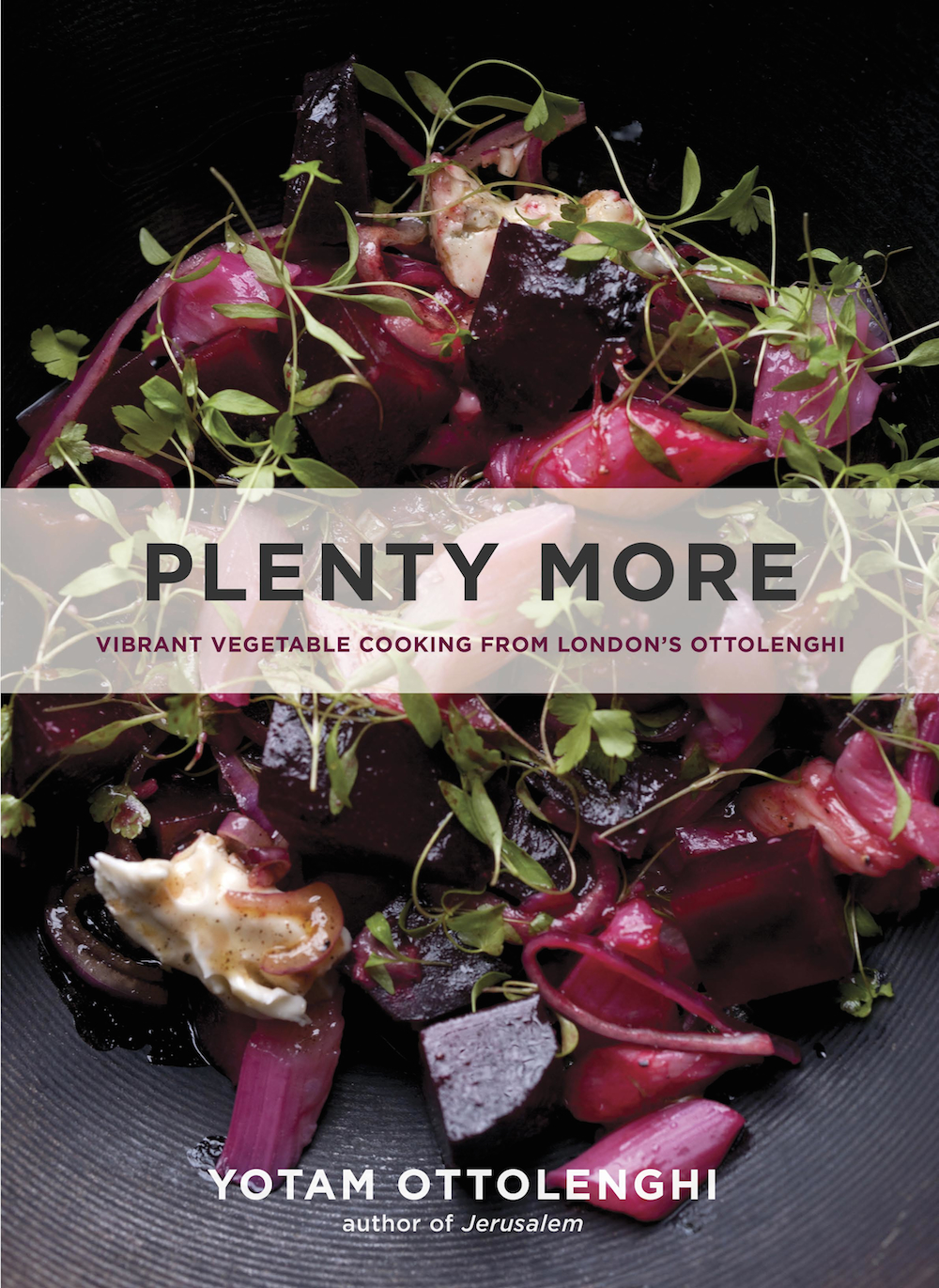
It’s something quite different for me to review a cookbook on this blog, but I thought it’d make a nice change from standard literary novel reviews and it’s by a chef whose recipes I’m really enthusiastic about. Much like in Nigella Lawson’s books, Yotam Ottolenghi also writes engaging and intriguing text to accompany his recipes which convey his real passion for flavours and makes the story of food into a narrative you want to follow. Apart from reading and my massage work I’m quite a keen weekend cook and baker so I was thrilled to see Ottolenghi has a new cookbook titled “Plenty More.” From the need to find interesting new vegetarian recipes in order to produce a weekly column he does in the Guardian he “discover[ed] a whole range of cuisines, dishes and ingredients that make vegetables shine like any bright star.” Trips to foreign places like Lebanon, New Zealand and Japan have inspired many of the new recipes as has input from fellow dedicated colleagues who work in a series of arches which serve as the Ottolenghi bakery and testing kitchens. The book is divided into sections based on preparation methods (steamed, braised, grilled, fried, sweetened, etc.) These exclusively vegetarian recipes range from filling hearty meals to the lightest of soups and offer tempting new ways of wowing you with flavour.

I remember the first time I went to Ottolenghi’s restaurant in Islington for dinner. It’s such an inviting venue with meringues piled high and big bowls of delicious looking savoury dishes meeting you when you enter the door. It’s like entering the home of some generous Mamma who only wants to feed you. What could be more inviting?! The small dishes we shared, both hot and cold, were all excellent. Soon after this experience I bought Ottolenghi’s first cookbook and tried out some of his recipes myself. Both his first book which includes meat and veg recipes and his other book of vegetarian dishes “Plenty” have become firm favourites of mine. I’ve made many of his dishes multiple times with his ‘Couscous and Mograbiah with Oven-Dried Tomatoes’ being a particular favourite.

Since I mentioned this recipe, here comes a crucial point as I assume many US and UK home cooks don’t know what mograbiah is (as, indeed, I did not.) With some Ottolenghi recipes, you’ll find they include an unfamiliar ingredient. It’s important to note that many recipes are also centred around common ingredients like lemon and garlic where the more exotic ones can be often substituted with more standard ones. In the case of the above recipe, it calls for Labneh which I often just substitute with feta cheese. The internet has, of course, made many of these ingredients more accessible whereby you can order spices, pulses or kitchen gadgets from specialist or even mainstream shopping sites. Ottolenghi has his own online shop for special ingredients. Once you have a bottle of pomegranate molasses or a za’atar spice mix they keep in the cupboard for ages. I’ve made many excursions to Green Valley market near Marble Arch in London since cooking with this chef’s recipes, but I’m sure many home cooks don’t have as easy access to a Middle Eastern grocer. However, this is part of the fun for me: discovering new ingredients and making the act of cooking into a journey.

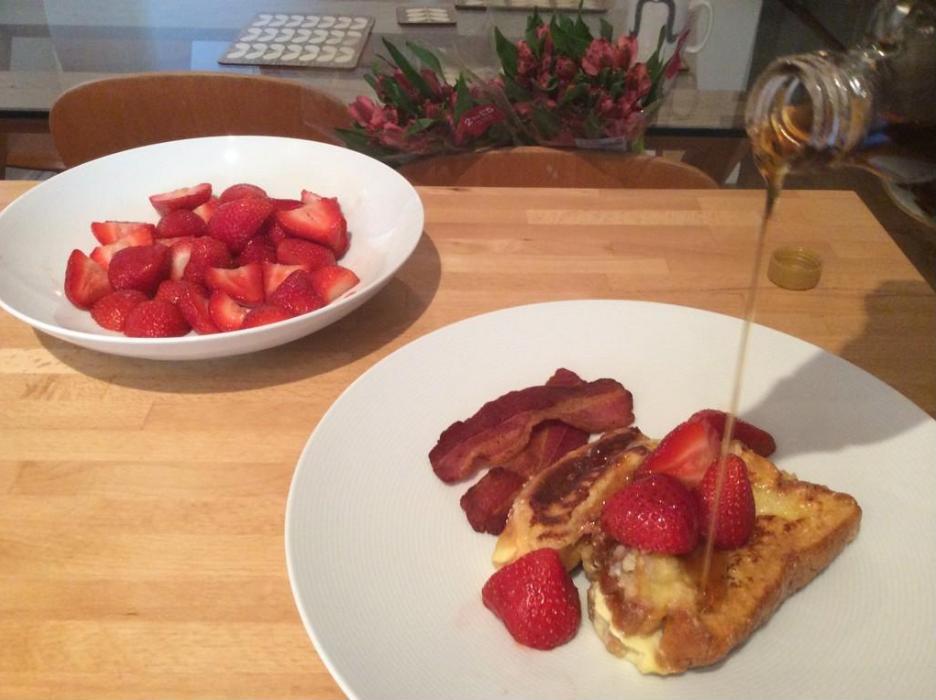
'Super French Toast'

'Super French Toast'

“Plenty More” does have plenty of new ingredients including pomelo, fregola, barberries, verjuice and black garlic. The influence of his time in Japan is evident in recipes which utilize ingredients such as soba noodles, edamame, enoki mushrooms, yuzu or Thai basil. In addition to some of the more exotic flavours he brings to his recipes, in this book Ottolenghi offers methods of preparing already familiar ingredients in a way that does the most justice to them. This includes blanching beets to keep their bite, frying brussels sprouts to maintain their texture, crushing carrots to make them into a hot spread, heating cooked pasta under the broiler to give it a crisp deliciousness, grilling lettuce to keep it’s colour, giving lemon a crisp tempura coating or okra a buttermilk crust, deep frying olives or baking French Toast before frying it to make it more warmingly flavourful. He extols how doing simple things like adding fresh lime or lemon to a salad makes it come more alive.

It’s interesting English ingredients are inveigling their way into many of Ottolenghi’s middle eastern style dishes. Cheddar stands prominently into a few dishes. Britain has come a long way from the days when Mr Fawlty looked incomprehensibly at his American dining patron who requested a Waldorf Salad. I love this kind of salad and Ottolenghi has created an updated version ‘Sort-of-Waldorf’ which combines the classic ingredients with cobnuts, dill, sour cherries and maple syrup. Many of us are now familiar with roasting root vegetables like carrots with maple syrup or honey, but Ottolenghi takes this a step further adding a welcoming tahini yogurt to this roast side dish. These flavour combinations are well known, but Ottolenghi’s ‘Pea and Mint Croquettes’ provide a refreshing change as they are packed with all the fresh vitamin goodness but also give you that decadently pleasurable fried crispness.

Colours are brought into fiery life in single-colour dishes like in his very red ‘Tomato and Pomegranate Salad,’ the gleaming yellow vibrancy of his ‘Alphonso Mango and Curried Chickpea Salad,’ the neon orange of his ‘Sweet Potatoes with Orange Bitters’ or the cool glory of his ‘Spring Salad’ which combines green vegetables with green leaves. Others stand out like a glorious rainbow in his simple and delicious recipe for ‘Tomato and Roast Lemon Salad.’ While some recipes have grown more complex with the addition of extra techniques or ingredients, it’s interesting how he offers some combinations in a pared down version to emphasize the star elements of the dish. This is true with his ‘Fig Salad’ which focuses on precision and simplicity. In another recipe he offers more complex flavours for a fig salad with the addition of oranges, cheese and a caramelising technique. Or he’ll show you how to take a simple ingredient like corn on the cob and brush it with miso mayonnaise. In another section, humble scrambled eggs are given a spicy kick. Some wild combinations of ingredients will make you do a double take like ‘Cauliflower, Grape, and Cheddar Salad,’ ‘Ricotta and Rosemary Bread Pudding,’ ‘Beet and Rhubarb Salad’ or ‘Halva Icecream.’ While these may prove stimulating for some greedy eaters, others may mark these mixtures as too experimental. But they may be worth the dare. 

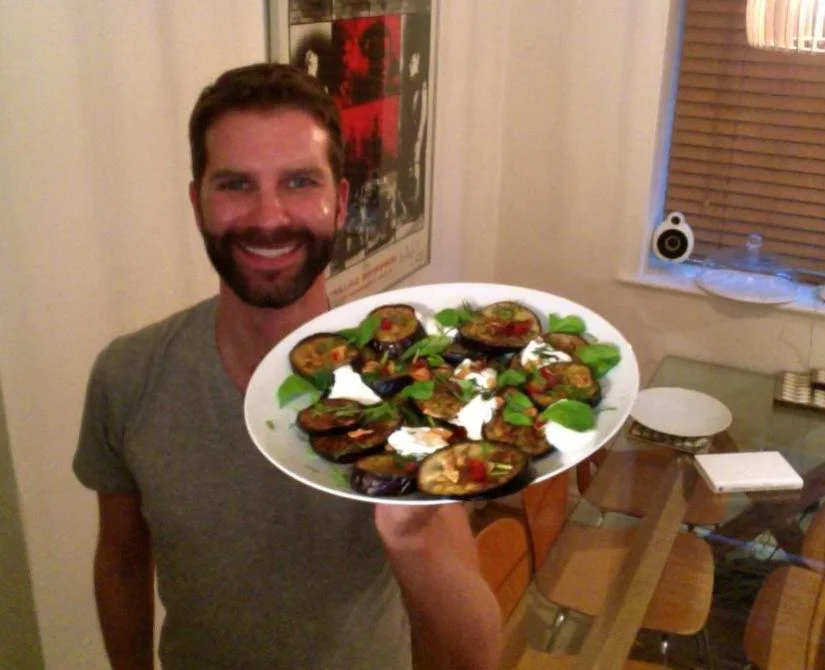
‘Eggplant with Black Garlic’

‘Eggplant with Black Garlic’

I have to admit that I haven’t come close to making most of the recipes in this book, but I feel that I’ve made enough to have an opinion about it and there are many I still want to make. I enjoyed trying out his ‘Dakos’ salad recipe which combines tomatoes, onions, herbs, spices and feta with crispy bread. This worked particularly well as an accompaniment to a barbeque I had. However, due to the nature of the rusk bread going soggy after being soaked overnight with the tomatoes I found this didn’t hold together as well for leftovers the next day. I made his ‘Stuffed Zucchini’ with its rich combination of spices and herbs. I think it makes an elegant and flavourful starter at a dinner party. On a weekday night I made his ‘Tagliatelle with Walnuts and Lemon’ which is utterly simple and stupendously delicious. When I was home alone it was excellent to make his ‘Eggplant with Black Garlic’ so I could enjoy the darkly rich flavour of the black garlic without worrying about assaulting anyone with my breath afterwards. As a bank holiday treat for breakfast I made his ‘Super French Toast’ which is luxuriously sweet. Last month I took a road trip around Spain and in Bilbao I had tomato and watermelon gazpacho. It’s a much more refreshing take on the normally thick soup which usually has a sharp kick of garlic. Ottolenghi is firmly on-trend with a recipe for this very combination in this book. I was thrilled to be able to reproduce it for the barbeque I had.

Behind the scenes making "Plenty More"

Ottolenghi’s recipes are so fresh and vibrant they make you excited to get back in the kitchen again. Whether it’s finding a new way to cook a familiar vegetable or experience the flavour sensation of a new ingredient, he’s created a range of dishes that have real style. I’m sure I’ll be returning to “Plenty More” frequently for inspiration.

Posted
AuthorEric Karl Anderson
4 CommentsPost a comment

When I was young the mother of one of my best friends suffered badly from mental illness. It was a hardship he mainly bore in silence, but sometimes the disturbance it caused to their family life spilled out into the open. I witnessed the shame this caused him. The evident love the family held was twisted and broken by frustration. I saw the aggravation it caused her not being able to be the mother she wanted to be, but there was nothing she could do to prevent the terrors from plaguing her mind. We tried to accustom ourselves to what we knew was not normal, but, being young, it’s not easy to empathize with hardships you don’t understand or appreciate what makes people unique. So I felt a real connection reading this novel about a mother struggling with mental illness and her family’s struggle to help her.

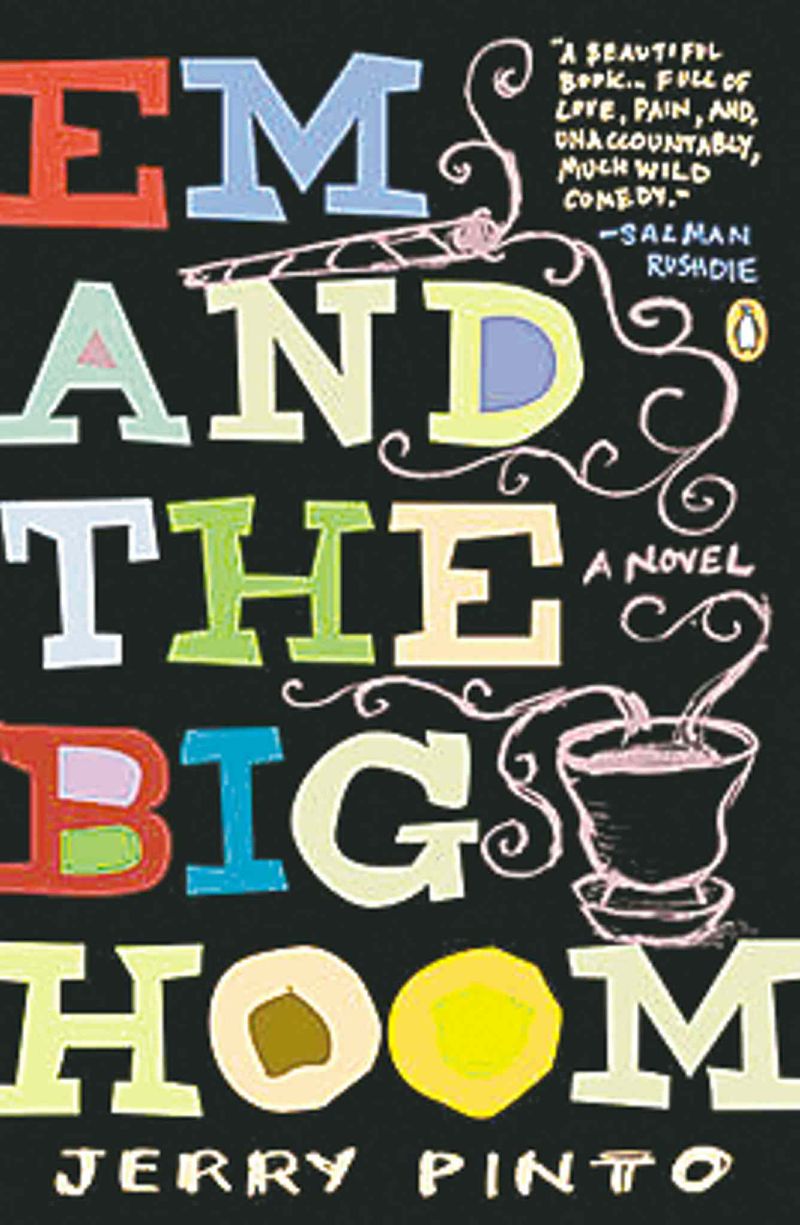
How do you cope when a family member has a mental illness? For people who have a loved one that suffers from this disability, in whatever form it takes, they know the heartache caused by having their love tested year after year. The cold hard truth is that as Jerry Pinto writes in this novel:  “Love is never enough. Madness is enough. It is complete, sufficient unto itself.” This is the experience represented so movingly and astutely in “Em and the Big Hoom.” It’s important to remember that for all the frustration, embarrassment and agony which can accompany caring for someone who is stricken by a mental disease there are also occasional moments of true happiness, humour and inspiration. This book is no romantic portrait. Rather, it's an inventively told story of a family who battle for years to save the mother from the ravages of her illness.

The narrator tells the tale of his family and his mother's disability in fragments. Most of the story is composed of dialogue between the narrator, his sister and mother, Em. They don't have the kinds of conversations you'd normally expect a mother to have with her teenage children. She is disarmingly confessional, flagrantly sexual and speaks with mysterious turns of phrase. Meanwhile, the father, nicknamed “The Big Hoom,” is the pragmatic voice of reason in the family. The narrator's account moves back and forth in time, occasionally reproducing selected letters or diary entries. The family's history builds slowly out of these fragments which recall the parents' courtship, Em's employment, early years of motherhood and her slide towards increasingly manic behaviour. I think the reason Pinto chose to unfurl the story in this piecemeal structure rather than giving a linear narrative is that no straightforward way of telling is appropriate for the experience. The narrator describes how “Conversations with Em could be like wandering in a town you had never seen before, where every path you took might change course midway and take you with it.” The narrative style reflects this. Em's story can't be neatly summed up because it would betray the confusion that remains for the narrator about his mother's life. Although he grew accustomed to the way her mental illness affected her behaviour, she remained a mystery to him – one he desperately wants to solve.

Excellent interview between Jerry Pinto and Madhu Trehan about the novel and writing

Em is a fantastically compelling character for the reader as well. She speaks to her children about sex. When discussing dates she comments that she doesn't see the point of a goodnight kiss because “why send the poor man off with a hard on? Unless you’re a tease.” She makes blunt comments which can be very insightful and funny such as “I don’t understand Zen. It seems if you don’t answer properly, or you’re rude, people get enlightened.” Other times her paranoia and mania rises to the point where she’s mercilessly cruel about her own children to their faces, expressing her hatred of becoming a mother: “I didn’t want to have my world shifted so that I was no longer the centre of it. This is what you have to be careful about, Lao-Tsu. It never happens to men. They just sow the seed and hand out the cigars when you’ve pushed a football through your vadge. For the next hundred years of your life you’re stuck with being someone whose definition isn’t even herself. You’re now someone’s mudd-dha!” This blunt honesty would be startling to hear in itself, but for her to be saying it to her own children is shocking. Of course, there are threads of honesty in it which are feelings probably common to many people. I don’t want to make crass statements about how the mad are not really mad or have special insights that those who are conventionally considered sane do not. What I think is important to consider is that people can’t be simply dismissed as mentally ill, but that there are external factors which those who are prone to mental illness can be particularly sensitive to and effected by.

This novel shows what the repercussions are for the narrator who cares for his mother and how his own identity is limited because he can’t have a life outside being her carer. His struggle with his own dark feelings is meaningfully conveyed. It also shows what strength and love the family has to stick by her. Some people are abandoned as in one scene in a mental institution when a warden remarks “This is a hospital but it is also used as a dumping ground, a human dumping ground.” It’s tragic to think of people’s mental health conditions exasperated by being left alone and that even if a recovery is made there is no home to go to. It’s all the more painful wondering if you’d have the spiritual strength to stick by loved ones who fall victim to conditions of mental illness. “Em and the Big Hoom” is a really powerful novel that challenges your assumptions. 

Posted
AuthorEric Karl Anderson
CategoriesJerry Pinto

I turn 36 today. You know how there are particular books you’ve always wanted to read, but somehow never make the time for? Since I was a teenager, I’ve made it a birthday tradition to read a book that I’ve always wanted to get to but somehow never have. This is difficult since it needs to be short enough to be manageable and reliably well-regarded so as not to be disappointing. Of course, most years it takes me a number of days to get through the entire book. Sadly with work and adult life the days of being able to sit in all day doing nothing but reading are gone. When I turned 17 I think I spent the entire lonely day in my room reading Kobo Abe’s stark brutal novel “Woman in the Dunes.” It’s a fantastic book – though it left me feeling a little bleak.

However, upon waking up early this morning and on the way to work, I finally read “Alice in Wonderland.” I can’t think why this wasn’t on my shelf as a child as it would no doubt have made a terrific impact upon me. I think I would have loved the sheer creativity and terror and absurdity of it… and the illustrations if they were anything like the ones found in the fantastic hardback Bloomsbury edition I own with beautiful drawings by Mervyn Peake and an introduction from Will Self. Of course, I wouldn’t have picked up on the subtler aspects of this profound unsettling book at a young age. Alice’s struggle with identity is something we experience perpetually no matter how established we become in our lives: “Who in the world am I? Ah, that's the great puzzle!” Alice’s body rapidly transforms. She encounters horror and hilarity, as well as a plethora of personalities all consumed with their own peculiar obsessive preoccupations and egocentric desires – what a true depiction of encountering the world! All the while, Alice approaches every obstacle with a calm sense of logic while maintaining her integrity and desire for civility.

The book’s great lines and imagery are so embedded in the public imagination that even without having reading it I was, of course, already familiar with much of what the story and characters. When I first came to study in England in 1999 I excitedly sat in my first class (where our task was to translate prose text to theatrical text) and volunteered to be the first one to present the first assignment. The imposing lecturer turned and narrowed his eyes down upon me enquiring in a thunderous voice “Who are you?” and I was reminded immediately of the imperial caterpillar from “Alice.” The phrase “curiouser and curiouser” seems common parlance, at least here in England and especially amongst the learned well-to-do. The character of the outrageous anthropomorphic beings and the very spirit of Alice herself seem to be a part of everyday society. This book is an incredible imaginative feat and I’m glad to have finally experienced the original writing.

Since it’s my birthday I’m feeling a little sentimental and want to express my gratitude to everyone who reads this blog. I’m flattered people find value in my thoughts about books and I’ve enjoyed immensely all the communication I’ve had with readers through the blog. It’s a passion project of mine that I really pour my heart into so thank you for giving it your attention. I had a lovely time over the weekend when my boyfriend surprised me with an overnight trip to Cornwall. We drove through the spectacular countryside and I paid a visit to the Screech Owl Sanctuary. I have a particular fondness for owls and enjoyed meeting these curious creatures which included Boobook and Siberian Eagle owls. What beauties!

owl2 copy.jpg
Posted
AuthorEric Karl Anderson
9 CommentsPost a comment

Saeed Jones’ debut book of poetry “Prelude to Bruise” reads like a complete narrative, but one which is constructed of intense glimmers of experience told in a lyrical way. The six sections of this book carry the reader through a journey of self-discovery. Most of the poems follow the story of “Boy” who in many instances is literally an adolescent/teenager. Even when the poems aren’t specifically about “Boy” much of the feeling is singed by the fire of his personality. By the end of the book, the label of “Boy” has taken on so many meanings and connotations – of naivety, of a wayward son, of social inferiority, of a racial expletive, of gay slang, of the submissive partner in sadomasochistic role play – that when, in the final poem, the boy emphatically denies this label it strikes an optimistic note. His real name remains private and unknown to the reader giving him a dignity and sense of selfhood which has thus far been denied him. This distinct personality finally steps out of the circumscribed role set by those around him.

It’s admirable the way Jones’ writing orchestrates an interplay between the imagination and reality. By blending images, a poem about friends play fighting while out for a swim suddenly takes on a serious tone of eroticism and violence. In ‘Drag’ the personality created through costume assumes a life of its own: “the dress begins to move without me.” This gradually yields to a deeper confusion of self and also revelation: “I don’t even know what I am in this dress.” In one of the final and longest poems in the book the boy is taken to shooting practice by his father and later this pretending might turn into real danger as the boy invades his parents’ bedroom while they are sleeping. There is the sense that we are both in the boy’s mind and in his spatial reality at the same time.

Jones writes forcefully about the power of desire and the dynamics of sexual discovery. Not only does he capture the all-consuming feeling of the act itself, but the emotions which fuel the before and after of it all. He describes how irrepressible sexual urges can physically take over the body: “I’ve got more hunger than my body can hold.” The boy learns the danger of his gaze when his focus on another boy’s muscular thighs and the gap in his shorts is rebuffed with verbal homophobic abuse. In ‘Kingdom of Trick, Kingdom of Drug’ the object of desire takes on the characteristics of a tree and the passion shared decorates it with weighty symbols in a way which is incredibly sensuous and moving. The title poem ‘Prelude to Bruise’ takes the reader into complex corners of desire with the representation of a kink-edged encounter. Through effective use of alliteration invoking words such as boy, black, boot, body, broke, bruise the author portrays the variegated emotions involved in hard play. He shows how sexual aggression can be shaded by racial politics and how sexual punishment can be simultaneously seductive and repulsive. Another poem effectively represents the post-coital tristesse which follows cruising: “I relearn my legs, mud-stained knees, and walk back to my burning house.” But in other poems there is also romantic hope as expressed in this beautiful line: “you are the first hour in a life without clocks.”

One of the most compelling and forceful poems for me is ‘Boy Found Inside a Wolf’ which is a sort of summation of Jones’ themes about fathers, violence and sex. Eroticism is implied by his use of line breakage and the double meaning of his verbs. But it is also heavily mixed with danger, threat and destruction. At the same time the poem radically imagines a father giving birth to his son. Paired with the other poems' commentary about the alternating tenderness and antagonism between father and son, this poem movingly represents a complicated layered familial relationship.

target copy.jpg

“Prelude to Bruise” confronts issues to do with race and sexuality in a way that challenges and changes the reader. More than this book’s engagement with identity politics, some of the poems it contains deal directly with instances of key political and historical significance. Creating a ghostly sense of unease, Jones describes the aftermath and repercussions of the tragic storms and flooding of New Orleans. In another poem dedicated to James Byrd Jr who was kidnapped and violently murdered by white supremacists in 1998, Jones vividly re-images the event with the imploring words “go back” reverberating significantly throughout the scene. Jones' invocation of these events shows how their meaning has both personal and broader long-term implications.

Each section of the book shows a different stage in the Boy’s development and evolution towards a more assertively individual sense of selfhood. Although some times this comes in the form of regression: “Run hard, look back, go back, owned.” But there is an awareness that one must always carry forth as is demonstrated by the warning line “If she retraces her steps, the footprints will eat her.” The final more distinctly prose-like poems take him mentally backward to deal with his relationship with his parents. This takes the book full circle. Some of the poetry shows direct influence from other writers such as Lucie Brock-Broido or Alexander Chee (one poem borrows a phrase from his daring novel Edinburgh). But Jones’ style is arrestingly fresh. His distinct voice is the thing which hooks you in this poetry which varies between different forms and methods of arrangement. (To borrow a phrase from a divine songstress) it’s a voice that plays tough as nails with his heart on his sleeve. Saeed Jones has created a radically different coming of age narrative distinctly his own through forceful, original poetry.

Posted
AuthorEric Karl Anderson
CategoriesSaeed Jones

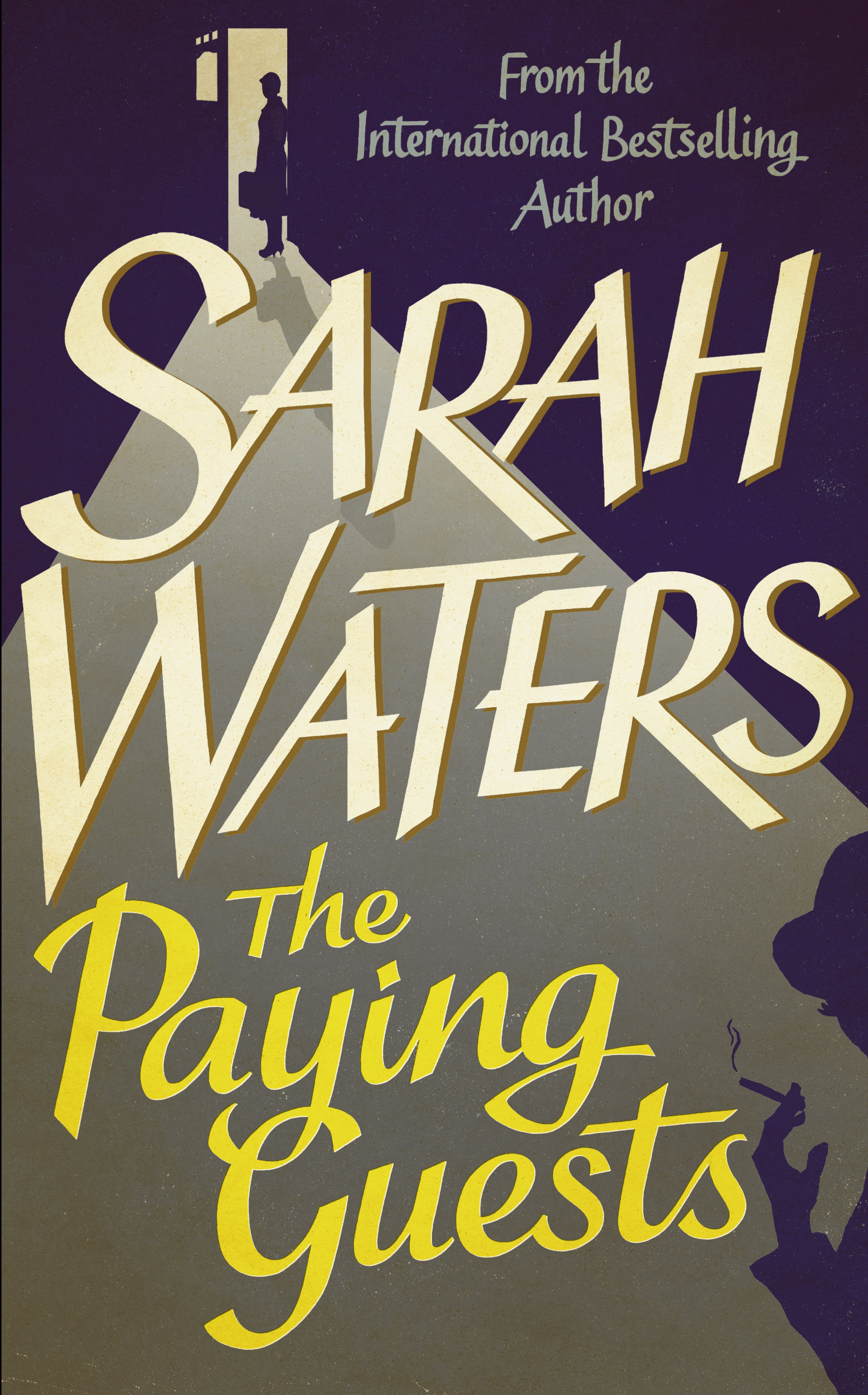
A new Sarah Waters novel is always a cause for celebration. I’ve read three of her previous novels and loved the experience of each with “Fingersmith” topping the pile. But I think “The Paying Guests” may be my new favourite. Waters has that special ability as a writer of gripping you from the start. Even though there isn’t much action at the beginning of this new novel, I was totally entranced by the vividly-described characters and their suffocating sense of claustrophobia as they awkwardly learn to live together. And you know that with this author’s talented ability for writing a long sumptuously twisted plot that the action will come soon enough and boy when it starts it is totally gripping! It’s 1922. At a large well-to-do house in south-east London, spinster-ish Frances Wray and her aging mother anxiously await the arrival of their paying guests, The Barbers. Frances has redecorated some upstairs rooms to rent out to lodgers because they are a respectable family who have fallen on hard times. She lives alone with her mother since her father died of heart trouble and her two brothers died in the war. The too-large house has fallen into disrepair. As Frances’ mother admits: “It’s heart stopped… years ago.” They can’t afford servants. They can barely afford to keep the heat going to stay warm. They need an income of rent money. However, being a respectable family the neighbours refer to the Wray’s new lodgers as their paying guests.

Even though she’s only in her 20s Frances feels like she’s already past her prime spending her days making murky cups of cocoa for her mother and scrubbing the floors of the house. Her thoughts about her position in life are that she should “Be content with your 'role', that you are settling so nicely into, like an oyster digging its dumb way into the sea-bed.” In the past she’s not been so satisfied with such a modest role in life. Years ago she had an affair with a woman which was found out by her family and put to a stop. When Frances unexpectedly finds love again, the affair threatens to completely unhinge her life and the story takes a series of gripping unexpected turns.

What Waters is supremely accomplished at doing in her writing is detailing the psychological intricacies of romance, the ebb and flow of lust and the overriding indecisiveness of love. The awakening of passion, the heat of the moment and the stupefaction at when it goes are all described in utterly convincing scenes. It leads Frances to wonder at one point “if their passion had ever been real.” Although we like to believe that once we’ve found the love of our lives our feelings will remain constant but they always fluctuate. We can be clingy and possessive about a person one minute, then revolted and spiky towards them the next. In “The Paying Guests” Frances and her lover’s relationship undergoes unusually extreme tests as the plot develops and their circumstances drive them physically and emotionally apart.

Watch Sarah Waters discuss THE PAYING GUESTS

Lingering behind so many intense affairs in Waters’ novels is the suspicion that the other person may not genuinely love them back. This is true in any relationship, but particularly so in the times in which Waters writes about homosexual love. The fear of betrayal that could lead to exposure and shame exerts terrifying pressure on the binding which holds these unique relationships together. Frances is a woman unusual in her time in that she is confident about her sexual desires for women. She ardently wishes to settle down in an apartment of her own with the woman she loves. Ironically, Mrs Wray says to Frances at one point, “all I’ve ever wanted for you were such ordinary things: a husband, a home, a family of your own. Such ordinary, ordinary things.” These are the ordinary things that Frances so desperately wants as well with the small substitution of having a wife rather than a husband. Herein lies the real tragedy.

There are a great many things I’d like to discuss about this novel, but can’t because it would give too much about the plot away. But rest assured you’ll find the thrill of passion, criminal intrigue, drunken parties, nosey neighbours, snooping detectives and a heated courtroom battle – all played out against the magnificently rendered backdrop of post-WWI London. Waters is that rare kind of literary writer who creates thrillingly-told historical novels. “The Paying Guests” demonstrates how this writer is at the height of her powers. It’s a novel with real heart.