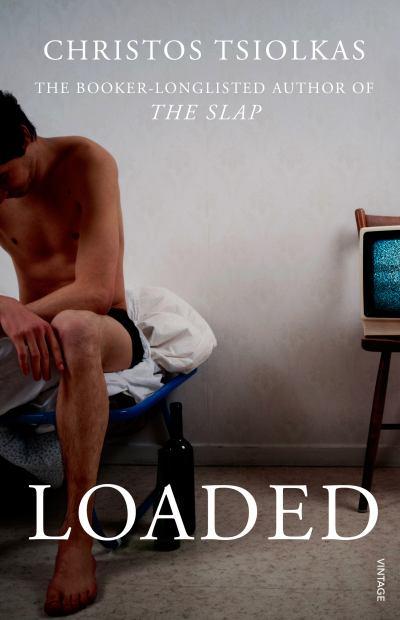
Approaching a book like Loaded feels in some ways like revisiting my teenage self. Although he's not at all like me on the surface there is all the familiar adolescent cynicism and rebellion which is still so easy to taste. The story takes place over roughly a 24 hour period of partying, sex and drugs in Melbourne. The protagonist Ari is a 19 year old Australian boy of Greek heritage who would scoff at being so neatly classified as he detests labels. “You're either Greek or Australian, you have to make a choice. Me, I'm neither. It's not that I can't decide; I don't like definitions.” Of course, his resistance to classification and being slotted into place is something that he hypocritically does all the time when viewing other people. He continuously defines the people he meets by their nationality or sexuality or their class (his most sneering contempt saved the married, employed, suburban people he defines as Wogs). For Ari labels like this are curiously hollowed out: “I want to tell her that words such as faggot, wog, poofter, gay, Greek, Australian, Croat are just excuses. Just stories, they mean shit. Words don't stop the boredom.” Like many teenagers he feels exceptionally bored by everything and his time is spent more in trying eradicate the self rather than nourish it (with culture, building substantial relationships with friends/lovers or working). When out and about he frequently listens to music to be “caught in a magic world of harmony and joy, a truly ecstatic joy, where aching longing to be somewhere else, out of this city, out of this country, out of this body and out of this life, is kept at bay.” Rather than be truly present he wants to escape the world immediately around him which he perceives to be corrupt and mediocre.

In addition to listening to music and taking a large amount of drugs to remain constantly high Ari has a phenomenal amount of sex. Because he's young and cute sex with men and women is never too difficult to find in bars, alleyways or at house parties. Tsiolkas' descriptions of the way gay bars and cruising functions is eerily accurate: “we hesitate in our physical communions. Testing each other, not wanting to be the first to admit desire. The first to be the faggot.” The environment is charged with sex, but there is also a wariness for fear of being hurt and rejected as well as a masculine homophobic pride in not wanting to be the first to admit you want it. Ari's blunt attitude towards calling it like he sees it applies especially to the gay people he encounters. “No matter how many hours spent at the gym, no matter the clothes he wears, the way he cuts his hair, the way he talks, a gay man always reveals himself as a faggot.” Ari is nothing but savage in the way he condemns people for being what they are and looking down at them. Typical for a teenager. In doing so Tsiolkas also highlights a particular problem for many gay men who have to wrestle with concepts of masculinity they've inherited when growing up. Our sexual nature is often aggressive especially when having casual sex. At two different points when Ari has sexual encounters pleasure is taken and given only through violent grappling. This attitude is something which especially arises when cruising: “He was a momentary figure in my life. That's what I like about casual sex with men; there's no responsibility towards the person you fuck with.” The anonymity of the encounters gives a kind of freedom where raw desire can be expressed without apology or consideration for the other person. This is because contempt runs closely alongside that desire. Ari has internalized all the anger and disdain he feels from society and projects it back out. At one point he states “insults have formed me, they have nourished me. In latrines and underneath piers I have enjoyed pleasures that are made sweeter by the contempt I know they bestow on me in the eyes of the respectable world I abhor.”

Ari sees that a society based on capitalism creates a competitive environment where some flourish while others are winnowed out. Therefore he can't feel any sort of fellowship with those he judges to be Wogs: “It is impossible to feel camaraderie if the dominant wish is to get enough money, enough possessions to rise above the community you are in.” He stubbornly resists having any sort of direction or purpose in life because of this. Better to get fucked on drugs and sleep around than join in what he sees to be an inherently corrupt and flawed society. Worse than wishing to join in with it he'd rather see the human race eradicated for its competitive machinations: “Pol Pot was right to destroy, he was wrong not to work it out that you go all the way. You don't kill one class, one religion, one party. You kill everyone because we are all diseased, there is no way out of this shithole planet.” To side with a dictator and root for the annihilation of humanity is both a strong statement and an empty pathetic statement. It feels too easy to project your pain out to the world which you haughtily judge and wish to see it levelled out. This is the same logic applied in the story of Noah's Ark or any disaster movie like 2012; wash the world of its sins by eradicating the human race except for a few who survive through chance in order to start over. Except Ari would rather the population be brought down to zero. When contemplating the complex frustrating way society works it's really attractive to imagine these stories and I do love a good disaster movie. But it's not really useful when going forward day to day and it doesn't take into consideration the individual's private pain or their inherent right to live life the way they want to. Ari can't see past his contempt for the world because he is “loaded” - not just strung out on drugs, but loaded with history and all the injustices of society. So where to go from here? It's telling that Loaded only takes place over a single day. As an accurate portrait of a teenage grappling with these difficult issues Christos Tsiolkas does a superb job and the novel is successful in conveying Ari's intense painful feelings. I wonder what could happen to Ari next (although it's clearly not the author's intention to try to answer this and it's certainly not his responsibility to do so.) There is only so long Ari can continue having this attitude towards life before he loses all his opportunities. Either he'll run out of money, favours with his family and friends, get arrested or die from over-indulgence in drugs, violence and/or promiscuous dangerous sex. Or he'll have to compromise his ideas and turn into the kind of Wog he so despises. Ari makes it clear he'll take the former option. I like to think there is a middle ground which many of us tread where we can sustain ourselves while maintaining our ideals and a healthy amount of skepticism but also having a good time and not causing too much damage. Maybe I'm just dreaming.

I haven't read anything else by Tsiolkas yet. Based on his in-your-face themes I'm not surprised he's a controversial writer. Books with unlikeable characters are difficult for some people to read. I grappled with a lot of feelings reading this novel, but isn't that the point? In terms of presenting points of view in a painfully honest way I think he's extremely effective.

Tsiolkas talks here about his novel The Slap but elaborates on his feelings about Australia, masculinity, the middle class and violence which are all themes heavily dealt with in Loaded.

Posted
AuthorEric Karl Anderson

Valve is a literary journal which publishes fiction and poetry that (in the words of the editor) “uses form, language or techniques in unusual ways, often generating an essential set of rules within a piece through which to channel creativity.” This is its third issue and many of the pieces contained within it succeed in their experimental mission to express something in a creative new way and adhere to their own internal logic while breaking away from traditional form. The editors carefully pair different pieces within the journal usually bouncing two distinct stories or poems off each other which are variations on a similar theme. This transforms meaning in itself. Of course, the pleasure of flipping through a journal like this is that pieces can also be taken at random whether in a hurry on a morning commute or steeped in a warm bed on some sleepless night.

One of the pieces of writing that struck me most was Lucy Ribchester’s story ‘The She-Squid’s Embrace’ where intense desire is expressed in a squid’s taking possession of a shipwrecked sailor. She takes him down to her lair and tries to coddle him though he’s slowly being devoured by sea creatures and disintegrating on the ocean floor. While presenting a warped version of passion the story expresses something very true about love and the longing to hold onto someone who is falling apart.

More radical experiments with form itself take place in other pieces. Some are composed of lists such as Andrew Blair’s funny and vivid numbered reasons in his piece ‘you cannae shove your granny.’ Harry Giles gives indications of gruesome and tragic scenes occurring while only providing impersonal lists or an announcement. These highlight the way we are screened away from the horrors of reality by the mechanical processes of a regimented society. Bjorn Halldorsson gives ‘A Swimmer’s Guide to the Front Crawl’ which is a set of instructions that trail down the page like words riding currents in water. This transforms a physical activity into a metaphysical meditation. Katy McAulay’s ‘Important news for lifeguards’ presents another list purportedly for instruction, but which really takes on a graver meaning in the way people may be experiencing an internal crisis though they look alright on the outside. David Greaves ‘Boulders’ presents text with additional groups of words in the margins on either side of a primary text that can be left out or inserted into the main body of words to elucidate the central meaning. Another piece by Martin Schauss uses repetition of the second-person “you” to create a poetic sense and give a suggestion of being romantically transfixed by another. Poetic repetition also occurs in Lynsey Cameron’s ‘The Man Holding Flowers’ where a profusion of possibilities and a torrential downpour of past experiences bloom out of the single image of a man holding flowers.

I was once in a creative writing class where someone passed me a hand-written piece which she’d revised a lot. She intended only the words which weren’t crossed out to be read but I felt all the deleted (but still visible) words highlighted different meanings and emotionally expressed someone grappling towards what they wanted to really say. Kirsty Logan’s ‘Love in Centralia’ is an impersonal description of a town where the text is mostly slashed through with black lines. Only a few essential words are left unmarked to give a radical new meaning. There is a tremendous amount of power in writing which is crossed out so the process of selection and editing can be seen. For this reason I’ve loved looking at holograph editions of Virginia Woolf’s ‘Jacob’s Room’ and ‘The Waves’ which present drafts of these novels which show where she crossed things out and inserted other things into the text.

Some pieces in Valve enter into a self conscious dialogue with other artists to elaborate on original ideas or ricochet concepts off others to provide entirely different meanings. Clair Askew takes issue with Wordsworth’s view of the Lake District offering her own poetic view of a starker more reality-laden landscape. Scott Morris pays homage to the surrealist poet and photographer Paul Nouge with short sharp quips that expand upon a world inverted by speech and offers transformative ways of seeing.

There are flashes of the way popular competitive events inveigle their way into our consciousness making us care one moment and forget the next in the form of a Masterchef challenger in Graham Fulton’s ‘Larkinesque’ and a hotdog eating race in Charlotte Turnbull’s ‘Hotdogs.’ We’re swept into a voyeuristic sensitbility witnessing the triumphs and failures of individuals, our hopes for them dampened by a sense of superiority when they blunder. In the case of Fulton, Welsh competitor Larkin’s plight is likened to the raw reality of the cosmos. Turnbull plays much more with form in her story brazenly shouting at us with text enlarged and bold like a commentator’s irritating blathering.

valve.JPG

One of the longest pieces in this issue of Valve is Elaine Reid’s ‘Trees for Africa.’ This story follows a call centre director over the course of a day where she receives lewd responses from a man she contacts about helping to maintain forestlands in Senegal. The worker traces the call to the home address where she meets a harried lonely woman caring for a number of children. The story expresses a sense of how we are disconnected from one another and gives a haunting feeling of good intentions being swallowed by shorthanded emotion.

In David Manderson’s ‘On the Beach’ he portrays a European holiday beach resort overseen by a tourist with his head full of the impending doom for the European economy. His pleasure of the holiday and his emotional investment in the beauty and grotesqueness of his surroundings is hollowed out by his sense of societies’ failing and feeling like “A silent man trying to scream.” Destruction comes in a more literal form in Chelsea Cargill’s poem ‘Tsunami’ which expresses a deep desire to leave a personal mark upon a world that is being washed away.

Afric McGlinchey transforms the domestic privacy of a bed into a tangled forest landscape where the body becomes tree. There is a sensuous physicality to the descriptions and deeply intimate associations are produced in small details. Ryan Van Winkle includes an Untitled poem about living surrounded by snow. Here I felt the heft and persistence of snow is likened to the way our best efforts and hopes are buried by the weight of reality. In another poem of his ‘The Duke in Pines’ an experience of listening to the jazz musician sparks an imagined dialogue between the narrator and someone who the narrator has designs upon.

Two poems by Mary McDonough-Clark are filled with such raw emotion that it feels like the pared down phrases contain a heft of feeling that expands voluminously to fill the whole page. An elaborate scene of torrid violence is summarised in a few pointed words “I retreat, you accuse, I ask, you deny: she feeds.” She gives a powerful sense of the riotous scenarios which are mentally played through amidst the actual disintegration of a relationship.

Valve is a great platform for writers to push the boundaries in what’s possible with both language and form. These pieces don’t dally with experimentation and reconfigure structure for the sake of it. They have something immediate and meaningful to say which can only be expressed in formats which aren’t traditional. I've read many of the pieces several times and find them richly rewarding. The work within this journal teases, surprises and illuminates.

This is something of a guilty confession, but playing online poker is a hobby of mine. I know it’s a waste of time and sometimes I end up losing money at it so it’s something I try not to indulge in too often. Online poker is something that underwent a massive boom several years ago and it still continues to be big. However, there are big legal and moral battles over online gambling. Coming across this new non-fiction book Alligator Blood by James Leighton I was fascinated to get more of an inside scoop to the industry. It’s not the kind of book I usually read, but given that it’s the festive season I’m feeling a bit more indulgent with the books I’m choosing. This book is an account of Australian Daniel Tzvetkoff who started a payment processing company which became the popular choice for many of the top poker sites in the world. Earning these top contracts gave a meteoric rise to Daniel’s fortunes turning him from a man working in Pizza Hut to one of the richest and most promising businessmen in the world - practically overnight! However, online gaming is an extremely volatile and risky industry. His rise in power and massive fortune all came crashing down a few short years later when he found himself hounded by the US government, placed under a witness protection program and made into a death-threat target by the poker community.

The tale isn’t quite so simple and Leighton goes to great lengths and has done a large amount of research to disentangle the complex story which led both to Daniel’s downfall and the twists in online gaming's history. Tzvetkoff was no innocent in his business dealings and did collaborate with authorities after his arrest, but he became a kind of scapegoat for narking on gambling websites which led to thousands of players being frozen out of their accounts and losing their money. Of course, this book isn’t just to do with poker. It’s also a tale which is very emblematic of our time. Fantastic fortunes can be obtained through savvy online business enterprises although hitting gold in this way is extremely rare. Daniel’s story is a high-octane example of how accumulating a fast fortune can sometimes lead to only more greed and grasping for power. Parallel to his journalistic investigations of the present day Leighton uses a novelistic approach to narrate the key events of Daniel’s rise and fall from success. At times he takes liberties getting inside Daniel’s mind to guess at his probable emotional state. Unsurprisingly, when his fortunes fail it’s friends and family who truly love him that count.

Alongside recounting the dramatic story of Daniel Tzvetkoff, Leighton makes an argument for possible ways in going forward with online gambling. He quite rightly identifies that (like prohibition) outlawing this risky recreational activity will only fuel the desire to participate in it through more illicit and pernicious means. If the industry is properly regulated then it can lead to a much safer online gambling experience (with safety checks in place to identify and provide help for possible gambling addicts) as well as generating a substantial amount of tax revenue. Of course, those who don’t like poker will no doubt see things quite differently. I would only add that rather than outlawing it completely the US government might consider playing a more active role in running and overseeing the industry with the understanding that the profits will go to charitable causes in a way that is analogous to the way the National Lottery is run in the UK.

Alligator Blood is a very entertaining and somewhat chilling read which sheds light on an extremely lucrative hidden industry.

Back when I used to gamble with the big boys...

Back when I used to gamble with the big boys...

Posted
AuthorEric Karl Anderson
CategoriesJames Leighton

Richard Ford - Canada

Tony Hogan Bought Me An IceCream Float Before He Stole My Ma – Kerry Hudson

Flight Behaviour - Barbara Kingsolver

Union Atlantic – Adam Haslett

Black Bread White Beer – Niven Govinden

The Goldfinch – Donna Tartt

Artful – Ali Smith

Harvest – Jim Crace

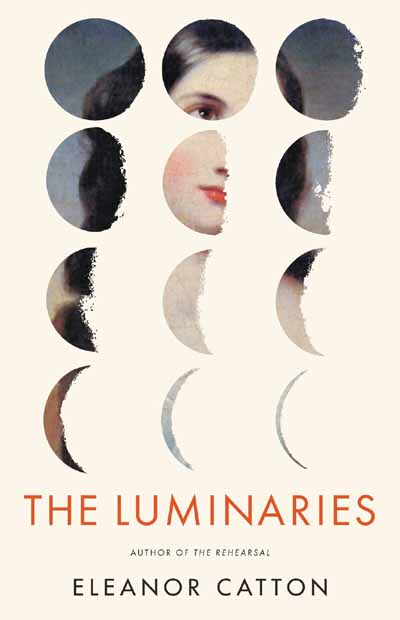
The Luminaries – Eleanor Catton

The Wasp Factory – Ian Banks

My top books of the year are mostly new releases with big Booker winner “The Luminaries” taking a prominent place. It’s such a complex, rewarding and intelligent novel it did really deserve to win the Booker. Speaking of award winners the book that I think should have won this year’s Women’s Prize for Fiction was Kingsolver’s “Flight Behaviour.” It’s a really heartfelt story of a woman making difficult choices in her private life as well as a moving meditation on environmental issues. I know many people are tired of reading the nearly-universal and never-ending praise for Donna Tartt’s “The Goldfinch” but it really is one of my top reads and totally mesmerized me. Another acclaimed writer whose book I absolutely loved was Richard Ford’s novel “Canada” which peters out somewhat towards the end, but has the most heart-breaking opening section. A book that totally swept me away was Ali Smith’s novel-ish book “Artful” which redefines the limits of what can be done in fiction while making every page feel immediately important and relevant to my life. "Harvest" attacked my subconscious and made its way into my dreams to leave me haunted and wondering. I’ve read Adam Haslett’s powerful stories before so was very excited to finally get to his novel “Union Atlantic” which is a really fascinating story about a few very different central characters and also a novel that critiques the causalities and pitfalls of capitalism gone mad. Two British books that captivated me are “Black Bread White Beer” and “Tony Hogan Bought Me an Ice-cream Float Before He Stole My Ma.” They explore areas of society and issues not often covered in contemporary fiction. Sadly, the author Iain Banks died this year which prompted me to reread “The Wasp Factor.” It’s so unbelievably original and has so many interesting things to say about masculinity and human nature. Now I must get to his other books.

It’s been interesting how starting this blog has prompted me to read more although I always have been an avid reader. I’m not sure anyone actually reads my posts (if you do thank you), but I’ve been enjoying the way writing about books helps me organize my thoughts and put them down someplace so I won’t forget them. Hopefully I’ll continue on all throughout next year. I know there are so many great books I didn't get to read this year. As always, I'm trying to catch up.

Posted
AuthorEric Karl Anderson
6 CommentsPost a comment

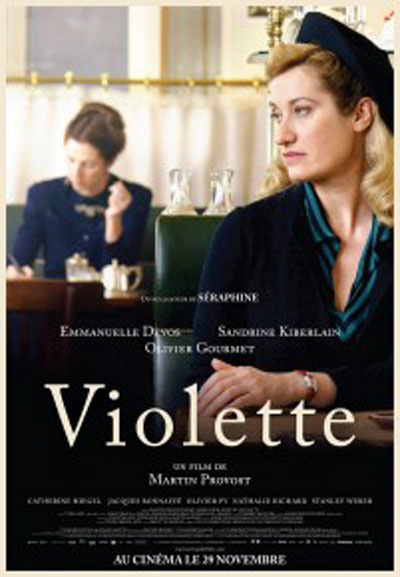
Violette

Compliance

Blue Jasmine

Frances Ha

Gravity

Inside Llewyn Davis

Philomena

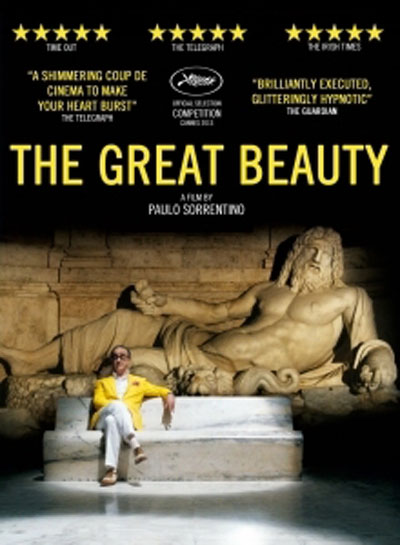
The Great Beauty

Rush

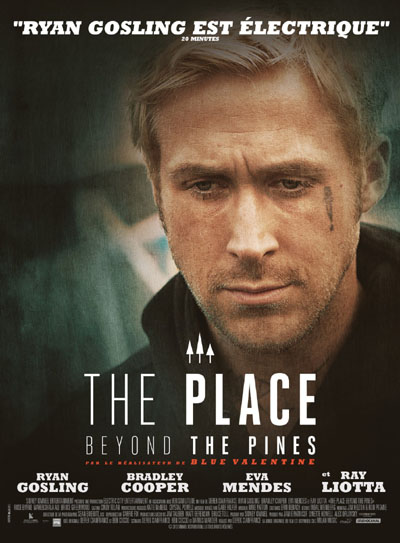
The Place Beyond the Pines

I see more films than the average person because my boyfriend is a huge moviegoer and works in the film industry. So here is yet another list rounding up my top new releases in 2013. Two fictional films which are largely based on real life events ‘Compliance’ and ‘Philomena’ really moved me with their shocking cruelty and disturbing truths. ‘The Place Beyond the Pines’ felt in many ways like a novel in film-form since it straddles two periods of time and generations. While not a perfect film, it's ambition is admirable and it made a really powerful emotional impact. The decadent roller-coaster ride that is ‘The Great Beauty’ is so original and entertaining it’s a film that haunts my dreams. Another foreign language film that captivated me and which I’ve written about before is the powerful ‘Violette’ exploring the life of the feminist author. One big blockbuster that took me by surprise was the historical racing double-bio pic ‘Rush.’ I didn’t think a film about car racing could grip me so much or speak so strongly about rivalry, friendship and ambition. A critically-acclaimed film that I had the biggest expectations for and it lived up to all of them was ‘Gravity’ which terrified and thrilled me watching it in IMAX. I never thought a Woody Allen film would make its way into my top ten of the year again but ‘Blue Jasmine’ was excellent. Blanchett and Hawkins really brought it to life. However, I also loved the way the script moved from present to past gradually revealing Jasmine’s tragic downfall. The Coens’ film ‘Inside Llewyn Davis’ is a collection of clever powerful vignettes which come together to form a whole with the entire film looping back on itself like a mobius strip. The incredibly talented Oscar Isaac makes you follow and really care about Llewyn though he is oftentimes unsympathetic with his high-minded artistic ideals and tempestuous nature. No other filmmakers draw such powerfully comic and haunting performances out of their supporting actors. A film which made me feel sheer joy with its humour and humanity was ‘Frances Ha.’ Frances is another character with artistic pretentions, but who is all the more loveable for her foibles as she awkwardly stumbles into full adulthood.

5 Star – The Remix Anthology

Evening Hymns – Spectral Dusk

Goldfrapp – Tales of Us

Haim – Days are Gone

John Grant – Pale Green Ghosts

Tegan and Sara – Heartthrob

Janelle Monae – The Electric Lady

Kelly Rowland – Talk a Good Game

Solange – True

Woodpigeon – Thumbtacks and Glue

I had difficulty narrowing down which albums released in 2013 would really be my top picks of the year. When it comes down to it, I had to mainly choose on the basis of what I listen to repeatedly. Although I’m getting into several songs on 'ArtPop' I can’t really say I’ll be listening to it as much as some of these other albums. Popular music still takes a prominent place with Kelly Rowland and her endearing confessional album where she lays out her feelings about “B” and pretty much everyone else who has ever pissed her off. Janelle Monae is someone I’ve been entranced with ever since seeing her perform a couple years back giving one of the greatest concerts I’ve ever seen. Her new album took a while to grow on me, but with some excellent collaborations and quirky lyrics she got my attention. I mean, who else would sing about Mia Farrow as a modern-day Joan of Arc? Still I think Monae could usefully learn from Solange’s example of releasing a mini-album of only quality music. She is another artist I got to see give an excellent concert earlier this year with lead song ‘Losing You’ being incredibly catchy and ‘Lovers in the Parking Lot’ heartbreakingly sad. My favourite blast from the past this year was 5 Star’s Remix Anthology which is irresistibly danceable especially ‘All Fall Down.’ My favourite new group would have to be Haim whose Fleetwood Mac sound make me want to clap along particularly with their track ‘Forever.’  Talented queer artists who’d already released a few albums but who I didn’t discover till their breakout albums this year include Tegan and Sara whose album is full of catchy angst-soaked songs and John Grant with his confessional, bitchy, wholly-original tunes. Another amazing new discovering for me is the Canadian group Woodpigeon with leading man Mark Andrew Hamilton giving a series of haunting powerful melodies. Goldfrapp mellows out even further than her last album with her newest Tales of Us filled with hushed songs that make a loud impact. Some singles like Martha Wainwright’s ‘Can You Believe It?’, Daft Punk’s ‘Lose Yourself to Dance’, Annie’s ‘Ralph Macchio’, Timberlake’s ‘Mirrors’ and Sparrow and the Workshop’s ‘Valley of Death’ got a lot of listens from me but their albums didn’t make as big of an impact.

Since starting this blog I've really enjoyed the interactions about books and writing I've made with people both here and on twitter. I've made connections with people from as close as my own London borough and as far as the other side of the globe. That people who have never met, but who are no longer virtual strangers can inspire, give companionship and encourage each other is incredibly heartening to me.

The Greek artist Lefteris Koulonis was inspired by my passion for Joyce Carol Oates expressed in this blog to create these original pencil, pentel brush and pen drawings of the author. Each captures a different aspect of Oates' personality and gives a sensitive interpretation of the complex intelligent individual behind such great books. The fourth is composed entirely of titles and quotes from Oates showing a woman literally made of words but also recognizably individual. There have been many great photographic and artistic portraits of Oates over the years - especially by Gloria Vanderbilt whose paintings convey Oates' soulful nature and studious sincerity. Portraits such as these are like touchstones linking the individual and the words.

You can see more of Lefteris' artwork at his blog http://koulonis.wordpress.com/

joyce-carol-oates1.jpg
joyce-carol-oates2.jpg
joyce-carol-oates3.jpg
joyce-carol-oates4.jpg
Posted
AuthorEric Karl Anderson
TagsArt

Edward St Aubyn is another writer I’ve been meaning to get to for ages because of the many personal recommendations I’ve received about the Melrose novels and the high praise he’s received in reviews. Of course, I came to it knowing that this sequence books are roughly autobiographical but this fact doesn’t influence my reading that much. It seems to me all writing skirts around the circumference of truth for every author whether it’s directly taken from their past or psychologically real to them. This first book in the series introduces the reader to a boy named Patrick living in a privileged household with an alcoholic mother Eleanor and an abusive monstrous father David. It follows this family and the friends who come to dine with the parents over the course of a day dipping in and out of each character’s perspective. Aubyn does this with startling grace giving equal weight and sentiment to an array of characters’ points of view. He can be very funny and cruelly cutting when dissecting the laborious social banalities of the adults interacting with each other. But he can also be breathtakingly moving when describing the painful humiliations and abuse which David inflicts on his wife and son.

Aubyn has an incredible way of describing his characters physicality in relation to their emotional state of mind. In particular Eleanor’s lethargy for life is shown in the sluggish detached way she deals with the world. “She settled into her body, like a sleepwalker who climbs back into bed after a dangerous expedition.” This suggests that Eleanor is often mentally removed from the world and only returns to her body to passively observe what’s happening around her. At one point when she’s told Patrick is sitting on the stairs in distress she doesn’t go to comfort him although she considers doing so. Patrick is also described as becoming detached from his body when experiencing abuse from his father as a method of surviving the atrocious horror of his situation.

Patrick’s complex psychology is described with the most beautiful detail. The relation between his inner world and the way he perceives the world around him is described using startling figurative language: “After a while, he no longer recognized what he was thinking and, just as a shop window sometimes prevents the onlooker from seeing the objects behind the glass and folds him instead in a narcissistic embrace, his mind ignored the flow of impressions from the outside world and locked him into a daydream he could not have subsequently described.” Patrick’s sense of self is displaced from what he sees around him and even his own thoughts. In this way he is shown as protectively retreating from the world in a way he can’t control.

Even with characters who really repulsed me like the grotesque womanizer and atrocious snob Nicholas there were aspects of his personality that the author movingly describes to draw my sympathy and make me feel a connection. In one scene following Nicholas’ point of view it is asked “Why was the centre of his desire always in a place he had just deserted?” This sense of never being able to capture exactly what you want and never feeling truly satiated with what you have is something a lot of people can relate to. Great writers like Aubyn know how to illuminate the inner workings of even monstrous characters to show why they might act the way they do. In the case of David, this is a man who is so disappointed by life and diminished by the fact of being a titled person who is financially dependant on the woman he married that he can only get pleasure from inflicting torture upon others – whether that be the ants marching through his garden or his own wife and son: “what redeemed life from complete horror was the almost unlimited number of things to be nasty about.” Mired in his own self-loathing and pain David makes a game of controlling and causing suffering for others. Although it’s difficult to read about such characters and their actions, it feels important to know about this kind of conflict – not to forgive evil actions, but to understand how pain reverberates through time and is given as a sort of inheritance.

AUBYN-articleLarge.jpg

There is an air of melancholy cast over this whole novel – a sense that people can’t really be changed. This sense of futility seems to even be expressed in the very title of the novel – Never Mind. The nature of human relations and psychology is openly discussed at the Melrose’s luncheon with a number of characters. These musings are underpinned by the remark that “Perhaps people were just born one way or another and the main thing was not to interfere too much.” This novel comes down heavily on the side of nature over nurture as the characters are locked in their way of being. The circular dysfunctional actions of the adults mean they are unable to progress. A scholar named Victor remarks at one point that “the compulsion to repeat what one has experienced is like gravity, and it takes special equipment to break away from it.” The Melrose family seem particularly incapable of moving on because no one would dare disrupt them. The fact that no one steps in to intervene when Eleanor is so obviously psychologically and chemically dependent on alcohol or when Patrick appears so visibly traumatized speaks to the indifference people can have and their unwillingness to stir the waters when observing dysfunction.
One of the most distinctive things about this novel is the way it uncovers the contradiction between the highly sophisticated setting and attitudes of the characters and their vile and debased actions. At one point a rather frivolous character named Bridget observes “What a civilized life you have here” Yet Aubyn shows that the lifestyle of the privileged can just be a veneer covering the most perverse actions and poisoned relations. Too often we accept what is on the surface as reflecting how things really are, but with a little digging depths of untold conflict are evident everywhere.

Aubyn seems to playfully hint at the powerlessness he feels as a writer haunted by pain which cannot be undone. When referring to Victor he writes “Just as a novelist may sometimes wonder why he invents characters who do not exist and makes them do things which do not matter, so a philosopher may wonder why he invents cases that cannot occur in order to determine what must be the case.” The act of writing or thinking about ideas deeply may feel futile at some points as it all takes place internally. However, this book proves that these fictional characters can make an impact upon the real world and how people think about it.

Posted
AuthorEric Karl Anderson
CategoriesEdward St Aubyn

If your house was on fire and you could only grab one book to save what would it be? Okay, unfair question. I don’t think I could answer it either. I’d probably be found by the firemen stumbling out of my apartment building coughing smoke, arms loaded with charred books and begging them to go in to save the rest. Books don't just contain their own stories, but the story of our relationship to them. I really value so many of my books, but if I were asked to pick out my favourites then these would be some at the top of the list.

1DSCN0680.jpg

This special shortened bookshelf houses most of my most treasured books. All of them are signed and many are special limited editions and many have sentimental value.

The Color Purple was the first book I ever had signed by an author. When stopping in a bookshop in Boston one day I noticed an ad for an Alice Walker reading at the Boston Public Library happening right now. I quickly bought this copy and rushed over catching Walker right before the end of her signing.

The signed Eugene Ionesco was one of the first expensive books I bought when I was earning enough to be able to afford it as he is one of my favourite authors.

The Lord John Ten anthology is signed by many prominent authors including Ray Bradbury, Raymond Carver, Derek Walcott and many others.

I bought the signed copy of Austerlitz only a couple weeks before W.G.Sebald’s tragic death. Since it was published so shortly before he died very few were signed and it’s now apparently worth hundreds of pounds.

1DSCN0679.jpg

Most of the hardback novels I’ve kept have been ones I’ve been able to get signed by the author in person when attending readings – many at the Royal Festival Hall in London. I have fond memories attached to the times I bought each of them.

1DSCN0694.jpg

Michael Downing was my first creative writing teacher when I was an undergraduate at Wheelock College in Boston. He was a tremendous inspiration and this fine novel which is a tribute to the importance of grammar was published while I was studying with him.

1DSCN0690.jpg

When I first arrived in London I noticed the Waterstones near Trafalgar Square was hosting a reading by Joseph Heller. I rushed over and listened to him speak as well as getting him to sign this copy of his novel Something Happened.

1DSCN0681.jpg

Jean Rhys is one of my favourite writers and this copy of her story My Day is part of a limited lettered edition of only 26 books.

1DSCN0689.jpg

Edmund White is a phenomenal writer and an incredibly generous human being. I’m very lucky to be able to call him a friend. His historical novel Fanny: A Fiction is one of my favourite books by him. It's a tale of two very different women from history that formed an unlikely friendship and who tried to establish a utopian community in America.

1DSCN0682.jpg

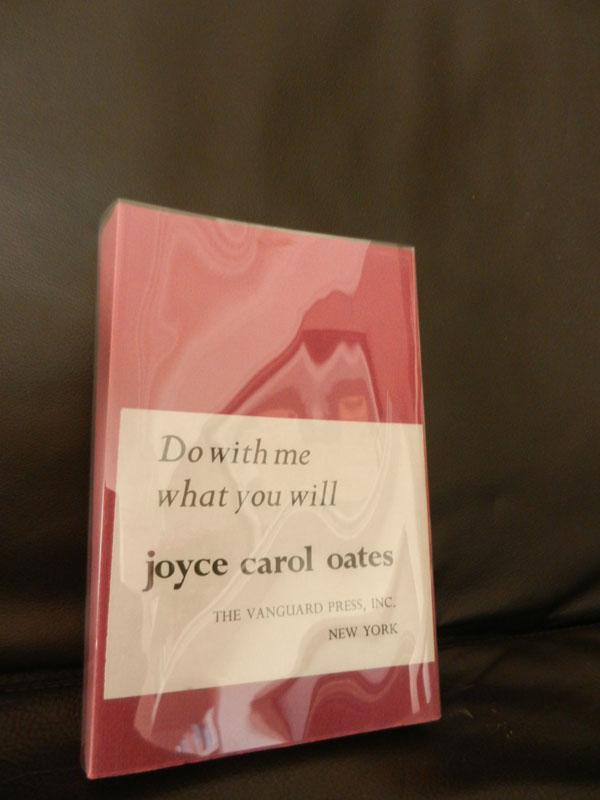
This is one of my top books in both monetary and sentimental value. It’s a proof of Joyce Carol Oates' novel Do With Me What You Will and inserted into the back is a typed revised ending from Joyce. However, both the ending printed in the proof and the new typed ending inserted within differ from the ending as it appears in the final published edition of this novel. It's a brilliant novel and well worth reading.

1DSCN0685.jpg

I’ve been lucky enough to see Joyce Carol Oates read several times. This copy of her published Journals means so much to me and is one of the few books I’ve read several times in its entirety.

1DSCN0691.jpg
1DSCN0692.jpg
1DSCN0693.jpg

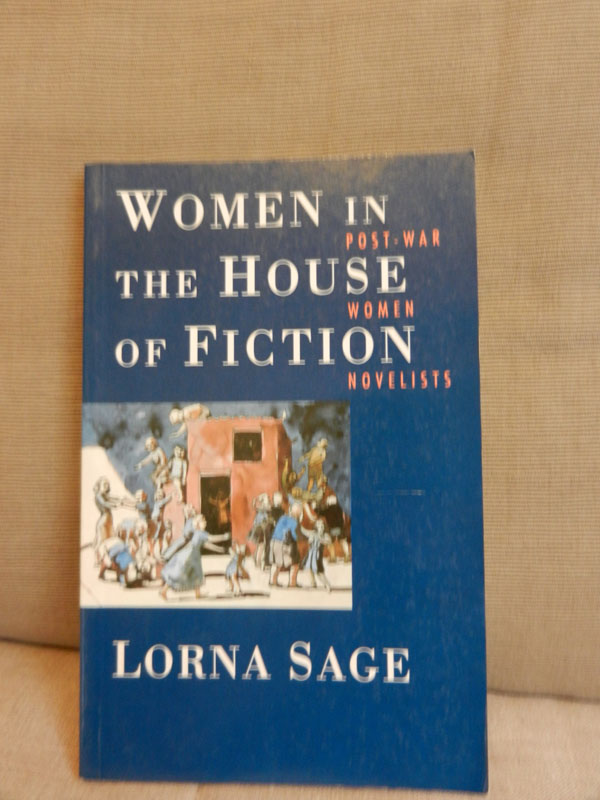
As part of my own personal tribute to my former teacher, the deceased author and critic Lorna Sage, I’ve been getting several authors to sign the tops of sections in which she wrote about them in this critical book about women and literature.


So what are some of the most treasured books you own?

Posted
AuthorEric Karl Anderson
2 CommentsPost a comment

The UK Miscarriage Association notes that “Even though about one in four pregnancies ends in miscarriage, there’s a lot that we still don’t know about why it happens.” This is a loss which affects a lot of couples hoping to conceive and give birth, but it is something rarely acknowledged openly or discussed except amongst the privacy of family. Negotiating how to deal with it is a strain that can threaten to break a relationship. Black Bread White Beer follows a couple who have just experienced a miscarriage and their day immediately following this trauma. They are in their mid-thirties and feel compelled to get their family started soon since the clock is ticking. “Even when it felt like they were at their closest, physically all-consuming, somewhere, in the crook of an arm, a cavity in their pumping hearts, was a final gap waiting to be filled.” The novel concentrates largely on the husband Amal’s perspective as he picks up his wife from the hospital and drives her to her parents’ house. In these high-pressure moments Niven Govinden brilliantly explores the minutia of how a couple functions and the dysfunctions which threaten to split them apart. Amidst relating the story of this particular couple he deals with larger issues of familial responsibility, faith, gender, racism and social expectation.

Every moment of this novel is filled with emotional tension since the knowledge of the couple’s immediate loss is felt so heavily between them. Before Amal retrieves his wife from an overnight stay in the hospital it is there. “Even before she returns, he feels the disappointment, self-blame, hanging in the air, but it does not seem irreparable. It is nothing that faith cannot fix.” Amal has abandoned the faith he was raised with from his Indian heritage to convert to Christianity before marrying his white girlfriend Claud. The sense of a personal belief system is at odds with feelings of social obligation creating a complexity in how Amal (someone who sees faith largely as symbolic) expresses himself religiously and whether faith can be called upon in an emotionally intense situation such as this one. There are instances where the subtle effects of racism can be felt – not overt or malicious, but modified expectations and reactions to Amal because of his skin colour. As such Amal has a heightened awareness of his otherness amidst Claud, her parents and their largely white community and that his actions might be perceived by them as stemming from his race. “It is the immigrant’s millstone: even in the face of this smug, politically incorrect tediousness he will remain all eyes and teeth, determined never to be less than his most exemplary self.” Being a minority is something Amal is always aware of and it impacts the way he relates to those around him whether those people perceive him as other or not. This self consciousness about race is an issue which is drawn to the surface even more acutely because of the intensity of the couple’s situation.

Govinden also skilfully writes about the different ways men and women currently deal with emotions and how they conceal them from the world. Claud tries to compose herself when concealing the fact of her miscarriage from her parents and strengthen herself to deal with the world. “Her make-up, all four products of it – powder, lipstick, mascara and blush – have made a warrior of her.” Whereas Amal deals with his heartache by secretly getting drunk and eating a lot of junk food before reconnecting with his wife and dealing with his in-laws. “Maybe it is only men who have let the modern age weaken their resilience, crying into baked goods and wallowing into beer.” In this way Govinden shows the way society’s expectations about how men and women should act in public impact upon their private outlets for releasing emotional tension.

At one horrifying point Amal discovers his wife’s parents have printed up cards to invite their friends to a party in order to celebrate their becoming grandparents. The sense of expectation that the prospect of a new baby creates is something that reverberates beyond the couple actually having it. “Everyone around them is using their due date to put an end to their personal issues. They are all after a clean slate.” Prospects for a new baby are not only felt by the couple having it, but by everyone around them. It seems cruel that a couple should have to not only deal between themselves with the loss of expectation following their miscarriage, but also the emotional investment and hopes of those around them. As such, Claud retains their secret about her loss trying to maintain control and privacy about her tumultuous emotions.

Black Bread White Beer deals with the private life and daily workings of a relationship better than any book I can think of. The miscarriage is a catalyst which draws to the surface a multiplicity of issues which always existed between Amal and Claud, but were often paved over by the niceties of comfortable routines. The great test of this is whether their bond is strong enough to withstand the challenge of all this surfacing in the face of such a profound disruption and loss. Govinden sympathetically portrays how relationships can only continue if there is a process of constant renegotiation for the desires, expectations and faults of each person involved. For all the emotional turmoil raised in this novel, it conveys a tremendous sense of hope and strength to continue on despite tragic circumstances.

Posted
AuthorEric Karl Anderson
CategoriesNiven Govinden

There have been countless in-between times I've spent watching ‘Murder, She Wrote’. Whether it was between having breakfast and getting dressed for the day, reading a book and going out for the evening or slouching on the sofa with a hang over, it seems that repeats of the show can always be found playing on some network. The preposterous plots and grandmotherly charm of Angela Lansbury never fail to make me smile and warm my heart. In this new pamphlet 'Angela' with text by Chrissy Williams and illustrations by Howard Hardiman the personality of Angela Lansbury via Jessica Fletcher is explored through a tale of love and obsession. In a confiding deeply-intense monologue stream the narrator speaks directly to Angela in an act which prises free the woman from behind the female super-slueth persona. Through poetic lines and repetition it speaks of a longing for a psychological and sexual connection with her while disentangling the mystery of amorous obsession. “Angela – you draw the dagger out, keep drawing, keep on drawing. This dagger never ends.” Angela is both the instigator and teller of the mystery tales giving her a godlike power which we mortals are enthralled by wanting her stories of small-town murder and intrigue to continue on and on.

Hardiman's illustrations recreate a cast of suspicious characters as might be found in episodes of the show as well as a trail of clues and murder scenes, but each is sharply etched out as if they were woodcuts and coloured in only three vibrant shades of red, white and black. In addition Angela herself is represented as on the hunt for answers, giving a cheeky wink to the camera or staring out at the reader with her face a mask of deep-lined horror. The familiar cartoonish aspect of the genre characters are given a darker edge as if they've been overlaid with the projection of a gothic psychological horror movie. Hardimen says on his website that he was given a brief to imagine Murder, She Wrote as directed by David Lynch. In fact, Lynch appears in the background at one point alongside a cast of characters. Subsequently the pamphlet gives a feeling of deep unease alongside a sense of psychological turmoil mired in absurdity. Shining through all this is Angela’s light-hearted personality making this comic a source of both stark beauty and subversive pleasure. Hardimen’s talent for packing complex emotions into a tenebrous landscape populated by quietly-dignified melancholy figures as was exemplified in his tremendous series ‘The Lengths’ is used to wonderful effect when set against William’s playfully lugubrious poetry. ‘Angela’ emanates with nostalgia tainted with an adult heartache.

Trailer for 'Angela'

Posted
AuthorEric Karl Anderson

Do you think of your life as a narrative? Casting your mind back do you hit upon “landmark” moments that set you on a course to becoming the person you are now? Last year I started spending more time with an acquaintance who I’d casually known for years. Increasingly we discussed books and went to events together although we didn’t really know all that much about each other. So one evening while we were having dinner he suddenly looked up at me and asked “Who are you?” I had to mentally scramble around quite quickly picking up and arranging all those introductory phrases and things you say at social gatherings to present a coherent answer to this. We’re accustomed to constructing narratives, forever tweaking and refining them, to make sense of our lives. It’s not that we necessarily try to fictionalize elements of the past, but that we attempt to make our lives into a complete comprehensible story rather than a series of slapdash experiences dependent upon chance and sporadic bursts of willpower which is the existence of most people. As Lively writes, “Most of us settle for the disconcerting muddle of what we intended and what came along, and try to see it as some kind of whole.” The trouble is that giving an approximate linear shape to our lives doesn’t really convey the experience as it was lived or how that experience has been translated into the memories inside our heads. Penelope Lively is very aware of this problem. Our lives don’t play through like a grand fictional narrative on a movie screen starting at birth and ending in death. Life exists in the sensory moment and in the scattered fragments of memory flitting through our minds throughout every day. 

Lively has previously given us her fictional representation of this in her lauded novel ‘Moon Tiger’. Here a life is presented in an impressionistic way. The story doesn’t move from start to finish but leaps around settling here and there upon episodes through a variety of narrative points of view. ‘Ammonites and Flying Fish’ which Lively admits is not a traditional memoir uses a similar tactic when trying to present a picture of her own life now that she’s over eighty years old. She muses upon what old age means now and how it’s transformed her personality: “We have to get used to being the person we are, the person we have always been, but encumbered now with various indignities and disabilities, shoved as it were into some new incarnation.” In many ways Lively feels like the same person she was when she was younger, but now she has a lot of memories to mull through. “We are the same, but different, and equipped now with a comet trail of completed time, the memory trail.” She finds old age has its challenges and also its freedoms and pleasures. There are physical problems, but she’s liberated by the fact that she doesn’t feel obligated to do anything that she doesn’t want to do. Lively muses upon the social impact of people living longer and how society reacts and is transformed by this new aging portion of the population.

Memory is a troublesome issue for Lively – both the process and the way memories are used to give coherence to our lives. Throughout the book she refers back to the strange phenomenon of memory loss when it comes to names. It’s a common problem and one that is often cited by writers and psychologists, but nobody can ever answer why it is that being unable to recall the name of someone you met last week would be more difficult than remembering the capital of Indonesia. It annoys her that no one has an answer and the problem annoys me too as it’s a difficulty I’m prone to though I’m less than half Lively’s age. In addition to losing the ability to recall names as easily, Lively finds herself unable to look forward to the future so much as continuously circling back through thoughts of the past. “What is at issue, it seems to me, is a new and disturbing relationship with time.” And so she casts her mind back and tries to construct a portrait of her life.

ammonites.jpg

Hilariously, Lively remarks that “we old talk too much about the past.” In the chapter which immediately proceeds this that is exactly what she does: goes on for a hundred or so pages talking about the past in an engaging way. Personally I love hearing interesting older people talk about the past and Lively is an incredibly fascinating individual. When she describes the beginning of her life she juxtaposes her personal memories of growing up in Egypt with general historical knowledge of social and political upheaval of the time whether that be the Suez Crisis or the nuclear attack threat of the Cold War. She also supplements this knowledge with documents including her personal writing or articles and books from the time. This connection to history is very important to her. “If you have no sense of the past, no access to the historical narrative, you are afloat, untethered; you cannot see yourself as a part of the narrative, you cannot place yourself within a context. You will not have an understanding of time, and a respect for memory and its subtle victory over the remorselessness of time.”

Lively has a preoccupation with time and a desire to define the meaning of time which eerily reflects Ali Smith in her book ‘Artful’ which I read recently. Lively remarks that “linguistically, we are positively cavalier about it – we make it, we spend it, we have it, we find it, we serve it, we mark it. Last time, next time, in time, half-time – one of the most flexible words going, one of the most reached for, a concept for all purposes.” Smith also notes this flexibility and ponders our relationship with it: “Time means. Time will tell. It’s consequence, suspense, morality, mortality. Boxers fight in bouts between bells ringing time. Prisoners do time. Time’s just ‘one damn thing after another,’ Margaret Atwood says. That sounds like conventional narrative plot. And at the end of our allotted time, we’ll end up in one of those, a conventional plot I mean, unless we stipulate otherwise in our wills.” Time is the map we use to locate ourselves within whether that be recalling when we first kissed someone, arriving at work or planning to retire. We exist in time and we wouldn’t have any conception of our place in the world without it.

Lively notes some grand changes in society since the time she was young remarking specifically upon the advancement of equality for women and acceptance of homosexuality. Then she changes tact, giving an impression of her life by recounting a series of seemingly random memories and sensations. Next she presents a group of objects in her house and the personal significance of each item. Objects for her are all artefacts of the past, in some ways more reliable for recounting history than anyone’s subjective account. “It is objects, things like these scraps of pottery, that have most keenly conjured up all those elsewheres – inaccessible but eerily available to the imagination.” Finally, she ends discussing the meaning books and writing have had upon her life.

Penelope Lively discusses reading, history, fiction and nonfiction at Yale University in 2009.

Lively is someone who is passionate about literature. For her, “books are not acquisitions, they are necessities.” She feels her life is not just informed from what she has read, but literally is a part of her past and who she is: “What we have read makes us what we are – quite as much as what we have experienced and where we have been and who we have known. To read is to experience.” The books we read allow us to experience lives we can never lead bound as we are in our own particular circumstances of our own particular time period. She has found this in both fiction and non-fiction. Her dedication to literature and illuminating thoughts on what books mean to us struck an emotional chord with me. Lively is someone dedicated to not just telling stories, but constantly pushing the boundaries of narrative itself and finding new radiant ways of writing. She has a wonderful quip which is a play upon a famous TS Eliot line: “I can measure out my life in books.” This book shows a new way of measuring one individual’s life. One that is honest, artful and enlightening.

Posted
AuthorEric Karl Anderson
CategoriesPenelope Lively

Getting under the covers with Gore Vidal is a terrifying prospect when thinking about the last time I saw him appear live on television. It was when David Dimbleby interviewed Vidal after Obama’s election in 2008. The elderly Vidal was haughty, argumentative and made no sense. Since he was such a vocal and frequent presence on television throughout his life, Tim Teeman references this incident in the book as the nadir of Vidal’s many public appearances due to his evident mental and physical decline. The appearance was particularly embarrassing in relation to thinking about a time when I’d seen him several years before give a reading at a PEN event in London. After the event people were mingling in the corridor chatting away when Vidal’s long-term partner Howard came bursting through clearing a path with a walking stick and grumbling “Make way! Make way!” as Vidal followed behind him strutting with his nose held high like an imperial statesman while everyone looked upon him with awe. People surrounding him practically bowed in respect. Looking past his status and accomplishments, consider portraits of the tall masculine intellectual stud in his heyday and the prospect of slipping in bed with Vidal is much more enticing. I was ambiguous about wanting to go there, but now that I’ve read this insightful, entertaining and admirable biography I’m glad that I did. In this book Teeman disentangles Vidal’s complicated position on sexuality while constructing a history of his erotic life. In doing so he creates an important portrait of one of recent gay history’s most controversial figures. 'In Bed with Gore Vidal' prompts us to challenge our assumptions and ask vital questions about how we define sexuality on a personal, social and political level.

Teeman makes clear at the beginning: “This is a book with sexuality at its heart; it is neither a general biography nor evaluation of Vidal’s writing career.” Through rigorous research and clear analysis Teeman manages to compile a collage of opinions both about Vidal’s sexuality and what sexuality means for an individual in relation to society. Drawing on an impressive range of resources, Teeman’s references draw upon Vidal’s books, letters between Vidal and his friends, interviews with a huge variety of people Vidal knew intimately, an important unpublished interview the publisher Don Weise conducted with Vidal in 1999, research material for an unfinished biography by Walter Clemons which was largely destroyed and an interview Teeman conducted with Vidal himself a few years prior to his death. Like a review of the last century’s most influential figures names of prominent politicians, writers and Hollywood actors are listed as having not only been acquainted with Vidal but close personal friends: Jackie and JFK, Eleanor Roosevelt, Princess Margaret, Rudolf Nureyev, Allen Ginsberg, Tennessee Williams, Norman Mailer, Paul Bowles, Muriel Spark, Anais Nin, Christopher Isherwood, Edmund White, Rock Hudson, Greta Garbo, Paul Newman, Susan Sarandon and many others. Naturally all these opinions and viewpoints about Vidal are sometimes in conflict with one another and present a series of contradictions.

Even just by scratching the surface of Vidal’s life a huge variety of questions arise about what the writer did in bed especially when considering Vidal’s ability to “embellish” the facts and present a carefully monitored public persona. Did Vidal really have sexual relations with the long-dead Jimmie Trimble who Vidal always considered his great lost love and masculine ideal? Did he ever have a cock in his mouth or was he only into mutual masturbation? Was Vidal indifferent about the AIDS crisis or deeply moved by it? Was he a great lover of women or was his close relationships with them only platonic? Did he really suck off and fuck Jack Kerouac in the Chelsea Hotel? Did he ever have sex with Howard, his partner of over 50 years, or (as he claimed in interviews) never have sex with him? Can Vidal, with all these questions swirling around him, legitimately claim not to be gay?

A small part of a 2008 interview with Gore Vidal speaking about sexuality at his home in Hollywood.

By presenting these queries with an even-handed array of references and offering his own diligent clear-sighted commentary Teeman constructs what feels like an accurate reconciliation between how Vidal presented himself as someone who claimed “There is no such thing as a homosexual person” and a man who lived with another man for over fifty years while having countless sexual encounters with male prostitutes. In some ways it all seems to come down to semantics as Teeman notes: “Vidal thought ‘gay’ referred to a sexual act, rather than a sexual identity.” Since Vidal saw sexual identity as always being fluid, people can’t ever be defined as either homosexual or heterosexual in his mind. 

There is a niggling sense throughout the book that his position on sexuality is largely founded on Vidal’s own fear of having his public image diminished by being labelled as gay: “He knew his political destiny would be betrayed by his gay sexuality – this taint.” That a public image could be diminished by a queer label was something he learned well after the reception of his ground-breaking novel ‘The City and The Pillar’ upon publication in 1948. On multiple occasions Vidal tried to be elected into government and harboured a longstanding daydream wish to one day become president. With these ambitions for power and overall public approval, it’s not surprising that, as Teeman observes, “his mind never allowed that ‘gay’ could mean firm wrists, men of all kinds having sex with, and loving, one another and being open about it; even realizing the potency of its political appropriation, or something to reveal, rather than hide.” Vidal had his definition and he stuck to it without considering how it might reflect on his personal longstanding relationship with Howard or the way it might be interpreted by society as self-denial.

Vidal always became very disgruntled if anyone tried to fix these labels on him. It’s humorous to think how the author, so deeply concerned about his self image, would have hated that this book exists. Now that Vidal is dead riffling around the sacred bed to discover his dirty underclothes gives the reader a giddy feeling of transgression – like when Colm Tóibín depicted the inner life of the deeply private Henry James in his novel 'The Master'. Such audacity can seemingly only occur after the subject’s passing. Vidal reveals himself as a hypocrite when he affixed the label of homosexual on Henry James even though this is something no one can know for sure. Teeman points out the “irony in Vidal freely casting James as a homosexual and homosexual writer, whereas he strenuously resisted any such definitions being applied to himself.” This is another indication of Vidal’s tremendous arrogance, but also what made him so enthralling to listen to as he was clearly a great gossip. He knew almost everyone worth knowing so could either recite accounts based on experience or spin believable fables to suit his purpose.

This is the well known incident between William Buckley and Gore Vidal that occurred during ABC's coverage of the 1968 Democratic convention in Chicago.

This resistance to embrace terms like “homosexual” and “gay” in relation to himself often led to feelings of animosity between the gay community and Vidal – something Vidal was never that bothered about as he felt “There is no fellow feeling particularly.” In addition, as can be seen in many recorded interviews with Vidal, he enjoyed a good scrap and enjoyed stirring heated debate. However, Teeman records how through some clear-intentioned writing, sporadic acts of charity and support for gay activism Vidal backed his claim when he once said to someone “I am on your team. After all, I’ve been there all along.” Maybe he didn’t do everything he could, but he played a part. Perhaps even by standing alone with his radical opinions he progressed ideas in society in ways that aren’t so clear-cut. As Teeman wryly notes: “He was a renegade, not a crusader.” And, after all, this raises one of the questions central to the heart of this book: was Vidal a sexual pioneer creating a level playing field or an old-fashioned relic who was too worried what people would think? There is no clear answer to this question or any of the other many questions raised by the fascinating and frustrating figure of Vidal. The fact that we’re forced to question and challenge our own beliefs and assumptions when considering him is what makes him so interesting to study. For that reason, Tim Teeman has produced a valuable biography and study that takes sex seriously while also providing a fantastically titillating read.

Posted
AuthorEric Karl Anderson
CategoriesTim Teeman

After reading a couple books on this year’s Polari First Book Prize shortlist, I decided to go back and reread the 2012 winner John McCullough’s book of poetry The Frost Fairs. It’s only fitting McCullough received recognition for this book by a LGBT prize because several of the poems describe ambiguous lines of gender and sexuality. In fact the very first poem is from the perspective of someone whose bits are “a mishmash of harbour and ship.” Later a character is vividly brought to life when described trying to apply makeup and contemplating “the logistics of masking your beard shadow in a jerking patrol car when you’ve only one eye.” More than describing the multifarious perspectives of queer and trans people McCullough’s poetry also seeks an idealised space where gender is levelled out and identity blurred. In one later poem which contemplates the sky he writes “Cloud sex – or merging and changing – complicates matters because it makes it hard to remember who they are or were.” With the act of transformation identity is destabilised and is shown to be something that is constantly being recreated.

This also demonstrates another skill of McCullough’s writing which is to reflect the personal and particular in the larger elements like a sky of clouds or a galaxy of stars. Although we often feel bound in our own circumstances and might feel our lives are stationary, McCullough’s poetry reminds us that we are inextricably bound to nature and the movement of the planet through an expansive ever-changing universe. My favourite poem in the book ‘The Light of Venus’ juxtaposes a pairing of Earth and Venus with a separated couple and the memory of when they were together. There is an incredible tenderness described with the couple’s meeting and the energy created from it is set against the proliferation of lightning storms on Venus hidden under the serene haze which covers the planet. There is a sense of threat, but also a tender union borne out of a need for survival. 

Venus_Earth_Comparison.jpg

Other poems in the book also evoke a beautiful sensual connection: “I picture your long fingers caressing the rims of improbable fountains, grasping mangoes from Assam, the sides of a bed that turns into a life-raft” His use of language creates a playful interplay between the erotic and fantastical. Again there is the sense of urgency – that romantic liaisons are both desired and necessary. The more sombre poem “Islands” sees a transformation similar to the above bed/life-raft where a bathtub turns into the sinister image of a boat filling with water. It feels as if these images aren’t only metaphorical but stand for the emotional reality of the narrator.

In a poem that draws the most direct connections between micro and macro worlds ‘On Galileo’s Birthday’ the universe is reflected in a bowl of cacti. Here there is the sense that casting our gaze outwards whether it be up to the stars or to lines of poetry we won’t discover any definitive answers. We can only marvel at the mystery and majesty of the world. This poem also seems to reveal McCullough’s primary mission in his incredibly moving and intelligent writing which is “plotting outer and earthly and inner space”

Posted
AuthorEric Karl Anderson
CategoriesJohn McCullough