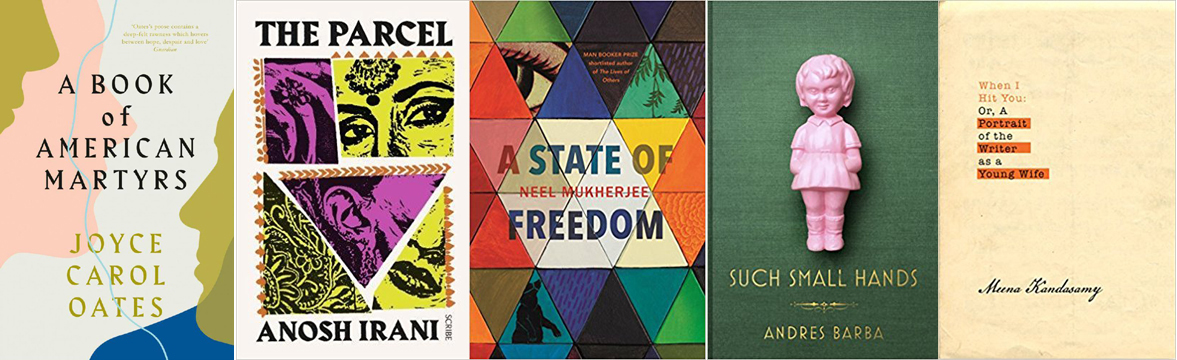
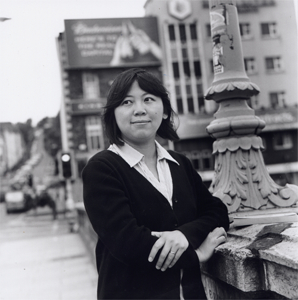
This is a book that felt so thrillingly alive and teeming with ideas that I frequently copied down quotes while I was reading it. Meena Kandasamy writes about a young woman reflecting on the atrociously abusive marriage that she lived through. Her narrative is very analytical as it artfully poses statements with challenging concepts and ideas about why abuse occurs, why the abused feel pressured to remain in that relationship and the challenges of extracting oneself from that relationship, but at the same time it is so heartfelt and meaningful that I felt totally drawn in and emotionally connected to this woman. Her story is very particular and beyond all theoretical commonalities she asserts “Abstractions are easy, but my story, like every woman's story, is something else.” She marries her husband and moves to Mangalore where he works as a professor heavily involved in the Communist revolutionary movement and gradually he cuts her off from her friends, family and livelihood to the point where she's totally isolated. This isn't just a novel that honestly explores how someone gets drawn into an abusive relationship, but also the way familial and social reactions to that abuse can inhibit abused people from sharing the reality of their situations. The story traces this unnamed narrator's journey from the start of her marriage to the gruelling aftermath as she navigates the world having confessed the brutality she endured within her marriage.
The narrator is a highly educated and capable woman so a common reaction to her situation is: shouldn't a woman this smart know better than to be caught in an abusive relationship? She's well-versed in feminist theory and sociological ideas. It's a common assumption that abuse only occurs amongst the poor and under-educated. The development of her relationship is complicated, but part of what draws her to her husband is an intellectual reverence: “I fell in love with the man I married because when he spoke about the revolution it seemed more intense than any poetry, more moving than any beauty. I'm no longer convinced.” He's an influential figure within a social and political movement that is larger than himself. Although the title of this novel is a play on James Joyce's famous novel that traces his alter-ego's intellectual and religious development, it felt in some ways that “When I Hit You” also connects with George Eliot's “Middlemarch”. Dorothea's attraction to what she believes is a cerebral excellence in the boorish Mr Casaubon seems to mirror Kandasamy's protagonist in some ways, but it also makes me think so much about Susan Sontag. Sontag once wrote about how she married an older professor and it wasn't until she read “Middlemarch” that she realised she had fallen into the same trap as Dorothea. The attraction towards a perceived intellectual superiority is very powerful for some people and it's often not until the seduced spends a lot of time with this “brilliant” person that they realise that person is actually full of hot air.